

TL;DR:
- Proper furniture placement improves room flow, comfort, and visual appeal.
- Accurate measurements and understanding daily use help create functional layouts.
- Using versatile, multi-purpose furniture maximizes space and adaptability.
That awkward feeling when your living room looks off but you can’t pinpoint why? It’s usually a layout problem. Maybe the sofa blocks the walkway, the chairs face the wrong direction, or the room just feels cramped no matter what you try. The good news is that arranging furniture well isn’t about having a design degree. It’s about following a clear, practical process. This guide walks you through every step, from measuring your space and selecting the right pieces to placing furniture with purpose and fixing the most common mistakes homeowners and renters make.
Table of Contents
- Assess your space and needs
- Gather key furniture and layout tools
- Step-by-step arrangement method
- Troubleshooting and common mistakes to avoid
- What most living room guides overlook
- Upgrade your living room with New Way Ref
- Frequently asked questions
Key Takeaways
| Point | Details |
|---|---|
| Start with your needs | Measuring your space and understanding how you use your living room are crucial foundations. |
| Use flexible furniture | Multi-functional and modular pieces make arrangements easier and your space more adaptable. |
| Follow a proven process | Arrange large pieces first, keep walkways open, and adjust until the room is both stylish and comfortable. |
| Avoid common mistakes | Steer clear of overcrowding, blocked paths, and poor lighting for a living room that works in real life. |
Assess your space and needs
Before you move a single piece of furniture, you need accurate information about your room. Measuring space and traffic flow is the first step to effective layout, and skipping it leads to the most frustrating mistakes. Grab a tape measure and note your room’s length and width. Then measure doorways, windows, and any architectural features like fireplaces or built-in shelves.
Next, map out your traffic flow. These are the natural walking paths people use to move through the room, from the entrance to the sofa, from the hallway to the kitchen, and so on. Blocking these paths is one of the fastest ways to make a room feel uncomfortable.
You also need to think honestly about how you use the space. Ask yourself:
- Do you mostly relax and watch TV, or do you entertain guests often?
- Do children or pets share the room?
- Do you work from home and need a quiet corner?
- How many people typically use the room at once?
Your answers shape every layout decision. A family with young kids needs open floor space and durable furniture. A couple that hosts dinner parties needs flexible seating. Someone working from home might need a defined zone that separates work from relaxation.
Here’s a quick reference for common living room sizes and what they can typically accommodate:
| Room size | Ideal for | Furniture capacity |
|---|---|---|
| Under 150 sq ft | 1-2 people, minimal use | Sofa, 1 chair, small table |
| 150-250 sq ft | Small families, casual use | Sofa, 2 chairs, coffee table, storage |
| 250-400 sq ft | Entertaining, multi-use | Full seating group, media unit, rugs |
| Over 400 sq ft | Open-plan, large families | Multiple zones, sectional, accent pieces |
For optimizing living room layouts in smaller spaces, every inch counts, so be precise with your measurements.
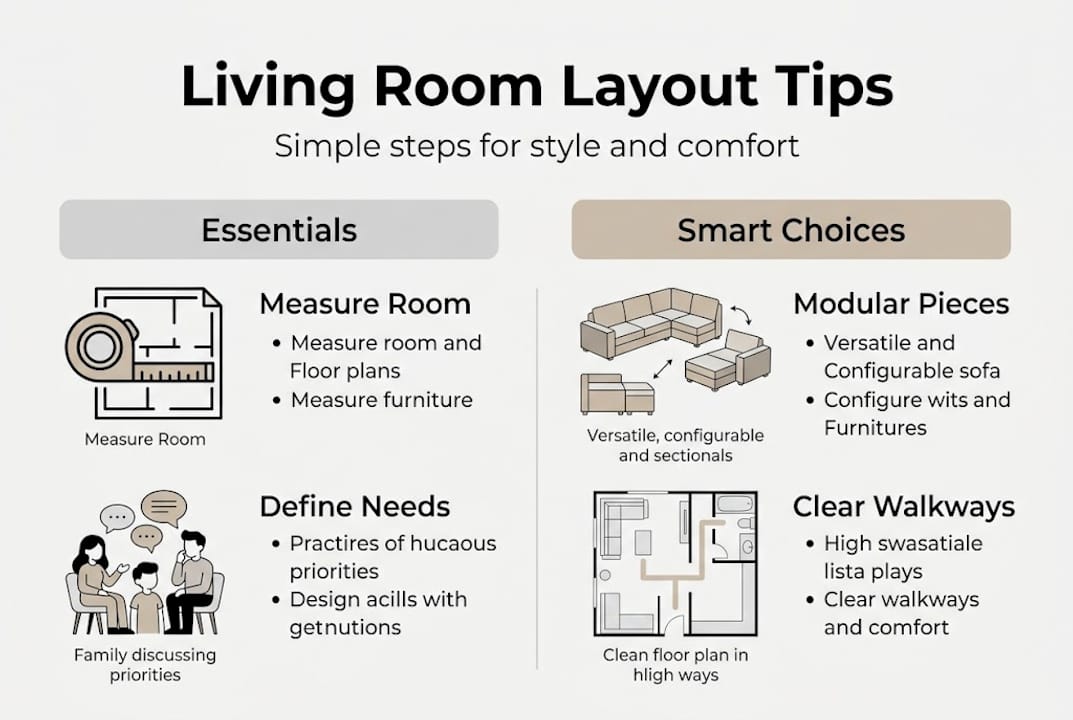
Pro Tip: Sketch your room on graph paper using a 1 inch to 1 foot scale, or use a free online room planner like Roomstyler. This lets you experiment with arrangements before lifting anything heavy.
Once you know your dimensions and lifestyle needs, you’re ready to think about choosing essential furniture that fits both your space and your life.
Gather key furniture and layout tools
Once you’ve sized up your space and needs, it’s crucial to take stock of what you have and any tools that make arranging simpler. Not every room needs the same pieces, but most living rooms benefit from a core set of furniture.
Here’s a numbered checklist of the essentials:
- Sofa or sectional — the anchor of the room
- Accent chairs — for extra seating and visual balance
- Coffee table — functional center point for the seating group
- Side tables — convenient surfaces near seating
- Media console or shelving — for storage and display
- Lighting — floor lamps, table lamps, or overhead fixtures
- Rug — defines zones and adds warmth
According to types of living room furniture research, having versatile furniture pieces and tools makes arranging easier and more effective, and the right selections can add up to 40% more usable storage and space.
Modular and multi-functional furniture is worth serious consideration, especially in smaller rooms. An ottoman with internal storage, a sofa with a pull-out bed, or nesting tables that tuck away when not in use all add flexibility without adding bulk. Smart furniture for small spaces can genuinely transform how a room feels and functions.
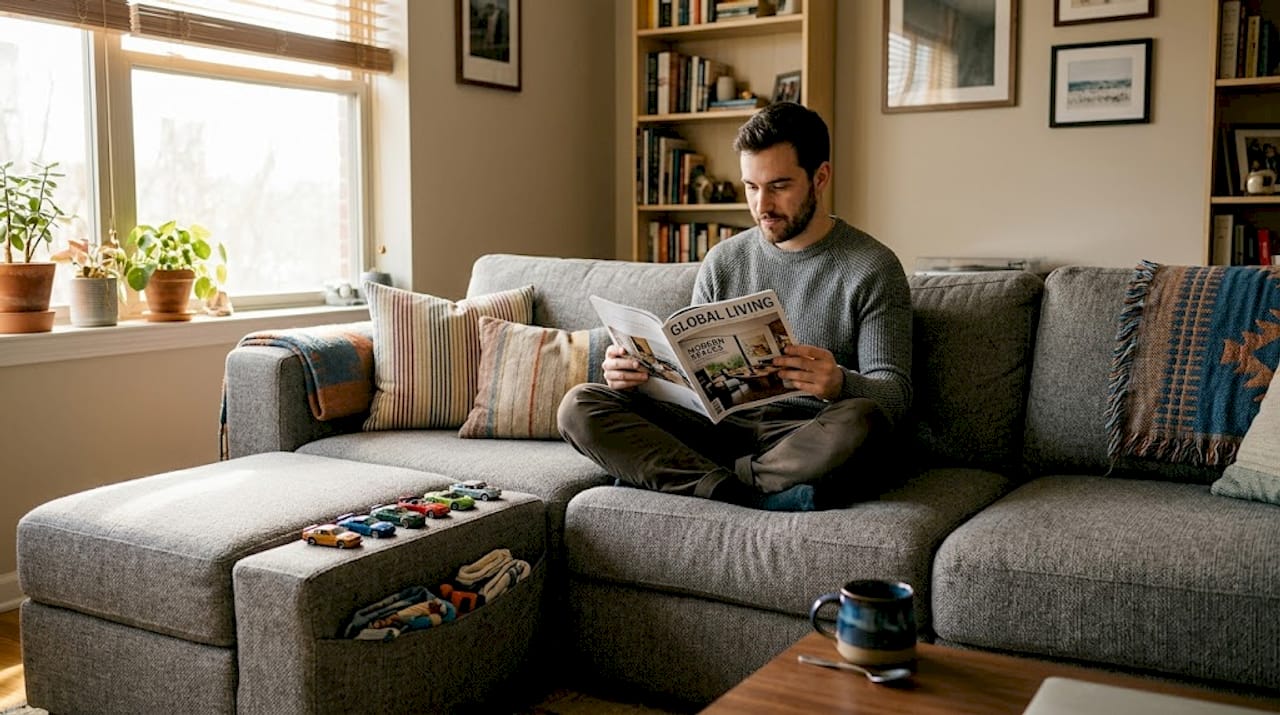
Here’s how traditional furniture compares to multi-functional alternatives:
| Traditional piece | Multi-functional alternative | Key benefit |
|---|---|---|
| Standard sofa | Sofa with storage chaise | Hidden storage |
| Basic coffee table | Lift-top coffee table | Work and dining surface |
| Decorative ottoman | Storage ottoman | Seating plus storage |
| Side table | Nesting tables | Space-saving flexibility |
For layout tools, you don’t need anything fancy. Painter’s tape on the floor lets you outline furniture footprints before you commit. A simple measuring tape and notepad keep your numbers organized. Free apps like Planner 5D or IKEA’s room planner let you drag and drop virtual furniture into a digital floor plan.
Pro Tip: Invest in at least one furniture piece with hidden storage. It reduces visual clutter instantly and keeps everyday items within reach without taking up extra floor space.
Step-by-step arrangement method
With your furniture and tools ready, you’re set to follow a proven method for creating the best arrangement. Arranging larger pieces first and keeping traffic flow open are central to good design, and this process makes it straightforward.
- Place the sofa first. The sofa is your largest piece and sets the tone for everything else. Position it to face the room’s focal point, whether that’s a TV, fireplace, or large window.
- Define your focal point. Every room needs one clear anchor. Arrange your main seating to face it directly.
- Add accent chairs. Place them at angles to the sofa to create a natural conversation area. Avoid lining all seating against the walls, which makes rooms feel cold and disconnected.
- Position the coffee table. Center it in front of the sofa, leaving enough room to move comfortably.
- Place side tables and lamps. These go beside seating, within easy reach.
- Lay the rug last. It should anchor the seating group, with at least the front legs of all major pieces resting on it.
Leave at least 18 inches between seating and tables for easy access and comfort.
For walkways, aim for at least 2 to 3 feet of clear space between furniture and walls or other pieces. This keeps the room feeling open and safe to move through. You can explore more ideas in this living room arrangement workflow guide.
Common accessory placement tips:
- Place floor lamps behind or beside seating, not in the middle of walkways
- Use table lamps at eye level when seated for the most flattering light
- Hang artwork at eye level, roughly 57 to 60 inches from the floor to the center
- Layer rugs in larger rooms to define multiple zones
For finishing touches, check out tips on styling a modern living room and how to arrange lighting for the living room to add the right atmosphere.
Troubleshooting and common mistakes to avoid
Even with a thoughtful plan, some snags are common. Here’s how to tackle the most persistent layout challenges.
The biggest mistakes people make when arranging a living room:
- Blocking doors and windows. Furniture placed in front of entry points or natural light sources makes a room feel dark and cramped. Always keep these clear.
- Too much furniture. Overcrowding and blocking natural walkways remain top layout mistakes. More pieces don’t mean more comfort.
- Poor lighting balance. Relying on a single overhead light creates harsh shadows. Layer your lighting with floor lamps, table lamps, and natural light.
- Ignoring sightlines. Think about what you see from the sofa, the entrance, and the kitchen. Ugly views can be blocked with plants, shelving, or art.
- Pushing all furniture against the walls. This is one of the most common instincts, and one of the least effective. Floating furniture toward the center creates a cozier, more intentional feel.
Quick fixes for common problems:
- If the room feels dark, add a mirror opposite a window to reflect natural light
- If it feels cluttered, remove one piece and see how the room breathes
- If traffic flow is awkward, trace your walking path and move whatever interrupts it
- If the room feels cold, add a rug and soft textiles to anchor the space
Statistic callout: Most rooms feel 25% larger after removing just one unnecessary piece of furniture. Less is often more.
Pro Tip: If a new furniture piece disrupts the flow of the room, don’t force it to fit. Reconsider its placement or function before assuming the rest of the layout needs to change.
For more ideas on upgrading your living room and decorating urban living spaces, both guides offer practical, visual inspiration.
What most living room guides overlook
Here’s something most arrangement guides won’t tell you: the best layout today might not be the best layout in six months. Life changes. You get a new pet, start hosting more, or simply want a fresh feel. Most guides treat furniture arrangement as a one-time task, but the most livable rooms are designed to evolve.
Matching furniture sets look tidy in catalogs, but they can actually limit your creativity. When every piece matches exactly, there’s no room for personality. Mixing a vintage chair with a modern sofa or pairing a wooden table with a fabric ottoman creates visual interest that a perfectly matched set never will.
We’ve seen homeowners rearrange their rooms seasonally, pulling seating closer together in winter for a cozy feel and opening things up in summer for airflow and light. That kind of flexibility is only possible when you understand the principles behind a good layout, not just the rules.
Knowing when to upgrade furniture is also part of this. Sometimes a layout problem isn’t about placement at all. It’s about a piece that has simply outgrown its usefulness.
The best arrangements allow your room to evolve as your life does.
Upgrade your living room with New Way Ref
If you’re ready to take your living room to the next level, here’s where to start. Putting these layout principles into practice is much easier when you have the right furniture to work with.
At New Way Ref, we offer a thoughtfully curated selection of modern, stylish furniture designed for real homes. From multi-functional sofas and storage ottomans to coffee tables and lighting, every piece is chosen with both form and function in mind. Free shipping on orders over $50 makes it even easier to refresh your space. Browse our collection and pair your new layout knowledge with furniture that actually fits your life. For more layout inspiration, revisit our living room setup tips to keep refining your space.
Frequently asked questions
How much space should be between living room furniture?
Leave at least 18 to 24 inches between seating and tables, and keep walkways 2 to 3 feet wide for comfortable, safe movement throughout the room.
What is the best way to arrange furniture in a small living room?
Choose compact, multi-use furniture, keep pathways clear, and use vertical storage. Smartly chosen furniture can maximize comfort even when square footage is limited.
How can I make my living room feel bigger?
Remove unnecessary pieces, use mirrors to reflect light, and choose low-profile furniture. Removing excess furniture alone can make most rooms feel up to 25% larger.
Should all living room furniture match?
No. Mixing textures and styles adds visual interest and personality. Focus on balance and proportion rather than matching everything exactly.
What should be the focal point in the living room?
A focal point can be a fireplace, TV, large window, or artwork. Arranging around a focal point anchors the room and gives the layout a clear sense of direction.
Recommended
- How to Style Living Room for a Modern, Stylish Look – New Way Ref
- Why Optimize Living Room Layout for City Life – New Way Ref
- Essential types of home furniture for style and comfort – New Way Ref
- Why Upgrade Living Room Furniture Now – New Way Ref
- 7 Minimalist Home Decorating Ideas for Timeless Elegance – San Rocco Italia