

TL;DR:
- Proper layering of ambient, task, and accent lighting creates a functional and inviting space.
- Planning and measuring fixtures ensure balanced illumination and avoid common lighting mistakes.
- Thoughtful lighting transforms décor and enhances the overall atmosphere of a home.
Picture this: you’ve spent weeks finding the perfect sofa, hung art you love, and layered in cozy textiles. But when you flip on the lights, the room feels flat. Something is off, and you can’t quite name it. Nine times out of ten, the culprit is lighting. Poor lighting can make even the most carefully decorated space feel cold, cramped, or just uninspired. This guide walks you through every step to arrange lighting like a pro, from understanding the core types to fixing common mistakes, so your home finally looks and feels the way you imagined.
Table of Contents
- Understand the basics: Types of home lighting
- Gather your essentials: Planning and tools checklist
- Step-by-step: Arranging lighting throughout your home
- Troubleshooting and common mistakes to avoid
- Why lighting arrangement is the secret ingredient in home design
- Make your vision a reality with expert lighting solutions
- Frequently asked questions
Key Takeaways
| Point | Details |
|---|---|
| Layer lighting types | Combining ambient, task, and accent lighting makes every room feel comfortable and functional. |
| Plan before placement | Map out your lighting needs and gather essentials to avoid costly mistakes and wasted time. |
| Fix common problems fast | Troubleshoot issues like darkness or glare with simple bulb swaps, portable fixtures, and strategic mirrors. |
| Experiment boldly | Small, thoughtful changes in lighting can dramatically transform your space without major renovations. |
Understand the basics: Types of home lighting
Before you move a single fixture, you need to understand what you’re working with. Ambient, task, and accent lighting are the core categories for residential lighting design, and each one plays a distinct role in how your space looks and functions.
Ambient lighting is your foundation. It’s the general, overall illumination that fills a room. Think ceiling fixtures, recessed lights, or flush-mount lights. Without it, everything else falls apart. Task lighting is focused and purposeful. It targets specific areas where you need more visibility, like a kitchen counter, a reading chair, or a bathroom vanity. Accent lighting is the finishing touch. It highlights architectural features, artwork, or décor to add depth and visual interest. Understanding lighting’s role in home design helps you see why all three types work together rather than in isolation.
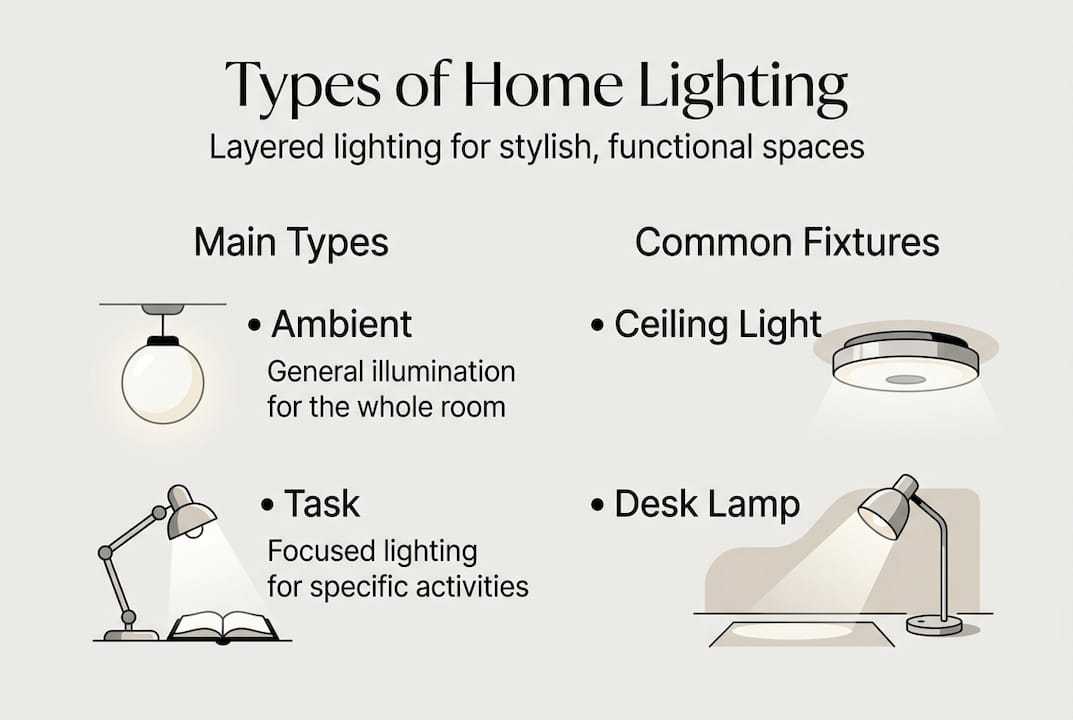
Here’s a quick comparison to keep things clear:
| Type | Purpose | Common fixtures |
|---|---|---|
| Ambient | General illumination | Ceiling lights, chandeliers, recessed lights |
| Task | Focused work or activity | Desk lamps, under-cabinet lights, vanity lights |
| Accent | Highlighting features or décor | Track lights, wall sconces, picture lights |
The most common mistake homeowners make is relying on a single overhead light for everything. That approach creates harsh shadows and makes a room feel one-dimensional. Layering all three types gives you flexibility. You can dial up the task lighting when you’re cooking and switch to soft accent lighting when you’re winding down.
Here’s what each type does best in specific rooms:
- Living room: Ambient from a ceiling fixture, task from a floor lamp near a reading chair, accent from wall sconces or LED strip lights behind a TV
- Kitchen: Ambient from recessed lights, task from under-cabinet lighting, accent from pendant lights over an island
- Bedroom: Ambient from a ceiling fixture or fan light, task from bedside lamps, accent from a small spotlight on artwork
- Bathroom: Ambient from a ceiling fixture, task from vanity lights on either side of the mirror, accent from a backlit mirror
Start with this framework and you’ll avoid the most common lighting pitfalls right from the start.
Gather your essentials: Planning and tools checklist
With a firm grasp on lighting types, it’s time to get organized and set yourself up for success. A solid lighting selection workflow starts with assessing your space before you buy or install anything. A lighting plan aligns fixtures with room usage and décor, which means you need to think about function first.
Start by evaluating each room on four factors:
- Size: Larger rooms need more fixtures or higher-output bulbs to feel evenly lit
- Color: Dark walls absorb light; lighter walls reflect it, reducing how many fixtures you need
- Natural light: Rooms with large windows need less ambient lighting during the day but more at night
- Function: A home office needs strong task lighting; a bedroom benefits from softer, warmer tones
Once you understand your space, use this checklist to gather what you need:
| Item | Why you need it |
|---|---|
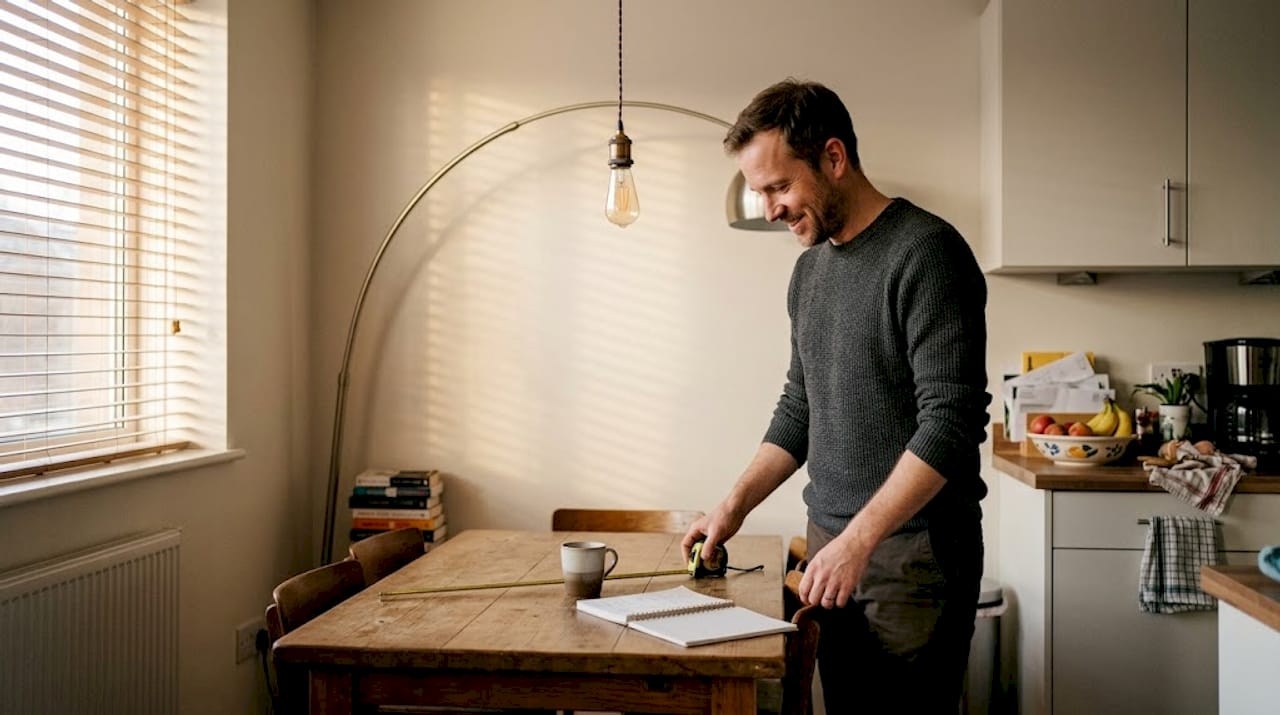
| Measuring tape | Confirms fixture sizing and spacing |
| Notepad or room sketch | Maps out lighting zones before purchasing |
| Bulb variety pack | Lets you test warm vs. cool tones in your space |
| Extension cord or plug-in lamp | Tests placement before hardwiring |
| Dimmer switches | Adds flexibility for mood and function |
| Ladder or step stool | Safe access for ceiling and wall fixtures |
Mapping out lighting zones is a step most people skip, and it costs them later. Divide each room into activity zones. In a living room, you might have a conversation zone, a reading zone, and an entertainment zone. Each zone should have its own light source.
Pro Tip: Take photos of each room at different times of day and sketch a rough floor plan. Mark where natural light enters and where shadows fall. This simple exercise reveals gaps in your current setup and helps you decide where to add or reposition fixtures before spending a dollar.
When choosing lighting fixtures, always consider scale. A tiny pendant over a large dining table looks awkward. A massive chandelier in a small entryway overwhelms the space. Match fixture size to room proportions for a balanced, intentional look.
Step-by-step: Arranging lighting throughout your home
With your essentials gathered, you’re ready to start arranging light for both practicality and wow-factor. Layering different types of light adds dimension and utility, and the process is more straightforward than most people expect.
Follow these steps in order:
- Install or confirm your ambient layer first. This is your starting point in every room. Make sure the general illumination is even and sufficient before adding anything else.
- Add task lighting where activities happen. Identify every spot where you read, cook, work, or apply makeup. Each one needs its own dedicated light source.
- Layer in accent lighting last. Once the functional lighting is in place, use accent lights to add personality. Highlight a gallery wall, illuminate a plant shelf, or add LED strips under a floating cabinet.
- Test your spacing. For recessed lights, a general rule is to space them about 4 feet apart and keep them 2 feet from walls. For pendant lights over a table, hang them 30 to 36 inches above the surface.
- Adjust height and angle. Wall sconces should sit at about 60 inches from the floor. Track lights should angle at 30 degrees to avoid glare on surfaces or in eyes.
- Add dimmers wherever possible. Dimmers are one of the most affordable upgrades you can make, and they instantly expand what your lighting setup can do.
“The best-lit rooms feel effortless. That’s because every layer of light was placed with intention, not just convenience.”
For small space lighting tips, keep fixtures close to walls to visually expand the room. Vertical light draws the eye upward and makes ceilings feel higher.
Pro Tip: Think about how you use each room at different times. A kitchen needs bright, cool light for morning prep but warmer, dimmer light for evening entertaining. One dimmer switch and two bulb types can handle both scenarios without any rewiring.
Troubleshooting and common mistakes to avoid
As you finish arranging your lights, don’t let common pitfalls undo your hard work. Improper fixture placement and neglecting natural light can make rooms feel harsh or gloomy, even when you’ve invested in quality fixtures.
Here are the most frequent mistakes and how to fix them:
- Relying only on overhead lights. A single ceiling fixture casts downward shadows that flatten faces and make rooms feel institutional. Add floor lamps, table lamps, or wall sconces to fill in the gaps.
- Choosing the wrong color temperature. Bulbs are measured in Kelvin (K). Warm white (2700K to 3000K) suits bedrooms and living rooms. Cool white (3500K to 4100K) works better in kitchens and offices. Mixing temperatures in one room creates visual chaos.
- Ignoring natural light. Natural light changes throughout the day. Position mirrors and reflective surfaces to amplify it, and use sheer curtains instead of heavy drapes to let it flow.
- Oversizing or undersizing fixtures. A fixture that’s too large dominates a room; one that’s too small disappears. Use the room’s length plus width in feet, then convert to inches for a rough chandelier diameter guide.
- Placing lamps too high or too low. Lamp shades should sit at eye level when you’re seated, so the light is comfortable and functional rather than blinding or useless.
“Good lighting isn’t just about brightness. It’s about placing the right light at the right height for the right purpose.”
For more ideas on apartment lighting ideas and modern lighting tips, always check wattage ratings on fixtures before swapping bulbs. Exceeding the recommended wattage is a fire hazard, not just a brightness issue. When in doubt, go LED. LED bulbs run cooler, last longer, and use significantly less energy than incandescent options.
Quick fixes that work immediately:
- Swap a cool-toned bulb for a warm one in your living room tonight
- Add a plug-in wall sconce to a dark corner without any wiring
- Place a large mirror opposite a window to double your natural light
- Use a clip-on task light at your desk if overhead lighting causes eye strain
Why lighting arrangement is the secret ingredient in home design
Here’s something most design guides won’t tell you: furniture and color get all the credit, but lighting does all the work. You can spend thousands on a beautiful sectional sofa, and bad lighting will make it look cheap. You can paint a room a perfect shade of warm white, and a single cool-toned overhead bulb will wash it out completely.
We’ve seen it happen repeatedly. Homeowners invest in décor and overlook lighting entirely, treating it as a utility rather than a design tool. The result is a space that looks fine in photos but never quite feels right in person.
The truth is, thoughtful lighting placement can make budget décor look designer. A $30 floor lamp in the right corner does more for a room’s atmosphere than a $300 accent chair in the wrong spot. And unlike furniture, lighting is easy to adjust. You can test, move, and swap fixtures without committing to anything permanent.
Lighting trends for 2026 will come and go, but the fundamentals of layering and intentional placement never go out of style. Start small if you need to. Swap one bulb, add one lamp, reposition one fixture. Small changes create real transformation, and once you see the difference, you’ll want to keep going.
Make your vision a reality with expert lighting solutions
You now have a clear, step-by-step path to better lighting in every room of your home. The next move is putting it into action with the right fixtures and resources.
At New Way Ref, we offer a thoughtfully curated selection of modern lighting fixtures designed to fit every room, style, and budget. From pendant lights and wall sconces to floor lamps and accent pieces, you’ll find options that work with your existing décor rather than against it. Not sure where to begin? Our guide on selecting lighting fixtures walks you through the decision process step by step. Free shipping on orders over $50 makes it easy to get started without the extra cost. Your ideal lighting setup is closer than you think.
Frequently asked questions
What is the most important rule for arranging home lighting?
The most important rule is to layer ambient, task, and accent lighting for both function and visual interest. Layering different types of light provides the flexibility to change the environment as needed.
How can I make a small room appear brighter with lighting?
Use wall-mounted and reflective fixtures, opt for lighter bulb tones, and add mirrors to bounce light around the room. Strategic use of mirrors and reflective fixtures increases overall brightness in small spaces.
Are there common mistakes to avoid when setting up lighting?
Yes, avoid using only overhead lights, forgetting task lighting in work areas, and neglecting lamp scale and bulb type. Ignoring task lighting and choosing the wrong-sized fixtures are frequent missteps in lighting arrangement.
How do I choose the right bulb for each room?
Select bulbs by considering the function and mood of each room; choose warm tones for relaxation and higher output for work areas. Bulb selection should fit the activity in the room for maximum comfort and visibility.
Recommended
- How to select lighting fixtures for stylish spaces – New Way Ref
- Stylish lighting ideas for apartments in 2026 – New Way Ref
- Role of Lighting in Home Decor – Enhancing Style and Function – New Way Ref
- Lighting tips for small spaces to brighten urban homes – New Way Ref
- Hoe tuinverlichting aanleggen voor een sfeervolle tuin - Holland Electric