

TL;DR:
- Well-planned layouts increase home value by 10-15% and reduce stress by 20%.
- Space planning involves measuring, zoning, and testing layouts before decorating or furnishing.
- Avoid common mistakes like ignoring scale, traffic flow, and purchasing furniture before planning.
Well-planned homes are 10-15% more valuable, and homeowners who get their layouts right report a 20% reduction in stress. Yet most people skip directly to choosing paint colors and buying furniture before they’ve mapped a single inch of their floor plan. That backward approach costs time, money, and comfort. Space planning is the foundation that makes everything else work, from traffic flow to furniture scale to how a room actually feels to live in. This guide walks you through the full process, whether you own your home or rent it, so you can stop guessing and start making decisions that genuinely improve your space.
Table of Contents
- What is space planning and why does it matter?
- The space planning process: step-by-step fundamentals
- Space planning for small homes and renters: key strategies
- Common space planning mistakes and how to avoid them
- Editorial perspective: what most guides miss about space planning
- Take the next step: optimize your space with expert solutions
- Frequently asked questions
Key Takeaways
| Point | Details |
|---|---|
| Space planning comes first | Organizing layout before decorating ensures your home is functional and visually appealing. |
| Boost value and comfort | A well-planned home increases property value, reduces stress, and improves day-to-day enjoyment. |
| Small space solutions | Multi-functional furniture and vertical storage make small homes feel bigger and work better. |
| Avoid key pitfalls | Plan your space before purchasing furniture to prevent clutter and maximize flow. |
What is space planning and why does it matter?
Space planning is not just moving furniture around. It is a structured process that shapes how your home works at every level. Understanding it clearly is the first step toward making your home feel right.
At its core, interior design space planning is the discipline of arranging furniture, fixtures, and activities within a space before any decorating decisions are made. As one industry definition puts it:
“Space planning organizes furniture, fixtures, and activities to optimize functionality, flow, and aesthetics before decorating.”
This means you map out where people walk, where they sit, where light falls, and what each zone of the room is meant to do, all before you select a single throw pillow.
The importance of space planning goes beyond just aesthetics. Here is what a well-planned layout actually delivers:
- Better traffic flow: People move through rooms naturally without bumping into furniture or feeling cramped.
- Improved functionality: Each zone serves a clear purpose, reducing clutter and confusion.
- Higher home value: Strategic layouts increase market appeal and selling price.
- Lower stress: A well-organized environment reduces cognitive overload, which is why that 20% stress reduction figure is real and measurable.
- Greater productivity: Home offices and study nooks that are properly zoned help people focus.
One of the most common misconceptions is that decorating and space planning are the same thing. They are not. Decorating is the layer you add on top of a plan. If you decorate before you plan, you end up with a beautiful room that does not function well.
This applies equally to renters and homeowners. Renters often assume space planning is only for people who own their homes and can make structural changes. That is not true. You can plan your space effectively within the constraints of a rental using portable, modular, and non-permanent solutions. Using home zoning strategies adapted for rental environments is fully achievable without drilling a single hole.
Space planning is the foundation of every successful interior. Get it right, and everything from your lighting to your decor will fall into place more easily.
The space planning process: step-by-step fundamentals
Knowing why space planning matters, here is how to systematically plan your space for maximum benefit.
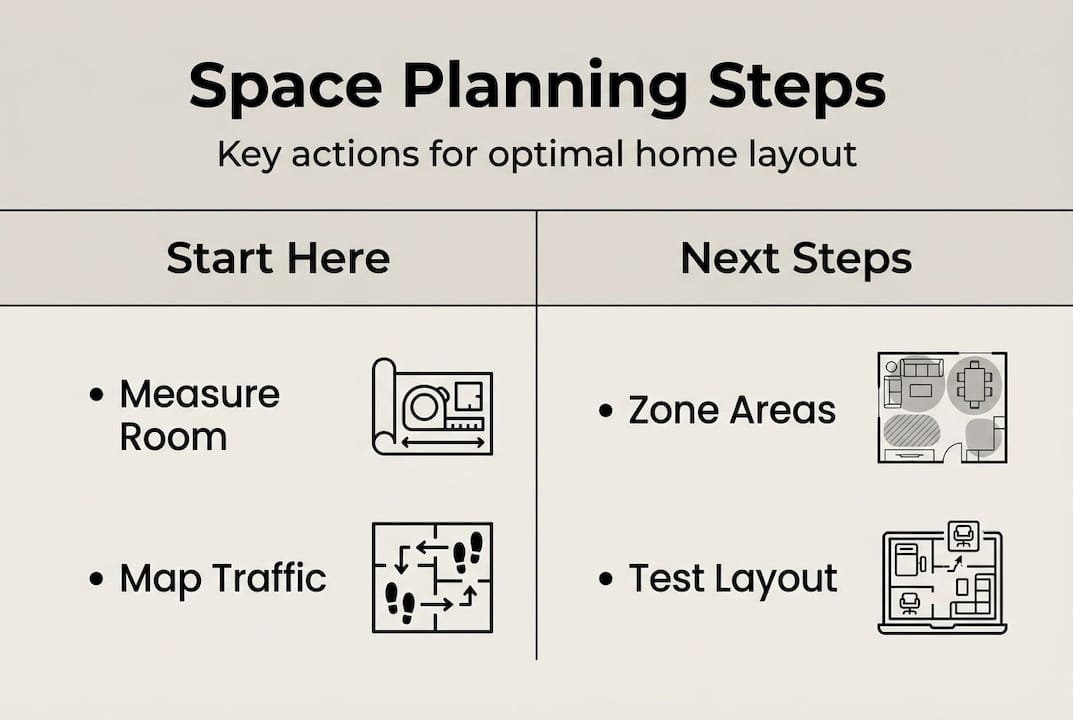
The core methodology follows a clear sequence: measure room dimensions, assess purpose and activities, map traffic flow with a minimum 36-inch clearance, identify focal points, create functional zones, place furniture to scale, and then test and refine the layout. Each step builds on the last.
Step-by-step process:
- Measure everything accurately. Record the length, width, and ceiling height of each room. Note window and door placements, electrical outlets, and any fixed features like fireplaces or columns.
- Assess your programming needs. Programming is the professional term for identifying what activities will happen in the space. A living room might need to serve as a TV area, reading nook, and conversation zone simultaneously.
- Map traffic flow. Identify the paths people naturally take through the room. Keep main walkways at a minimum of 36 inches wide to allow comfortable movement.
- Identify focal points. Every room should have one dominant visual anchor, like a fireplace, a large window, or a media wall. Arrange furniture to support and frame that focal point.
- Create functional zones. Use a simple bubble diagram, where circles represent activity areas, to block out zones before placing actual furniture.
- Place furniture to scale. Use graph paper or a free floor plan app to arrange pieces proportionally. Avoid furniture placement mistakes like pushing all pieces against the walls or choosing items that are too large for the room.
- Test and refine. Walk through your plan physically. Use tape on the floor to simulate furniture outlines before you buy or move anything heavy.
| Room element | Minimum clearance |
|---|---|
| Main walkway | 36 inches |
| Sofa to coffee table | 14 to 18 inches |
| Dining chair pull-out space | 36 inches |
| Bedroom aisle (side of bed) | 24 inches |
Pro Tip: Use painter’s tape on your actual floor to outline furniture shapes before purchasing. This five-minute step can save you from returning a sofa that does not fit.
The iterative approach is what separates good space planning from guessing. Plan, test, adjust, and test again.
Space planning for small homes and renters: key strategies
With the fundamentals in place, you can adapt these principles to smaller spaces or rental homes.
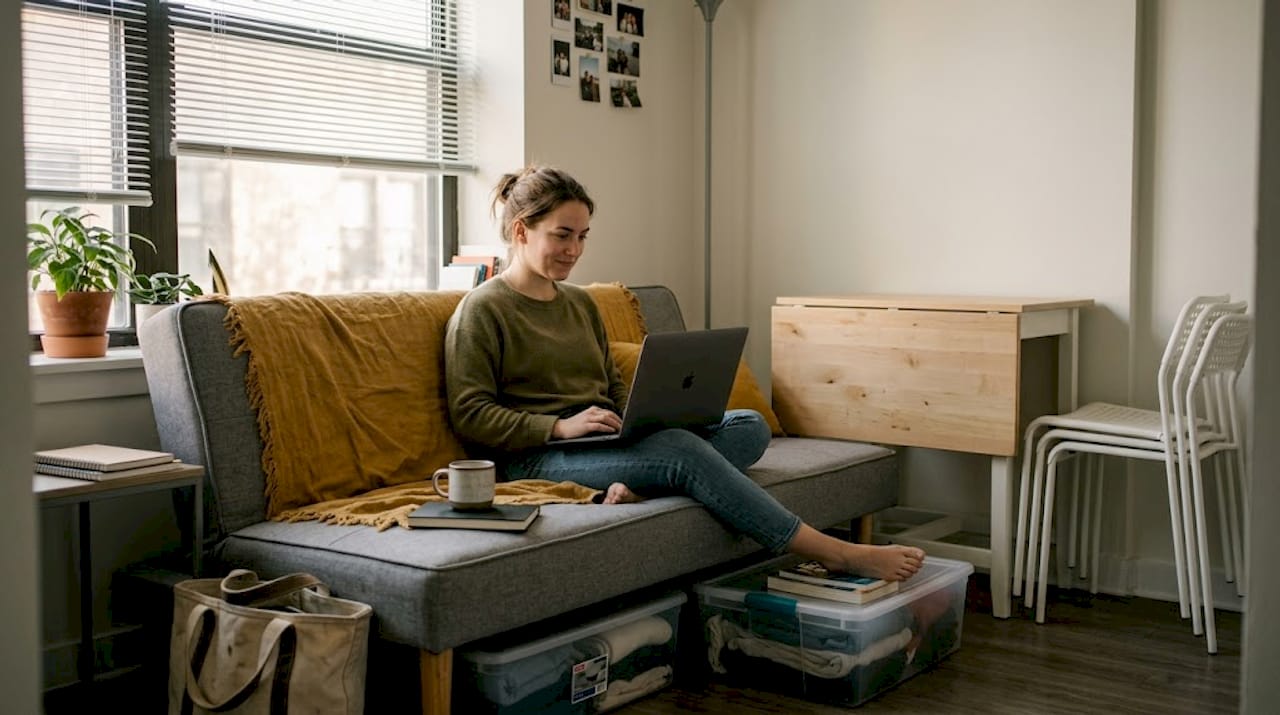
Small spaces and rentals come with real constraints. But the right approach turns those constraints into creative advantages. According to small space layout research, multi-functional furniture and vertical storage can yield up to 30% more functional area in a room, and 78% of people who apply these principles report a significant improvement in how their space feels.
Here are the strategies that make the biggest difference:
- Float your furniture. Pulling sofas and chairs away from the walls creates a sense of depth and makes rooms feel larger, not smaller. Furniture pushed flush against every wall makes a room feel like a waiting room.
- Go vertical. Shelving, tall bookcases, and wall-mounted storage draw the eye upward and free up valuable floor space.
- Choose multi-functional pieces. A storage ottoman, a sofa bed, or a dining table that folds against the wall all serve double duty without doubling your footprint.
- Zone without walls. Use rugs, lighting, and furniture groupings to define separate areas in open-plan spaces. Thoughtful small space zoning makes a studio apartment feel intentional rather than chaotic.
- Mirror strategically. A large mirror on a side wall reflects light and visually expands the room.
| Strategy | Best for | Impact |
|---|---|---|
| Multi-functional furniture | Studios, renters | High space savings |
| Vertical storage | Any small room | Frees up floor space |
| Floating furniture | Living rooms | Creates visual depth |
| Area rugs for zoning | Open-plan layouts | Defines activity areas |
For renters specifically, smart furniture choices make a measurable difference when you cannot alter walls or flooring. Pair your layout strategy with thoughtful lighting choices for small rooms to amplify the effect further.
Pro Tip: Use painter’s tape to outline furniture footprints directly on your rental floor before committing to any purchase. Landlords cannot object, and you will know exactly what fits.
Common space planning mistakes and how to avoid them
Beyond applying these methods, knowing what to avoid is critical for success.
Even well-intentioned homeowners fall into predictable traps. The most expensive mistake is also the most common: buying furniture before you have finalized your layout. As the principle goes, space planning must precede decorating, not follow it. If you buy a sectional sofa without knowing your room’s traffic flow, you may block a doorway or make the room feel impossible to navigate.
Here are the mistakes that most often derail a space:
- Ignoring scale. A massive sectional in a small living room is not cozy, it is suffocating. Always work to scale on paper or a digital tool before purchasing.
- Neglecting traffic flow. Furniture placement that interrupts natural movement paths frustrates everyone who uses the room daily.
- Too many small pieces. Filling a room with many small accent tables and chairs creates visual clutter without adding comfort. Fewer, well-scaled pieces create a calmer, more functional space.
- No negative space. Negative space, which means open, uncluttered floor and wall area, is not wasted space. It gives rooms room to breathe and makes your furniture stand out.
- Decorating over a broken layout. Adding art, throw pillows, and plants to a poorly planned room will not fix the underlying problems. It just makes them more expensive.
“The most common error in home design is making decorating decisions before the layout is resolved. Space planning is not a step you skip.”
If you are ready to rethink your living room layout, start by reviewing common approaches to arranging living room furniture. From there, look at a living room setup workflow to see how the sequence of decisions fits together. And if you want to sidestep the most common pitfalls upfront, our guide to avoiding furniture mistakes covers the full list with practical fixes.
Editorial perspective: what most guides miss about space planning
Most mainstream guides treat space planning as a checklist. Measure the room, pick a focal point, done. But that misses the real point entirely.
The true value of space planning is not in the final layout. It is in the process of making decisions before spending money. Early diagramming, even a rough bubble sketch on a napkin, forces you to think about how you actually live in a space versus how you imagine you will. Those two things are rarely the same.
Most people confuse space planning with decorating because both involve looking at a room and imagining it differently. But decorating is additive. Space planning is structural. When you invest time in programming your space, meaning actually writing down what activities need to happen where, you save yourself from costly furniture returns and layout regrets.
Another underrated insight from zoning guide research is that universal design principles, designing for accessibility and flexibility, make spaces more functional for everyone, not just those with physical limitations. Wider pathways, adjustable surfaces, and flexible furniture are just good design.
If you take one contrarian insight away from this guide, let it be this: fewer, well-scaled pieces always outperform many small ones. That principle, grounded in visual weight and negative space, is the single most overlooked truth in home design. Explore more in our step-by-step decor advice for a practical application of these ideas.
Take the next step: optimize your space with expert solutions
You now have a clear picture of how space planning works, what mistakes to avoid, and how to adapt the process to your specific home or rental. The next step is putting it into action with the right pieces.
At New Way Ref Store, we offer a thoughtfully curated selection of modern furniture and home decor designed to fit real-life layouts, from multi-functional storage pieces to stylish sofas scaled for smaller rooms. Every product is chosen with functionality and design appeal in mind. If you are still building your understanding of the process, our detailed guide on understanding space planning is a practical starting point. Browse our collections today and find pieces that actually work in your space.
Frequently asked questions
How does space planning increase home value?
Strategic layouts and open floor plans can boost home value by 10-15% and improve buyer interest by making spaces feel larger and more functional. Open-plan homes also tend to appreciate at around 7.4% annually.
What are the main steps for effective space planning?
Start by measuring your room dimensions, then map traffic flow, zone activity areas, scale your furniture choices to fit, and refine the layout through testing before finalizing any purchases.
What mistakes should I avoid when space planning?
Avoid buying furniture before your layout is set and never ignore scale or traffic flow. As space planning fundamentals confirm, the layout must come first or you risk costly, frustrating results.
How can renters optimize space without making permanent changes?
Use tape outlines on the floor to test layouts, choose modular and multi-functional furniture, and rely on vertical storage to maximize function. These non-permanent solutions work within any rental agreement while still delivering real results.
Recommended
- What is space planning? Transform your home for comfort – New Way Ref
- Home zoning guide: transform any space with smart layout – New Way Ref
- Upgrade your home: 2026’s modern lighting trends revealed – New Way Ref
- Why personalize your home for comfort and style in 2026 – New Way Ref
- How to photograph your home for a home swap | SwapSpace