

TL;DR:
- Proper ambient lighting creates a welcoming, layered atmosphere essential for comfortable spaces.
- Combining different fixtures with adjustable controls enhances room mood and functionality.
- Indirect lighting methods and thoughtful placement prevent flat, harsh spaces and increase visual comfort.
You can fill a room with stylish furniture, hang carefully chosen art, and still walk in and feel… nothing. The space looks fine on paper but doesn’t feel inviting. More often than not, the culprit isn’t your decor choices. It’s the lighting. Specifically, it’s the absence of a proper ambient lighting foundation. Ambient lighting is the base layer that sets the mood for everything else in a room. Without it, even the most thoughtfully designed spaces can feel flat, cold, or uninspiring. This guide breaks down exactly what ambient lighting is, how it works, and how you can use it to genuinely transform your home.
Table of Contents
- Defining ambient lighting: The foundation of every room
- Types and sources of ambient lighting in the home
- Ambient vs task vs accent lighting: How to layer for perfect results
- Expert strategies: Avoiding flat spaces and maximizing comfort
- A designer’s insight: Why most homes get ambient lighting wrong
- Bring your vision to life with expert lighting solutions
- Frequently asked questions
Key Takeaways
| Point | Details |
|---|---|
| Ambient sets the mood | The right ambient lighting is the foundation for inviting, comfortable rooms. |
| Layering is essential | Combine ambient, task, and accent lights for a home that feels balanced and visually rich. |
| Avoid common mistakes | Don’t rely on just overhead lights—use indirect sources and diffusers for a cozier atmosphere. |
| Adapt to each space | Select fixtures and intensities based on individual room size, use, and mood. |
Defining ambient lighting: The foundation of every room
Ambient lighting is the primary, general illumination that fills a room. Think of it as the background light that makes a space usable and comfortable before you add anything else. It’s not focused on a specific task like reading or cooking, and it’s not meant to highlight a piece of art or an architectural feature. Its job is simple: make the room visible, comfortable, and welcoming.
Understanding the role of lighting in home design starts with recognizing that not all light is created equal. Lighting professionals typically divide light into three categories:
- Ambient lighting: The broad, base layer. It fills the room evenly and sets the overall mood.
- Task lighting: Focused, brighter light for specific activities like reading, cooking, or working.
- Accent lighting: Directional light used to highlight objects, textures, or architectural details.
Ambient lighting is the starting point. Without it, task and accent lighting have no foundation to build on, and the result is a room that feels patchy and uncomfortable.
| Lighting type | Primary purpose | Typical color temp |
|---|---|---|
| Ambient | General illumination | 2700K to 3000K |
| Task | Activity-focused brightness | 3500K to 4500K |
| Accent | Decorative highlighting | Varies, often warm |
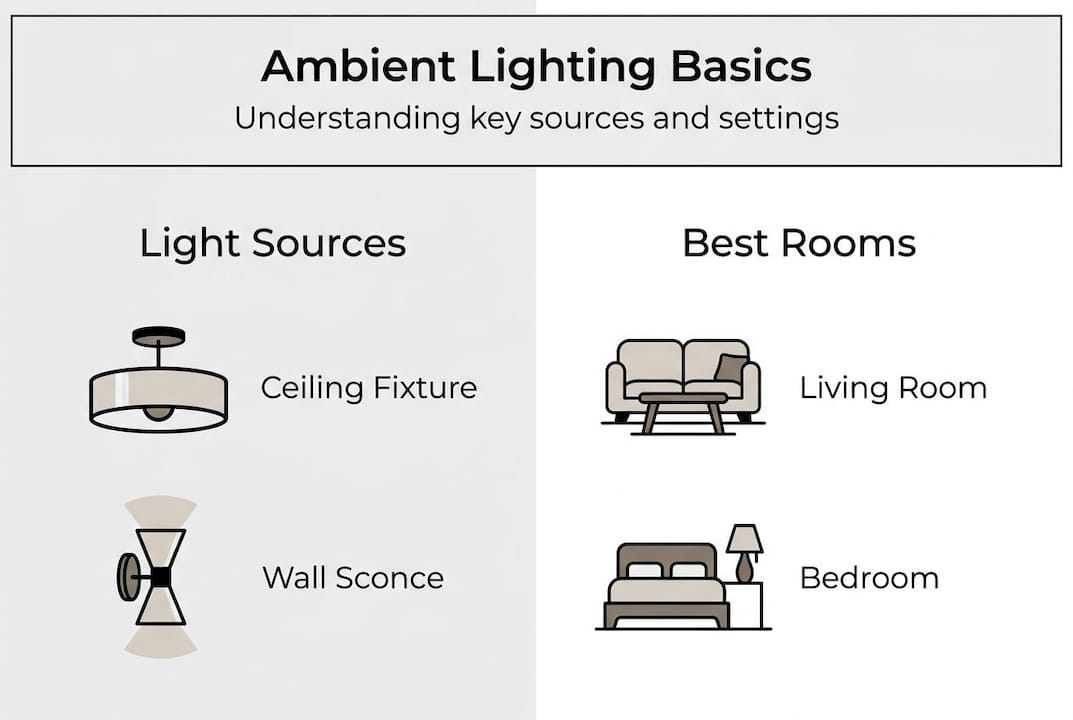
Common sources of ambient light in a home include ceiling fixtures, recessed downlights, flush-mount lights, wall sconces, and large pendant lights. Each of these spreads light broadly across a room rather than concentrating it in one spot.
“Single overhead reliance creates flat and shadowy spaces. Use indirect methods to reduce glare and build a more comfortable, layered environment.”
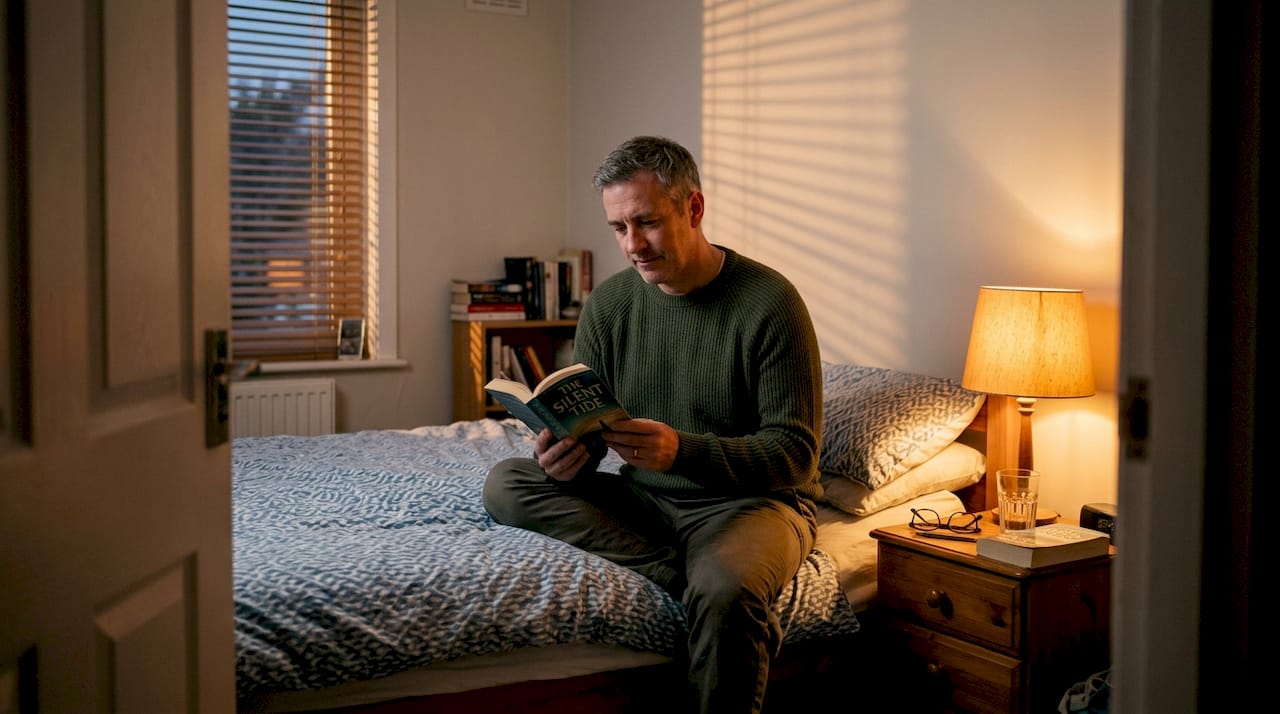
The goal of ambient lighting isn’t just visibility. It’s about creating a mood. A warm, softly lit room feels relaxed and cozy. A brightly lit room with cool tones feels alert and energizing. Knowing this gives you real control over how your home feels, not just how it looks. Exploring lighting in interiors further shows how this base layer influences every other design decision you make.
Types and sources of ambient lighting in the home
Now that we know what ambient lighting is, let’s explore the many ways you can create it in your home. The good news is that you have plenty of options, and mixing a few of them together almost always produces better results than relying on a single source.
Popular ambient lighting sources:
- Ceiling-mounted fixtures: The most common choice. Flush-mount and semi-flush fixtures spread light downward and outward across the room.
- Recessed lighting: Installed into the ceiling for a clean, modern look. Works especially well in kitchens and hallways.
- Cove lighting: LED strips hidden in ceiling recesses or crown molding that cast light upward, creating a soft, indirect glow.
- Track lighting: Adjustable heads on a ceiling track that can be angled to wash walls with light, adding warmth and dimension.
- Large pendant lights: Hung centrally or in groups, these work well over dining tables or in open-plan living areas.
| Source | Best room | Effect |
|---|---|---|
| Flush-mount ceiling fixture | Bedroom, hallway | Even, general coverage |
| Recessed downlights | Kitchen, living room | Clean, modern fill light |
| Cove lighting | Living room, master bedroom | Soft, indirect warmth |
| Track lighting | Open-plan spaces | Flexible, directional fill |
| Large pendant | Dining room, entryway | Focal point with ambient spread |
Color temperature plays a big role in how your ambient light feels. Warmer tones (around 2700K) are ideal for bedrooms and living rooms where you want to relax. Slightly cooler tones (around 3000K) work better in kitchens and home offices where you need a bit more alertness.
Blending two or more ambient sources in a single room creates a richer, more layered effect. For example, combining recessed lights with a central pendant and a cove strip in a living room gives you depth and flexibility. You can also look at how lighting in home decor choices affect the overall feel of your space beyond just fixture selection.
Pro Tip: Always install dimmers on your ambient fixtures. Being able to lower the brightness in the evening transforms the same room into a completely different, more relaxing environment without changing a single piece of furniture.
Relying on a single overhead source creates flat and shadowy spaces, which is the most common ambient lighting mistake homeowners make.
Ambient vs task vs accent lighting: How to layer for perfect results
Understanding your options lets you go a step further. Here’s how ambient, task, and accent lighting combine for truly exceptional spaces.
Layering light means intentionally using all three types together so each one serves its specific role. The result is a room that’s comfortable for everyday living, functional for specific activities, and visually interesting.
A simple three-step guide to layering lights:
- Start with ambient. Choose your base light source and make sure it covers the room evenly. This is your foundation.
- Add task lighting. Identify where you need focused light: a desk lamp, under-cabinet kitchen lights, or a reading lamp beside the sofa.
- Layer in accent lighting. Use directional spotlights, picture lights, or LED strips to highlight artwork, shelving, or architectural features.
Here’s where many people get the ratios wrong. Accent lighting should be up to 3x the intensity of your ambient light to create a proper visual contrast and make those highlights pop. Task lighting typically uses cooler color temperatures, around 3500K to 4500K, to support focused work.
| Layer | Intensity relative to ambient | Color temp range |
|---|---|---|
| Ambient | Baseline (100%) | 2700K to 3000K |
| Task | Slightly higher | 3500K to 4500K |
| Accent | Up to 3x ambient | Warm to neutral |
A well-layered room gives you flexibility. Bright ambient plus task lighting for a productive afternoon. Dimmed ambient plus warm accent lighting for a relaxed evening. Same room, completely different feel. Following a clear lighting selection workflow helps you make these decisions with confidence rather than guesswork.
Pro Tip: If you’re working with a small space, lighting tips for small spaces can help you layer effectively without overwhelming the room or cluttering the ceiling with too many fixtures.
Expert strategies: Avoiding flat spaces and maximizing comfort
To truly master ambient lighting, practical strategies and pitfalls to avoid are essential. Even with the right fixtures, small mistakes can undermine the entire effect.
Common ambient lighting mistakes to avoid:
- Relying on a single overhead light as the only source in a room
- Choosing a color temperature that’s too cool for relaxation spaces
- Under-lighting large rooms, leaving corners dark and uninviting
- Skipping dimmers and losing the ability to adjust mood throughout the day
- Placing fixtures too close together, creating harsh bright spots
The fix for most of these is indirect lighting. Instead of pointing light directly down at the floor, bounce it off walls or ceilings. Wall sconces, uplights, and cove lighting all achieve this effect. Indirect methods reduce glare and create a softer, more even distribution of light that feels natural and comfortable.
“The best ambient lighting is the kind you don’t consciously notice. You just feel comfortable, relaxed, and at home.”
One of the most effective and affordable tweaks is adding a dimmer switch to an existing overhead fixture. This single change lets you shift from bright, functional daytime light to a warm, low-glow evening atmosphere. It costs very little and makes an immediate difference.
Another strategy is to think about how you enhance home mood through placement, not just product choice. Moving a floor lamp from a corner to behind a sofa, for example, creates a completely different feel by washing the wall with soft, indirect light.
Pro Tip: When choosing bulbs, stick to warm white (2700K to 3000K) for living areas and bedrooms. Reserve neutral white (3000K to 3500K) for kitchens and bathrooms where clarity matters more than coziness.
Keeping up with modern lighting trends can also inspire smarter ambient choices, and learning how to select lighting fixtures ensures your picks match both your style and your space.
A designer’s insight: Why most homes get ambient lighting wrong
Here’s the honest truth: most lighting guides focus on brightness. They tell you how many lumens you need per square foot and which fixtures cover the most area. That’s useful information, but it misses the point entirely.
Real comfort doesn’t come from brightness. It comes from quality, control, and intention. The rooms that feel genuinely inviting aren’t the brightest ones. They’re the ones where light is layered thoughtfully, where dimming is used deliberately, and where the warmth of the light matches the purpose of the space.
Most homeowners install one overhead fixture and call it done. The result is a room that looks fine in photos but feels clinical or flat in real life. The fix isn’t buying more fixtures. It’s understanding that ambient light should be a starting point, not the whole solution.
Personalization matters more than any formula. Your bedroom at 10 p.m. should feel nothing like your kitchen at noon. That requires intention, not just installation. Exploring modern home lighting concepts gives you the vocabulary and confidence to make those intentional choices rather than defaulting to whatever came with the apartment.
Bring your vision to life with expert lighting solutions
Ready to put these insights into action? Transforming how your home feels starts with the right products and a clear plan.

At New Way Ref, we’ve thoughtfully curated a collection of modern lighting fixtures designed to help you build that perfect ambient foundation. Whether you’re looking for sleek ceiling fixtures, stylish pendants, or versatile accent pieces, our lighting range covers every room and every style. Browse our selection, find fixtures that match your space, and take the first step toward a home that doesn’t just look good but genuinely feels like yours. Free shipping on orders over $50 makes it even easier to get started.
Frequently asked questions
What is the role of ambient lighting in interior design?
Ambient lighting delivers the primary layer of illumination, creating a comfortable atmosphere and supporting all other lighting types in a space. It forms the base for task and accent layers to build on effectively.
How can I make my ambient lighting less harsh?
Use indirect methods such as wall sconces, cove lighting, or diffusers to reduce glare and create a softer, more even glow. Indirect methods reduce glare and significantly improve overall comfort in any room.
What’s the difference between ambient, task, and accent lighting?
Ambient lighting brightens the overall space, task lighting focuses on specific activities, and accent lighting highlights features or decor. Task lighting uses cooler temperatures around 3500K to 4500K, while accent lighting can reach up to 3x ambient intensity.
Can I use the same fixtures for both ambient and task lighting?
While some fixtures can serve dual roles, it’s best to layer separate sources tailored for specific uses to achieve balanced, comfortable lighting. Layering individual types reduces flatness and improves both visibility and visual comfort throughout the room.
Recommended
- Enhance your home’s mood with the role of lighting – New Way Ref
- Role of Lighting in Home Design – Enhancing Ambience and Function – New Way Ref
- Role of Lighting in Interiors: Impact on Ambiance – New Way Ref
- Role of Lighting in Home Decor – Enhancing Style and Function – New Way Ref
- Top 7 advantages of marble lighting for elegant interiors – Marmorique