

TL;DR:
- Effective space planning maximizes usability and improves comfort by organizing rooms around activities.
- Thoughtful layouts can add up to 15% value to your home and enhance daily satisfaction.
- Small spaces benefit from vertical storage, cautious furniture sizing, and flexible, multifunctional pieces.
You know that feeling when a room just doesn’t work? The couch blocks the doorway, the dining table feels cramped, and somehow you’re always bumping into something. Most homes waste a surprising amount of usable space, not because they’re too small, but because they’re not planned well. Up to 30% improved space utilization is possible with thoughtful space planning, and that difference shows up in how comfortable, productive, and happy you feel every single day. This guide breaks down what space planning is, why it matters, and exactly how you can start using it in your own home.
Table of Contents
- What is space planning? Core principles explained
- Why does space planning matter? Real benefits for your home
- How space planning works: A step-by-step guide
- Maximizing small spaces: Creative strategies and common pitfalls
- A fresh take: Why most people get space planning backwards
- Ready to transform your space? Explore our solutions
- Frequently asked questions
Key Takeaways
| Point | Details |
|---|---|
| Unlock hidden space | Smart planning can boost usable space by up to 30% without renovation. |
| Increase home value | An optimized layout may raise your property’s market appeal and resale price by up to 15%. |
| Start with needs | Successful space planning always begins with your real habits, not just decor trends. |
| Optimize for comfort | Prioritize flow and flexibility to make every inch of your home feel larger and more enjoyable. |
What is space planning? Core principles explained
Space planning is the process of organizing a room or home so that every square foot serves a clear purpose. It goes well beyond simply moving furniture around. A true space plan considers how people move through a room, what activities happen where, and how the layout supports daily life. Think of it as the blueprint for how your home actually functions, not just how it looks.
The four core principles of space planning are:
- Function: Every area should support the activities you actually do there. A living room needs seating, sight lines to the TV, and easy conversation flow.
- Flow: People should be able to move naturally from one area to another without obstacles. Pathways of at least 36 inches are a standard guideline.
- Flexibility: Good layouts adapt as your needs change, whether you add a work-from-home setup or a new family member.
- Aesthetics: Visual balance, scale, and proportion all matter. A well-planned space looks intentional, not accidental.
Here’s where space planning differs from simple furniture arrangement. Rearranging your couch is reactive. Space planning is proactive. You start with your needs and then choose furniture and placement to meet them, not the other way around.
“Professional space planning can deliver up to 30% better space utilization, meaning you get more usable room from the same square footage.”
For example, zoning your home layout into distinct activity areas, like a reading nook separate from the TV zone, makes a single room feel larger and more organized. In open concept living spaces, this kind of intentional zoning is especially important because the lack of walls means you need furniture and rugs to define each area visually.
Space planning is not just for designers or architects. Any homeowner or renter can apply these principles with a measuring tape, a notepad, and a clear sense of how they want to live.
Why does space planning matter? Real benefits for your home
Understanding the basics is key. Now, let’s see why space planning makes a measurable difference for you.
The benefits are not just about comfort. Research shows that optimized layouts add a 15% premium to real estate values, and studies from Steelcase and Herman Miller confirm that well-planned spaces improve both productivity and satisfaction. That means a better-planned home is not only more enjoyable to live in, it’s also worth more money.
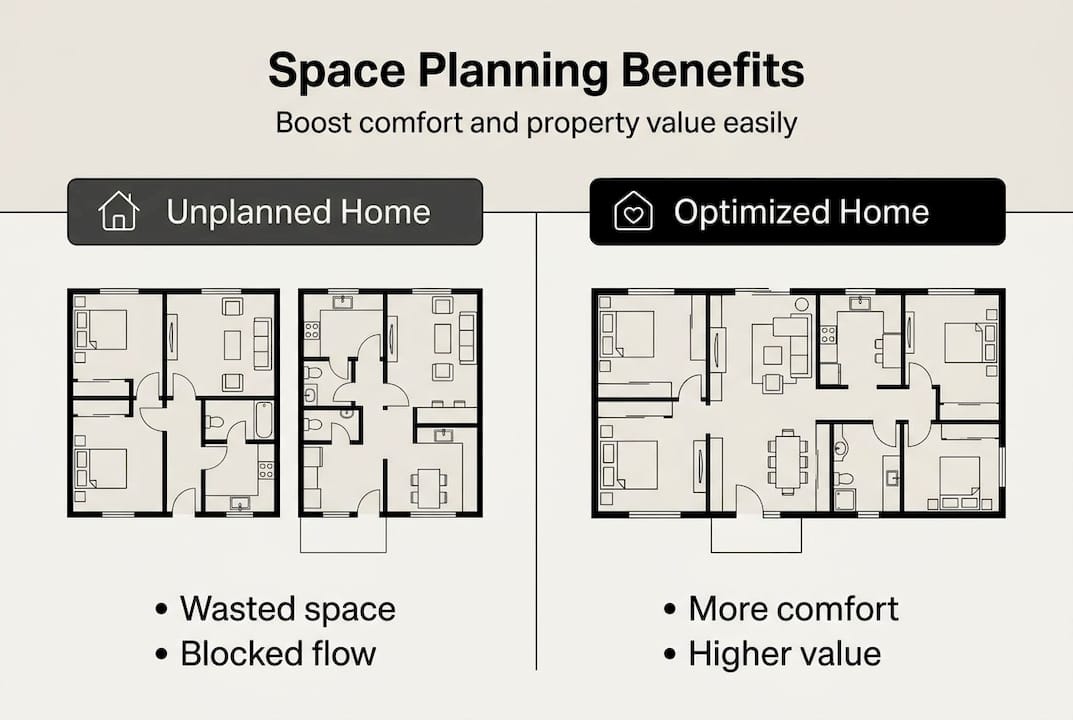
Here’s a quick look at how planned and unplanned spaces compare:
| Feature | Unplanned space | Planned space |
|---|---|---|
| Usable floor area | Often blocked or wasted | Maximized for daily use |
| Traffic flow | Awkward, frequent obstacles | Clear, intuitive pathways |
| Resale value | Average market rate | Up to 15% higher |
| Daily comfort | Frustrating, cluttered feel | Calm, organized, functional |
| Flexibility | Rigid, hard to adapt | Easy to reconfigure |
For homeowners, a smart layout means less frustration and more enjoyment every day. For renters, it means getting the most out of a space you can’t structurally change. Either way, the benefits of modern decor are amplified when the underlying layout actually works.
Key benefits worth highlighting:
- More usable square footage without any renovation
- Reduced visual clutter, which lowers stress
- Better natural light distribution when furniture isn’t blocking windows
- Improved social interaction and conversation flow
- Higher perceived value when selling or renting your home
Pro Tip: You don’t need to redesign your whole home to see results. Even repositioning one key piece of furniture, like moving a sofa away from the wall, can open up a room and improve flow immediately. Understanding how staging adds value uses the same logic on a larger scale.
How space planning works: A step-by-step guide
You’ve seen the benefits. Here’s how anyone can start planning their space with confidence.
Space planning doesn’t require expensive software or a design degree. It requires observation, measurement, and a willingness to think before you move anything. Follow these steps:
- Measure your space. Grab a tape measure and note the room dimensions, window placements, door swings, and any fixed elements like radiators or outlets. Sketch a rough floor plan on paper.
- List your activities. Write down everything you do in that room. Watch TV? Work from home? Host friends? Each activity needs its own zone and enough space to happen comfortably.
- Prioritize your needs. Rank those activities by importance. The primary function of the room gets the best real estate, usually the area with the most natural light or the most central location.
- Design your zones. Group related activities together and use furniture, rugs, or lighting to define each zone. This is the heart of living room setup workflow thinking.
- Plan your pathways. Make sure you can walk through the room easily. Aim for at least 36 inches of clearance in main paths and 18 to 24 inches around furniture.
- Select and place furniture. Choose pieces that fit the scale of the room. Oversized furniture in a small room kills flow. Undersized furniture in a large room looks lost.
- Add final touches. Lighting, rugs, and accessories reinforce the zones and add personality. This is where your modern home upgrade guide comes into play.
User-centered planning, where you design around how you actually live rather than how a room is supposed to look, leads to improved satisfaction and usability that you’ll notice every day. If you’re working with a home that has multiple climate zones or rooms with specific temperature needs, heat pump zoning tips can also inform how you arrange furniture around vents and airflow.
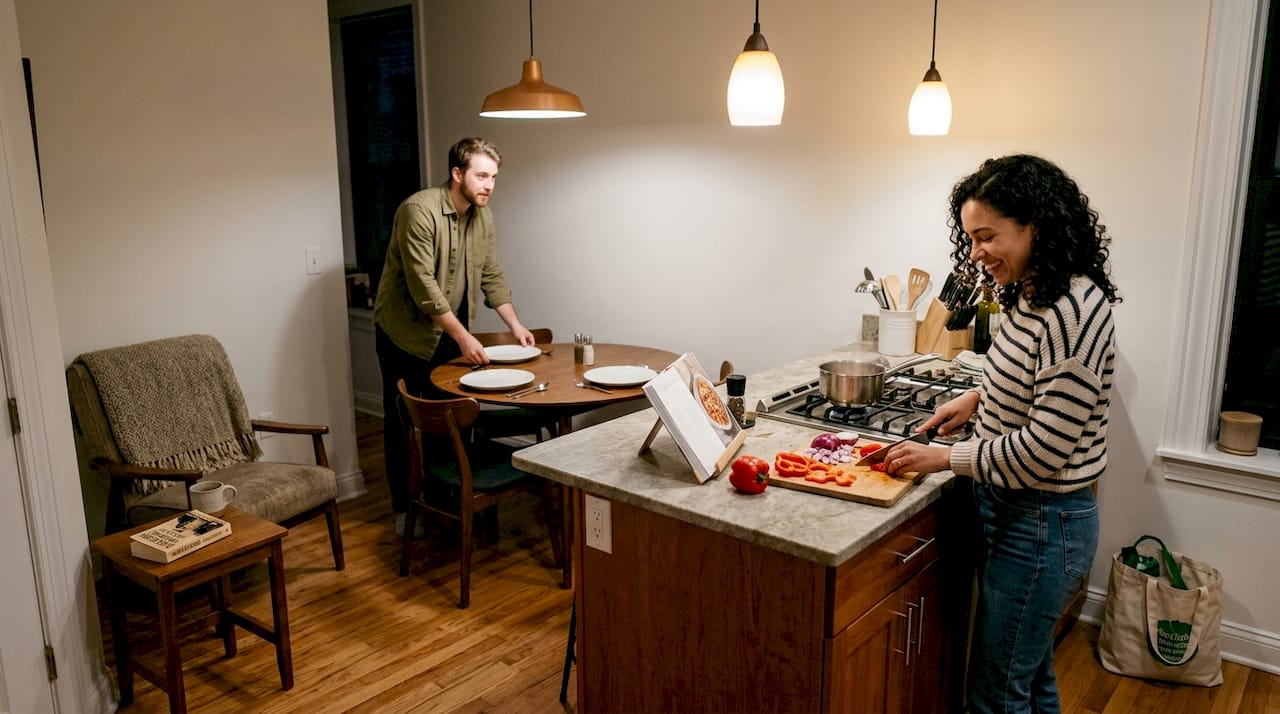
Pro Tip: Avoid placing furniture symmetrically just because it looks balanced on paper. Live in the room for a few days before committing to a final arrangement. Your actual movement patterns will reveal what works.
Maximizing small spaces: Creative strategies and common pitfalls
Now, let’s get practical. What if your space is limited or awkwardly shaped?
Small rooms and studio apartments are where space planning earns its keep. The difference between a cramped apartment and a comfortable one often comes down to a few smart decisions, not more square footage. Up to 30% better space utilization is achievable even in the tightest layouts when you apply the right strategies.
Creative strategies for small spaces:
- Use vertical space. Tall shelving units and wall-mounted storage draw the eye upward and free up floor area.
- Choose furniture with legs. Pieces that sit off the floor create a sense of openness and make rooms feel less heavy.
- Mirrors and light. Strategically placed mirrors bounce light and visually expand a room. Pair this with smart lighting tips for small spaces for maximum effect.
- Define zones with rugs. A well-placed rug anchors a seating area without adding visual clutter.
- Keep pathways clear. Even a single blocked pathway makes a small room feel suffocating.
Common pitfalls to avoid:
| Mistake | Why it hurts | Better approach |
|---|---|---|
| Oversized furniture | Blocks flow, overwhelms the room | Scale furniture to room size |
| Too many small items | Creates visual noise and clutter | Edit ruthlessly, keep only what you love |
| Furniture against every wall | Makes the center feel empty | Float furniture toward the center |
| Ignoring storage | Clutter accumulates fast | Build storage into the layout from the start |
Pro Tip: Multifunctional furniture is your best investment in a small space. A storage ottoman, a bed with drawers, or a coffee table that doubles as a desk can eliminate the need for extra pieces entirely. Start with decluttering for function before buying anything new.
A fresh take: Why most people get space planning backwards
Here’s the honest truth. Most homeowners start with furniture and work backwards to function. They fall in love with a sofa, buy it, bring it home, and then try to make the room work around it. That’s the wrong order, and it’s why so many living rooms feel off even after expensive purchases.
Real comfort starts with movement, sight lines, and function, in that order. Style comes after. A beautifully decorated room that’s hard to navigate is just a frustrating room with good taste.
The other mistake is planning for perfection instead of flexibility. Your needs will change. You’ll get a dog, start working from home, or want a reading corner you didn’t anticipate. The best layouts leave room to adapt. Don’t fill every inch. Optimizing living room layouts means leaving intentional breathing room, both physically and visually.
Our honest advice: try an unusual arrangement and live with it for two weeks before judging it. You’ll learn more about how you actually use your space in those two weeks than in any amount of planning on paper.
Ready to transform your space? Explore our solutions
Now that you understand the principles behind space planning, your next step is putting them into practice with the right pieces. A well-planned layout only reaches its full potential when the furniture and decor you choose actually fit the space and support how you live.
At New Way Ref, we’ve thoughtfully curated a selection of modern furniture and home accessories designed to work with your layout, not against it. From multifunctional storage pieces to stylish lighting that brightens any zone, our collection is built for real homes. Explore urban space transformation ideas to see how our products fit into a smarter, more functional home. Free shipping on orders over $50 makes it easy to get started today.
Frequently asked questions
What does a space planner do in a residential setting?
A space planner analyzes your home and recommends furniture layouts, zoning strategies, and design adjustments to make each room more functional and comfortable. With up to 30% better utilization possible, the impact is real and measurable.
How is space planning different from interior decorating?
Space planning focuses on how rooms work and flow, while decorating addresses colors, textures, and style. Space planning is foundational for effective home design, and the best results come from combining both disciplines.
Can good space planning really increase my home’s value?
Yes. A well-planned layout can add a 15% real estate premium compared to homes with unoptimized floor plans, making it one of the highest-return improvements you can make.
What’s the fastest way to optimize a small space?
Start by decluttering, then arrange your key furniture to support clear pathways and natural light. Up to 30% more usability is achievable in small homes just by rethinking layout and adding multifunctional pieces.
Recommended
- Home zoning guide: transform any space with smart layout – New Way Ref
- Why Optimize Living Room Layout for City Life – New Way Ref
- Home Decor Guide 2026: Transform Your Urban Space Easily – New Way Ref
- Master your living room setup workflow for style and function – New Way Ref
- Master the Marble Interior Design Workflow for Luxury Spaces – Marmorique