

TL;DR:
- Thoughtfully designed minimalist spaces reduce anxiety and enhance focus through reduced clutter.
- Minimalist decor emphasizes quality, purpose, and intentionality to create warm, personalized environments.
- Starting small with decluttering and purposeful decor helps transition into a functional, calm minimalist home.
Most people assume minimalist decor means bare walls, cold surfaces, and a home that feels more like a showroom than a place to live. That assumption is wrong. Research confirms that thoughtfully designed minimalist spaces actually reduce anxiety, sharpen focus, and create a sense of ease that cluttered rooms simply cannot match. The trick is knowing how to apply minimalist principles without stripping your home of personality. This guide walks you through what minimalist decor really means, why it works, and how to make it feel genuinely warm and yours.
Table of Contents
- What is minimalist decor and why does it appeal?
- The benefits of choosing minimalist decor
- Minimalist vs maximalist decor: Which suits you?
- Personalizing minimalist decor without losing warmth
- Our take: Why minimalist decor is powerful when personalized
- Ready to embrace minimalist decor? Find your essentials
- Frequently asked questions
Key Takeaways
| Point | Details |
|---|---|
| Boosts calm and focus | Minimalist decor reduces stress and helps you concentrate by cutting visual clutter. |
| Saves time and money | Fewer items mean easier cleaning and less spent on decor and maintenance. |
| Adds timeless style | Minimalism’s neutral palette and clean lines look fresh year after year. |
| Personal touch matters | Customizing your minimalist space with art, plants, and textiles prevents blandness. |
What is minimalist decor and why does it appeal?
Minimalist decor is a design approach built on three core ideas: keep only what serves a purpose, choose quality over quantity, and let each piece breathe. Clean lines, neutral color palettes, open floor space, and intentional furniture placement are its defining features. Nothing is there by accident. Every item earns its spot.
What separates minimalism from other styles is its discipline. A traditional room layers textures, patterns, and collections. A bohemian space celebrates abundance and eclecticism. Minimalism does the opposite. It edits ruthlessly, and that editing is exactly what makes it so calming. As research on spatial psychology shows, minimalism creates a calming environment by reducing visual and cognitive clutter, giving your brain less to process the moment you walk in the door.
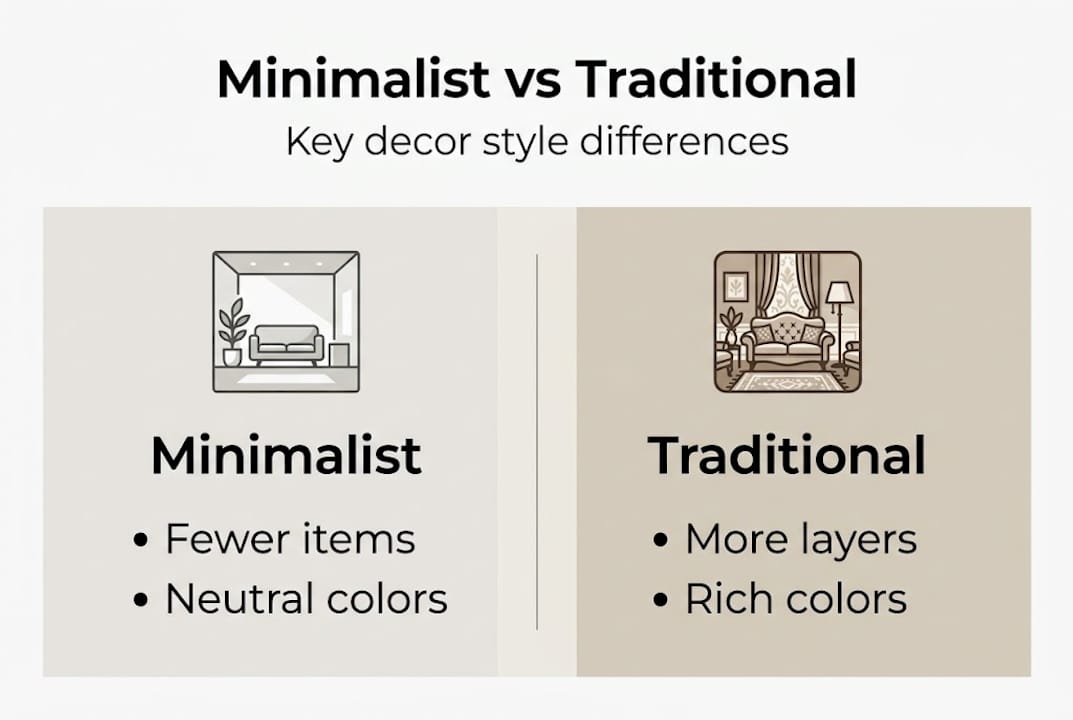
Here’s a quick comparison of how minimalism stacks up against other popular styles:
| Feature | Minimalist | Traditional | Bohemian | Industrial |
|---|---|---|---|---|
| Color palette | Neutral, muted | Rich, warm tones | Bold, mixed | Dark, raw tones |
| Furniture count | Few, functional | Many, ornate | Layered, eclectic | Sparse, utilitarian |
| Decor density | Low | High | Very high | Low to medium |
| Maintenance | Easy | Moderate to high | High | Easy |
| Mood | Calm, focused | Cozy, formal | Creative, vibrant | Edgy, casual |
If you want to explore modern home decor basics before committing to a full minimalist approach, that’s a smart starting point. You can also browse interior decor styles to see how minimalism compares side by side with other options.
Why does minimalism appeal to so many homeowners and renters right now? A few clear reasons stand out:
- Clarity: A room with less visual noise is easier to think in.
- Versatility: Neutral, simple pieces work across seasons and trends.
- Peace: Less stuff means fewer distractions and a quieter atmosphere.
- Adaptability: Minimalist spaces are easy to refresh with small, affordable updates.
- Accessibility: You don’t need a large home or a big budget to pull it off.
Minimalism isn’t a sacrifice. It’s a deliberate choice to surround yourself only with what adds value.
The benefits of choosing minimalist decor
Once you understand what minimalism is, the practical advantages become obvious. This isn’t just an aesthetic preference. It’s a lifestyle choice with real, measurable payoffs.
Here are the most immediate benefits you’ll notice:
- Less cleaning time: Fewer surfaces and objects mean faster tidying and dusting.
- More usable space: Open layouts make even small rooms feel larger and more functional.
- Lower costs: Buying fewer, better pieces saves money over time compared to constant trend-chasing.
- Easier organization: When you own less, finding what you need takes seconds, not minutes.
The psychological gains are just as significant. Minimalism saves time and money on maintenance and enhances a spacious feel, which directly supports a more relaxed daily routine. When your home is easier to manage, you spend less mental energy on it and more on the things that actually matter to you.
There are also longer-term advantages worth noting. Minimalist design tends to be timeless. A well-chosen sofa or coffee table in a neutral tone won’t look dated in five years the way a trend-driven piece might. That timelessness is also sustainable: buying less and buying better reduces waste. And when it’s time to move, a minimalist home is far easier to pack and transition.
Exploring modern decor benefits can give you a clearer picture of how these principles translate into real home upgrades. If you’re working with limited square footage, furniture choices for small spaces can help you select pieces that maximize both style and function.
Pro Tip: Don’t try to overhaul your entire home at once. Start by decluttering one small room, like a bathroom or entryway, and live with the result for a week. The immediate sense of calm and ease is usually enough motivation to keep going.
Minimalist vs maximalist decor: Which suits you?
Minimalism isn’t the right fit for everyone, and that’s completely fine. Understanding the contrast between minimalist and maximalist design helps you make a more confident choice.
| Dimension | Minimalist | Maximalist |
|---|---|---|
| Visual density | Low | High |
| Color use | Neutral, restrained | Bold, layered |
| Emotional tone | Calm, focused | Stimulating, expressive |
| Maintenance level | Low | High |
| Personalization style | Curated, intentional | Abundant, expressive |
| Best for | Focus, relaxation | Creativity, self-expression |
Research on design psychology confirms that maximalism boosts creativity and warmth but increases cognitive load, while minimalism feels calmer but can be less stimulating for some personality types. Neither is objectively better. They serve different needs.
“The best interior style is the one that supports how you actually live, not the one that photographs best.” — Interior design principle shared widely among professional decorators.
If you’re unsure which direction fits your lifestyle, work through this quick checklist:
- Do you feel more relaxed in a tidy, open room or a cozy, layered one?
- Do you prefer spending time decorating and rearranging, or would you rather set it and forget it?
- Is your home primarily a place to rest and recharge, or a creative and social hub?
- Do you own many meaningful objects you want to display, or do you prefer a few carefully chosen pieces?
- How much time per week are you willing to spend on cleaning and organizing?
If your answers lean toward calm, efficiency, and simplicity, minimalism is likely your match. For more context on modern home decor approaches, you’ll find helpful guidance on how different styles translate into real rooms. Getting lighting for small spaces right also plays a big role in making a minimalist space feel warm rather than cold.
Personalizing minimalist decor without losing warmth
The biggest fear people have about going minimalist is that their home will feel sterile or impersonal. This is the most common misconception, and it’s completely avoidable. Studies recommend personalization to prevent minimalist spaces from feeling bland, and experienced designers agree: warmth comes from how you choose your pieces, not how many you have.
Here are the most effective ways to add personality without adding clutter:
- Plants: A single large plant or a small cluster of greenery adds life and color naturally.
- Textured throws and cushions: Soft textiles in linen, wool, or cotton create tactile warmth without visual noise.
- Curated art: One or two meaningful pieces on a wall make more impact than a gallery wall of random prints.
- Accent lighting: A warm-toned lamp or pendant light shifts the mood of a room dramatically.
- Curated keepsakes: One shelf with a few objects that genuinely matter to you tells your story without cluttering the space.
The key word here is intentional. Every item you choose should either serve a function, bring you genuine joy, or do both. Designer-approved layering means combining different textures at different heights. A smooth concrete coffee table paired with a soft rug and a linen throw creates visual interest without adding more objects.
For more ideas on personalizing your home while keeping it clean and stylish, there’s plenty of inspiration worth exploring. If you want a structured approach to the whole process, a step-by-step decor guide can help you move from concept to finished room with confidence.
Pro Tip: Rotate two or three decorative items seasonally. Swap a summer-toned vase for an earthy fall piece, or change out a lightweight throw for a heavier knit in winter. Your space stays fresh without accumulating more stuff.
Our take: Why minimalist decor is powerful when personalized
After years of helping customers find furniture and decor that genuinely fits their lives, we’ve noticed a clear pattern. The clients who feel most satisfied with their minimalist spaces are not the ones who followed the rules most strictly. They’re the ones who bent the rules thoughtfully.
Minimalism works best when it reflects your actual taste and lifestyle, not a rigid design formula. A home that looks like a catalog page but feels cold and unwelcoming has missed the point entirely. The real goal is a space that feels easy, intentional, and unmistakably yours.
Personalization prevents blandness and is what separates a truly satisfying minimalist home from one that just looks good in photos. The clients who personalize for comfort while keeping things simple consistently report the highest long-term satisfaction. Minimalism, at its best, is about making space for what matters most: function, comfort, and genuine joy.
Ready to embrace minimalist decor? Find your essentials
Inspired to give minimalist decor a try? The best place to start is with a few thoughtfully chosen pieces that do double duty: they look great and work hard. You don’t need to overhaul everything at once.
Browse our minimalist decor essentials to find curated furniture and accessories that fit a clean, modern aesthetic without sacrificing warmth or personality. From sleek coffee tables to functional storage solutions, every product is selected to help you build a space you’ll love living in. For more style direction, check out our inspiring home decor ideas to see how real rooms come together with minimal effort and maximum impact.
Frequently asked questions
Does minimalist decor really help reduce stress?
Yes. Minimalist environments reduce anxiety and increase focus for most people by lowering the amount of visual information your brain has to process at once.
Will a minimalist home feel empty or bland?
Not if you approach it with intention. Adding warm textures, a few meaningful objects, and accent lighting keeps the space inviting, and personalization prevents blandness according to design researchers.
Is minimalist decor suitable for families with kids?
Absolutely. Minimalism saves time on maintenance and creates more open space for movement, making it a practical and family-friendly approach when you choose durable, functional pieces.
How do I start transitioning to minimalist decor?
Begin with one area, clear out anything that doesn’t serve a purpose or bring you joy, then reduce visual clutter by limiting decorative items to only those with real meaning or function.
Recommended
- Top home decor ideas for young professionals: modern style – New Way Ref
- Modern Home Decor: Defining Style for Small Spaces – New Way Ref
- Benefits of modern decor: stylish and functional homes – New Way Ref
- Explore interior decor styles: find your perfect home aesthetic – New Way Ref
- Perdele Voal – Alegerea Perfectă pentru un Decor Elegant și Luminos - Mastel