

TL;DR:
- Accent lighting is designed to highlight specific features and create visual contrast.
- Proper placement and layered design enhance room ambiance and perceived space.
- Using dimmers and consistent color temperatures ensures flexible, effective accent lighting.
Accent Lighting Explained: How to Transform Your Home’s Ambiance
Most people think of lighting as a simple on-off decision. You flip a switch, the room brightens, and you move on. But that thinking leaves a lot of visual potential on the table. Accent lighting is a specific layer of home illumination designed to draw your eye toward something worth noticing, whether that’s a painting above your sofa, an exposed brick wall, or a collection of shelves you’ve spent years curating. When used correctly, it shifts a room from feeling functional to feeling intentional. This article covers what accent lighting is, how it compares to other types, which fixtures work best in which spaces, and how to design with it confidently.
Table of Contents
- What is accent lighting?
- Types of accent lighting and where to use them
- Accent lighting vs. other lighting styles: Key differences
- How to design with accent lighting: Practical tips
- Why most homes fall short with accent lighting: A fresh perspective
- Upgrade your space with accent lighting solutions
- Frequently asked questions
Key Takeaways
| Point | Details |
|---|---|
| Accent lighting purpose | Accent lighting highlights design elements and enhances atmosphere. |
| Types and uses | Wall sconces, spotlights, and LED strips are ideal for art, architecture, and shelves. |
| Design strategies | Layering, focal points, and smart controls help achieve professional results. |
| Common pitfalls | Avoid over-lighting and mismatched tones to keep your look cohesive. |
What is accent lighting?
Accent lighting is a focused form of illumination that directs light toward a specific object, area, or architectural feature rather than lighting an entire room evenly. The goal is contrast. By making one spot brighter than its surroundings, you naturally pull attention there. Think of it as a spotlight in a theater production. The star of the scene is clearly lit, and everything else fades slightly into the background.
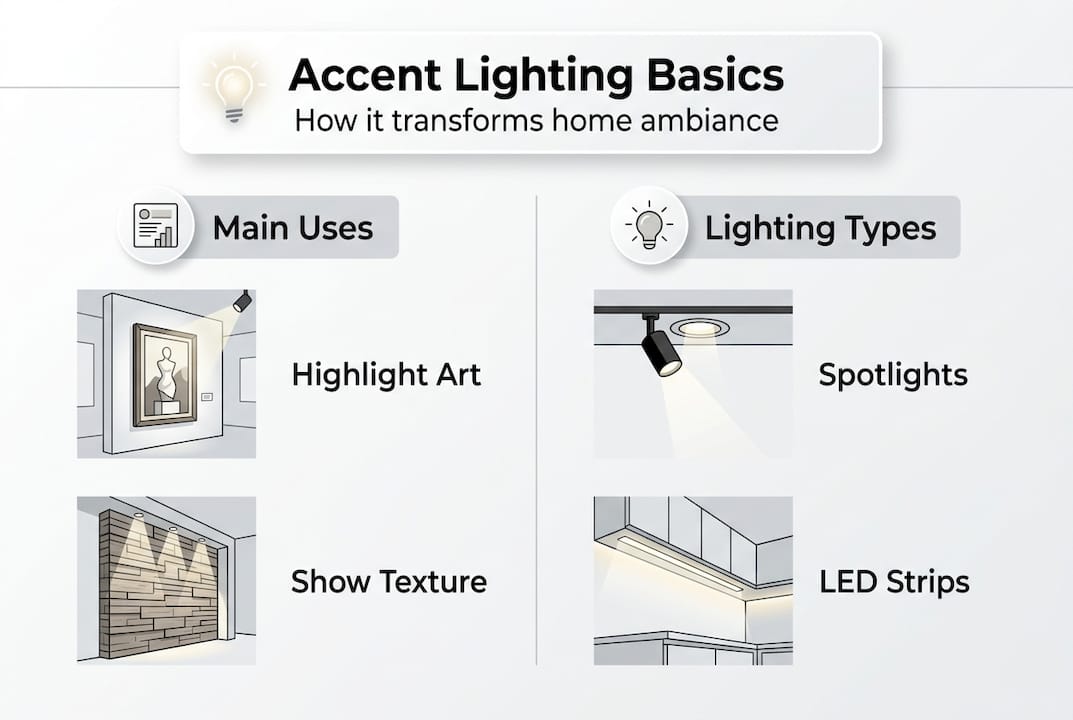
To understand accent lighting clearly, it helps to see how it differs from the other two main lighting categories in home design.
| Lighting Type | Main Purpose | Common Fixtures | Beam Focus |
|---|---|---|---|
| Ambient | General room illumination | Ceiling fixtures, chandeliers | Broad, diffused |
| Task | Support specific activities | Desk lamps, under-cabinet lights | Narrow, functional |
| Accent | Highlight features or objects | Track lights, spotlights, LED strips | Tight, directional |
As the table shows, ambient lighting vs accent lighting is a significant distinction. Ambient light fills a space with overall brightness. Accent light carves out moments of visual interest within that space. Task lighting focuses on helping you see what you’re doing, like reading or chopping vegetables. Accent lighting, by contrast, is all about aesthetics and atmosphere.
The most common forms of accent lighting include:
- Track lights: Adjustable heads mounted on a ceiling track, pointed toward specific objects or walls
- Recessed spotlights: Built into the ceiling with a narrow beam angle, ideal for artwork or shelves
- Wall sconces: Mounted on vertical surfaces to create soft upward or downward washes of light
- LED strip lights: Flexible and low-profile, excellent for under-cabinet glow or shelf backlighting
- Picture lights: Small fixtures mounted directly above or below framed artwork
- Uplights: Floor-level fixtures that cast light upward to emphasize texture or height
The design rule most professionals follow is the 3:1 ratio: accent lighting should be roughly three times brighter than the ambient lighting in the same area. This creates enough contrast to draw the eye without creating harsh, uncomfortable glare. The difference is visible, intentional, and effective.
Accent lighting is most impactful when placed near surfaces with texture, color, or depth. A flat, painted wall will reflect light evenly. But a stone fireplace, wood-paneled wall, or tiled backsplash will come alive under directional light because the texture creates subtle shadows that add dimension.
Types of accent lighting and where to use them
Understanding the definition is just the beginning. The real power comes from knowing which types of accent lights work best in specific spaces. Each room in your home has unique opportunities, and choosing the right fixture for the right location makes a significant difference in the final result.
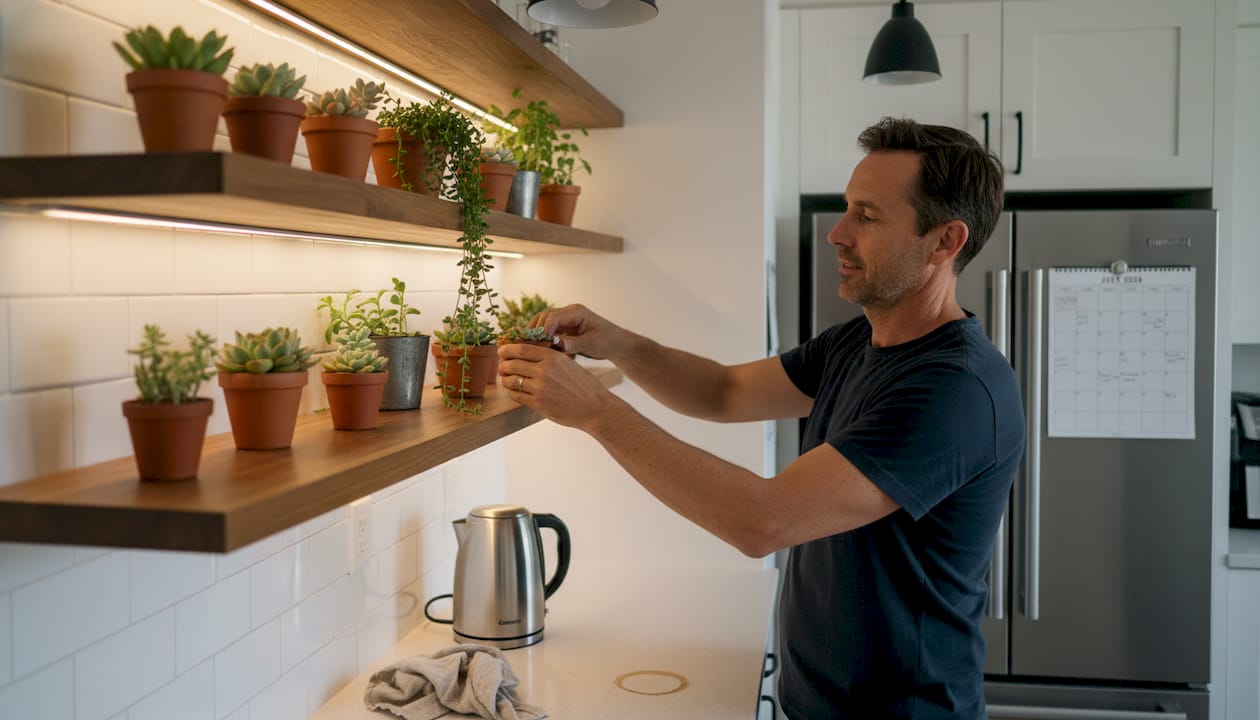
Here is a room-by-room overview of the most effective accent lighting types and their ideal applications:
| Room | Best Accent Type | Ideal Placement | Effect Created |
|---|---|---|---|
| Living room | Track lights, wall sconces | Above artwork, on feature walls | Drama, focal point |
| Kitchen | LED strips, recessed spots | Under cabinets, inside open shelving | Warmth, functionality |
| Bedroom | Picture lights, LED strips | Above headboard, behind furniture | Relaxation, coziness |
| Bathroom | Backlit mirrors, wall sconces | Around mirror, near tub | Spa-like ambiance |
| Outdoor | Uplights, spotlights | Trees, pathways, facades | Security, curb appeal |
Let’s go through the most versatile types in more detail:
- Wall sconces: These are ideal for flanking a fireplace, framing a bed, or lining a hallway. They add a warm, contained wash of light that works beautifully alongside ambient sources.
- Picture lights: Mounted just above a framed piece, these direct a focused beam directly onto the artwork. They work best with warm white bulbs (2700K to 3000K) to bring out rich colors.
- Under-cabinet lighting: Common in kitchens, LED strips beneath upper cabinets illuminate countertops while creating a floating, layered look. They also reduce eye strain during food prep.
- Uplighting: Floor-level fixtures that push light upward work surprisingly well near tall plants, columns, or fireplace mantels. The upward direction creates a dramatic, almost theatrical glow.
- Colored LEDs: Smart LED strips with color-changing capability let you shift the entire mood of a room with a single app command. Blues and purples feel modern and energetic. Ambers and warm whites feel cozy and settled.
When you layer accent pieces for decor alongside your accent lighting, the visual story in a room becomes much stronger. A sculptural vase on a lit shelf, for example, becomes a genuine design moment rather than just a decorative object sitting in the corner.
The broader relationship between lighting for home style and overall interior design is well established. Lighting choices directly influence how colors appear, how spacious a room feels, and how cohesive the overall design reads to anyone entering the space.
Pro Tip: Install dimmer switches on all accent lighting circuits. This single upgrade gives you the ability to dial mood up or down depending on the time of day, the activity, or the occasion. Pair dimmers with smart bulbs, and you can adjust color temperature too, shifting from a bright, cool 4000K for focused activity to a warm 2700K for a relaxed evening atmosphere.
Accent lighting vs. other lighting styles: Key differences
With a variety of options available, it’s crucial to understand how accent lighting fits into the bigger picture of interior lighting. Many homeowners make the mistake of using only one type of lighting throughout their home. The result is a space that feels flat or one-dimensional, regardless of how stylish the furniture and decor may be.
Here is a simplified comparison of the four main lighting styles:
| Style | Primary Goal | Emotional Effect | Best Used For |
|---|---|---|---|
| Ambient | Fill space with light | Neutral, comfortable | Whole-room base layer |
| Task | Aid visibility for activities | Focused, productive | Work surfaces, reading areas |
| Accent | Highlight features | Dramatic, atmospheric | Art, architecture, focal points |
| Statement | Serve as visual centerpiece | Bold, expressive | Dining rooms, entryways |
Accent lighting works best as a complement to ambient lighting, not a replacement. Imagine your living room with only recessed spotlights aimed at the walls. Certain surfaces would be bright, but the middle of the room would feel dim and awkward. The solution is layering: ambient light handles the base, and accent light adds the interest.
Well-executed lighting design layers at least three types of light sources in any given room. Spaces that rely on a single overhead fixture miss out on depth, warmth, and visual interest that make a house feel like a home.
Some scenarios where accent lighting clearly outperforms other options:
- Displaying art collections: A track light system with adjustable heads lets you reposition beams as your collection changes.
- Emphasizing architecture: Built-in bookcases, crown molding, and exposed beams all benefit from a directed wash of light.
- Creating evening ambiance: When ambient lights are dimmed for a dinner party or quiet night in, accent lights carry the visual weight of the room.
The connection between lighting and home mood is one of the most consistent findings in interior design research. Brighter, cooler light tends to increase alertness. Softer, warmer, directional light shifts the environment toward calm and relaxation.
If you are considering a more dramatic approach, reviewing a statement lighting guide can help you understand where a bold fixture might work alongside your accent lights rather than competing with them.
How to design with accent lighting: Practical tips
Knowing the differences is helpful, but the real fun begins when you put ideas into practice with effective design techniques. Many people feel uncertain about where to start. A simple three-step framework makes the process much more approachable.
Step 1: Identify your focal point. Every room should have at least one visual anchor. This might be a fireplace, a piece of large-scale artwork, a textured feature wall, or even a statement piece of furniture. Once you know what deserves attention, you know where your accent light should point.
Step 2: Layer your light sources. Start with your ambient base, then add task lighting where needed, and finally position accent lights to bring drama and dimension. Good lighting arrangement tips emphasize that no single fixture should carry the full burden of a room’s illumination.
Step 3: Control the output. Fixtures without controls are inflexible. Install dimmers on your accent lights so you can adjust the intensity to match the activity or time of day. Smart lighting systems take this further by allowing scene-based presets, so you can switch between “movie night,” “dinner party,” and “morning routine” with a single tap.
Here are common mistakes to avoid:
- Over-lighting: More accent lights do not always mean more impact. Too many competing spotlights create visual noise and eliminate the contrast that makes accent lighting effective.
- Clashing color temperatures: Mixing a 2700K warm strip light with a 5000K cool spotlight in the same room creates an unpleasant, incoherent look. Stick to one color temperature family per space.
- Ignoring beam angle: A wide 60-degree beam washes a large area softly. A narrow 15-degree beam creates a tight, dramatic spot. Choosing the wrong angle for the object you’re highlighting is a common oversight.
- Skipping mounting height: Wall sconces and picture lights placed too high or too low lose their visual effectiveness. A general rule is to mount picture lights 6 to 8 inches above the top of the frame.
Following modern lighting trends 2026 also helps you make choices that feel current without being trendy to the point of dating quickly.
Pro Tip: In a small room, place accent lights to graze along the walls rather than pointing inward. This technique visually pushes the walls outward and makes the space feel larger than it actually is. When selecting lighting fixtures, look for slim-profile options that don’t visually crowd a compact room.
Why most homes fall short with accent lighting: A fresh perspective
Here is something worth thinking about: most homeowners spend thousands on furniture and zero hours thinking about lighting. They install a central overhead fixture, maybe add a floor lamp, and call it done. This is exactly why so many beautifully furnished rooms still feel flat or uninspiring.
The truth is that accent lighting’s biggest impact is psychological. You feel the difference more than you consciously see it. Walk into a room with thoughtfully placed accent lights, and you instinctively feel that the space is more refined, more considered. You may not notice the track light aimed at the bookcase, but you notice that the bookcase looks special.
The role of lighting’s role in home design is often described in terms of function, but the emotional impact is just as significant. Accent lighting signals that someone paid attention to this space. That signal reads as luxury, even when the fixtures themselves are affordable.
The most stylish homes we see don’t follow trends blindly. They experiment. They try a strip light behind a mirror and see how it feels. They move an uplight from one corner to another until the shadow pattern feels right. Personalized, iterative design beats trend-following every time. Give yourself permission to experiment, adjust, and enjoy the process.
Upgrade your space with accent lighting solutions
You now have a clear picture of what accent lighting is, why it works, and how to use it effectively in your home. The next step is finding fixtures that match your style and your space.
At newwayref.store, you’ll find a thoughtfully curated selection of modern accent lighting options, from sleek LED strips and adjustable track systems to stylish wall sconces and picture lights. Whether you’re refreshing a single room or planning a whole-home lighting upgrade, the collection is designed to make the process simple and inspiring. Browse by room, fixture type, or style, and take the first step toward a home that truly reflects your personality. Free shipping on orders over $50 makes it even easier to get started.
Frequently asked questions
What is the main purpose of accent lighting?
Accent lighting’s main purpose is to highlight specific areas or features in a room and create a particular mood or ambiance. It draws the eye intentionally rather than illuminating a space evenly.
Where should accent lighting be placed in the home?
Ideal placements include above artwork, inside shelves or cabinets, under counters, and near architectural details or textured walls. The goal is to place it wherever you want to create a visual focal point.
How is accent lighting different from ambient lighting?
Ambient lighting provides general, even illumination across a room, while accent lighting focuses on drawing attention to specific spots or creating dramatic visual contrast. They work best when used together as complementary layers.
Can accent lighting make a small room look bigger?
Yes, when properly placed along walls or behind furniture, accent lighting can create a sense of depth and visual expansion, making a compact space feel more open and dynamic.