

TL;DR:
- Effective bedroom organization begins with removing unnecessary items before investing in storage solutions. Using multifunctional furniture, maximizing vertical space, and establishing daily reset habits create a calm, clutter-free environment. Consistent decluttering and strategic layout choices ensure long-term tidiness and restful sleep.
Bedroom organization is defined as assigning every item in your room a specific, permanent home so clutter never accumulates. The most effective bedroom organization ideas combine that principle with multifunctional furniture and smart layout choices to maximize space without adding visual noise. Martha Stewart’s organizing framework, Architectural Digest’s organizer-approved strategies, and insights from Better Homes & Gardens all point to the same foundation: edit first, then store. Whether you have a sprawling master suite or a compact studio corner, these practical steps will help you build a system that actually holds.
1. start with the best bedroom organization ideas: edit before you store
The single biggest mistake people make is buying storage bins before removing what they do not need. Editing out clutter before purchasing any storage product is the non-negotiable first step. Storage solutions only work when the volume of items is manageable.
Use a zone-by-zone approach. Tackle surfaces first, then drawers, then the closet. This order prevents you from shuffling clutter from one zone to another.
The Four-Box Method works well here. Label four boxes: Keep, Donate, Trash, and Relocate. Every item you touch goes into one box. Nothing gets set aside for “later.”
Apply the “one in, one out” rule after the initial edit. Every new item that enters the bedroom requires removing one existing item. This single habit prevents the slow drift back to clutter.
Pro Tip: Set a calendar reminder every three months for a 20-minute seasonal check-in. Seasonal items like extra blankets or off-season clothes are the most common sources of bedroom clutter buildup.
2. use multifunctional and space-saving furniture
Space-saving bedroom furniture is the most direct way to add storage without increasing your room’s footprint. The goal is furniture that serves two purposes at once.
- Bed frames with built-in drawers replace the need for a separate dresser in small rooms. Brands like IKEA’s MALM and Zinus offer platform beds with under-frame drawer systems.
- Storage benches at the foot of the bed hold extra linens, off-season clothing, or shoes while providing seating.
- Murphy beds and flip-down desks convert a bedroom into a dual-purpose space, freeing the entire floor during the day.
- Nightstands with drawers plus open shelving keep bedside essentials accessible without surface clutter.
- Narrow console tables double as compact vanities when paired with a wall-mounted mirror, saving the floor space a full vanity would require.
Designers favor converting under-bed space and built-ins over adding freestanding furniture. That preference reflects a core truth: more furniture rarely solves a storage problem. It usually creates a new one.
Choose furniture scaled to your room. Oversized pieces create visual bulk and reduce walking clearance, which makes even a tidy room feel cramped.
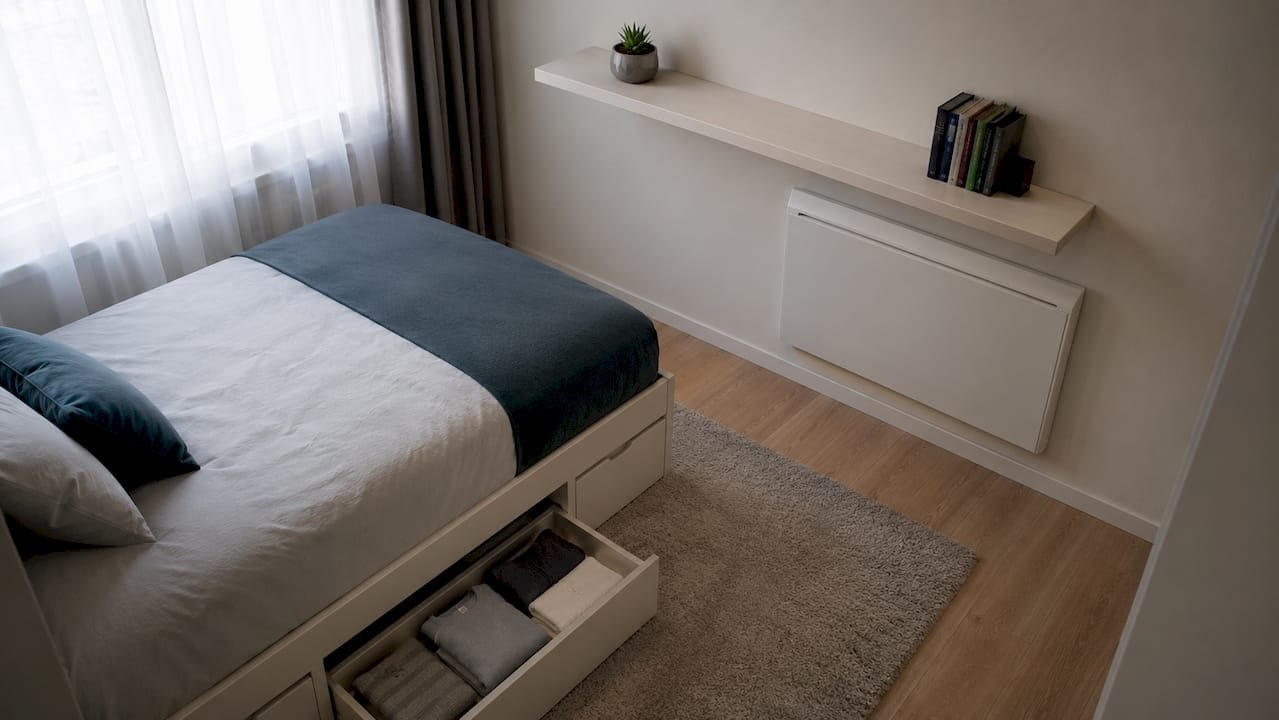
Pro Tip: Measure your room’s clearance before ordering any furniture. Standard bedroom walking paths require at least 24 inches between pieces. Tight clearances make the room feel smaller and harder to keep tidy.
Explore space-saving furniture options that combine function and style for small bedrooms.
3. maximize vertical space with wall-mounted storage
Vertical storage is the most underused resource in most bedrooms. Most people fill the floor and ignore everything above eye level.
Wall-mounted cubbies, floating shelves, and narrow built-in bookcases move storage off the floor and onto walls. That shift directly reduces visual clutter at ground level, which makes a room feel larger.
| Storage Type | Best Use | Space Saved |
|---|---|---|
| Floating shelves | Books, decor, small bins | Floor and dresser top |
| Wall-mounted cubbies | Folded clothes, accessories | Closet and drawer space |
| Floor-to-ceiling wardrobe | Full clothing storage | Replaces multiple dressers |
| Pegboard panels | Jewelry, bags, accessories | Drawer and surface space |
| Over-door organizers | Shoes, small items | Closet floor space |
Combining vertical storage with multifunctional furniture is the most reliable formula for small bedroom storage solutions. The two strategies together reduce floor clutter more than either approach alone.
Integrate lighting with storage where possible. Plug-in sconces mounted beside floating shelves free up nightstand space while adding warm ambient light. That combination solves two problems with one installation.
Floor-to-ceiling wardrobes or built-ins dramatically increase storage capacity compared to standard-height furniture. The space between the top of a dresser and the ceiling is typically wasted. Built-ins reclaim it.
4. unlock under-bed storage the right way
Under-bed storage is one of the highest-value zones in any bedroom, yet most people either ignore it or fill it with forgotten items. The key is sizing containers to your bed’s actual clearance.
Under-bed storage containers should match the exact clearance height of your bed frame. Containers that are too tall will not slide in and out easily, which means you will stop using them within weeks.
Organize stored items by frequency of use. Items you access weekly, like extra pillows or gym gear, go in slide-out bins at the front. Seasonal items like holiday decorations or heavy blankets go in flat containers pushed toward the back.
Vacuum storage bags work well for bulky items like comforters and winter coats. They compress volume significantly and keep contents dust-free. Pair them with labeled bins so you always know what is where without pulling everything out.
Bed risers are a practical option if your current frame sits too low. They add 3–6 inches of clearance and cost very little compared to buying a new bed frame.
5. design your bedroom layout for calm and function
Bedroom layout ideas directly affect how easy the room is to keep organized. A well-placed bed and clear traffic paths create natural routines that reduce surface clutter.
Proper furniture layout creates natural routines that reduce cluttering surfaces and promote tidy habits. When furniture placement makes sense, putting things away becomes the path of least resistance.
Key layout principles to follow:
- Place the bed against a solid wall in the “command position” with clear access on both sides. This placement supports restful sleep and keeps both nightstands functional.
- Keep nightstand surfaces to a strict limit of three items: a lamp, one book or device, and one personal item. Every additional item increases the visual noise that disrupts sleep.
- Avoid using dressers as catch-all surfaces. Designate a tray or small dish for items like keys or jewelry so they have a defined home rather than spreading across the top.
- Position your most-used storage closest to where you use those items. Clothes storage near the closet, reading materials near the bed, and work items outside the bedroom entirely.
“Treat your bedroom as an operating system, not a storage unit. Every item needs a designated place, and the layout should make returning items to those places easier than leaving them out.” — Martha Stewart Living
Lighting temperature also affects how organized a room feels. Warm bulbs at 2700K or lower reduce visual overstimulation and make a tidy room feel genuinely restful rather than just clean.
6. build a creative closet organization system
Creative closet organization turns the most chaotic storage zone in most bedrooms into a functional system. Most closets fail because they rely on a single hanging rod and a shelf, which wastes the majority of available space.
Double-hang rods immediately double hanging capacity for shorter items like shirts, jackets, and folded pants. Install a second rod at mid-height below the original. The space below a standard single rod is almost always wasted.
Shelf dividers keep folded stacks from toppling and mixing. They cost very little and prevent the common problem of a neatly folded pile collapsing into a jumbled mess within days.
Clear bins with labels on closet shelves make retrieval fast. You see the contents at a glance and return items to the correct bin without thinking. That reduction in decision points is what keeps the system working long-term.
For custom closet systems, modular components from brands like IKEA’s PAX system or The Container Store’s Elfa line allow you to configure shelving, drawers, and hanging sections to your exact space. Both systems are adjustable, so the layout can change as your needs do.
Shoe storage belongs inside the closet, not on the bedroom floor. Over-door shoe organizers or stacked clear shoe boxes keep footwear visible and off the floor, which makes the entire room feel cleaner.
7. adopt habits that keep your bedroom organized long-term
Sustainable bedroom organization depends more on daily habits than on storage products. A well-designed system falls apart without consistent maintenance.
- Run a 5-minute nightly reset. Return every item to its designated home before bed. This single habit prevents the slow accumulation that turns a tidy room into a cluttered one within a week.
- Do a monthly surface audit. Check nightstands, dressers, and shelves for items that have drifted from their homes. Relocate them immediately.
- Schedule seasonal decluttering. Zone-by-zone decluttering and regular scheduled resets keep clutter from accumulating again. Twice a year is the minimum for most households.
- Label everything. Labels remove the decision of where something belongs. When the label is there, the choice is made for you.
- Audit new items before they enter the room. Apply the “one in, one out” rule consistently. Do not wait for clutter to build before editing.
Organized clutter, where excess is merely relocated rather than removed, reduces the effectiveness of any storage system. The goal is fewer items in better places, not more containers holding the same volume of stuff.
Pro Tip: Set a recurring phone reminder every Sunday evening for your 5-minute reset. Pairing the habit with an existing routine, like brushing your teeth, makes it automatic within two to three weeks.
For a broader look at home storage strategies that apply beyond the bedroom, Newwayref’s resource library covers every room in the house.
Key takeaways
The most effective bedroom organization combines editing possessions first, using multifunctional furniture second, and building daily reset habits third.
| Point | Details |
|---|---|
| Edit before you store | Remove unused items before buying any storage product to avoid organized clutter. |
| Use multifunctional furniture | Bed frames with drawers and storage benches add capacity without increasing floor footprint. |
| Go vertical | Floating shelves and floor-to-ceiling wardrobes free floor space and increase total storage. |
| Size under-bed containers correctly | Match bin height to bed clearance so storage stays accessible and actually gets used. |
| Build nightly reset habits | A 5-minute reset each evening prevents clutter from accumulating between deep cleans. |
What i’ve learned from organizing bedrooms that actually stay tidy
Most bedroom organization advice focuses on products. Buy this bin, install that shelf, get a new dresser. After years of watching people set up beautiful systems that collapse within a month, I am convinced the products are the last 20% of the solution.
The first 80% is deciding what you actually need in the room. Decision fatigue is real. When a bedroom holds too many items, every surface becomes a landing zone because the brain cannot process where things belong quickly enough. Structured zones and labeled storage remove that friction. The room stays tidy not because of willpower but because the system makes tidiness easier than clutter.
The layout matters more than most people expect. A bed placed in the command position with clear paths on both sides genuinely changes how you interact with the space. You stop piling things on one nightstand because both sides are equally accessible.
The pitfall I see most often is confusing a beautiful organization project with a finished system. Reorganizing feels productive. But if you have not removed items, you have only relocated them. Real organization reduces volume first, then contains what remains.
Tailor every idea here to your actual lifestyle. If you read in bed every night, your nightstand system matters more than your closet. If you work from home, keeping work items out of the bedroom entirely will do more for your sleep than any storage product.
— Enn
Transform your bedroom with Newwayref
Newwayref carries a thoughtfully curated selection of storage solutions and modern furniture designed to make your bedroom work harder for you. From drawer organizers and storage benches to space-saving furniture that doubles as hidden storage, every product is chosen for both function and style. If you are ready to move from a cluttered room to a calm, organized space, browse the full collection at Newwayref’s home store. Free shipping is available on orders over $50, so you can start building your system today without the extra cost.
FAQ
What is the first step to organizing a bedroom?
Edit your belongings before buying any storage products. Removing unused, expired, or duplicate items reduces the volume you need to store, which makes every other organization step more effective.
How do i maximize space in a small bedroom?
Combine vertical storage like floating shelves and floor-to-ceiling wardrobes with multifunctional furniture like beds with built-in drawers. Using vertical space and dual-purpose furniture respects limited floor area and reduces visual clutter.
How often should i declutter my bedroom?
Run a 5-minute nightly reset daily and a full zone-by-zone declutter at least twice a year. Seasonal check-ins prevent gradual clutter buildup and keep your storage system working as intended.
What is the best way to organize a small closet?
Install a double-hang rod for shorter items, add shelf dividers for folded stacks, and use clear labeled bins on upper shelves. For a more complete system, modular options like IKEA’s PAX or The Container Store’s Elfa line allow full customization to your space.
Does bedroom layout affect sleep quality?
Yes. Cluttered surfaces and harsh lighting contribute to sleep disturbances. Placing the bed in the command position, limiting nightstand items, and using warm bulbs at 2700K or lower all reduce visual overstimulation and support restful sleep.