

You don’t need a beachfront address to bring the coast home. Coastal decor is one of the most adaptable interior styles around, and it works just as well in a city apartment as it does in a seaside cottage. The secret is in the details: light colors, natural textures, and an overall sense of ease. According to coastal decor basics, this style is inspired by seaside environments and emphasizes light, airiness, natural materials, and relaxed atmospheres. Once you understand the core principles, you can apply them to any room in your home, no ocean view required.
Table of Contents
- What is coastal decor? Defining a calm and airy style
- Core elements: Colors, textures, and natural light
- Coastal vs. nautical vs. beachy: How styles differ
- Expert tips: Achieving authentic, modern coastal decor
- DIY your coastal space: Easy, affordable makeover ideas
- Take your coastal decor to the next level with New Way Ref
- Frequently asked questions
Key Takeaways
| Point | Details |
|---|---|
| Coastal decor basics | This style draws inspiration from the atmosphere of seaside environments, focusing on light and natural elements. |
| Distinctive features | Neutral colors, natural textures, and maximized natural light set coastal spaces apart from other styles. |
| Avoiding common pitfalls | Subtlety is key—layer textures instead of piling up beach-themed objects to prevent a cliché look. |
| Budget-friendly updates | Simple changes like new textiles, paint, and lighting are effective ways to achieve a coastal feel in any home. |
What is coastal decor? Defining a calm and airy style
Coastal decor is more than seashells on a shelf. It’s a design philosophy rooted in the feeling of being near the water, where everything feels open, unhurried, and naturally beautiful. When you think about defining home style, coastal sits in a unique space: it’s relaxed without being sloppy, and refined without being stiff.
“Coastal decor emphasizes light, airiness, natural materials, and relaxed living that evokes beachside serenity.”
At its core, this style is about simplicity and brightness. It strips away visual clutter and replaces it with clean lines, soft tones, and materials that feel organic. Here’s what defines the look:
- Light and open spaces that feel breathable and uncluttered
- Natural materials like wood, rattan, jute, and linen
- A muted, nature-inspired color palette with whites, beiges, and soft blues
- Minimal accessories that suggest the coast without screaming it
- Relaxed furniture arrangements that invite you to sit down and stay awhile
This style is essential for anyone who wants a home that feels like a retreat, somewhere calm and refreshing to return to at the end of the day.
Core elements: Colors, textures, and natural light
Once you know what coastal decor stands for, the next step is understanding its building blocks. These are the elements you’ll mix and match to create that signature breezy look.
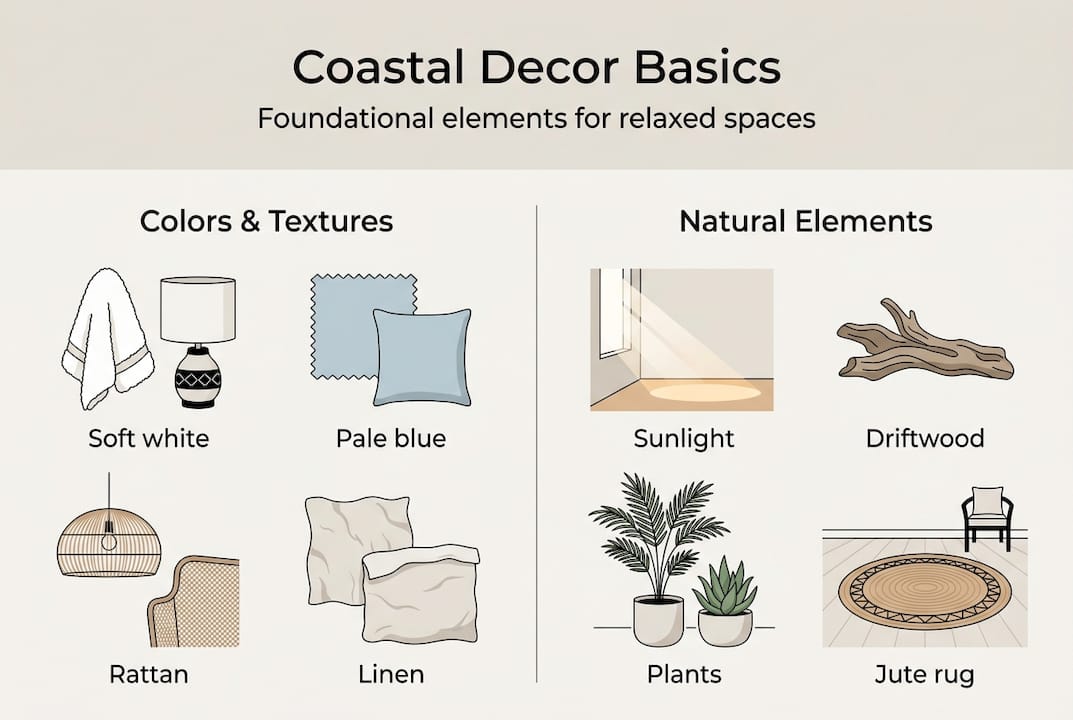
Color palette is your starting point. Coastal decor uses neutral palettes, natural textures like linen and rattan, and maximized natural light. Think soft whites, warm beiges, pale seafoam greens, and dusty blues. These colors reflect light and make rooms feel larger and more open.
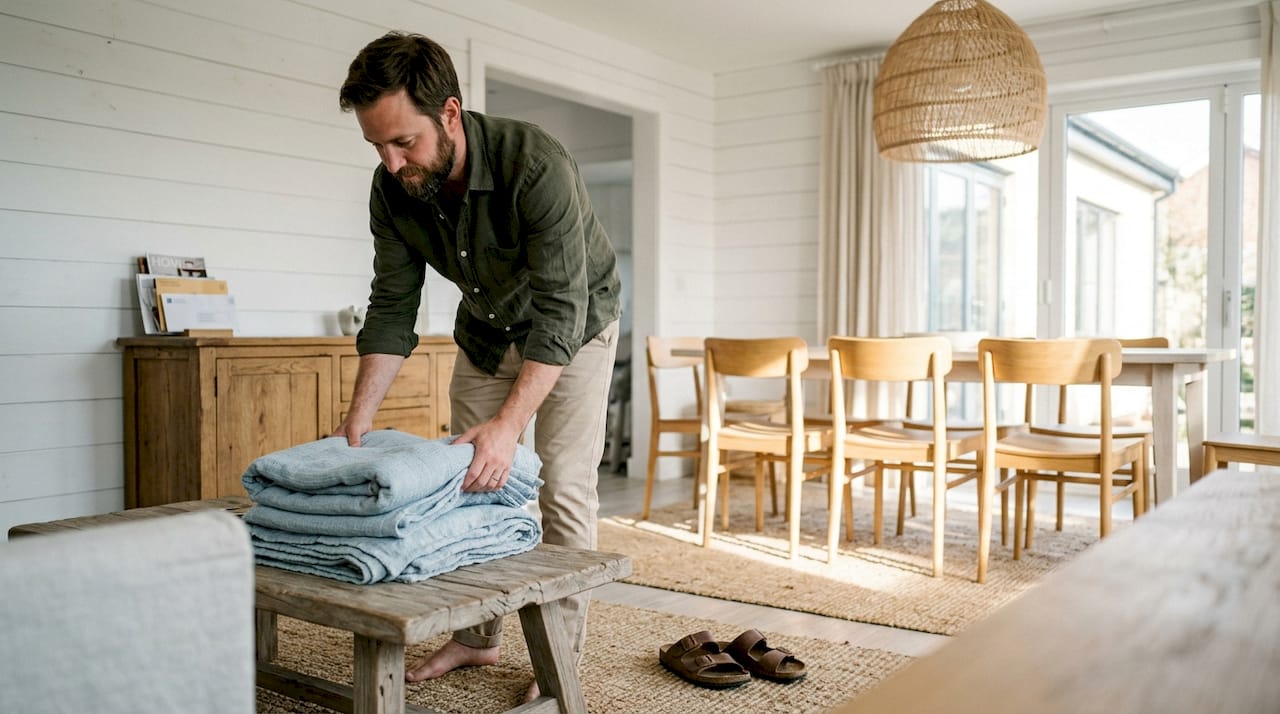
Texture is what gives the style depth. Without it, a coastal room can feel flat and sterile. Layer different materials to add warmth and interest. Check out warm style trends for ideas on how texture plays a role across different interior styles.
| Element | Coastal choice | What to avoid |
|---|---|---|
| Wall color | Soft white, pale blue, warm beige | Bright primary colors |
| Textiles | Linen, cotton, jute | Heavy velvet or dark wool |
| Furniture | Light wood, rattan, wicker | Dark mahogany or ornate pieces |
| Window treatment | Sheer curtains or none | Heavy blackout drapes |
| Accessories | Driftwood, glass, woven baskets | Plastic or overly themed items |
For lighting, the goal is to maximize natural light wherever possible. Use mirrors to bounce sunlight around the room. Swap heavy drapes for sheer curtains. If your space lacks windows, choose warm white bulbs that mimic daylight. HGTV’s coastal style guide recommends keeping window treatments minimal so light flows freely.
Pro Tip: Place a large mirror opposite your main window. It doubles the perceived light in the room and makes even a small space feel open and airy, a classic coastal trick.
Coastal vs. nautical vs. beachy: How styles differ
This is where a lot of people get tripped up. Coastal, nautical, and beachy are not the same thing, and mixing them up can send your decor in the wrong direction. Here’s how to tell them apart.
“Coastal decor is subtle and refined, unlike bold nautical or playful beachy styles.”
| Style | Key colors | Common motifs | Overall feel |
|---|---|---|---|
| Coastal | White, beige, pale blue | Subtle textures, natural materials | Airy, calm, refined |
| Nautical | Navy, red, white | Anchors, ropes, ship wheels | Bold, themed, structured |
| Beachy | Bright turquoise, coral, yellow | Starfish, surfboards, shells | Fun, casual, literal |
Here’s a simple way to think about it:
- Nautical is inspired by the navy and seafaring tradition. It’s graphic and bold, with strong color contrasts and clear maritime symbols.
- Beachy is the most literal of the three. It leans into obvious beach imagery and bright, tropical colors. Fun for a vacation rental, but it can feel kitschy in a permanent home.
- Coastal is the most sophisticated option. It captures the feeling of the coast without spelling it out. The beachy vs coastal difference comes down to subtlety: coastal is atmospheric, not literal.
If you’re working on living room styling tips, coastal is the style most likely to feel timeless and versatile across seasons.
Expert tips: Achieving authentic, modern coastal decor
Knowing what coastal decor is and what it isn’t gets you halfway there. The other half is execution. Here’s how to get it right.
The biggest mistake people make is overdoing the theme. A few shells, a piece of driftwood, and a woven rug are enough. You don’t need anchor pillows, a ship wheel on the wall, and a fish net in the corner. Layer textures, avoid theme overload, and adapt coastal decor to your region for a personalized look.
For urban space transformation, the key is focusing on light and layout rather than accessories. In a city apartment, you might not have ocean views, but you can still create that open, breathable feeling with the right furniture placement and color choices.
Regional variations matter too. New England coastal tends to be crisper and more structured, with navy accents and weathered wood. California coastal modern leans warmer and more minimal, with sandy tones and organic shapes. Knowing your regional inspiration helps you make more cohesive choices. Follow modern decor steps to build your look systematically.
Pro Tip: Choose performance fabrics for upholstered pieces. They resist stains and moisture, which is practical for a style meant to feel relaxed and lived-in. Brands like Sunbrella make indoor-outdoor fabrics that look great and hold up to daily use.
Here are the expert-backed principles to keep in mind:
- Keep your color palette tight: two to three main tones maximum
- Layer at least three different textures in every room
- Let furniture breathe: avoid pushing everything against the walls
- Use coastal design experts as a reference for proportion and scale
- Choose quality over quantity when it comes to accessories
DIY your coastal space: Easy, affordable makeover ideas
You don’t need a full renovation or a big budget to get the coastal look. A few targeted changes can transform your space completely. Simple, budget-friendly changes like textiles, paint, and lighting create a coastal vibe anywhere, not just at the beach.
Here’s a step-by-step approach to upgrade your living room or any room in your home:
- Start with wall color. Paint is the most impactful and affordable change you can make. Choose a soft white or warm beige as your base. It instantly opens up the space.
- Swap your textiles. Replace heavy throws and pillows with linen or cotton versions in neutral tones. This one change shifts the entire mood of a room.
- Add a natural fiber rug. Jute or sisal rugs bring texture and warmth underfoot. They’re also durable and easy to clean.
- Replace heavy drapes. Sheer white curtains let light pour in and create that breezy, open feeling that defines coastal style.
- Introduce subtle accessories. A driftwood centerpiece, a few glass jars, or a woven basket are all you need. Less is more here.
- Update your lighting. Swap harsh overhead lights for softer options. Rattan pendant lights or simple linen shades add texture and warmth.
For a complete home decor checklist, work room by room so changes feel intentional rather than scattered. Check out coastal design DIY tips for more inspiration on budget-friendly approaches.
Pro Tip: Shop secondhand for rattan and wicker pieces. Thrift stores and online marketplaces often have great finds at a fraction of the retail price, and a little wear adds to the authentic coastal feel.
Take your coastal decor to the next level with New Way Ref
You’ve got the knowledge and the plan. Now it’s time to bring it all together with the right pieces. Finding furniture that captures the coastal spirit without looking like a souvenir shop can be a challenge, but it doesn’t have to be.

At New Way Ref, we’ve thoughtfully curated a selection of modern, coastal-friendly furniture and decor that fits real homes and real budgets. Whether you’re looking for a statement sofa or finishing touches for your space, our home decor collection has options that blend comfort with style. For a centerpiece that anchors your living room in coastal modern style, the blue modular sofa is a standout choice. It’s versatile, comfortable, and built for everyday living. Plus, enjoy free shipping on orders over $50.
Frequently asked questions
Can I use coastal decor in an apartment far from the beach?
Yes, coastal decor works in any home. Coastal style adapts to urban homes by focusing on light, natural textures, and open layouts rather than location-specific elements.
How do I avoid a coastal room looking too cliché or outdated?
Focus on texture layering and a muted color palette instead of obvious nautical motifs. Experts recommend subtle cues over theme saturation to keep the look fresh and timeless.
Which materials and colors define the coastal look?
Linen, cotton, rattan, light woods, and shades of white, beige, and pale blue are the foundation. Coastal decor relies on natural materials and a muted palette to create its signature calm.
What is the difference between coastal and nautical decor?
Nautical is bold and motif-heavy with anchors and navy tones, while coastal is airy, neutral, and atmospheric. Coastal is refined and subtle; nautical makes a louder statement.
Is coastal decor still trendy in 2026?
Absolutely. Coastal modern is trending with a focus on minimalism, warmer neutrals, and organic influences that feel current and livable.