

TL;DR:
- Eco-friendly decor uses sustainable materials, responsible production, and prioritizes durability.
- Choosing durable, certified, and responsibly sourced products significantly reduces waste and carbon footprint.
- Sustainable decor combines stylish design with long-term savings and environmental benefits.
Most people never stop to think about where their old sofa ends up. Furniture production generates a staggering volume of waste, with 51 million tonnes consumed globally each year and nearly as much discarded. That cycle keeps repeating unless something changes. Eco-friendly decor offers a real, practical way to break it. Beyond the environmental angle, sustainable choices also affect your indoor air quality, your budget over time, and even how your home feels to live in. This guide walks you through what eco-friendly decor actually means, how to spot genuinely sustainable products, and the most effective swaps you can make today as a homeowner or renter.
Table of Contents
- What makes decor eco-friendly?
- The real-world impact: waste, carbon, and market growth
- How to choose wisely: materials, certifications, and sourcing
- Smart swaps for renters and homeowners
- A fresh perspective: sustainability vs superficial style
- Explore stylish eco-friendly decor options with New Way Ref
- Frequently asked questions
Key Takeaways
| Point | Details |
|---|---|
| Durability drives sustainability | Choosing robust, long-lasting decor minimizes waste and supports the circular economy. |
| Certifications prevent greenwashing | Look for FSC, GREENGUARD, or similar credentials to ensure products meet environmental standards. |
| Start with high-impact swaps | Opt for low-VOC paints, natural textiles, and secondhand goods to make impactful, affordable changes. |
| Market growth signals consumer shift | Eco-friendly decor’s expanding market reflects growing demand for sustainable home solutions. |
| Local sourcing lowers carbon | Buying locally produced decor reduces transport emissions and often ensures higher material transparency. |
What makes decor eco-friendly?
The term “eco-friendly decor” gets used loosely, so it helps to know exactly what it means. True eco-friendly decor involves sustainable materials, responsible production processes, and a design philosophy built around longevity. It is not just about swapping one material for another. It is about rethinking how products are made, used, and eventually repurposed or disposed of.
The importance of material choices cannot be overstated. The pre-production stage alone accounts for 76% of furniture’s environmental impact, meaning the problem starts long before the product reaches your home. This is why material sourcing matters as much as the finished look.
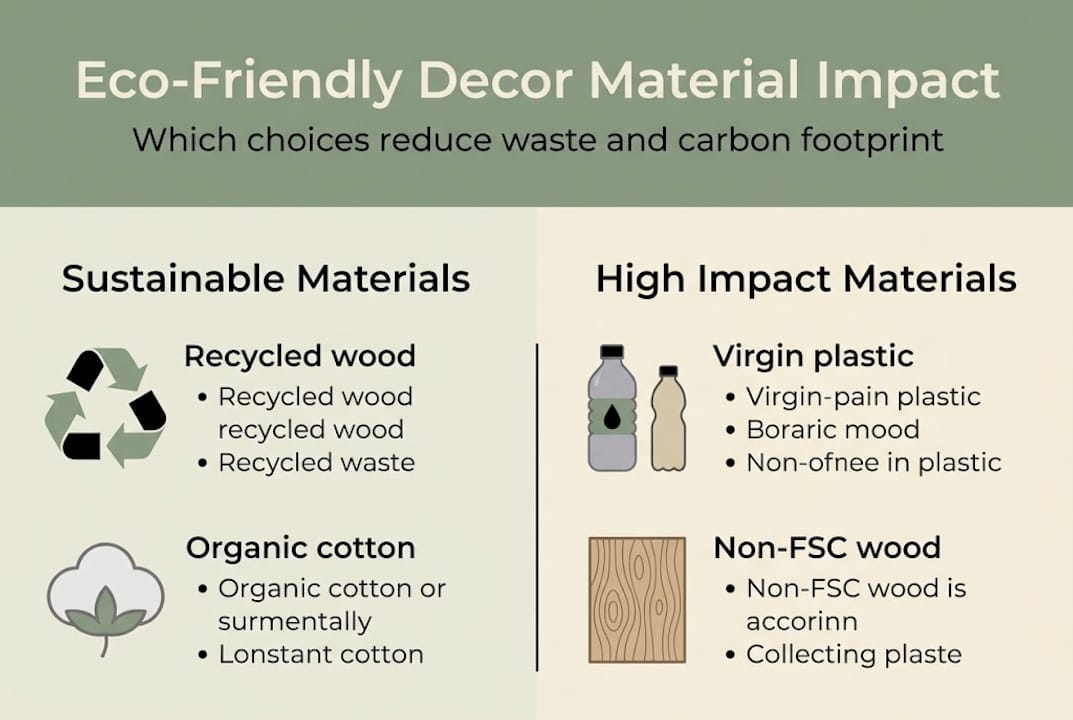
Eco-friendly items are designed for longevity and built to last, which reduces waste from frequent replacements and supports circular economy principles like reuse, repair, and recycling. A well-made solid wood table that lasts 30 years beats a trendy piece that falls apart in three, no matter what the label says.
Certifications are your clearest guide. Look for FSC (Forest Stewardship Council) on wood products and GREENGUARD on items tested for low chemical emissions. These labels carry real meaning, and understanding certification importance is key to avoiding misleading marketing.
| Feature | Conventional decor | Eco-friendly decor |
|---|---|---|
| Materials | Synthetic, virgin resources | Recycled, reclaimed, or certified |
| Lifespan | Short to medium | Long, repair-focused |
| Chemical emissions | Often high VOCs | Low or zero VOCs |
| End-of-life design | Landfill-bound | Reusable or biodegradable |
| Cost over time | Lower upfront, higher replacement | Higher upfront, lower long-term |
Core features of genuinely sustainable decor include:
- Certified materials: FSC wood, organic cotton, or recycled metals
- Low chemical content: Low VOC finishes, non-toxic adhesives
- Durability-first design: Built for repair, not disposal
- Minimal packaging: Recycled or compostable shipping materials
- Transparent sourcing: Brands that openly share their supply chain
Pro Tip: Do not chase eco-labels alone. A product that lasts a decade with no certification is often more sustainable than a “green” item that wears out in two years. Durability is the foundation of true sustainability.
The real-world impact: waste, carbon, and market growth
The numbers behind furniture waste are striking. Durable goods like furniture generated 57.1 million tons of municipal solid waste (MSW) in the US in 2018, yet only 18.5% was recycled. The rest went to landfills or combustion facilities. That is a massive, largely invisible problem sitting in plain sight.
The carbon picture is equally serious. Because the pre-production phase drives the majority of furniture’s environmental footprint, choosing products made from materials that require less energy to extract and process creates the biggest reduction. Eco-friendly decor does not just look better. It actively pulls your home’s environmental footprint lower.
“The sustainable home decor market was valued at $43.6 billion in 2026 and is projected to reach $70.9 billion by 2033, reflecting a dramatic shift in what consumers want from their living spaces.”
This growth signals something important. Eco-friendly decor is no longer a niche preference. It is becoming the mainstream standard. Browsing modern decor benefits shows how style and sustainability now go hand in hand, while 2026 furniture trends confirm that the most popular pieces increasingly prioritize both.
| Category | US MSW generated (2018) | Recycling rate |
|---|---|---|
| Furniture and furnishings | 12.1M tons | ~17% |
| All durable goods | 57.1M tons | 18.5% |
| Overall MSW | 292.4M tons | 32.1% |
The impact of making eco-friendly decor choices reaches further than most people expect:
- Waste reduction: Less furniture heading to landfills when products are built to last
- Better air quality: Low-VOC materials reduce harmful indoor chemical exposure
- Lower carbon output: Responsible sourcing cuts transportation and extraction emissions
- Resource conservation: Reclaimed or recycled materials reduce demand for virgin resources
- Market signal: Every purchase vote shifts what manufacturers produce next
The decor trends shifting toward sustainability show that consumers are increasingly voting with their wallets, and brands are responding fast.
How to choose wisely: materials, certifications, and sourcing
Knowing what makes decor eco-friendly is only half the battle. Verifying it before you buy is where most people get tripped up. Greenwashing, which means making products appear more sustainable than they actually are, is common in the home decor space.
Here is a step-by-step process to verify eco-friendly credentials:
- Check for recognized certifications. FSC for wood, GREENGUARD for emissions, and OEKO-TEX for textiles are reliable starting points.
- Research the brand’s sourcing. Transparent brands publish where their materials come from. Vague claims are a warning sign.
- Ask about local sourcing. Products made closer to home have lower transport emissions, a key factor in lifecycle analysis (LCA). Certifications and local sourcing together give you the most reliable picture.
- Compare materials directly. For example, particleboard has a 72% lower environmental impact than fibreboard in many applications, making it a smarter choice despite its humbler reputation.
- Read third-party reviews. Independent sources are more reliable than brand-created content.
A smart decor checklist can help you organize these steps before making any purchase. For a broader approach, a step-by-step home decor framework helps you plan each room with sustainability in mind from the start.
Pro Tip: Prioritize local sourcing when you can. Transport emissions are one of the most overlooked hotspots in furniture’s environmental impact. A certified product made nearby often outperforms an imported one with a longer green credentials list.
Be skeptical of vague terms like “natural,” “green,” or “earth-friendly” without supporting documentation. These phrases carry no regulatory weight and are frequently used to mislead shoppers. Always follow the certification trail.
Smart swaps for renters and homeowners
You do not need to replace everything at once. The most effective approach is to start with high-impact, lower-cost swaps that make an immediate difference to your space and your air quality.
High-impact eco-friendly swaps to consider:
- Low-VOC paints: A straightforward change with measurable air quality benefits. Eco-friendly painting tips and a solid low VOC paint guide can help you find the right product fast.
- Natural textiles: Swap synthetic throws and cushions for organic cotton, linen, or wool options.
- Secondhand furniture: Buying pre-owned pieces is one of the most sustainable choices you can make, full stop.
- Reclaimed wood accents: Shelves, frames, or side tables made from reclaimed wood add character and reduce demand for new timber.
- Energy-efficient lighting: LED fixtures with sustainable materials lower both energy use and replacement frequency.
For renters especially, high-impact swaps like low-VOC paints and natural textiles let you improve sustainability without structural changes that most leases prohibit.
Here is how to prioritize your swaps:
- Start with air quality: low-VOC paints and non-toxic cleaning products have the fastest health impact.
- Replace high-use textiles next: cushions, bedding, and curtains you touch daily.
- Source secondhand before buying new for any furniture piece.
- Choose certified new products only when secondhand is not available.
- Use smart decor ideas and urban home decor advice to refine your approach room by room.
Pro Tip: Secondhand plus durable should be your default strategy. A solid secondhand piece that lasts another 20 years beats a new “eco-labeled” item that is poorly made. Durability always wins.

One important caution: even natural materials can carry high impacts if they are sourced irresponsibly. Non-FSC wood marketed as “sustainable” is a common example. The sourcing process matters as much as the material itself.
A fresh perspective: sustainability vs superficial style
Here is the uncomfortable truth most eco-decor articles avoid: style and sustainability are not in tension. The idea that choosing sustainable means settling for plain, boring, or rustic is simply outdated. Contemporary eco-friendly furniture is thoughtfully designed, visually striking, and built to complement modern interiors.
The bigger misconception is about cost. Yes, upfront prices can be higher. But lifecycle ROI favors eco-decor when you factor in replacement rates, maintenance, and resale value. A well-built piece rarely needs replacing. That changes the math entirely.
Consumer values are also shifting faster than most brands realize. Eco-friendly decor has moved from a conscious choice to an aspirational one. People want their homes to reflect what they care about. The functional style benefits of modern sustainable pieces prove you do not have to choose between looking great and living responsibly. The best choice is usually both at once.
Explore stylish eco-friendly decor options with New Way Ref
You now have the knowledge to shop with confidence. The next step is finding pieces that match your values and your vision for your space. At New Way Ref, we have thoughtfully curated a range of modern, stylish home decor and furniture designed to elevate your living environment.
Browse our eco-friendly decor collection to discover options that blend contemporary design with responsible choices. Whether you are refreshing a single room or starting fresh, our selection covers everything from accent pieces to key furniture items. Check out the latest 2026 eco-trends to see what is resonating with homeowners right now. Free shipping on orders over $50 makes it even easier to get started.
Frequently asked questions
How can I verify if decor products are truly eco-friendly?
Look for recognized certifications like FSC and GREENGUARD, and check whether materials are sourced locally to reduce transport emissions. Vague terms like “natural” or “green” without documentation are not sufficient.
Are eco-friendly decor items more expensive?
Upfront costs can be higher, but lifecycle ROI favors eco-decor because durable products need replacing far less often, lowering your total spend over time.
What are the easiest eco-friendly swaps for renters?
Start with low-VOC paints, natural textiles, and secondhand furniture for the biggest improvements with the least cost and no structural changes required.
Why is durability more important than just eco-labels?
A product that lasts reduces waste and supports circular economy principles far more effectively than a poorly made eco-labeled item that ends up in a landfill after two years.
How big is the sustainable home decor market in 2026?
The market is valued at $43.6 billion in 2026 and is expected to grow to $70.9 billion by 2033, reflecting rising consumer demand for values-aligned home products.
Recommended
- Benefits of modern decor: stylish and functional homes – New Way Ref
- Top home decor ideas for young professionals: modern style – New Way Ref
- Why Choose Minimalist Decor? Create Calm, Style, and Space – New Way Ref
- Home Decor Guide 2026: Transform Your Urban Space Easily – New Way Ref
- Why sustainable homeware matters: benefits and buying guide – Homable
- Why Choose Eco-Friendly Painting Options for Your Home