

Most homeowners spend thousands on furniture and paint but overlook the single most powerful tool for transforming how a space feels: lighting. The right light can turn a sterile room into a cozy retreat or an energizing workspace in seconds. Yet many people settle for basic overhead fixtures and wonder why their carefully decorated rooms still feel off. This guide reveals how lighting fundamentally shapes emotional atmosphere at home and provides practical strategies to harness its power for every room and mood you want to create.
Table of Contents
- How Lighting Shapes Mood And Atmosphere In Your Home
- Comparing Lighting Types And Colors For Desired Moods
- Practical Lighting Setups To Enhance Different Room Moods
- Incorporating Modern Technology And Trends In Lighting Mood Control
- Explore Lighting Solutions To Transform Your Home Ambiance
- FAQ
Key takeaways
| Point | Details |
|---|---|
| Lighting drives emotional response | Different light qualities trigger specific feelings and comfort levels in your living spaces. |
| Color temperature matters most | Warm tones relax while cool tones energize, making temperature selection critical for desired moods. |
| Layering creates flexibility | Combining ambient, task, and accent lighting gives you complete control over atmosphere. |
| Smart systems adapt instantly | Technology enables personalized lighting scenes that shift with your activities and preferences. |
| Strategic placement eliminates problems | Proper positioning avoids glare and shadows while highlighting your best decor elements. |
How lighting shapes mood and atmosphere in your home
Your body responds to light on both conscious and subconscious levels. Bright, cool lighting stimulates alertness and focus by suppressing melatonin production, making it ideal for workspaces and kitchens. Warm, dim lighting does the opposite, triggering relaxation responses that prepare your body for rest. Lighting significantly influences emotions and comfort in home settings, affecting everything from your energy levels to how you perceive room size and cleanliness.
Natural light provides the gold standard for mood regulation because it contains the full spectrum of wavelengths your circadian system evolved to recognize. Morning sunlight rich in blue wavelengths signals your brain to wake up and boost cortisol. Evening light with more red and orange wavelengths prepares you for sleep. Artificial lighting that mimics these patterns supports your natural rhythms, while lighting that contradicts them can disrupt sleep quality and mood stability.
Light intensity directly impacts how comfortable and energized you feel in a space. Overly bright lighting in relaxation areas creates visual stress and makes unwinding difficult. Insufficient lighting in work areas causes eye strain and reduces productivity. The role of lighting in interiors extends beyond visibility to fundamentally alter how you experience and use each room.
Pro Tip: Match your lighting intensity to the time of day and activity. Use bright, cool light for morning routines and dim, warm light for evening relaxation to support your body’s natural rhythms.
The quality of light affects spatial perception in surprising ways. Harsh, direct lighting creates sharp shadows that make rooms feel smaller and more confined. Soft, diffused lighting minimizes shadows and makes spaces feel larger and more inviting. Color rendering also matters because poor quality light distorts how you see colors in furniture, artwork, and even skin tones, subtly affecting your comfort level without you realizing why a room feels wrong.
- Warm lighting (2700K to 3000K) creates intimacy and comfort in living rooms and bedrooms
- Cool lighting (5000K to 6500K) enhances focus and clarity in kitchens and home offices
- Neutral lighting (3500K to 4500K) provides balanced visibility in bathrooms and hallways
- Dimmed lighting at any temperature promotes relaxation and conversation
- Bright lighting supports active tasks and energetic moods
“The right lighting doesn’t just illuminate a room. It transforms how you feel, behave, and connect with your space on an emotional level.”
Comparing lighting types and colors for desired moods
Incandescent bulbs produce warm, flattering light that most people find naturally comfortable because it closely resembles firelight and candlelight. However, they waste significant energy as heat and have short lifespans. LED bulbs now replicate that warm quality while using 75% less energy and lasting 25 times longer. Fluorescent lighting often gets criticized for harsh, unflattering quality, though modern versions have improved dramatically in color rendering and warmth options.
Smart lighting systems adapt to homeowner mood and preferences for customized ambiance. These systems let you program specific color temperatures and brightness levels for different times and activities. You can create a bright, energizing morning scene, a focused work mode, and a relaxing evening atmosphere, all from the same fixtures. The flexibility eliminates the need to install different bulbs for different moods.
| Lighting Type | Color Temperature | Best Mood Effect | Ideal Rooms |
|---|---|---|---|
| Warm LED | 2700K to 3000K | Cozy, intimate, relaxing | Bedrooms, living rooms, dining areas |
| Neutral LED | 3500K to 4500K | Balanced, practical, clean | Bathrooms, closets, laundry rooms |
| Cool LED | 5000K to 6500K | Alert, focused, energizing | Home offices, kitchens, garages |
| Smart RGB | Full spectrum | Customizable for any mood | Any room needing flexibility |
Color psychology plays a powerful role in mood setting beyond just warm versus cool. Red and orange tones stimulate energy and appetite, making them effective in dining areas when used subtly. Blue and green tones promote calm and concentration, working well in bedrooms and study spaces. Purple creates a sense of luxury and creativity. Yellow generates cheerfulness but can cause eye strain if too intense. Most mood lighting strategies use these colors sparingly as accents rather than primary illumination.
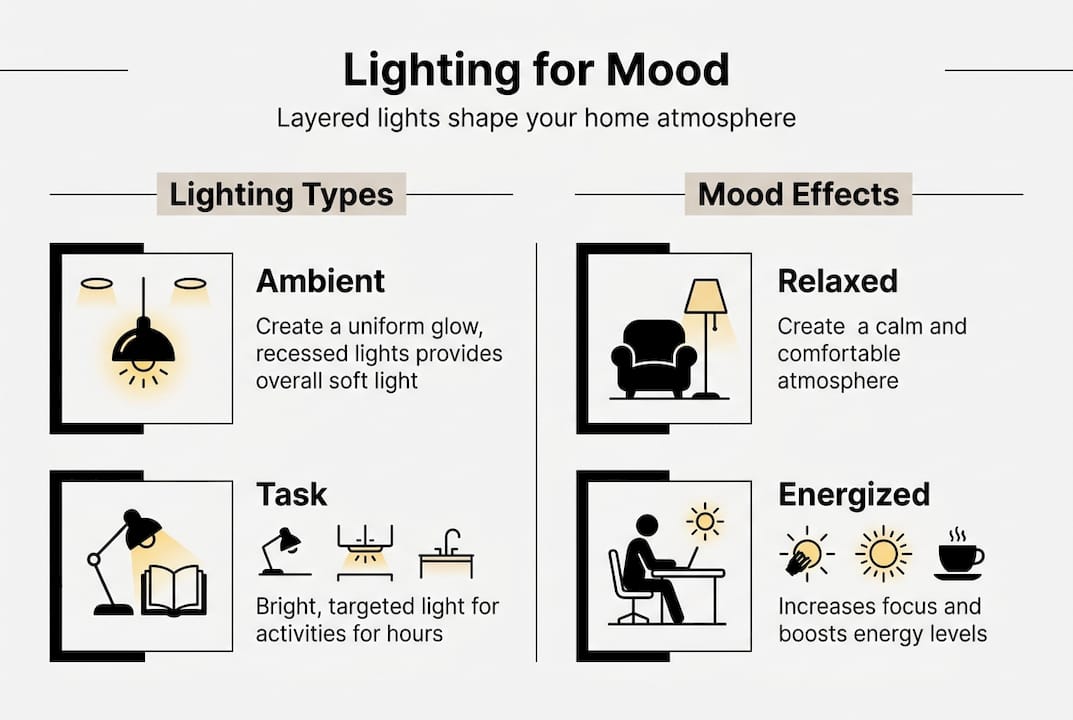
Layering different light sources gives you the most control over atmosphere. Ambient lighting provides overall illumination, typically from ceiling fixtures or wall sconces. Task lighting focuses on specific activities like reading or cooking, usually from desk lamps or under cabinet lights. Accent lighting highlights architectural features or artwork, creating visual interest and depth. Combining all three layers lets you adjust mood by switching which sources you activate and at what intensity.
Candles add a unique emotional dimension that electric lighting struggles to replicate. The flickering, warm glow creates instant intimacy and romance. The role of candles in decor extends beyond light to include scent and the ritual of lighting them, which signals to your brain that it’s time to relax. Use candles to supplement electric lighting during dinners, baths, or quiet evenings for maximum mood impact.
Pro Tip: Install smart bulbs with adjustable color temperatures in your most used rooms. This single upgrade gives you warm, relaxing light for evenings and cool, energizing light for mornings without changing fixtures or bulbs.
- Choose warm white for spaces where you relax and connect with others
- Select cool white for areas requiring focus and detailed work
- Use colored accent lighting sparingly to create specific emotional effects
- Combine multiple light sources at different heights for visual depth
- Add dimmers to every room for instant mood adjustment capability
Practical lighting setups to enhance different room moods
Creating the right mood in your living room requires three distinct lighting layers working together. Start with ambient lighting from a ceiling fixture or recessed lights on a dimmer, providing adjustable overall illumination. Add task lighting with reading lamps beside seating areas, ensuring comfortable visibility for activities. Finish with accent lighting using wall sconces or picture lights to highlight artwork and create visual interest. This combination lets you shift from bright and social to dim and intimate by adjusting which lights you use and their intensity levels.
Bedroom lighting should prioritize relaxation and sleep quality while providing adequate light for dressing and reading. Install warm ambient lighting on dimmers as your primary source, keeping it off or very low in the evening to support melatonin production. Use bedside reading lamps with adjustable arms for task lighting that doesn’t disturb a sleeping partner. Consider adding LED strips behind the headboard or under the bed frame for soft accent lighting that provides safe navigation at night without triggering full alertness.
- Evaluate your room’s natural light throughout the day and note when you need supplemental lighting
- Install ambient lighting on dimmers to control overall brightness and mood
- Add task lighting where you perform specific activities like reading, cooking, or working
- Include accent lighting to highlight favorite decor pieces and create visual depth
- Position all fixtures to avoid glare in your eyes and eliminate harsh shadows on faces
- Test different combinations and intensities to find your preferred mood settings
- Program smart bulbs or switches to automate your favorite lighting scenes
Kitchen lighting needs to balance functionality with atmosphere. Bright, cool task lighting under cabinets illuminates countertops for safe food preparation. Pendant lights over islands or dining areas provide focused illumination with decorative appeal. Ambient lighting from recessed ceiling fixtures fills in overall visibility. The lighting selection workflow influences atmosphere and well-being at home, particularly in multi-purpose spaces like kitchens where mood needs shift from energetic cooking to relaxed dining.
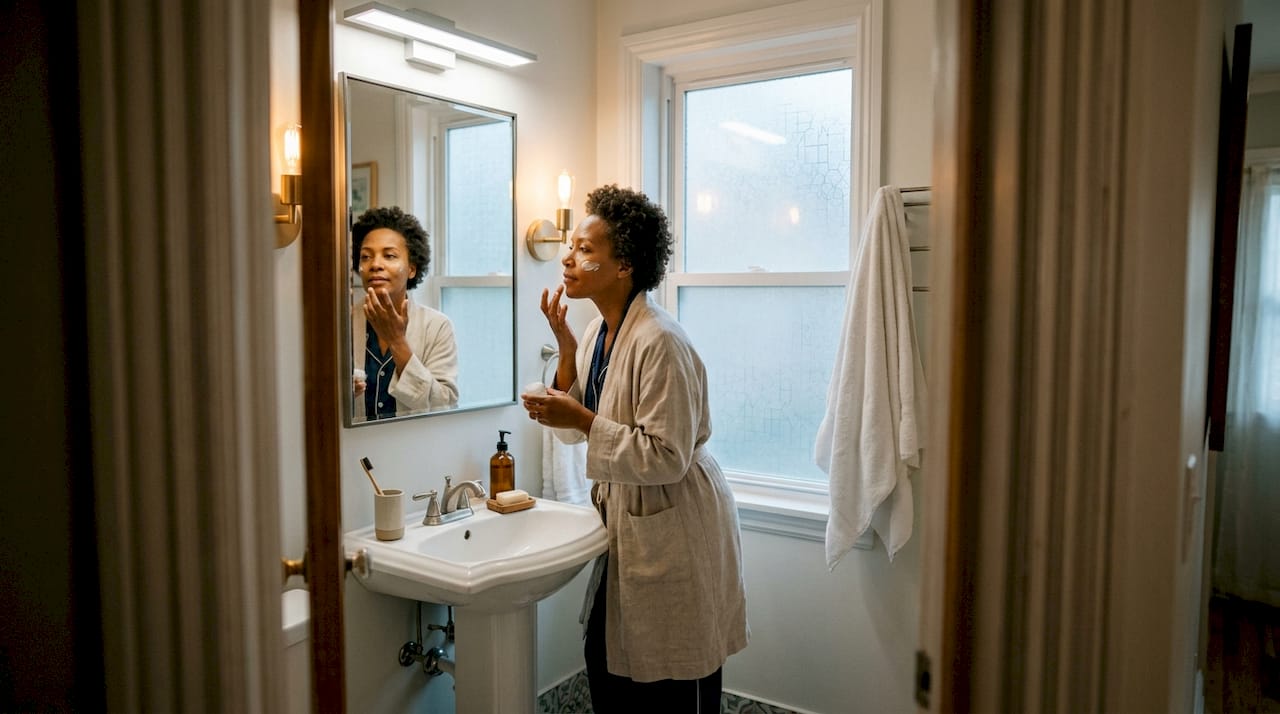
Bathroom lighting requires careful planning to serve both practical and mood-setting purposes. Install bright, neutral lighting around mirrors for accurate visibility during grooming tasks. Add ambient lighting from ceiling fixtures to eliminate shadows. Consider waterproof LED strips in the shower or around the tub for a spa-like relaxation mood. Dimmers on all circuits let you shift from bright and functional in the morning to soft and calming for evening baths.
Pro Tip: Position lighting to avoid direct glare while highlighting your best decor elements. Place fixtures at angles that wash walls with light rather than creating hot spots, and use lampshades or diffusers to soften harsh bulb brightness.
Natural light integration amplifies your artificial lighting strategy. Use sheer curtains during the day to diffuse harsh sunlight while maintaining brightness. Install blackout curtains or shades in bedrooms to control light for better sleep. Position mirrors opposite windows to bounce natural light deeper into rooms. In spaces with limited windows, use full-spectrum LED bulbs that mimic daylight to compensate for the lack of natural illumination and maintain mood-supporting light quality.
Incorporating modern technology and trends in lighting mood control
Smart lighting systems revolutionize mood control by automating adjustments based on time, activity, or even your presence in a room. Motion sensors turn lights on when you enter and off when you leave, ensuring you never waste energy or fumble for switches. Color tuning capabilities let you shift from energizing cool white in the morning to relaxing warm white in the evening with a single tap. Remote control via smartphone apps means you can adjust lighting from anywhere in your home or even while away, creating the illusion of occupancy for security.
Technology-enabled lighting systems adapt to homeowner mood and preferences through learning algorithms and preset scenes. You can program a “movie night” scene that dims overhead lights and activates accent lighting, or a “dinner party” scene that sets warm, flattering illumination throughout entertaining spaces. Voice assistant integration with Alexa, Google Assistant, or Siri lets you control lighting hands-free while cooking, carrying items, or settling into bed.
| Feature | Traditional Lighting | Smart Lighting |
|---|---|---|
| Color temperature adjustment | Requires bulb replacement | Instant adjustment via app |
| Dimming capability | Needs compatible dimmer switch | Built into bulb or system |
| Automation | Manual timers only | Motion, schedule, and presence based |
| Energy monitoring | No visibility | Real-time usage tracking |
| Remote control | Must be physically present | Control from anywhere |
| Scene programming | Not possible | Unlimited custom scenes |
Integration with smart home hubs creates powerful automation possibilities. Connect lighting to your thermostat so lights dim when you lower temperature for sleep. Link to your security system so lights flash if alarms trigger. Sync with your entertainment system so lights automatically adjust when you start watching TV or listening to music. These integrations make lighting a responsive part of your home environment rather than something you manually control.
Eco-friendly lighting options now deliver superior mood-setting capabilities while reducing environmental impact. LED technology uses a fraction of the energy incandescent bulbs consumed, lowering your carbon footprint and utility bills simultaneously. Solar-powered outdoor lighting eliminates electrical consumption entirely for pathway and garden illumination. Many manufacturers now offer bulbs made from recycled materials with extended lifespans that reduce waste. The modern home lighting trend embraces sustainability without compromising on ambiance or functionality.
- Smart bulbs with color tuning let you match lighting to your circadian rhythm automatically
- Motion sensors provide hands-free control and energy savings in low-traffic areas
- Voice control integration enables lighting adjustments without interrupting activities
- Scheduling features ensure lights match your routine without manual intervention
- Energy monitoring helps you optimize usage and reduce electricity costs
- Geofencing turns lights on as you approach home and off when you leave
Personalized ambiance reaches new levels with systems that remember your preferences and suggest optimizations. Some platforms analyze your usage patterns and recommend adjustments for better mood support or energy efficiency. Others integrate with wearable devices to detect your stress levels and automatically shift lighting to more calming settings. As artificial intelligence advances, expect lighting systems that proactively adapt to your emotional state and daily rhythms without requiring any manual programming.
Explore lighting solutions to transform your home ambiance
The lighting strategies you’ve learned can dramatically change how your home feels, but implementation requires the right products. Professional-grade fixtures, smart bulbs, and decorative lighting pieces make the difference between generic illumination and truly mood-enhancing environments. Whether you need layered lighting for your living room, smart controls for your bedroom, or accent pieces to highlight your favorite decor, specialized products deliver results that basic hardware store options can’t match.
Our lighting collection features fixtures designed specifically for mood setting across every room type. From dimmable LEDs with adjustable color temperatures to statement pieces that serve as both light sources and artwork, you’ll find options that align with your aesthetic preferences and functional needs. Pair your lighting upgrades with complementary pieces from our home decor collection to create cohesive spaces where every element works together to support your desired atmosphere. Visit New Way Ref store to explore how professional lighting solutions can transform your daily living experience.
FAQ
What color temperature is best for relaxing lighting?
Warm white light between 2700K and 3000K creates the most relaxing atmosphere in your home. This color range mimics the warm glow of sunset and candlelight, triggering your body’s natural relaxation responses. It works particularly well in bedrooms, living rooms, and any space where you want to unwind after a busy day.
How can I use smart lighting to change home moods?
Smart lighting lets you customize colors, brightness levels, and timing to match any mood or activity. You can create preset scenes for different situations like focused work, relaxed reading, or romantic dinners, then activate them with a voice command or app tap. Most systems also support scheduling so your lighting automatically shifts throughout the day to support your routines and circadian rhythms.
What are the best lighting types for small apartments?
Small apartments benefit most from layered lighting that combines ambient, task, and accent sources to create depth and flexibility. Choose compact LED fixtures with dimming capability to control intensity without taking up valuable space. Maximize natural light with strategic mirror placement and sheer window treatments, and consider lighting tips for small spaces that emphasize vertical illumination and multi-functional fixtures to make rooms feel larger.
How does layering lighting improve mood setting?
Layering combines ambient, task, and accent lighting to give you complete control over atmosphere and functionality. This approach prevents the flat, one-dimensional feel of single overhead fixtures by creating visual depth and allowing dynamic adjustments. You can brighten task lights for focused work while keeping ambient lights dim, or illuminate accent features while dimming everything else for dramatic effect. The role of lighting in home decor becomes most powerful when multiple sources work together to support both practical needs and emotional preferences.
Recommended
- Role of Lighting in Home Design – Enhancing Ambience and Function – New Way Ref
- Role of Lighting in Home Decor – Enhancing Style and Function – New Way Ref
- Role of Lighting in Interiors: Impact on Ambiance – New Way Ref
- Modern Home Lighting: Enhancing Style and Functionality – New Way Ref
- Role of Candles in Decor: Creating Calm, Classy Spaces – mi KALMA