

TL;DR:
- Home zoning uses existing furniture and decor to create functional, purposeful areas without renovations.
- Proper zoning improves room flow, reduces clutter, and lowers cognitive load for a more comfortable living space.
- Micro-zoning and strategic furniture placement are effective for small or open-plan homes to define distinct zones.
Most people assume that creating a well-organized, comfortable home requires knocking down walls, hiring a designer, or starting fresh in a brand-new space. That assumption costs homeowners and renters real comfort every single day. Home zoning is not about renovation. It is about using what you already have, including your furniture, rugs, and lighting, to give every area of your home a clear purpose. Whether you live in a studio apartment or a sprawling house, zoning shapes how your space feels and functions. This guide walks you through the core concepts, practical strategies, and smart furniture choices that make zoning work in any home.
Table of Contents
- What is home zoning? Definitions and key concepts
- How home zoning shapes room flow and comfort
- Practical zoning strategies: Defining zones without walls
- Micro-zoning: Solutions for open-plan and small spaces
- Choosing furniture and lighting for effective zoning
- Our perspective: The overlooked power of zoning for everyday living
- Discover comfort and style with New Way Ref
- Frequently asked questions
Key Takeaways
| Point | Details |
|---|---|
| Home zoning basics | Dividing spaces by function increases comfort and makes homes feel larger. |
| Optimize flow | Clear walkways and defined zones make every activity easier and less stressful. |
| Easy, flexible strategies | Use furniture, rugs, and lighting to zone any room—no remodeling needed. |
| Smart furniture shopping | Selecting pieces based on zone size and purpose saves money and prevents mistakes. |
What is home zoning? Definitions and key concepts
Now that you know why home zoning deserves attention, let’s clarify what it actually involves.
Home zoning in interior design is the practice of dividing living spaces into distinct functional areas based on their primary purpose. Think of it as giving each part of your home a job. The sofa area becomes the relaxation zone. The corner desk becomes the focus zone. The dining table becomes the social zone. Each area has a role, and that clarity changes how you experience your home.
Zones generally fall into three categories:
- Private zones: Bedrooms, home offices, reading nooks. These are spaces for rest, focus, or personal time.
- Public zones: Living rooms and dining areas. These support socializing and shared activities.
- Utility zones: Kitchens, laundry rooms, entryways. These are functional spaces built around tasks.
A common myth is that zoning only applies to open-concept homes. That is not true. Even rooms with walls benefit from intentional zoning because it reduces clutter and improves how you move through the space.
| Approach | Traditional zoning | Modern zoning |
|---|---|---|
| Separation method | Walls and doors | Furniture, rugs, lighting |
| Flexibility | Low | High |
| Cost | High (renovation) | Low to moderate |
| Best for | New builds | Any home or rental |
| Adaptability | Fixed | Easily updated |
The benefits are immediate. Smoother traffic flow, less visual clutter, and a stronger sense of comfort all follow from purposeful zoning. You do not need to spend thousands to feel the difference.
“A well-zoned home is not about having more space. It is about making every inch of your current space intentional.”
How home zoning shapes room flow and comfort
With the foundations in place, let’s explore how zoning impacts the feel and usability of your home.
Flow is the invisible quality that makes some homes feel relaxing and others feel chaotic. Zoning is the primary tool that controls it. When zones are clearly defined, people naturally move through the space without confusion or collision. When zones are blurry, traffic jams form and spaces feel cramped even when they are not.
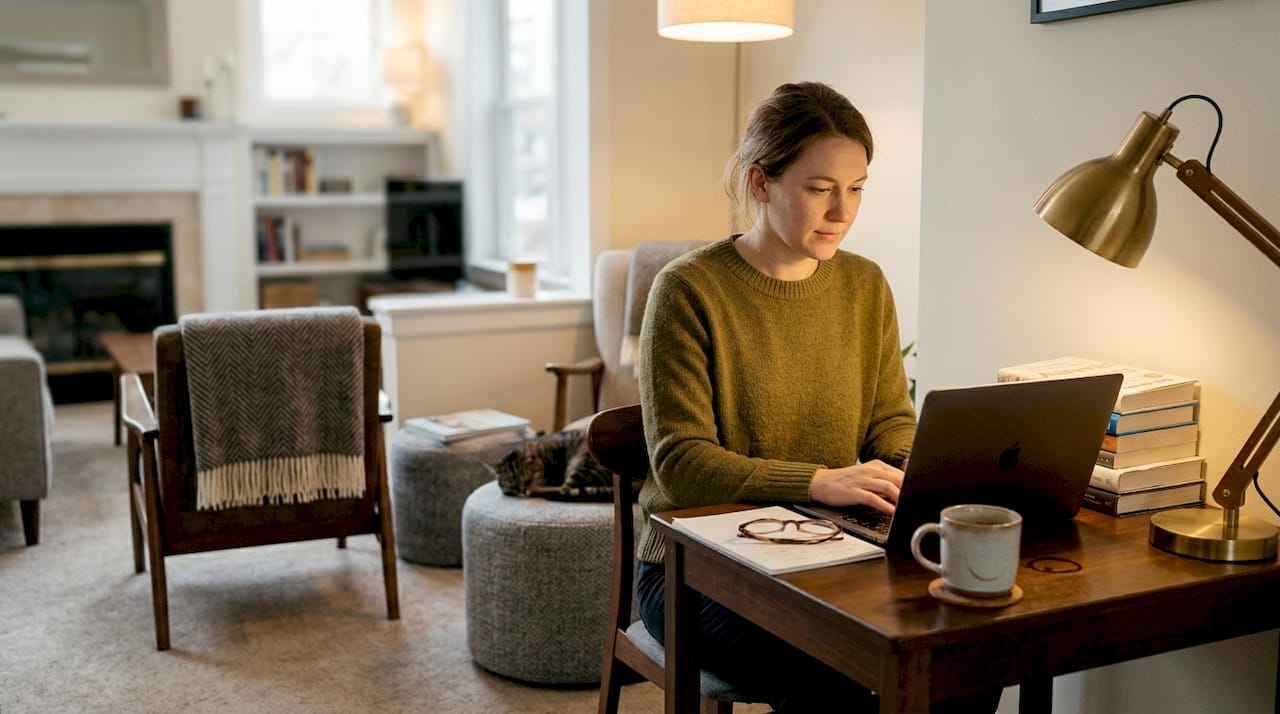
Physical clearances matter more than most people realize. Primary walkways need 30 to 36 inches of clear space, while secondary paths need at least 24 to 30 inches. Living rooms should maintain 35 to 55 percent open floor space for comfort and easy movement. These are not aesthetic preferences. They are practical benchmarks that determine whether your space actually works.
Pro Tip: Before moving any furniture, walk through your room and count how many times you sidestep or squeeze past something. That number tells you how much your current layout is costing you in daily comfort.
Zoning also has a psychological impact that is easy to underestimate. Zoning reduces cognitive load by signaling space purpose, which helps your brain shift between rest, work, and social activity more naturally. When your brain sees a clearly defined reading chair with a lamp beside it, it starts to relax before you even sit down. That is the power of purposeful spatial cues.
For people working from home, this is especially valuable. A dedicated work corner with its own lighting and desk setup creates a mental boundary between professional focus and personal downtime. You can optimize your living room layout to support both work and relaxation without the two bleeding into each other. Zoning also supports comfort and energy savings when paired with smart home systems, though furniture-based zoning alone delivers significant daily benefits.
Practical zoning strategies: Defining zones without walls
Understanding the why is empowering. Now let’s see how you can apply zoning in your own home.
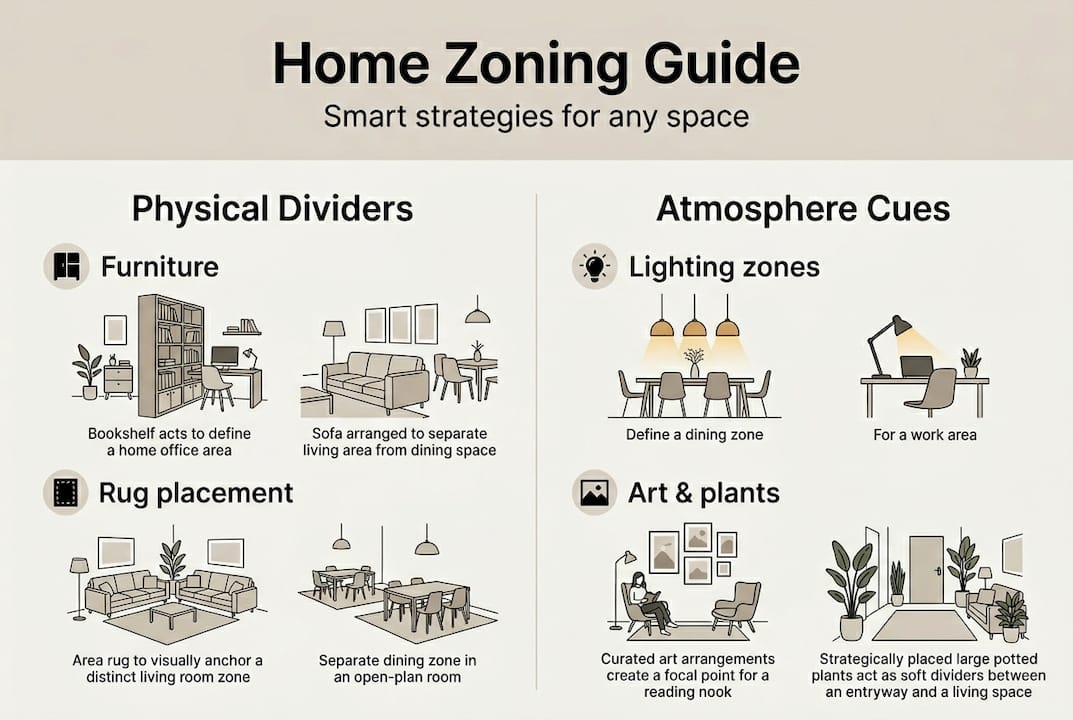
Effective room design starts by identifying primary activities first, then using furniture, rugs, lighting, and screens to define each zone. This sequence matters. Most people do it backwards, placing furniture first and then wondering why the room feels off.
Here is a practical step-by-step approach:
- List every activity that happens in the room. Watching TV, reading, working, eating, playing. Write them all down.
- Group related activities that can share a zone. TV watching and casual conversation can share the living area. Work and reading might share a quiet corner.
- Choose anchor pieces for each zone. A sofa anchors a lounge zone. A desk anchors a work zone. A rug anchors a dining zone.
- Arrange for flow. Leave clear paths between zones. No furniture should block a natural walking route.
- Add layered cues. Use rugs to define floor boundaries, lighting to signal purpose, and screens or shelving to add visual separation.
Floating furniture away from walls and layering lighting help reinforce zones without adding permanent structures. A sofa pulled 18 inches from the wall instantly creates a more intimate conversation area and signals where the lounge zone begins and ends.
Pro Tip: Use a floating furniture arrangement in your living room to create a zone that feels cozy and intentional. Pair it with a rug that fits all front legs of your seating to visually anchor the space.
You can explore a detailed living room setup workflow to apply these steps systematically, or browse living room furniture types that support smart zoning from the start.
Micro-zoning: Solutions for open-plan and small spaces
Even the most thoughtfully zoned homes face unique challenges in smaller or open spaces. Let’s see how micro-zoning solves them.
Micro-zoning creates sub-areas like reading nooks or work corners to prevent chaos in open and small spaces. It is the same concept as full zoning but applied at a smaller, more granular scale. Instead of dividing an entire floor plan, you are carving out purposeful pockets within a single room.
Common micro-zoning problems include:
- Noise overlap: A TV zone too close to a work corner creates constant distraction.
- Traffic jams: Poorly placed furniture forces people to cut through active zones.
- Blurred boundaries: When a dining table doubles as a desk and a craft table, no activity gets done well.
Solutions are practical and affordable:
- A tall bookshelf between a living area and a work corner blocks visual and sound distraction.
- A portable folding screen creates a temporary private zone for video calls or focused work.
- A distinct rug under a child’s play area signals to everyone that this corner has its own rules.
- Pendant lighting over a dining table in a studio apartment creates a clear eating zone even without walls.
“Micro-zoning is not about shrinking your space. It is about making every corner earn its place.”
Modern experts favor flexible micro-zoning for renters and homeowners who need to adapt spaces without renovations. This is especially relevant for city dwellers and apartment renters who cannot make structural changes. You can find stylish living room ideas that apply micro-zoning beautifully, and learn more about optimizing city living layouts for compact spaces.
Choosing furniture and lighting for effective zoning
With zoning concepts established, you can make smarter shopping choices for both furniture and lighting.
Zoning guides optimal piece selection, reduces buyer’s remorse, and ensures proper fit and circulation. When you know a zone’s purpose before you shop, you stop buying pieces that look great in the store but feel wrong at home.
Here is what to prioritize when selecting furniture for each zone:
- Scale: Choose pieces sized for the zone, not the whole room. A loveseat works better in a small lounge zone than an oversized sectional.
- Function: Every piece should support the zone’s primary activity. A coffee table in a lounge zone should be the right height for comfortable use from the sofa.
- Clearance: Always check that your chosen pieces leave enough walkway space around them.
- Visual weight: Lighter, open-frame furniture keeps small zones from feeling crowded.
Lighting is equally important. Lighting layers including ambient, task, and accent reinforce zones without adding physical dividers. Ambient light fills the whole room. Task lighting focuses on a specific activity like reading or cooking. Accent lighting draws attention to a feature or boundary.
Pro Tip: In a multifunctional room, use dimmable lighting in each zone. Bright task light for the work corner, warm low light for the lounge zone. Switching the lighting literally switches the room’s mood and purpose.
Accessories like mirrors, artwork, and plants also contribute to zone definition. A gallery wall above a desk signals the work zone. A large plant beside a reading chair marks the relaxation corner. Learn more about the role of lighting in home design and find targeted lighting tips for small spaces that make zoning more effective.
Our perspective: The overlooked power of zoning for everyday living
After exploring practical applications, it is worth stepping back and rethinking what truly makes a space enjoyable.
Most homeowners spend hours choosing paint colors and chasing the latest decor trends. Very few spend that same energy on how their space actually functions. That is a mistake. Color fades from your awareness within days of moving in. Poor zoning bothers you every single morning when you trip over misplaced furniture or cannot focus because your desk faces the TV.
Zoning is not glamorous. It does not photograph as well as a new sofa or a bold accent wall. But it delivers more day-to-day comfort than almost any other design decision you can make. A thoughtfully zoned room feels calm, purposeful, and easy to live in, even when the furniture is modest.
Another truth worth saying plainly: zoning enables your home to grow with you. Life changes. You work from home one year and commute the next. A baby arrives. A teenager needs privacy. Zoned spaces adapt to those changes with a rug swap and a furniture rearrangement, not a contractor. Understanding the role of lighting in home decor is one small part of this bigger picture. The real investment is in thinking about your space before you fill it.
Discover comfort and style with New Way Ref
Ready to put home zoning into action? The right furniture and lighting make every zone feel intentional and complete.
At New Way Ref, you will find a thoughtfully curated selection of modern furniture and decor designed to support every zone in your home. From anchor pieces like sofas and coffee tables to lighting fixtures that layer beautifully across zones, each product is chosen to help you transform your space with confidence. Free shipping on orders over $50 makes it easy to start small and build your ideal layout one piece at a time. Browse the full collection and find exactly what your next zone needs.
Frequently asked questions
Can I use home zoning in a small apartment?
Yes, micro-zoning works well in small apartments. Use furniture placement, area rugs, and targeted lighting to create purposeful areas even within a single room.
What are the biggest mistakes in home zoning?
Poor zoning causes noise overlap and awkward traffic patterns. The most common errors are blocking walkways, placing noisy and quiet zones too close together, and choosing oversized furniture that disrupts flow.
Do I need new furniture to apply home zoning?
No. Flexible micro-zoning adapts existing rooms without renovations or new purchases. Start by rearranging what you have, then add a rug or lamp to reinforce each zone’s purpose.
How much open space should I leave when zoning a living room?
Aim for 35 to 55 percent open floor space in living rooms. This range ensures comfortable movement and prevents the space from feeling overcrowded.
Recommended
- Home Decor Guide 2026: Transform Your Urban Space Easily – New Way Ref
- Why Optimize Living Room Layout for City Life – New Way Ref
- Step-by-Step Guide to Modern Home Decor for Urban Spaces – New Way Ref
- Step-by-step modern home upgrade guide for NYC living – New Way Ref
- Heat Pump Zoning – Maximizing Comfort and Savings - CoolFix Appliance & HVAC Service