

TL;DR:
- Accent tables play a crucial role in anchoring and organizing living spaces, often overlooked as mere decor. They support both functionality and design, with types like side, nesting, and C-shaped tables suited for different needs and room sizes. Proper placement and styling based on personal habits and room flow maximize their usefulness and aesthetic impact.
Most people treat accent tables as an afterthought, something to fill a corner or give a lamp a place to rest. But when you look at how thoughtfully placed accent tables actually function in well-designed spaces, it becomes clear they are doing far more heavy lifting than most homeowners realize. The right accent table, positioned with intention, can anchor a seating area, reduce daily frustration, and pull together a room that feels scattered. This article walks you through how to choose, place, and style accent tables so every piece works harder for your home.
Table of Contents
- What makes an accent table unique?
- Function meets form: Practical benefits of accent tables
- The art of placement: How to position accent tables for style and ease
- Styling strategies: Creating impactful accent table vignettes
- Coordinating accent tables with your existing decor
- Beyond decoration: What most people miss about accent tables
- Shop the look: Find the perfect accent table for your home
- Frequently asked questions
Key Takeaways
| Point | Details |
|---|---|
| Match table height | Your accent table should be within 2 inches of nearby seating for comfort. |
| Use intentional styling | Apply the rule of three and vary object heights to avoid visual clutter. |
| Prioritize placement | Keep accent tables accessible but out of walkways for both style and function. |
| Coordinate, don’t match | Accent tables should harmonize with your space, not be identical. |
What makes an accent table unique?
With an overview in mind, let’s explore exactly what sets accent tables apart from other furniture. The term “accent table” covers a wide range of small, versatile tables designed to support both daily tasks and room aesthetics. They differ from coffee tables, which typically anchor the center of a seating group, and from dining or console tables, which have fixed, specialized roles.
Accent pieces in home decor play a layered role in how a room feels and functions. As one design resource puts it, “accent tables serve as both design elements and practical tools for organizing daily-use items.” That dual purpose is exactly why they deserve more attention than they usually get.
Here are the most common types of accent tables and where they shine:
- Side tables: Positioned beside sofas or chairs, ideal for drinks and remotes
- Nesting tables: A set of two or three tables that tuck together, perfect for small rooms that need flexible surface space
- C-shaped tables: Slide directly under sofa arms or over chair cushions, keeping everything within reach without blocking foot traffic
- Drum tables: Cylindrical, sturdy, and often used as a bold visual statement beside an armchair
- Martini tables: Tall and slim with a small top surface, great for tight spaces where you just need a spot for a glass or a candle
“The most underused piece of furniture in most living rooms isn’t the sofa or the coffee table. It’s the accent table sitting just out of reach.”
Each type solves a different problem. In a small apartment, nesting tables give you flexibility without permanent bulk. In a large open-plan space, drum or martini tables help define zones and create visual anchors. Knowing which type fits your space is the first step toward using them well.
Function meets form: Practical benefits of accent tables
Now that you know their roles, it’s helpful to understand how accent tables help create a more livable, ergonomic environment. A well-placed accent table prevents the awkward stretch for your phone, the balancing act of a drink on a sofa cushion, or the constant search for your remote. These are small frustrations, but they add up over time.
One of the most practical design guidelines around accent tables is simple but often ignored: matching table height to seating within about 2 inches of the sofa arm height significantly improves daily comfort. If the table is too short, you hunch. If it’s too tall, reaching feels unnatural. Getting this measurement right makes a real difference.
Think of accent tables as “micro-stations,” small designated spots for the things you actually use every day. Here are four common micro-station setups that work well:
- The reading nook station: A side table with a small lamp, a bookmark, and a coaster for tea. Everything a reader needs, right there.
- The entertainment station: Positioned beside the main seating with a remote caddy, a small dish for earbuds, and a drink holder.
- The work-from-home overflow station: A C-shaped table that slides over the sofa arm with a notepad and charger spot.
- The relaxation corner: A drum table beside a chaise lounge with a candle, a face mist spray, and a charging cable.
Pro Tip: Before buying a new accent table, sit in your favorite chair or sofa spot and reach naturally to the side. Measure the height from the floor to your hand. That number is your ideal tabletop height.
Thinking about optimizing your living room layout alongside your furniture purchases helps you avoid the common mistake of choosing tables that look great in a photo but interrupt natural movement in the room. The same applies when you are arranging living room furniture around different seating zones.
| Scenario | Problem solved | Best table type |
|---|---|---|
| Sofa without nearby surface | No spot for drinks or remotes | Side table or C-shaped table |
| Small living room | Limited floor space | Nesting tables |
| Reading chair by window | Lamp and book storage | Drum or side table |
| Entryway or room corner | Dead visual space | Martini or pedestal table |
The art of placement: How to position accent tables for style and ease
With comfort and practicality mapped out, the next step is making accent tables look as good as they perform. Placement is where many people lose confidence. The good news is there are a few reliable rules that make positioning almost foolproof.

Treating accent tables as part of intentional micro-stations improves both their usefulness and visual appeal. This means each table should have a clear purpose and be close enough to where you sit or stand to be genuinely useful.
Here are key placement principles to follow:
- Keep a clear path: Your table should never block the natural flow of foot traffic. Leave at least 18 inches of walking space around it.
- Match the scale: A tiny martini table next to a large sectional sofa looks lost. A bulky drum table crammed beside a slim armchair feels crowded. Scale matters.
- Anchor with proximity: The table should sit close enough to the seating that you don’t need to lean forward or stand to reach it.
- Avoid the wallflower mistake: Tables pushed too far into corners lose their function entirely. Pull them into the conversation area.
Pro Tip: Use painter’s tape on the floor to test table placement before you buy. Mark the table’s footprint and sit nearby for a day. You’ll immediately know if it’s in the right spot.
| Room type | Placement goal | Common mistake |
|---|---|---|
| Open plan living room | Define seating zones visually | Placing tables too far apart |
| Compact apartment | Maximize reachable surface | Choosing oversized tables |
| Bedroom sitting area | Personal convenience | Forgetting table height match |
| Home office with lounge | Dual-purpose flexibility | Blocking key walking paths |
Pairing your placement strategy with the right accent lighting placement takes a room from functional to genuinely impressive. A lamp on an accent table creates layered light that overhead fixtures simply cannot achieve.
Styling strategies: Creating impactful accent table vignettes
Armed with placement knowledge, you can now tap into pro-styling tactics that put accent tables at the heart of your design. The word “vignette” simply means a small, curated grouping of objects that tells a visual story. Done well, a vignette makes an accent table look intentional rather than cluttered.
Experts rely on the rule of three and object layering to visually organize accent tables. This approach keeps things balanced without looking staged or overdone.
Here is a simple step-by-step method for building a strong accent table vignette:
- Start with height: Place your tallest object first. This is usually a lamp, a tall vase, or a framed print leaned against the wall behind the table.
- Add a mid-height element: A stack of art books, a small plant, or a decorative bowl works well here.
- Finish with a low accent: A candle, a small figurine, or a coaster set rounds out the grouping.
- Use a tray to organize: A tray on the table corrals smaller objects and makes cleaning easier.
- Edit ruthlessly: Remove anything that doesn’t serve a function or add to the visual story.
“A vignette that includes three different heights automatically looks more interesting than a flat arrangement of same-sized objects.”
The most common objects used in successful accent table vignettes include small potted plants (especially trailing or compact varieties), decorative trays, art books with interesting spines, candles in quality holders, and a single sculptural or ceramic piece. You don’t need all of these. Choose two or three that feel personal to you.
Explore modern decor ideas for additional styling inspiration that fits your aesthetic. If you are starting from scratch, a step-by-step decor guide can help you build confidence room by room. And when choosing comfortable furniture to place near your accent tables, consider how the pieces will work visually as a group. The same principles that apply to styling modern coffee tables translate directly to accent table vignettes.
Coordinating accent tables with your existing decor
Once you know how to style and position accent tables, it’s equally important to make them look intentional with your current space. The biggest fear most people have is that a new table will look mismatched or out of place. This is rarely a problem if you follow a few guiding principles.
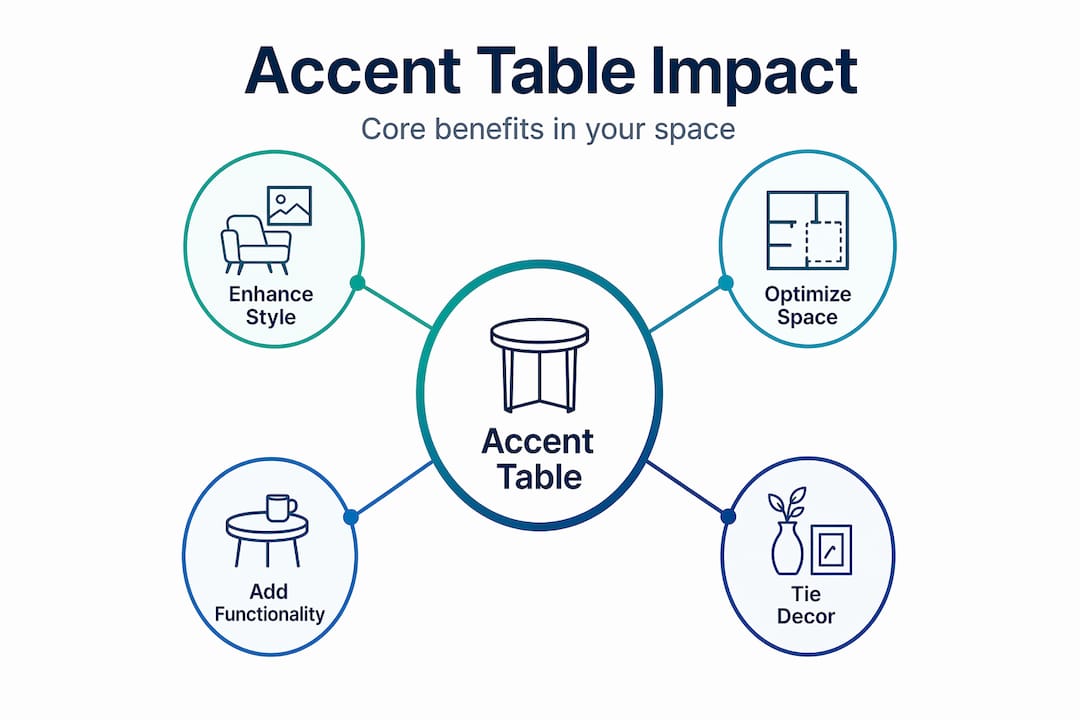
Selecting the right accent table involves consideration of both aesthetics and interaction with other furniture. You don’t need to match everything, but you do need some shared thread connecting the pieces.
Use this checklist before purchasing a new accent table:
- Identify your room’s dominant material: Is it wood, metal, glass, or upholstered fabric? Your new table should echo at least one of these.
- Check your existing color palette: The table doesn’t need to match exactly, but it should work within the room’s tones. A warm walnut table in a cool gray room creates contrast, while a lighter oak in the same room feels softer.
- Consider shape relationships: If your sofa has soft, rounded arms and your rug has curved patterns, a round accent table will feel cohesive. Sharp-edged rooms welcome geometric tables.
- Think about finish and texture: A room full of matte surfaces benefits from one piece with a slight sheen or metallic finish. Variety in texture adds depth without clutter.
- Match the style era loosely: Mid-century modern furniture pairs well with tapered-leg accent tables. Industrial spaces suit raw metal or reclaimed wood options. Contemporary spaces can carry almost any clean-lined design.
Accent tables are also a powerful tool for tying together pieces that don’t naturally relate to each other. A bold patterned rug and a solid sofa can look disconnected until a carefully chosen accent table bridges the gap with a color or finish that references both. This is one of the smarter ways to mix accessories for cohesion without buying entirely new furniture.
For multipurpose or transitional rooms where the style isn’t strictly defined, choose accent tables in neutral materials like natural wood, brushed brass, or matte black. These finishes adapt across style shifts and remain relevant as your decor evolves.
Beyond decoration: What most people miss about accent tables
With all the evidence and styling tactics covered, let’s step back and offer a fresh perspective on getting the most from your accent tables. Here is something worth saying directly: most people who invest in beautiful accent tables still end up frustrated with their rooms. Not because the tables are wrong, but because style becomes the only filter.
The obsession with how a table looks in a product photo often means zero thought goes into how it will actually work during a Tuesday evening when you’re managing a laptop, a cup of coffee, and your phone all at once. That martini table might look stunning, but if it tips easily or has no room for anything beyond a single candle, it will become invisible within a week.
The best accent tables we’ve seen work in real homes are chosen with personal habit in mind first, style second. Think honestly about what you actually do in the spot where the table will live. Do you snack there? Work? Read? Each answer points to a different table shape and size.
There’s also a tendency to treat accent tables as permanent once placed. They don’t need to be. Moving an accent table to a different corner or swapping one from the bedroom to the living room can instantly refresh a space without spending a dollar. Versatility is a feature worth paying for.
The rooms that feel most put together are rarely the ones with the most expensive furniture. They’re the ones where the transforming home decor strategy includes pieces that earn their place every single day. Accent tables, when chosen well, do exactly that.
Shop the look: Find the perfect accent table for your home
Ready to put your newfound knowledge into practice? See how curated accent tables can complete your space.
At New Way Ref, we’ve gathered a collection of modern, stylish accent tables designed to fit real living spaces, not just catalog photoshoots. Whether you’re searching for a slim C-shaped table for your reading chair or a bold drum table to anchor a corner, you’ll find options that balance function and design appeal. Visit New Way Ref to explore the full selection of home furniture and decor, or browse accent tables directly to filter by size, material, and style. Free shipping is available on orders over $50, making it easy to try a piece and see how it transforms your space.
Frequently asked questions
What is the ideal height for an accent table next to a sofa?
The ideal accent table height is within about 2 inches of the sofa arm for comfortable, natural use without reaching or hunching.
How do you keep an accent table from looking cluttered?
Style the table using objects of different heights and apply the rule of three to keep arrangements balanced and visually cohesive.
Can accent tables be mixed or do they need to match?
Accent tables do not need to match, but they should coordinate with the room through shared color, material, or shape for a pulled-together look.
What are popular types of accent tables for small spaces?
C-shaped, nesting, and martini tables are top picks for small or multi-use spaces because they offer surface area without taking up much floor space.