

TL;DR:
- Measure your space and map routines to ensure furniture fits your daily life and room layout.
- Start with foundational anchor pieces that define scale, purpose, and style for each room.
- Choose durable, timeless furniture and adapt design solutions for room challenges and evolving trends.
You finally refresh a room, buy the sofa you’ve been eyeing for months, and then realize it swallows the entire space. Sound familiar? Many homeowners and young professionals end up with furniture that looks great in a showroom but feels wrong at home. The proportions are off, the storage disappears, or daily routines collide with the layout. This guide walks you through a practical, repeatable method: you’ll learn what to measure, how to match furniture to how you actually live, and which mistakes to sidestep before spending a single dollar.
Table of Contents
- Assess your space and daily needs
- Select foundation pieces for every room
- Balance comfort, scale, and style
- Adapt to room challenges and trends
- Our perspective: What most guides miss about choosing furniture
- Upgrade your space with New Way Ref
- Frequently asked questions
Key Takeaways
| Point | Details |
|---|---|
| Map space to needs | Measure for movement and match furniture to your daily habits for better layouts. |
| Invest in anchors | Quality sofas, beds, and tables in neutral tones form the foundation of functional rooms. |
| Balance comfort and style | Pick pieces sized to your room and lifestyle so they look good and work well every day. |
| Adapt for real life | Choose furniture and materials that handle small spaces, busy homes, and changing trends. |
Assess your space and daily needs
Impulsive furniture buying is one of the most common and costly home mistakes. The first real step is understanding the needs of your unique space before you browse a single product page.
Start by measuring every room you plan to furnish. Note the total square footage, door and window placements, and existing fixed elements like radiators or built-ins. Then measure your walkways. Core furniture principles confirm that clear, functional spaces support movement with 30-36 inch walkways, match proportions to room scale, and align with your routine behaviors and storage needs.
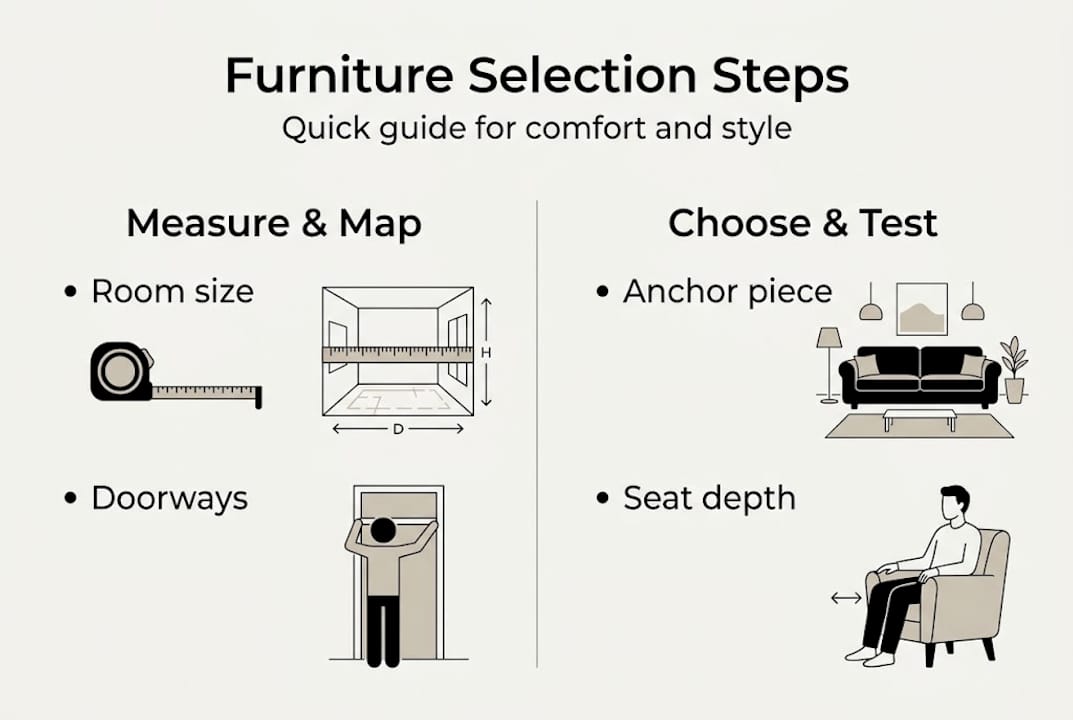
Beyond measurements, list who uses each room and how. Does your living room double as a workspace? Do kids or pets share the sofa? This activity mapping step is something most shoppers skip, and it’s exactly why rooms feel off after the furniture arrives.
Use the table below to organize your findings before shopping:
| Room | Square footage | Main functions | Key constraints |
|---|---|---|---|
| Living room | 200 sq ft | Relaxing, hosting | Narrow entry, one window |
| Bedroom | 150 sq ft | Sleeping, dressing | Small closet, low ceiling |
| Dining area | 120 sq ft | Eating, homework | Adjacent to kitchen |
| Home office | 100 sq ft | Work, video calls | No natural light |
Here’s a step-by-step process to complete your space assessment:
- Sketch a rough floor plan with accurate measurements.
- Mark all doorways, windows, and vents.
- Identify high-traffic paths people walk most often.
- Note storage gaps, like clutter that piles up on counters or floors.
- List every activity that happens in the room weekly.
Pro Tip: Walk through your home at peak activity times, like morning rush or weekend evenings, and notice where congestion builds. Those are your high-traffic zones to protect.
Checking out living room layout tips can also help you visualize how different furniture arrangements work before committing.
Select foundation pieces for every room
Once you’ve mapped your space and activities, it’s time to invest in the right foundation pieces that set the tone for each room.
Every room needs at least one anchor: the sofa in a living room, the bed in a bedroom, the dining table in an eating area, or a desk in a home office. These are the pieces that define scale, establish the room’s purpose, and guide every other purchase. Think of them as the system, not just individual items. As anchor furniture types guidance explains, prioritizing function means starting with behavior and routine mapping, then planning layout for flow with 18-36 inch paths, and buying anchors first as part of a connected system.
When it comes to materials, kiln-dried hardwood frames are the industry standard for longevity. They resist warping, hold screws well over years of use, and justify a higher upfront cost through fewer replacements.
Use this comparison table to match anchor choices to each room:
| Room | Anchor piece | Key quality markers | Neutral color options |
|---|---|---|---|
| Living room | Sofa | Kiln-dried frame, firm cushions | Beige, gray, cream |
| Bedroom | Bed frame | Solid slats, sturdy headboard | White, oak, charcoal |
| Dining area | Dining table | Scratch-resistant surface | Natural wood, matte black |
| Home office | Desk | Cable management, stable base | White, walnut finish |
Key qualities to look for in any anchor piece:
- Solid construction you can feel when you press or push the frame
- Fabric or finish that suits your household’s activity level
- Scale that leaves at least 18 inches of breathing room on each side
- A neutral color that won’t clash with future decor updates
Well-scaled anchors do more than improve daily comfort. They also support your home’s resale value by giving any room a polished, intentional look. Think of your anchor furniture as a long-term investment guided by a smart setup workflow rather than a short-term style choice.
Balance comfort, scale, and style
After anchor pieces are set, getting the right balance of comfort and style ensures your room feels welcoming and truly yours.
Comfort is specific, not subjective. When evaluating a sofa, seat depth matters: 20-21 inches works best for upright sitting, while 22-25 inches suits lounging. Seat height between 16-20 inches accommodates most adults comfortably. Beyond dimensions, always verify that the furniture can actually reach the room. Measure doorways, hallways, and any tight corners along the delivery path. A kiln-dried hardwood frame is worth little if it can’t make it through your front door.

Check out living room proportions to see how sizing choices directly affect how spacious or crowded a room feels.
Comfort features to evaluate before you buy:
- Cushion density: High-density foam holds shape longer than standard foam
- Arm height: Should align with where your elbows rest naturally
- Leg height: Higher legs make sofas easier to clean under and feel lighter visually
- Fabric type: Performance fabrics resist stains, fading, and pet damage
- Back support: Test whether the backrest supports your lower back without strain
Right scale and comfort matter more for daily living than looks alone.
For homes with kids or pets, performance fabrics are a non-negotiable upgrade. They clean easily, resist pilling, and often look just as refined as standard upholstery.
Pro Tip: Always sit or lie on pieces in a showroom before buying. Spend at least five minutes in a realistic position. What feels fine for 30 seconds may feel wrong after an hour of reading or watching TV.
If you can’t test in person, look for retailers that offer generous return windows. Arranging for comfort also makes a real difference once the pieces arrive.
Adapt to room challenges and trends
Not every room is perfect. Let’s solve for unusual layouts, family needs, and keeping your home stylish over time.
Tricky floor plans require smart adaptations. Furniture for small spaces outlines how narrow rooms benefit from slimmer arms and raised legs, while multi-generational homes often need higher seat heights for easier standing. High-traffic areas call for heavy-duty fabrics, and large statement pieces should always lean toward timeless neutrals rather than trending styles, as interior design experts note.
Here’s how to adapt your furniture choices for specific challenges:
- Narrow rooms: Choose sofas with slim rolled arms instead of wide boxy ones. Raised legs create visual breathing room and make spaces feel larger.
- Low ceilings: Stick to low-profile furniture. Tall bookcases and high headboards visually shrink a room.
- High-traffic zones: Prioritize durable fabrics like microfiber or crypton weave. They handle heavy use and clean up fast.
- Multi-functional rooms: Opt for modular pieces. A modular sectional can be rearranged as your needs shift over time.
- Awkward corners: Floating shelves and wall-mounted storage free up floor space without adding visual clutter.
Pro Tip: For narrow rooms, floating shelves replace bulky storage units without sacrificing function. Wall space is often underutilized and can hold a surprising amount.
On the topic of trends: a bold, oversized velvet sofa in a deep jewel tone may look stunning in 2026 but feel dated in three years. Large furniture purchases should always lean classic. Save trends for throw pillows, artwork, or a single accent chair. Browsing contemporary furniture advice can help you identify which styles have staying power.
Our perspective: What most guides miss about choosing furniture
Most furniture shopping guides tell you to measure your space and pick what you love. That’s fine advice, but it misses the harder truth.
The rooms that feel best over time aren’t the ones that match a catalog perfectly. They’re the ones built around real routines, with flexible pieces that can adapt. We’ve seen customers fall in love with a look online, receive a beautiful sofa, and then realize it doesn’t fit their daily rhythm at all. The issue isn’t the furniture. It’s skipping the routine mapping step.
Another overlooked pitfall: delivery and assembly. A stunning sectional means nothing if it can’t turn the corner at your landing. Excitement fades fast when you’re calling for returns and dealing with damage claims.
The most memorable homes evolve slowly. They layer meaning and function over years, not overnight. That’s why defining your style matters as much as measuring your space. Start with anchors, map your routines, and let the room grow from there. That’s a strategy that actually holds up.
Upgrade your space with New Way Ref
Ready to apply these steps? Finding the right pieces is much easier when you have a thoughtfully curated selection behind you.
At New Way Ref, we bring together modern sofas, storage solutions, coffee tables, and decor that meet the standards this guide covers: practical scale, durable construction, and styles that stay relevant. Whether you’re setting up your first apartment or refreshing a living room, our collection is designed to make every room feel intentional. Browse foundational pieces or creative storage options, and enjoy free shipping on orders over $50. Your next great room starts with the right foundation.
Frequently asked questions
What measurements matter most when choosing living room furniture?
Focus on walkway width (30-36 inches), sofa seat depth, seat height, and delivery path sizes for a comfortable and practical fit.
How do I choose durable materials for home furniture?
Look for kiln-dried hardwood frames and performance fabrics, which last longer and age well in busy households.
Is it better to buy neutral or trendy pieces for a new home?
Choose neutral, timeless pieces for large items, since timeless neutrals outlast trends, and add bold accents through smaller decor you can easily swap out.
What’s the best way to furnish a small or narrow space?
Use slim-arm or raised-leg furniture, modular pieces, and floating shelves to maximize usable floor space without visual clutter.