

TL;DR:
- Choosing a sofa involves careful space planning, measuring doorways, hallways, and traffic flow to ensure it fits and functions well.
- Selecting proportions that support comfort and matching upholstery fabrics to your lifestyle ensures a durable, stylish, and comfortable piece for urban living.
Your sofa is the most visible, most used piece of furniture in your home, and knowing how to choose sofa style that actually works for your space is harder than it looks. Urban apartments rarely have forgiving floor plans. Awkward corners, narrow hallways, and open layouts mean a sofa that photographs beautifully in a showroom can become a source of daily frustration once it’s in your living room. This guide cuts through the noise and walks you through every decision point, from measuring your space to picking upholstery, so you can buy with confidence and live with your choice for years.
Table of Contents
- Start with smart space planning: the foundation of choosing sofa style
- Choose sofa proportions and seat dimensions for your comfort
- Pick practical upholstery fabrics matching your lifestyle
- Balance sofa style with your room’s design and future adaptability
- Avoid common mistakes and check key sofa features before buying
- Why true sofa style goes beyond looks to blend comfort, craft, and urban living needs
- Find your perfect sofa style with New Way Ref
- Frequently asked questions
Key Takeaways
| Point | Details |
|---|---|
| Measure for space and delivery | Measure your room and all delivery paths carefully before choosing a sofa style to avoid fit and installation problems. |
| Test seat dimensions personally | Sit on sofas as you would at home to find comfortable seat depth and back height matching your preference. |
| Select durable upholstery | Choose performance fabrics that combine stain resistance with a luxury feel for busy urban households. |
| Harmonize style and flexibility | Use neutral sofa bases paired with accessories to adapt your living room style over time. |
| Prioritize practical style details | Focus on sofa back design, cushion fill, and modular options for long-term style and function in urban spaces. |
Start with smart space planning: the foundation of choosing sofa style
Most people start sofa shopping by scrolling through styles and falling in love with a look. That’s the wrong order. Before you consider silhouette, color, or fabric, you need to know exactly what your space can accommodate. Interior design guidance consistently recommends starting with space planning before committing to any sofa silhouette, because a beautiful style choice becomes useless if the piece can’t fit through your front door.
Here’s what to measure before you shop:
- Destination area: Length, depth, and height clearance where the sofa will live
- Doorways: Both front door and any interior doors the sofa must pass through
- Hallways and turns: The trickiest part, since a long sofa needs enough turning radius to navigate corners
- Stairwells: Ceiling height and landing width matter just as much as staircase width
- Elevator dimensions: In urban buildings, this is often the real bottleneck
Pro Tip: Use painter’s tape on your floor to outline the sofa’s footprint before you buy. Walk around it, open nearby doors, and check that natural traffic flow through the room stays clear. It takes five minutes and saves a costly return.
Mapping traffic flow is just as important as measuring the sofa’s final resting spot. A sofa that blocks the path between the kitchen and the balcony will irritate you every single day, no matter how stylish it looks. For space planning tips that account for both furniture placement and flow, good planning pays off before you spend a dollar.
For tight urban layouts, modular sectionals are worth serious consideration. Unlike a fixed three-seater, modular pieces ship in separate components, move through tight corridors easily, and can be rearranged as your needs change. You can check out the full range of living room furniture types to see how modular designs compare to traditional configurations.
| Space constraint | Recommended sofa type | Why it works |
|---|---|---|
| Narrow hallways (under 36 in.) | Modular sectional | Ships in small components |
| Small square rooms | Compact two-seater or loveseat | Preserves floor space and flow |
| Open-plan layouts | Large L-shape or sectional | Defines zones without walls |
| Studio apartments | Sleeper sofa or sofa bed | Doubles as guest sleeping space |
Choose sofa proportions and seat dimensions for your comfort
Once your space is mapped, the next step in choosing the right sofa is understanding how proportions connect to personal comfort. This is where most buyers make a second costly mistake: they choose what looks good in a room photo without ever sitting in it.
Customers can spend up to an hour finding the right sofa fit, including testing whether they can sit with their feet flat on the floor. That detail matters. If you’re shorter, a deep seat (over 24 inches) will force you to sit with your legs extended or curled, which becomes uncomfortable fast. If you’re taller, a shallow seat or low back will leave you feeling cramped.
Here’s how to test a sofa properly in person:
- Sit the way you actually sit at home. Upright for work-from-home use? Lounging sideways watching TV? Test for your real habits, not your best posture.
- Check your feet. They should rest flat on the floor with your knees at roughly a 90-degree angle when seated upright.
- Test back height. Your head should get support if you want it, and the back should not push your shoulders forward.
- Sit for at least five minutes. Initial comfort and long-term comfort are different. Many sofas feel great for 30 seconds and stiff after ten minutes.
- Check armrest height. Arms should feel rested naturally without your shoulders rising up toward your ears.
Designers note that sofa style is tied to proportions and comfort tradeoffs, not just appearance. A refined silhouette with clean lines can still offer a lounge-friendly seat depth without overwhelming a smaller room. That balance is exactly what you’re looking for in a sofa that works aesthetically and physically.
Pro Tip: If you’re buying online and can’t test in person, look up the seat depth in the product specifications. For most adults, 20 to 23 inches is the sweet spot. Below 20 feels perched, above 24 starts to feel like you’re sinking.
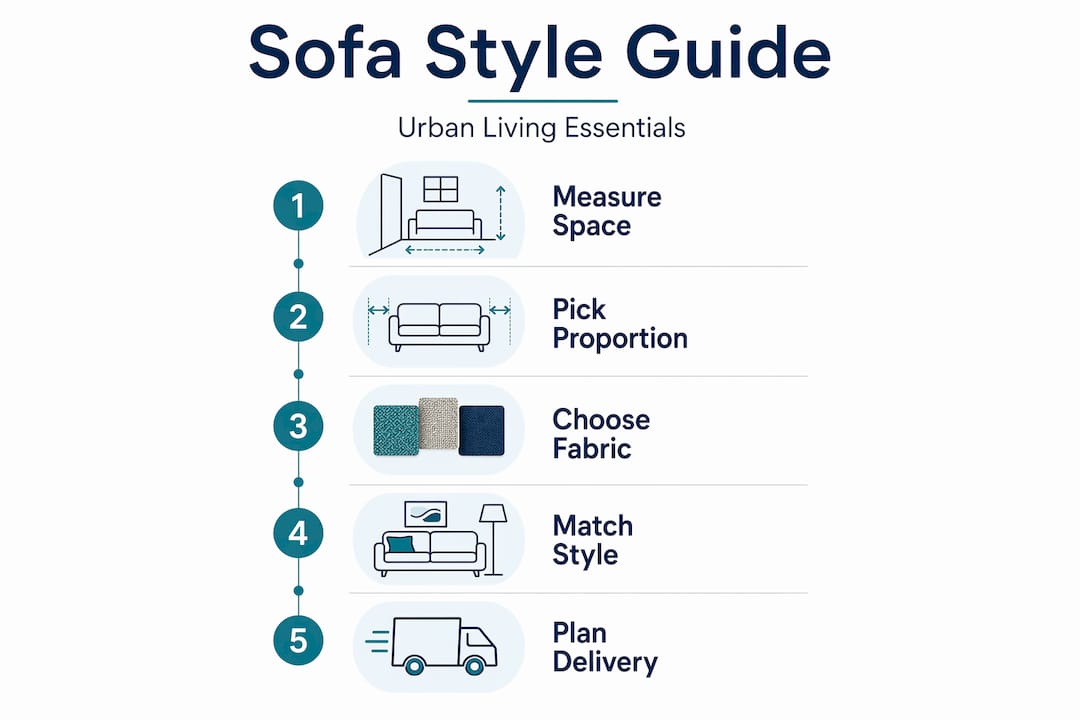
For more guidance on choosing sofa size and comfort that matches your body and lifestyle, taking the time to read up on dimensions before purchasing online can save you a return.
Pick practical upholstery fabrics matching your lifestyle
After selecting the right proportions, choosing upholstery that suits your lifestyle ensures your sofa stays beautiful and practical over time. This is an area where the gap between classic vs modern sofas becomes very visible. Traditional upholstery like pure linen or untreated cotton looks stunning but requires real effort to maintain in a busy home.

Performance fabrics are increasingly requested by clients with kids and pets, offering stain resistance that looks indistinguishable from luxury textiles. The technology behind these fabrics has genuinely caught up with the aesthetics. A performance velvet, for example, is nearly impossible to tell apart from a standard velvet at first touch, but it resists spills, pet hair, and everyday wear far better.
Key upholstery options and what they offer:
- Performance woven textiles: Durable, easy to clean, comes in a wide range of textures and colors
- Performance velvet: Rich look and feel with practical stain resistance, a strong pick for modern sofa design choices
- Standard linen or cotton: Beautiful but requires more care and shows stains more readily
- Leather: Extremely durable over decades but can crack without conditioning, shows scratches, and feels cold in winter months
- Microfiber: Budget-friendly and highly stain-resistant, though it tends to look less refined over time
Choosing performance fabrics like woven textiles and performance velvet is ideal for busy households wanting an elevated look without high maintenance. If you have young children or pets, this is not a compromise on style. It’s a smarter style decision.
Pro Tip: Before buying any upholstery fabric, request a sample swatch. Rub it repeatedly, expose it to a drop of water, and look at it under your home’s lighting conditions. Colors that look neutral in a showroom can read as warm or cool depending on your room’s light sources.
If you’re considering upgrading to performance fabrics as part of a broader living room refresh, it’s one of the highest-return investments you can make in a sofa purchase.
Balance sofa style with your room’s design and future adaptability
With a sofa chosen for comfort and practicality, the next step is making sure its style harmonizes with your room and stays relevant as your tastes evolve. This is the heart of any good sofa style guide: not just picking what looks good today, but picking what works for years.
The table below matches common interior styles with the best sofa silhouettes:
| Interior style | Best sofa silhouette | Key features to look for |
|---|---|---|
| Modern/minimalist | Low-profile, clean lines | Tight back, tapered legs, solid or subtle texture |
| Transitional | Mid-century or track arm | Versatile shape, works with classic and modern pieces |
| Traditional | Rolled arms, tufted back | Ornate details, plush cushions, warm tones |
| Bohemian | Oversized, curved, layered | Mixed textures, earthy tones, flexible styling |
| Industrial | Leather or raw woven fabric | Metal legs, exposed structure, neutral or dark tones |
A neutral upholstery base is your best long-term investment. Changing pillows and throws can make a neutral sofa feel completely fresh as seasons and trends shift, without replacing the piece itself. A gray, ivory, or warm beige sofa gives you the most flexibility.
Additional ways to keep your sofa style ideas current without buying new:
- Swap throw pillow covers seasonally (a $30 change that shifts the entire room’s feel)
- Add a contrasting throw blanket for texture and warmth
- Layer a rug underneath to define the seating zone and anchor the sofa visually
- Update a side table or coffee table to shift the overall style story
For modern sofa style ideas that demonstrate how neutrals pair with different accessory choices, visual examples can make these decisions much easier to imagine in your own space.
Avoid common mistakes and check key sofa features before buying
Finally, to ensure your choice stands the test of time, it helps to know what buyers most often regret. These mistakes show up consistently, and almost all of them are avoidable with a small amount of preparation.
- Skipping delivery route measurements. Many people pick a sofa by look first and then discover fit issues on delivery day. This is the most common and most preventable mistake.
- Ignoring the sofa’s back design. If your layout places the sofa in the middle of a room or visible from a hallway, the back becomes a prominent design element. The sofa’s back shape directly impacts the room view in open-plan layouts.
- Choosing loose cushions over tight back. Loose back cushions need regular fluffing and repositioning. A tight-back sofa maintains its shape and keeps your room looking polished with almost no effort.
- Buying for the showroom, not your home. A sofa surrounded by perfectly matched decor in a store will look different in your actual space. Always visualize it against your walls and floors.
- Overlooking leg style and height. Sofa legs affect how heavy the piece looks. Higher legs create a sense of openness and make cleaning underneath easier. This is especially useful in smaller rooms.
Pro Tip: Before finalizing any sofa purchase, visit the sofa setup pitfalls to avoid checklist to run through the key questions buyers most commonly forget.
“Style is not just what you see from the front. Consider every angle your sofa will be viewed from before committing to a silhouette.”
Why true sofa style goes beyond looks to blend comfort, craft, and urban living needs
Here’s a perspective most sofa buying guides skip: the best sofa for your urban home is not the most beautiful one in the catalog. It’s the one that earns its place in your space every day, combining looks with real usability.
Too many buyers treat sofa shopping like artwork selection, prioritizing visual impact above everything else. The result is a beautiful piece that’s uncomfortable to sit in, difficult to keep clean, or perpetually out of place in the room’s traffic flow. That’s not style. That’s a decoration problem dressed up as a furniture choice.
Designers consistently frame sofa style as a question of proportions and comfort tradeoffs, especially for urban settings where refined, lounge-friendly silhouettes work better in smaller footprints. A sofa that respects your room’s scale, supports your body correctly, and holds up to your lifestyle is making a style statement just as much as a visually dramatic choice.
The practical realities, delivery clearance, upholstery durability, seat depth, back visibility, are not compromises on style. They are the full definition of what makes a sofa work. When those factors are handled well, the visual appeal becomes something that lasts. When they’re ignored, even the most beautiful sofa becomes a regret.
If you’re thinking about upgrading sofa with 2026 trends, anchor every trend decision in these practical fundamentals first. That’s what separates a sofa you admire from one you actually love living with.
Find your perfect sofa style with New Way Ref
Ready to put this guide into practice? At New Way Ref, you’ll find a thoughtfully curated selection of sofas built for exactly this challenge: stylish urban living where aesthetics and function need to work together. From refined low-profile designs in performance fabrics to modular sectionals that solve the delivery and space issues covered in this guide, the collection is designed around real home needs.
Every sofa in our catalog comes with detailed dimensions and material specifications so you can measure confidently and choose with clarity. Whether you’re furnishing your first apartment or refreshing a long-term home, our collections take the guesswork out of matching style with comfort. Explore sofa styles tailored to your space and lifestyle, and transform your living room into a space you’re genuinely proud of.
Frequently asked questions
What is the most important measurement to check before buying a sofa?
Beyond the sofa’s footprint, measuring delivery paths including doorways, hallways, and stairwells is crucial because many buyers overlook whether the sofa can physically enter the home at all.
Why should I sit on a sofa before choosing it?
Sitting lets you personally assess seat depth and back height to match your body, and customers often spend up to an hour finding the right fit because comfort preferences vary widely from person to person.
What upholstery fabrics are best for homes with kids and pets?
Performance fabrics like woven textiles and performance velvet are the top choice, offering strong stain resistance and durability while looking indistinguishable from luxury upholstery.
How can I keep my sofa style fresh as trends change?
Choosing a neutral upholstery base and updating pillows and throws seasonally lets you shift your living room’s style without replacing the sofa itself.
What sofa styles work best in small urban apartments?
Compact modular sectionals and low-profile sofas with refined silhouettes are ideal, and modular designs are popular in urban markets specifically because they ship in components that fit through tight delivery paths and adapt to changing layouts.