

TL;DR:
- A cozy bedroom combines layered textiles, warm lighting, and clutter-free decor to promote relaxation and comfort. Creating this space involves using natural materials, strategic lighting, and thoughtful furniture placement to evoke a sense of warmth and tranquility. Simplifying and decluttering are essential, focusing on quality textures and soft lighting rather than excessive purchases.
A cozy bedroom is defined as a sleep space that combines warm lighting, layered textiles, and intentional decor to promote deep relaxation and comfort. Interior designers call this approach “hygge-inspired design,” a Danish concept centered on warmth, simplicity, and a sense of well-being. Knowing how to create a cozy bedroom means understanding that comfort comes from layering, not just decorating. The right color palette, soft textures, and thoughtful lighting work together to transform any room into a personal retreat. This guide covers every element you need, from materials to furniture layout.
How to create a cozy bedroom with the right textiles
The foundation of any warm, inviting bedroom is tactile comfort. Natural materials like linen, wool, cotton, and bouclé add both physical warmth and visual depth without making a room feel cluttered. Each material brings something different. Linen feels breathable and relaxed. Wool adds weight and warmth. Bouclé gives a soft, textured look that reads as luxurious even in small doses.
Layering is the key technique here. Start with a fitted sheet, add a flat sheet, then a quilt or duvet, and finish with one or two throws draped across the foot of the bed. Folding back duvets and throws to expose all the layers creates a richer, more inviting look that signals comfort the moment you walk in. Pillows follow the same logic. Use two sleeping pillows, two Euro shams behind them, and one or two accent pillows in front for a full, layered effect.
- Choose 2–3 natural materials and repeat them across bedding, curtains, and a rug for visual cohesion
- Layer throws at the foot of the bed rather than folding them in a basket, so the texture is visible and accessible
- Limit patterns to one or two per room to avoid visual noise that works against relaxation
- Use a chunky knit blanket or wool throw as a focal point on a neutral bed for instant warmth
The most common mistake people make is adding too many patterns at once. A striped duvet, a floral pillow, and a geometric rug all compete for attention. Pick one pattern and let solid textures carry the rest of the room.
Pro Tip: Mix a smooth linen duvet with a chunky knit throw and a velvet accent pillow. Three different textures in the same neutral color family create a layered, high-end look without visual clutter.

What lighting works best for a warm, soothing bedroom?
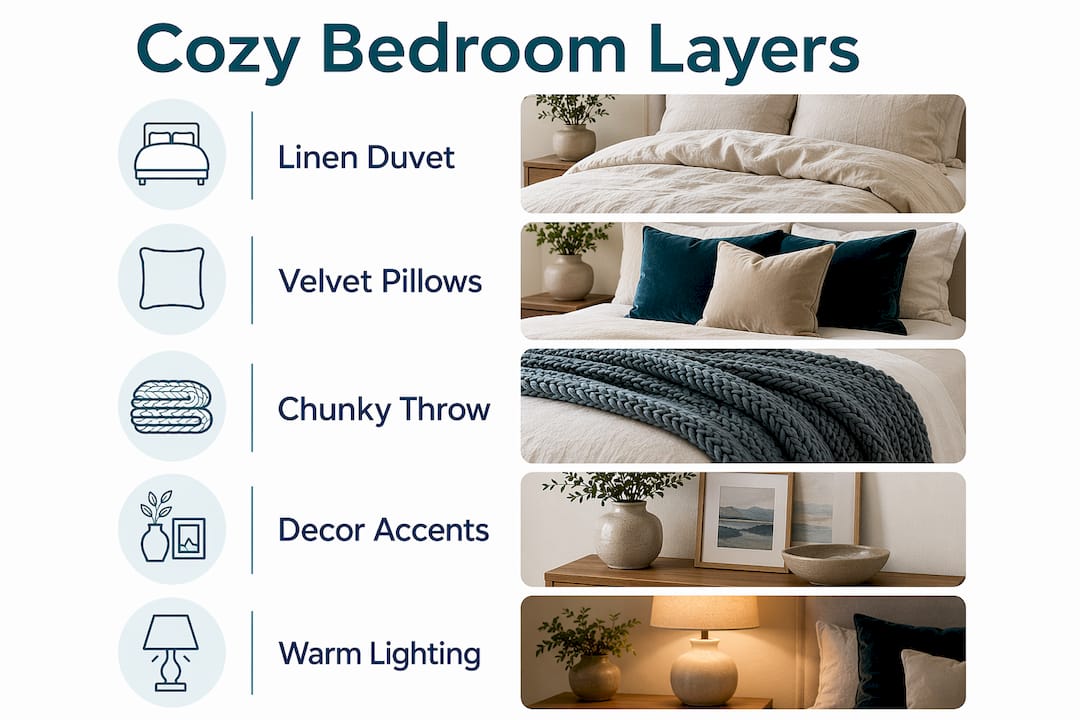
Lighting is the single most powerful tool for creating a warm bedroom atmosphere. Warm-toned bulbs at 2000K–2700K soften the room and signal to your body that it is time to wind down. Standard cool white overhead bulbs do the opposite. They mimic daylight and keep your brain alert, which is the last thing you want at night.
The solution is to layer multiple light sources at different heights rather than relying on a single ceiling fixture. Here is a simple system that works in almost any bedroom:
- Bedside lamps at table height for reading and close-range tasks
- A floor lamp in a corner to add ambient glow and fill dark areas
- Wall sconces mounted at eye level to create depth and visual interest
- Candles or flameless LED candles on a dresser or shelf for soft, flickering warmth
- Dimmers on every switch so you can adjust intensity based on the time of day
Dimmers are non-negotiable for a truly cozy setup. A bedside lamp at full brightness feels harsh. The same lamp at 40% feels warm and intimate. Smart bulbs from brands like Philips Hue let you set schedules and color temperatures automatically, so your room shifts from bright in the morning to warm amber by evening without any manual adjustment.
For stylish lighting ideas in smaller spaces, wall sconces are especially useful because they free up nightstand surface area while still providing directed light exactly where you need it.
Pro Tip: Charge your phone in another room and replace your bedside screen with a small lamp and a book. The reduction in blue light exposure and mental stimulation makes a measurable difference in how quickly you fall asleep.
Best colors for a cozy bedroom: light vs. dark palettes
Color sets the emotional tone of a room before you add a single piece of furniture. Both light and dark palettes can produce a cozy result, but they work differently depending on your room size and the mood you want.
| Color Palette | Best For | Effect |
|---|---|---|
| Cloud White, warm beige, soft cream | Smaller rooms or bright spaces | Airy, open, and calm without feeling cold |
| Charcoal, navy, deep forest green | Larger rooms or low-light spaces | Intimate, restful, and enveloping |
| Warm terracotta, dusty rose | Any size room | Adds warmth and personality without darkness |
| Greige (gray-beige blend) | Neutral base for any style | Versatile, grounding, and easy to layer |
Light colors like Cloud White or warm beige reflect natural light and make a room feel open. They work especially well in smaller bedrooms where dark walls might feel oppressive. Dark colors like charcoal or navy absorb light and create a sense of enclosure that many people find deeply restful. Think of it as the difference between a sunlit meadow and a cozy reading nook.
Accent walls are an effective middle ground. Paint one wall in a deeper tone while keeping the other three light. This adds visual depth and warmth without committing the entire room to a dark scheme. Wallpaper with a subtle texture or botanical print on a single wall achieves the same effect with even more personality.
The safest approach for most bedrooms is a warm neutral base with one accent color pulled from your textiles. If your throw is terracotta, bring that tone into a pillow or a small piece of art. Repetition of color creates cohesion, and cohesion feels calm.
How should you arrange furniture for maximum coziness?
Furniture placement shapes how a room feels before you even sit down. The command position for your bed means placing it against a solid wall with a clear sightline to the door, but not directly in the door’s path. This placement reduces subconscious anxiety because your brain registers that you can see the entry point while remaining protected. It sounds subtle, but the effect on restfulness is real.
Beyond bed placement, these principles guide a comfortable, cozy layout:
- Avoid oversized furniture that crowds pathways. A bed that fits the room leaves space to breathe and move.
- Create a reading nook in an unused corner with a small armchair, a floor lamp, and a side table. This is the hyggekrog concept from Scandinavian design, a small, intentional spot for quiet and reflection.
- Keep nightstands clear. Cluttered surfaces increase visual stimulation and make it harder to relax. Limit each nightstand to a lamp, one book, and a glass of water.
- Use storage furniture like ottomans with lids or beds with built-in drawers to keep the floor clear without sacrificing function.
- Add a soft area rug under the bed to define the sleeping zone and add warmth underfoot when you get up in the morning.
For more guidance on bedroom layout and styling, the goal is always to reduce visual noise. Every item in the room should earn its place.
What are the most common cozy bedroom mistakes?
Most bedrooms fail at coziness not because of what they lack, but because of what they have too much of. Here are the most frequent mistakes and how to fix them:
- Single overhead light. One ceiling fixture creates flat, harsh light with no warmth. Replace it or supplement it with layered sources at multiple heights.
- Screens in the bedroom. Removing screens and charging phones outside the room reduces mental alertness and supports the calm atmosphere you are trying to build.
- Too many competing patterns. Three or more patterns in one room create visual chaos. Stick to one pattern and fill the rest with solid textures.
- Cluttered floors and surfaces. Visual overstimulation from piles of items on the floor or a crowded dresser works directly against relaxation.
- Furniture that is too large. A king bed in a small room leaves no space for the layered accessories and nooks that make a bedroom feel cozy rather than just full.
“Cozy design prioritizes removing stressors over adding new purchases. The ideal bedroom minimizes technology and visual clutter to support mental calm.” — Amerisleep
In small spaces, coziness comes from intentionality. A small bedroom with a well-made bed, warm lighting, and clear surfaces feels more inviting than a large room filled with furniture and clutter. You do not need more space. You need better choices within the space you have. For a deeper look at layering, lighting, and layout, the principles scale to any room size.
Key takeaways
A cozy bedroom is built through layered lighting, natural textiles, and intentional decluttering rather than through new purchases alone.
| Point | Details |
|---|---|
| Warm lighting is non-negotiable | Use bulbs at 2000K–2700K and layer bedside, floor, and wall sources with dimmers. |
| Natural textiles create tactile warmth | Layer linen, wool, cotton, and bouclé in 2–3 textures for depth without clutter. |
| Color sets the emotional tone | Light neutrals open small rooms; dark hues like charcoal or navy create intimacy in larger spaces. |
| Bed placement affects relaxation | Position the bed in the command position for subconscious comfort and reduced anxiety. |
| Decluttering is a design tool | Clear nightstands and tech-free zones reduce visual stimulation and improve restfulness. |
What i’ve learned about authentic bedroom coziness
Most advice on cozy bedrooms focuses on buying things. My experience points in the opposite direction. The most restful bedroom I ever styled had fewer than 12 items in it. The transformation came from removing a television, clearing the nightstand down to three objects, and swapping a cool white ceiling bulb for a warm amber lamp.
The hygge approach resonates with me because it treats coziness as a feeling, not an aesthetic. Mixing a vintage wooden side table with a modern linen duvet creates something that feels lived-in and personal. That combination is harder to achieve by buying a matching bedroom set than by collecting pieces over time that actually mean something to you.
The reading nook idea changed how I think about bedroom layout. A single armchair in the corner with a good lamp turns a bedroom into a room you actually want to spend time in, not just sleep in. That shift in how you use the space changes how it feels entirely.
Removing my phone charger from the bedroom was the single highest-impact change I made. The first week felt uncomfortable. After that, the room felt like a different place. Texture and lighting matter enormously, but the absence of a glowing screen matters more than most people expect.
— Enn
Transform your bedroom with Newwayref
Your bedroom deserves furniture and decor that actually support the warm, relaxed atmosphere you are building.

Newwayref carries a thoughtfully curated selection of home decor and furniture designed to complement cozy interiors. If you are adding a reading nook or a seating area to your bedroom, the modular sofa armrests in warm beige are a practical and stylish starting point. They pair well with neutral palettes and add the kind of soft, functional seating that makes a bedroom feel complete. Browse the full Newwayref home decor collection to find lighting fixtures, accessories, and furniture pieces that bring your cozy bedroom ideas to life. Free shipping is available on orders over $50.
FAQ
What is the best color for a cozy bedroom?
Warm neutrals like beige, cream, and greige work in most rooms. Dark colors like charcoal or navy create a more intimate, restful feel in larger spaces.
What lighting temperature makes a bedroom feel cozy?
Bulbs in the 2000K–2700K range produce warm amber light that softens the room and signals the body to relax. Avoid cool white bulbs above 3000K in a bedroom.
How do i make a small bedroom feel cozy without clutter?
Focus on one layered textile combination, one warm light source at each height, and clear surfaces. Small bedrooms benefit most from intentional minimalism rather than added accessories.
What is the command position for a bed?
The command position places the bed against a solid wall with a clear view of the door but not directly in the door’s path. This layout reduces subconscious anxiety and supports deeper rest.
Do i need to spend a lot to create a cozy bedroom?
No. Cozy design prioritizes removing stressors over new purchases. Swapping a harsh bulb, clearing a nightstand, and adding one textured throw costs very little and produces an immediate change in how the room feels.