

TL;DR:
- True coziness comes from intentional layering of textures, lighting, and furniture placement.
- Editing and restraint are key; remove unnecessary items to achieve a collected, welcoming feel.
- Layered warm lighting and thoughtful furniture arrangement create a inviting, comfortable home atmosphere.
You’ve probably walked into a beautifully decorated room and still felt something was off. The furniture was expensive, the color palette was perfect, and the art was carefully chosen — yet it felt cold, almost staged. That disconnect is more common than you’d think, and the fix isn’t about spending more money. True coziness comes from intentional choices: how you layer textures, how you place your light sources, and how you arrange your furniture to encourage connection rather than just fill space. This guide walks you through each step so your home can feel as good as it looks.
Table of Contents
- Gathering your cozy essentials
- Step-by-step: Layering for comfort and style
- The role of lighting: Creating atmosphere
- Arranging furniture for coziness and connection
- Why true coziness requires editing — not just adding
- Ready to create your cozy home?
- Frequently asked questions
Key Takeaways
| Point | Details |
|---|---|
| Intentional layering matters | Comfort comes from mixing textures and colors, not just adding more decor. |
| Lighting transforms mood | Layered, adjustable lighting is essential to create warmth and intimacy in your home. |
| Furniture layout invites comfort | Arrange seating for conversation, access, and relaxation—not just aesthetics. |
| Editing over crowding | Removing unnecessary items often makes a room more inviting than filling it. |
Gathering your cozy essentials
Now that you understand why many spaces miss the mark on coziness, let’s look at what you actually need to get started. Before you rearrange a single cushion or swap out a bulb, it helps to take stock of the elements that genuinely contribute to warmth in a room.
The core items to gather include:
- Throws and blankets in soft materials like cotton knit, fleece, or chunky wool
- Accent pillows in mixed sizes, from small lumbar styles to oversized floor cushions
- Textured area rugs that anchor seating areas and add warmth underfoot
- Candles in glass holders or ceramic vessels for layered, ambient light
- Mixed lighting sources including table lamps, floor lamps, and string lights
- Natural elements like potted plants, wooden trays, or woven baskets
Here’s a quick reference for what each item contributes to your space:
| Cozy element | Primary purpose | Best placement |
|---|---|---|
| Chunky throw | Tactile warmth and visual softness | Draped over sofa arm or chair |
| Layered rug | Defines zones, reduces echo, adds texture | Under coffee table or seating area |
| Table lamp | Warm, localized light source | End tables, nightstands, shelves |
| Accent pillows | Color, texture, and comfort support | Sofa, reading chair, window seat |
| Candles | Soft flicker light and scent | Mantel, coffee table, dining surface |
| Woven basket | Practical storage with organic texture | Floor beside sofa, bookshelf corner |
One thing that separates truly comfortable spaces from cluttered ones is restraint. As noted by interior design experts, layering visual elements — colors, textures, and surfaces — creates genuine coziness far more effectively than simply piling on more items. Quality matters more than quantity here. Three thoughtfully chosen pillows in contrasting textures will outperform six mismatched ones every time.
If you want a deeper look at how to approach your space from the ground up, our decor transformation guide walks through the full process room by room.
Pro Tip: When selecting textiles, aim to blend at least three different textures — something smooth, something woven, and something soft or nubby. This contrast creates visual depth without needing to add more items.
Step-by-step: Layering for comfort and style
With the right essentials ready, you’re equipped to begin transforming your space. Next, let’s see how layering brings true warmth. Layering isn’t just about stacking more things on your shelves or sofa. It’s about mixing surfaces, heights, and materials in a way that feels deliberate and lived-in at the same time.
Follow these steps to layer your room effectively:
- Start with the anchor pieces. Your sofa, bed, or largest seating element sets the tone. Choose one that’s comfortable first, stylish second. Everything else builds around it.
- Add your base textiles. Layer in a rug that grounds the seating area. Rugs visually define zones and instantly make a room feel more complete and connected.
- Introduce throw pillows and blankets. Mix sizes and textures. Pair a linen pillow with a velvet one. Drape a knit blanket over one arm of the sofa rather than folding it perfectly.
- Bring in accent furniture and surfaces. Side tables, poufs, and small stools give people places to set a drink or book. These practical additions make a space feel human-scale and welcoming.
- Add accents and personal touches last. Books, candles, small plants, and objects with personal meaning finish the look. These are the pieces that make a space feel curated rather than showroom-ready.
The difference between a room that looks “collected” versus one that just looks “decorated” is subtle but significant:
| Quality | Collected look | Decorated look |
|---|---|---|
| Cohesion | Items feel personally chosen | Items match perfectly but feel generic |
| Texture variety | Multiple materials and finishes mix naturally | Matching sets dominate |
| Negative space | Open areas are intentional and restful | Every surface is filled |
| Lighting | Layered warm sources throughout | Single bright overhead light |
| Personal items | Meaningful objects mixed into the display | Purely store-bought accessories |
Exploring different decor style options can help you identify which aesthetic naturally suits your taste before you start layering. And if you want to understand the philosophy behind a thoughtfully assembled room, our piece on the curated collections approach breaks it down clearly.
Designer Benjamin Reynaert, whose work was featured in layered home tips by Domino, emphasizes that coziness comes from intention, not volume. Every item in the room should earn its place.
Pro Tip: After you finish layering, take one item away. Seriously. Removing a single piece often reveals how much more breathing room the space needed, and the room almost always looks better for it.
The role of lighting: Creating atmosphere
Once your layering foundation is set, the right lighting will elevate it — and here’s where many cozy rooms succeed or fail. You can have gorgeous furniture, the perfect rug, and beautiful textiles, but one harsh overhead light can undermine all of it within seconds.
Good cozy lighting relies on three layers working together:
- Ambient lighting is your base layer. It provides overall illumination. Think ceiling fixtures on a dimmer or soft recessed lighting set low.
- Task lighting serves a practical purpose. Reading lamps, desk lights, or under-cabinet lights fall into this category. They’re functional but can still be warm and stylish.
- Accent lighting highlights specific areas or objects. Picture lights above artwork, LED strips behind shelving, or candles on a console table all create focal points and depth.
Practical ideas to bring these layers into your space:
- Replace cool-white bulbs with warm-white ones (look for 2700K to 3000K on the packaging)
- Add a dimmer switch to your overhead fixture if you don’t already have one
- Place at least two table lamps in your main living area, positioned at different heights
- Use candles strategically — a cluster of three on a coffee table creates intimacy without being formal
- Try plug-in sconces or battery-powered lamps if hardwiring isn’t an option
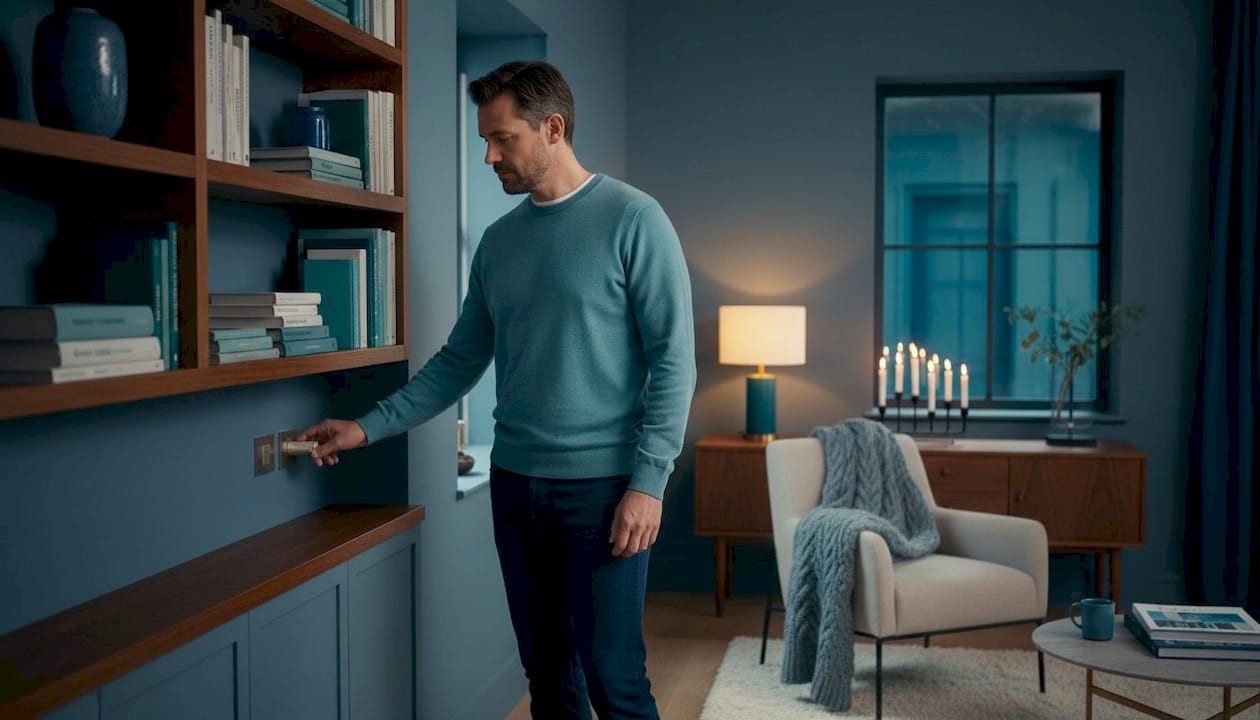
Warm, layered lighting makes interiors feel finished and cozy in a way that no single fixture can accomplish alone. Martha Stewart’s guidance on living room comfort specifically calls out the power of flexible, multi-source lighting to shift a room’s mood entirely.
A caution worth repeating: A single overhead light, no matter how expensive or design-forward the fixture, will flatten a space and make it feel institutional. Avoid relying on one source — layer your light instead.
Dimmers are one of the most underrated tools in interior design. They cost relatively little to install but completely change how you use and feel in a room. Bright for morning coffee, dim for evening relaxation. Same room, very different atmosphere.
For more ideas on using light to shift your home’s mood, take a look at our guide on mood-enhancing lighting. It covers bulb temperature, fixture placement, and how to use light to make small spaces feel larger.
Arranging furniture for coziness and connection
The perfect lighting fades if the seating plan isn’t right — let’s lay out your furniture for real coziness. Furniture arrangement is about more than filling the room efficiently. It determines whether people feel drawn to sit down and stay, or whether they feel like they’re waiting in a waiting room.
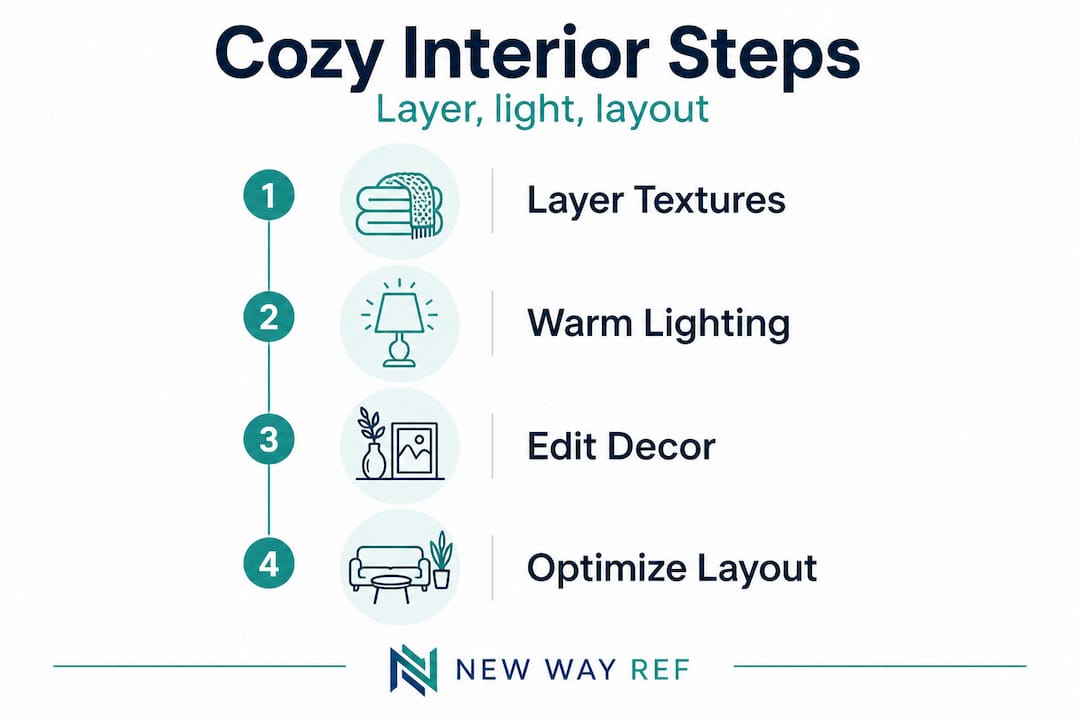
Here’s how to approach your arrangement with coziness in mind:
- Start by clearing the room entirely if possible. This removes the mental anchor of “where things were” and lets you think about the space fresh.
- Place your largest piece first. The sofa or primary seating element should face the room’s natural focal point — a fireplace, a TV, or a window with a view.
- Create conversation groupings. Pull seating closer together than you think you should. A common mistake is pushing furniture against the walls, which creates a cold, open center and forces people to shout across the room.
- Make sure every seat has a nearby surface. Each chair or sofa section should have access to a side table, a tray on a pouf, or a surface within arm’s reach. This is practical and makes the room feel well-considered.
- Leave clear pathways. Circulation should feel natural. Avoid blocking windows, doors, or natural walking paths. Aim for at least 30 to 36 inches of walkway space.
- Add flexible pieces last. Moveable stools, accent tables on casters, and poufs give you options to reconfigure for different occasions without rearranging the whole room.
Furniture layout and circulation directly affect whether a room feels inviting and comfortable or sterile and disconnected. The goal is for a room to feel like it welcomes you, not like it’s waiting to be photographed.
For detailed guidance specific to your room shape, our articles on arranging living room furniture and optimizing living room layout offer room-by-room walkthroughs. And if you’re not sure your current furniture is the right fit for comfort, our guide on choosing furniture for comfort covers what to look for before you buy.
Pro Tip: Rearrange your furniture with conversation in mind, not just visual balance. Two chairs angled toward a sofa — close enough for easy eye contact — create a far cozier feel than a formal side-by-side arrangement.
Why true coziness requires editing — not just adding
Now that you have the step-by-step foundation, here’s a candid perspective you may not have heard from mainstream decor advice.
Most home decorating content tells you what to buy. Add this lamp. Get this rug. Try these throw pillows. And while those things matter, the advice almost always skips the harder, more important step: taking things away.
We’ve seen this pattern over and over. Someone invests in beautiful pieces, follows every tip they can find, and the room still feels off. Nine times out of ten, the problem isn’t what’s missing — it’s what shouldn’t be there. A side table with six objects on it. Three rugs layered without intention. Throw pillows in five patterns that don’t quite connect. The room is busy, not cozy.
The most powerful insight from experienced designers is that a truly comfortable room feels “collected, not decorated.” That phrase carries real meaning. Collected means intentional. It means every piece was chosen for a reason, placed deliberately, and given room to breathe. Decorated often means filled — items added for the sake of completeness rather than comfort.
Negative space is not empty space. It’s restful space. When a sofa has three pillows instead of nine, your eye can relax. When a shelf has a few meaningful objects instead of a dense collection, those objects actually get noticed. Rooms that feel most calming — the ones you walk into and exhale — almost always have more restraint than you’d expect.
The practice of curated collections wisdom isn’t about minimalism for minimalism’s sake. It’s about making sure every item in the room earns its place. If something doesn’t add to the comfort, the warmth, or the personal story of the space, it’s probably doing the opposite.
Editing takes confidence. It’s easier to add than to remove, because removing something feels like giving up or undoing work. But the discipline to say “this room has enough” is what separates truly cozy spaces from ones that just look busy.
Ready to create your cozy home?
Armed with everything you need to make your home more inviting, why not explore decor ideas tailored for living beautifully?
At New Way Ref store, we’ve thoughtfully curated a selection of modern, stylish home decor designed to help you layer warmth into every room. From soft lighting fixtures to accent furniture that anchors a space just right, everything is chosen with comfort and style in mind.

Browse our full range of cozy home decor options to find pieces that fit your space and your style. Whether you’re starting from scratch or refining a room that’s almost there, we have practical, beautiful solutions ready to ship — with free shipping on orders over $50.
Frequently asked questions
How do you layer fabrics for maximum coziness?
Mix throws, pillows, and rugs in contrasting textures, placing the softest elements where you relax most. Layering tactile elements — not just matching them — is what creates genuine warmth and visual depth.
What type of lighting makes a living room feel warm and inviting?
Layer warm, soft lighting sources like table lamps, candles, and dimmable overhead fixtures for intimacy. Soft, warm lighting using ambient, task, and accent sources together makes interiors feel finished and cozy rather than flat or institutional.
How can you avoid making a space look cluttered while adding cozy decor?
Focus on intentional layering and edit out decor pieces to maintain balance and cohesion. A cozy room is often “collected, not decorated,” so thoughtful editing and a consistent visual thread matter more than adding more items.
What’s the most common mistake when trying to create a cozy interior?
Relying on a single harsh light or overfilling the room with too many accessories are the two most frequent missteps. Avoiding one overhead source and layering light from multiple points dramatically improves the mood, regardless of how nice your furniture is.