

TL;DR:
- Mixing furniture styles creates personalized, layered spaces by unifying color, materials, and visual weight.
- Limiting to two or three styles, selecting an anchor piece, and applying color and material repetition ensure cohesion.
Mixing furniture styles is the practice of combining distinct furniture aesthetics into one space using shared design principles to create cohesion over chaos. Done well, it produces rooms that feel personal, layered, and far more interesting than spaces furnished entirely from a single collection. The key to successful furniture style blending lies in three unifying forces: a consistent color palette, repeated materials, and balanced visual scale. Designers like Kelly Wearstler and Jonathan Adler have built entire careers on this principle, and the approach is now accessible to any homeowner willing to follow a few clear rules.
What are the foundational rules for mixing furniture styles?
Knowing how to mix furniture styles starts with three non-negotiable principles. Get these right, and the rest falls into place naturally.
-
Match undertones, not styles. Every piece of furniture carries a temperature. Warm woods like walnut, mahogany, and teak sit in the same family and complement each other in mixed-style rooms. Cool-toned metals like chrome and nickel belong together. Mixing warm and cool undertones in the same room creates visual tension that reads as a mistake rather than intention.
-
Balance visual scale. A heavy, carved Victorian armchair paired with a slender Parsons side table creates imbalance regardless of style. Pairing heavy traditional pieces with other visually substantial elements keeps the room grounded. Think of it as matching the “weight class” of each piece.
-
Contrast shapes deliberately. Rounded forms soften angular ones. A curved velvet sofa next to a rectangular oak coffee table creates productive tension. Placing all rounded pieces together produces a room that feels soft and undefined. All angular pieces feel cold. The contrast is the point.
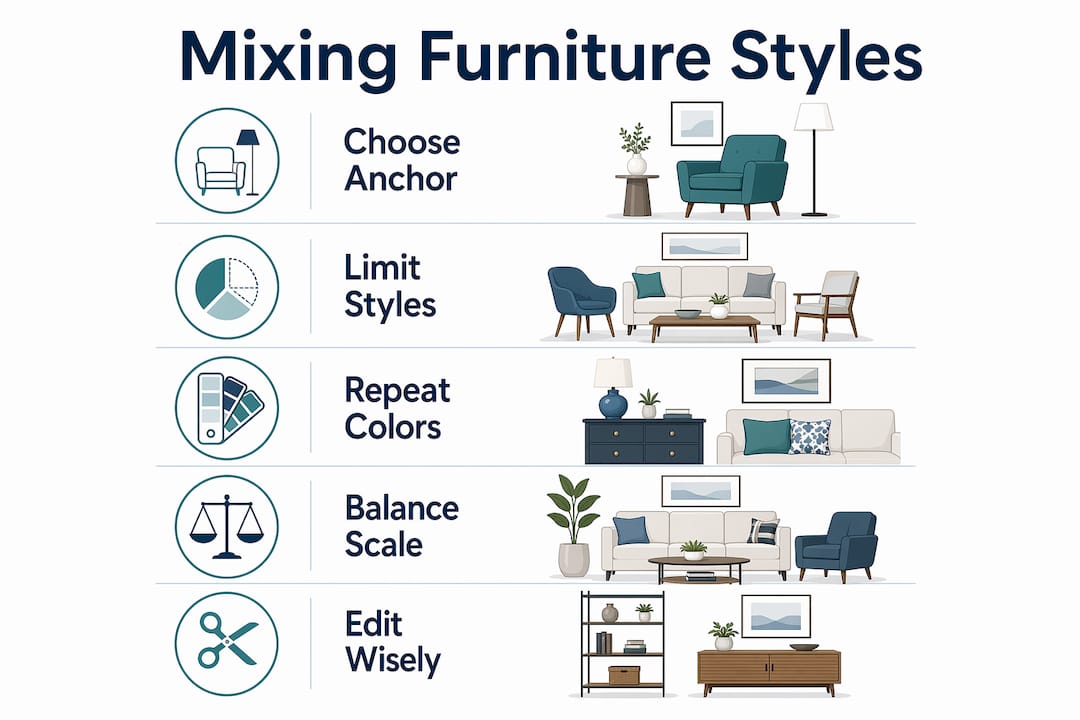
Beyond these three rules, limit your room to two or three styles maximum. Two styles in a 70/30 ratio works for most homeowners: one dominant style sets the tone, and the second adds contrast. Three styles is the ceiling, even for experienced designers. More than that, and the room stops feeling curated and starts feeling random.
Every well-mixed room also needs an anchor piece. The focal piece sets the tone for everything around it. Choose your sofa or dining table first, then layer secondary style pieces in response. This single decision prevents the most common mistake in eclectic furniture design: buying pieces you love individually that refuse to coexist.
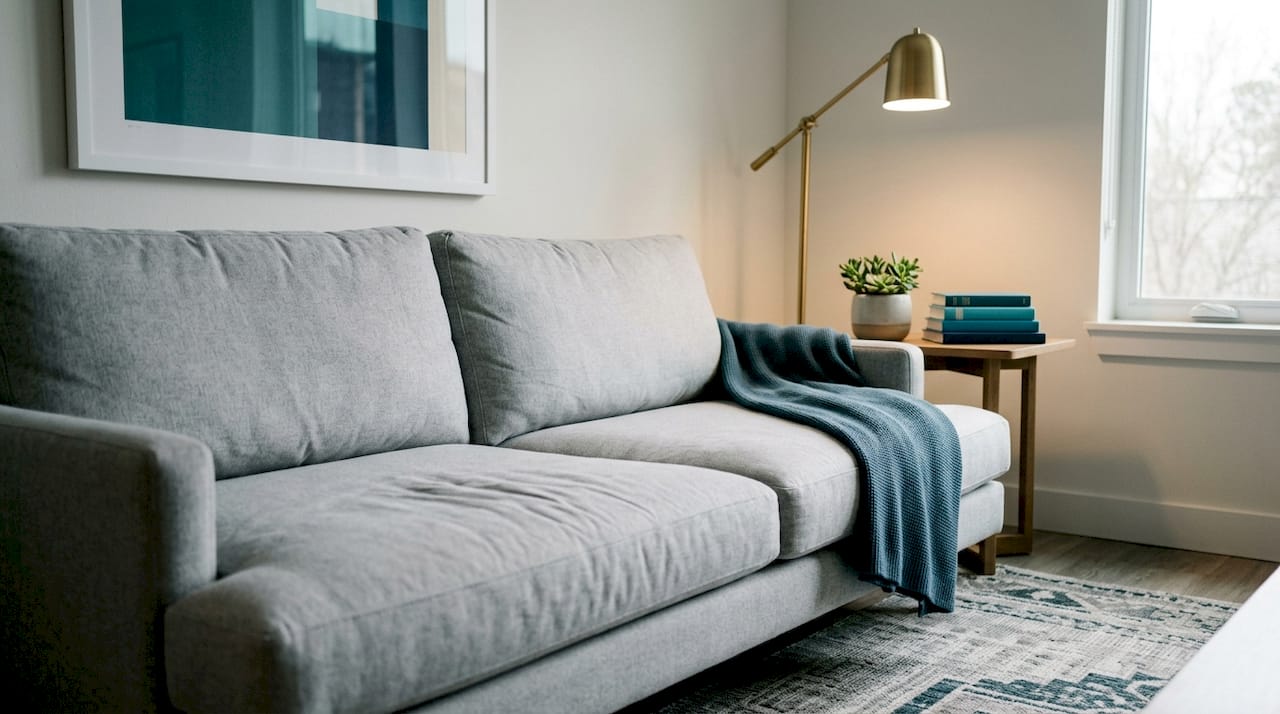
Transitional pieces serve as connectors between styles. A mid-century credenza with brass hardware can link a traditional room to a modern one because it borrows from both vocabularies. When you find a piece that speaks two design languages, buy it.
Pro Tip: Before purchasing a second or third style piece, photograph your anchor piece and hold the image next to the new item in the store. If the undertones clash or the scale feels off in the photo, trust what you see.
How to use color and material repetition to unify mixed styles
Color is the fastest way to create cohesion across mismatched furniture styles. The 60-30-10 color rule is the designer-approved framework for getting this right: 60% dominant color on walls and large surfaces, 30% secondary color on large furniture, and 10% accent color on pillows, throws, and art. This proportion prevents any single color from overwhelming the room while giving every piece a clear role to play.
Neutral walls are your best tool when combining decor styles. A warm white or greige wall acts as a blank canvas that lets furniture from different eras coexist without competing. The wall color becomes the 60%, and you build from there.
Material repetition works the same way color does. When you repeat each material at least twice across a room, the eye reads it as intentional. Brass on a lamp, a picture frame, and cabinet hardware creates a thread the eye follows around the room. That thread is what separates a thoughtfully curated space from a collection of random purchases.
Here is a practical guide to material pairings that work across styles:
| Material | Pairs well with | Temperature |
|---|---|---|
| Walnut wood | Leather, linen, brass | Warm |
| White oak | Concrete, matte black, wool | Cool/neutral |
| Brass metal | Velvet, marble, warm wood | Warm |
| Matte black | Raw linen, white oak, glass | Cool |
| Marble | Brass, chrome, lacquered wood | Neutral |
- Use warm woods (walnut, cherry, teak) together and avoid mixing them with cool-toned white oak or ash in the same sightline.
- Repeat your chosen metal finish in at least three spots: lighting, hardware, and one decorative object.
- Textiles like linen, velvet, and wool each carry a temperature. Linen reads cool and casual; velvet reads warm and formal. Mix them intentionally.
- Avoid introducing more than two metal finishes in a single room. Brass and matte black work. Brass, chrome, and copper together create noise.
Pro Tip: Pull a paint chip from your dominant wall color and carry it when shopping. Hold it against any furniture piece you are considering. If the undertones fight, the piece will fight in your room too.
What practical steps help balance scale and proportion when mixing furniture styles?
Visual weight is not the same as physical size. A glass coffee table is physically large but visually light. A small, heavily carved wooden side table carries enormous visual weight. Understanding this distinction is the foundation of furniture arrangement that actually works when you are combining styles.
- Match visual weight across the room. Place your heaviest pieces opposite each other to create balance. A substantial sectional on one wall calls for a solid bookcase or console on the opposite side, not a pair of slim accent chairs.
- Vary heights deliberately. A low-profile mid-century sofa paired with a tall arc floor lamp creates vertical interest. Without height variation, a room feels flat regardless of how well the styles mix.
- Group purposefully. Conversation areas work when the furniture within them shares a similar visual weight, even if the styles differ. A traditional wingback chair and a modern barrel chair can share a rug if both carry similar visual presence.
- Avoid clustering all small pieces together. A grouping of delicate accent tables, thin-legged chairs, and small artwork in one corner creates a weak zone. Distribute visual weight evenly across the room.
The most common scale mistake is buying a sofa that is too small for the room, then surrounding it with large statement pieces. The sofa becomes lost, and the room feels unresolved. Size your anchor piece to the room first, then scale everything else in response.
Pro Tip: Tape out the footprint of any large furniture piece on your floor with painter’s tape before buying. Walk around it. Sit in the space. Scale errors are almost impossible to see in a showroom but immediately obvious at home.
How do different design eras and styles blend without creating visual noise?
The architectural character of your home is the framework for every style decision you make. A 1920s craftsman bungalow can absorb mid-century modern and art deco pieces because all three share warm wood tones and geometric detail. A glass-and-steel contemporary home suits Bauhaus, Scandinavian, and industrial pieces for the same reason. Fighting your architecture is the fastest way to create visual noise.
Era combinations that consistently work well include mid-century modern paired with art deco, vintage farmhouse with contemporary, and traditional with transitional. What makes these pairings succeed is shared materiality or palette across the eras. Honed marble or unlacquered brass appearing in both a 1940s side table and a current pendant light creates continuity across decades.
| Era combination | Shared thread | What to avoid |
|---|---|---|
| Mid-century + art deco | Warm wood, geometric forms | Mixing cool and warm metals |
| Vintage farmhouse + contemporary | Natural textures, neutral palette | Ornate carvings with minimal forms |
| Traditional + transitional | Symmetry, upholstered pieces | Clashing wood undertones |
| Industrial + Scandinavian | Matte black, raw materials | Overly decorative accessories |
Mixing eras creates intrigue when contrast is balanced by shared elements. The contrast is what makes the room interesting. The shared elements are what make it feel resolved. Remove either one, and the room tips into chaos or boredom.
Editing is the skill most homeowners underestimate. Removing items improves cohesion more reliably than adding them. When a room feels busy, the instinct is to add a unifying element. The better move is to pull three pieces out and see what remains. Breathing room lets each era’s pieces stand on their own. You can always read more about mixing old and new styles for a deeper look at this approach.
Pro Tip: Take a black-and-white photo of your room on your phone. Color disappears, and you see only shape, scale, and visual weight. If the room looks balanced in black and white, it will look balanced in color.
What common mistakes to avoid when mixing furniture styles?
Most rooms that feel “off” share the same handful of errors. Recognizing them early saves you from expensive corrections.
- Too many styles competing at once. More than three styles in a single room produces clutter, not character. Audit your space and identify which style is dominant, which is secondary, and which pieces belong to neither. Those outliers are the first to go.
- Every piece fighting for attention. Designate one or two hero pieces per room and let everything else support them. A stunning vintage credenza loses its impact when surrounded by five other statement pieces. Supporting furniture should recede, not compete.
- Clashing undertones in wood or metal. Warm walnut next to cool ash reads as a mistake. Brass hardware next to chrome reads as unfinished. Choose a temperature family and stay in it across your primary materials.
- Ignoring height variation. A room where every piece sits at the same height feels monotonous. Mix low seating with tall shelving, table lamps with floor lamps, and low art with tall mirrors.
- No negative space. Every surface covered, every corner filled. Negative space is not wasted space. It is the pause that makes the statement pieces readable.
When a room feels unresolved, the fix is almost always one of three things: introduce a transitional piece that borrows from both styles present, add a unifying color accent (a throw, a rug, or a set of cushions) that appears in at least two spots, or remove the piece that shares no material, color, or shape language with anything else in the room. For more guidance on mixing decor styles with confidence, the process is the same whether you are working with furniture or accessories.
Pro Tip: If you cannot identify what two pieces in your room have in common, neither can your guests. Every piece needs at least one visible connection to another piece in the room, whether through color, material, or shape.
Key takeaways
Successful furniture style blending requires a consistent color palette, repeated materials, and matched visual weight across all pieces in the room.
| Point | Details |
|---|---|
| Anchor piece first | Choose your sofa or dining table first, then build secondary styles around it. |
| 60-30-10 color rule | Apply 60% dominant, 30% secondary, and 10% accent color to prevent visual chaos. |
| Limit to three styles | Two or three styles maximum keeps the room curated rather than cluttered. |
| Repeat materials twice | Each material or finish should appear in at least two spots to read as intentional. |
| Edit for breathing room | Removing pieces improves cohesion more reliably than adding new ones. |
Why the “rules” are really just a starting point
I have spent years looking at rooms that follow every design rule perfectly and still feel lifeless. Then I have walked into spaces that break half the rules and feel completely right. The difference is almost always confidence. The homeowner made a decision and committed to it.
The principles in this article are real and they work. The 60-30-10 rule, the two-style limit, the material repetition strategy: these are not arbitrary. They reflect how the human eye processes visual information. But they are a starting point, not a ceiling. Once you understand why a rule exists, you know exactly when breaking it will work in your favor.
The rooms I find most memorable always have one unexpected combination. A Shaker-style cabinet next to a baroque mirror. A raw concrete side table beside a tufted velvet sofa. These pairings work because the designer understood the rules well enough to know which one to break and how to compensate with a shared color or material thread.
Start with the anchor piece. Get the color palette right. Repeat your materials. Then trust what you see. Your instincts about your own home are more reliable than you think, especially once you have the vocabulary to understand what you are responding to. Style evolves. The best rooms are never truly finished.
— Enn
Transform your space with Newwayref’s curated furniture collection
Ready to put these principles into practice? Newwayref offers a thoughtfully curated selection of furniture and home decor designed to work across styles, from statement sofas and coffee tables to lighting and accessories that serve as perfect transitional pieces.
Whether you are building a room around a bold anchor piece or searching for the supporting furniture that ties your existing collection together, browse Newwayref’s full collection to find pieces that fit your palette, your scale, and your style. Free shipping on orders over $50 makes it easy to experiment with a new accent piece before committing to a larger purchase. Your next great combination is closer than you think.
FAQ
What is the easiest way to start mixing furniture styles?
Choose one anchor piece first, typically a sofa or dining table, then select secondary pieces that share at least one material, color, or shape element with it. This single decision prevents the most common mistake in eclectic furniture design.
How many furniture styles can you mix in one room?
Limit your room to two or three styles maximum. Two styles in a 70/30 dominant-to-accent ratio works best for most homeowners, while three styles is the ceiling even for experienced designers.
What is the 60-30-10 rule in furniture styling?
The 60-30-10 rule divides color use into 60% dominant (walls and large surfaces), 30% secondary (large furniture), and 10% accent (pillows, art, and throws) to keep mixed-style rooms visually balanced.
Can you mix warm and cool wood tones in the same room?
Mixing warm and cool wood tones in the same sightline creates visual tension that reads as unintentional. Warm woods like walnut, mahogany, and teak work together, while cool-toned woods like white oak and ash belong in a separate temperature family.
How do you fix a room where mixed styles feel chaotic?
Remove pieces that share no material, color, or shape language with anything else in the room, then add a unifying color accent that appears in at least two spots. Editing down almost always resolves the problem faster than adding new pieces.