

Mixing home accessories can transform a bland room into a magazine-worthy space, but getting it right feels overwhelming. Too many colors clash, textures compete, and suddenly your carefully chosen pieces look chaotic rather than curated. The difference between a stylish, cohesive look and a cluttered mess often comes down to a few strategic choices. This guide walks you through expert-backed techniques to mix accessories confidently, creating a modern living space that reflects your personality while maintaining visual harmony.
Table of Contents
- Gathering Your Tools And Planning Your Style
- Step-By-Step Process To Mix Your Home Accessories
- Common Mistakes To Avoid And Tips For Troubleshooting Your Accessory Mix
- Evaluating Results And Refreshing Your Accessory Mix
- Discover Stylish Home Accessories At New Way Ref
- How To Mix Home Accessories Frequently Asked Questions
Key takeaways
| Point | Details |
|---|---|
| Plan your foundation | Establish a clear style direction and color palette before purchasing or arranging accessories. |
| Layer with intention | Mix textures, shapes, and scales deliberately to create depth and visual interest. |
| Avoid common pitfalls | Overcrowding and color conflicts undermine cohesion, so edit ruthlessly. |
| Refresh regularly | Seasonal updates and periodic evaluation keep your space feeling current and balanced. |
Gathering your tools and planning your style
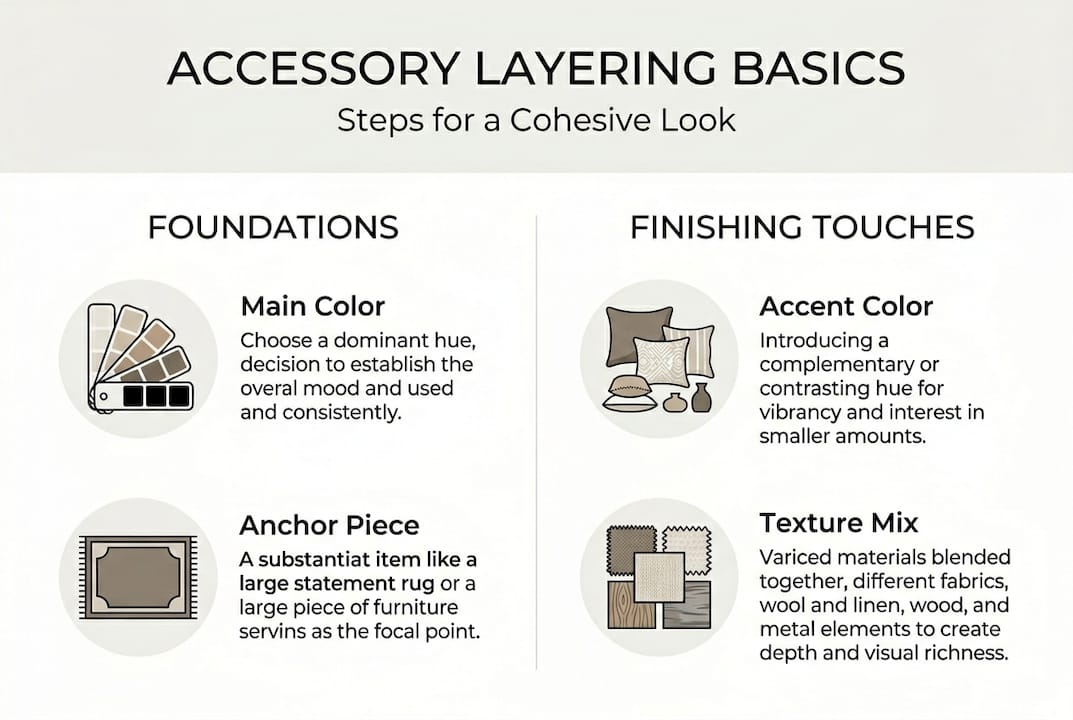
Before you start arranging pillows and vases, you need a clear vision. Planning your style and color scheme is crucial to mixing accessories cohesively. Your decor style acts as a filter for every decision you make. Are you drawn to clean-lined modern minimalism, eclectic bohemian warmth, or industrial edge? Identifying your aesthetic prevents impulse purchases that don’t serve your overall vision.
Once you know your style, select a color palette that ties everything together. Most successful schemes use two to three main colors with one or two accent shades. Neutrals like white, gray, and beige provide a calming base, while pops of color through accessories add personality without overwhelming the space. Consider your existing furniture and wall colors when choosing your palette, ensuring new accessories complement rather than clash.
Essential accessory types to consider include:
- Textiles (throw pillows, blankets, rugs)
- Decorative objects (vases, bowls, sculptures)
- Wall art (paintings, prints, mirrors)
- Lighting fixtures (table lamps, floor lamps)
- Greenery (plants, flowers, botanical prints)
- Functional decor (trays, baskets, candle holders)
Having a variety of accessory types gives you flexibility in creating layers and visual interest. You don’t need every category represented in every room, but understanding the options helps you identify gaps in your current setup.
| Tool/Material | Purpose | Example |
|---|---|---|
| Color wheel | Identify complementary and analogous color schemes | Physical wheel or digital app |
| Measuring tape | Ensure proper scale and spacing | Standard 25-foot tape |
| Inspiration images | Reference photos for style direction | Pinterest boards, magazine clippings |
| Inventory list | Track existing accessories and identify needs | Spreadsheet or notebook |
Pro Tip: Choose two to three main colors and one to two accent colors for your palette. This formula prevents color overload while giving you enough variety to create interest. Test your palette by gathering paint chips or fabric swatches before committing to purchases.
Step-by-step process to mix your home accessories
Start with your largest pieces as anchors. Your sofa, bed, or dining table sets the foundation for everything else. These anchor pieces establish scale and help you determine appropriate sizes for accessories. A large sectional sofa can handle bigger throw pillows and substantial artwork, while a compact loveseat needs smaller-scale accents to avoid looking overwhelmed.
Incorporating varying textures creates visual depth and makes your space feel intentionally designed rather than randomly assembled. Mix smooth surfaces with rough ones, shiny finishes with matte, and soft fabrics with hard materials.
Texture combinations that work well:
- Velvet pillows with linen throws
- Ceramic vases beside wooden bowls
- Metal picture frames paired with woven baskets
- Glass lamps next to stone sculptures
- Leather accents with cotton textiles
Follow these steps to mix accessories effectively:
- Place your largest accessories first, creating focal points in the room.
- Add medium-sized pieces around these anchors, maintaining visual balance.
- Fill in with smaller decorative objects, using odd-numbered groupings.
- Distribute your accent colors throughout the space to create flow.
- Step back and assess from different angles, adjusting as needed.
Color distribution matters as much as color selection. Repeating your accent colors in at least three spots around a room creates cohesion. If you have navy blue pillows on your sofa, echo that shade in artwork across the room and perhaps in a decorative bowl on your coffee table. This repetition guides the eye and makes the space feel intentional.
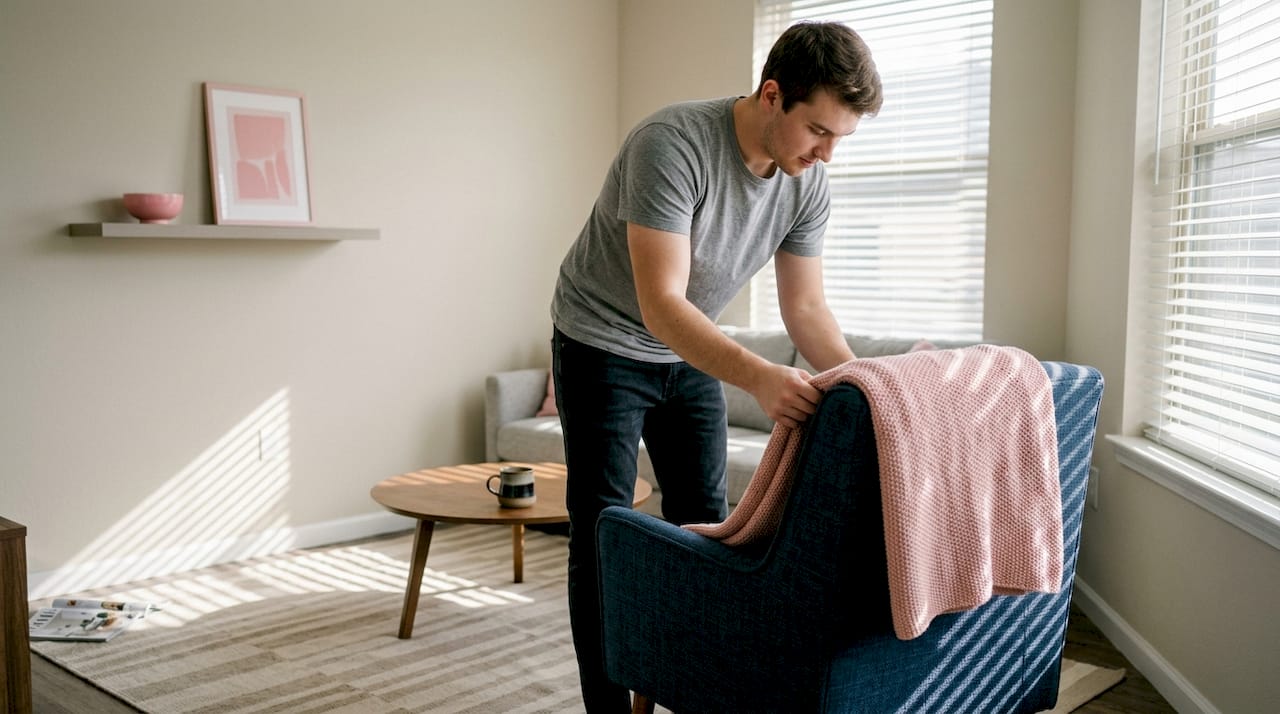
Balancing accessory sizes prevents monotony. Group items of varying heights together on shelves or tables. A tall vase paired with a medium-height stack of books and a small decorative object creates more interest than three items of identical height. The rule of thirds applies here: aim for one tall piece, one medium piece, and one short piece in each grouping.
| Accessory Type | Ideal Placement | Style Impact |
|---|---|---|
| Large artwork | Above sofa or bed | Creates focal point and anchors space |
| Table lamps | End tables, console tables | Adds ambient lighting and vertical interest |
| Throw pillows | Sofas, chairs, beds | Introduces color, pattern, and texture |
| Decorative trays | Coffee tables, ottomans | Corrals smaller items and defines zones |
| Floor plants | Corners, beside furniture | Brings life and fills vertical space |
Shape contrast adds sophistication to your accessory mix. If your furniture features clean lines and right angles, introduce curved accessories like round mirrors, spherical vases, or organic-shaped sculptures. Conversely, angular accessories can sharpen a room dominated by soft, rounded furniture. This interplay between geometric and organic shapes creates visual tension that keeps spaces interesting.
Pro Tip: Use odd numbers when grouping accessories. Three candlesticks look more natural than two or four. Five small frames create better visual rhythm than six. This principle, rooted in design theory, helps arrangements feel balanced without appearing too symmetrical or staged. When styling your living room for a modern look, odd-numbered groupings prevent the space from feeling too rigid.
Common mistakes to avoid and tips for troubleshooting your accessory mix
Overcrowding ranks as the most common decorating mistake. More accessories don’t equal more style. In fact, avoiding overcrowding and color overload is key to a cohesive space. Every surface doesn’t need decoration. Negative space allows your eye to rest and makes the accessories you do display feel more intentional and valuable.
Warning signs your space is overcrowded:
- Surfaces have no empty space visible
- You struggle to find places for everyday items
- The room feels visually chaotic rather than interesting
- Cleaning becomes difficult due to too many objects
- Individual pieces lose impact because nothing stands out
“Less is more when mixing accessories to maintain cohesion.”
Color palette conflicts create visual discord that undermines even the most thoughtful accessory selection. If your carefully chosen navy and gold scheme suddenly includes random pops of red, purple, and green, the cohesion falls apart. Stick to your established palette ruthlessly. If you fall in love with an accessory outside your color scheme, consider whether it’s worth adjusting your entire palette or if you should pass on the piece.
Lighting dramatically affects how colors and textures appear. An accessory that looks perfect in the store might read completely differently in your home’s natural and artificial light. Before committing to a purchase, ask if you can take it home to test. Many retailers allow returns, making it worth the effort to see pieces in your actual space. Pay attention to how colors shift from morning to evening as natural light changes.
Troubleshooting tips when your mix isn’t working:
- Remove half your accessories and add back only what you truly love
- Swap one dominant color for another if the palette feels off
- Adjust lighting to see if that resolves color or texture issues
- Move accessories to different rooms to find their best placement
- Take photos of your space to identify problems more objectively
Scale mismatches throw off visual balance. Tiny accessories on a massive console table look lost, while oversized pieces on a small side table appear comical. Match accessory scale to furniture scale, erring on the side of slightly larger rather than too small. A good rule: accessories should occupy roughly one-third to two-thirds of the surface they sit on, leaving breathing room around them.
Evaluating results and refreshing your accessory mix
Step back literally and figuratively to assess your work. Leave the room for an hour, then return with fresh eyes. Does the space feel balanced? Do your eyes move comfortably around the room, or do they get stuck on one cluttered area? Take photos from different angles. Your camera often reveals issues your eyes miss in person, like uneven color distribution or awkward gaps.
Signs your accessories need updating:
- The arrangement feels stale or boring despite following all the rules
- Trends have shifted and your space looks dated
- Your lifestyle has changed and current accessories don’t reflect that
- Pieces show wear, damage, or discoloration
- You find yourself avoiding the space because it doesn’t feel right
Regular updates and evaluation keep your space fresh and stylish. You don’t need to overhaul everything seasonally, but small refreshes prevent stagnation. Swap throw pillow covers for different textures or colors. Rotate artwork between rooms. Replace summer’s bright florals with autumn’s rich botanicals. These minor changes keep your space feeling current without requiring major investment.
Simple refresh ideas that make big impact:
- Change out throw pillows and blankets seasonally
- Rotate artwork and photographs quarterly
- Introduce fresh flowers or new plants monthly
- Swap decorative objects between rooms for a new perspective
- Update one accent color while keeping your base palette
- Replace worn or dated pieces with contemporary alternatives
Maintaining cohesion during refreshes requires discipline. Your new spring accessories should still align with your established color palette and style direction. If your base is modern minimalism, don’t suddenly introduce heavily ornate baroque pieces just because they’re trendy. Evolution works better than revolution when it comes to accessory styling.
Pro Tip: Use seasonal colors and textures to keep decor lively without abandoning your core palette. If your base colors are gray and white, add blush pink and soft green in spring, navy and coral in summer, rust and gold in fall, and deep burgundy and forest green in winter. These seasonal accents feel fresh while maintaining overall cohesion.
Document what works through photos and notes. When you achieve a look you love, photograph it from multiple angles. Note which accessories you used and where you placed them. This documentation helps you recreate successful arrangements after cleaning or rearranging, and it builds a personal reference library of your best work. Over time, you’ll identify patterns in what works for your space and develop stronger instincts for mixing accessories effectively.
Discover stylish home accessories at New Way Ref
Putting these mixing principles into practice becomes easier when you have access to carefully curated accessories that work together. New Way Ref offers a thoughtfully selected home decor collection featuring modern pieces in complementary styles and colors. From textured throw pillows to sculptural vases, each item is chosen to help you build cohesive, stylish spaces.
The lighting collection provides another layer of sophistication, with fixtures that function as both practical necessities and decorative statements. Whether you need a sleek table lamp to anchor a console table or a dramatic floor lamp to fill vertical space, you’ll find options that integrate seamlessly with your accessory mix. Explore the full range at New Way Ref to discover pieces that elevate your home’s style.
How to mix home accessories frequently asked questions
What are the best colors to mix in home accessories?
Start with two to three neutral base colors like white, gray, or beige, then add one to two accent colors for interest. Complementary colors (opposite on the color wheel) create vibrant contrast, while analogous colors (adjacent on the wheel) offer harmonious blends. Repeat your accent colors in at least three places around the room for cohesion.
How do I balance different textures and shapes?
Pair smooth textures with rough ones, shiny finishes with matte, and soft fabrics with hard materials. For shapes, mix geometric angular pieces with organic curved forms. Aim for variety within each grouping, using the rule of thirds: one tall piece, one medium, one short creates pleasing visual rhythm.
Can I mix modern and vintage accessories?
Absolutely, mixing eras adds character and depth when done intentionally. Keep your color palette consistent across all pieces, regardless of age. Use vintage items as accent pieces rather than dominant elements if your overall style leans modern. The key is ensuring each piece, whether new or old, serves your cohesive vision.
How often should I refresh my home accessories?
Small seasonal updates every three to four months keep spaces feeling current without requiring major investment. Rotate accessories between rooms quarterly to see familiar pieces with fresh eyes. Replace worn or damaged items immediately, and do a thorough evaluation annually to identify what still serves your style and what needs updating.
What if I have a small space?
Small spaces benefit from fewer, carefully chosen accessories with greater impact. Use vertical space with wall-mounted shelves and tall plants. Choose multi-functional pieces like decorative storage baskets. Stick to a tight color palette to avoid visual fragmentation. Mirrors expand the sense of space while functioning as decorative elements themselves.
Recommended
- Modern Home Accessories Guide for Stylish Urban Spaces – New Way Ref
- Role of Home Accessories: Elevating Urban Living Spaces – New Way Ref
- Streamline your modern home accessories workflow in 2026 – New Way Ref
- How to Style Living Room for a Modern, Stylish Look – New Way Ref
- TOP 40 Modern Home Interior Design Ideas, Rules, and Trends in 2022. I