

TL;DR:
- Proper planning is essential to avoid overspending, delays, and disappointment in home upgrades.
- Establish clear goals, secure permits early, and order long-lead items before starting demolition to ensure a smooth process.
Planning a home upgrade sounds exciting until you realize you don’t know where to start. Most people underestimate the planning involved, and that gap between idea and execution is exactly where projects go over budget, stall out, or produce results that disappoint. Knowing how to plan home upgrade projects properly from the start makes the difference between a smooth process and a stressful one. This guide gives you a clear, practical path through every stage of planning home improvements, so you can move forward with confidence and avoid the most common pitfalls.
Table of Contents
- Key takeaways
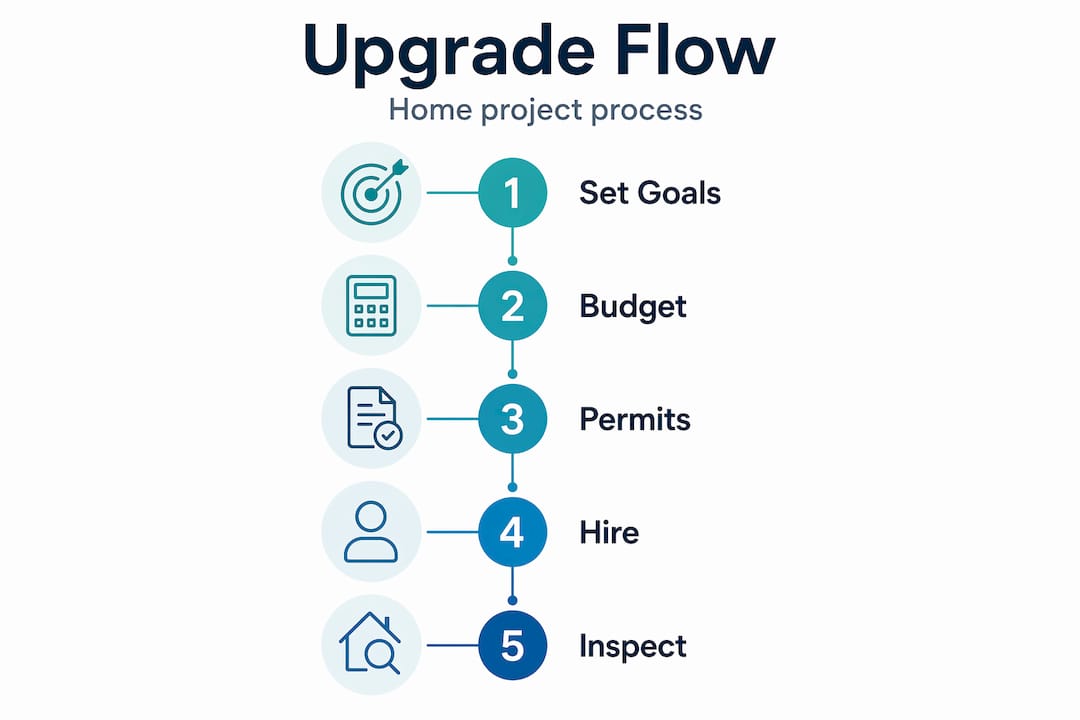
- How to plan home upgrade projects: start with a clear foundation
- Budgeting smart for your home renovation
- Planning and permits: don’t skip this step
- Executing the upgrade: contractors, timelines, and sequencing
- Verification and wrap-up: inspect before you sign off
- My take after watching too many upgrades go sideways
- Transform your space with Newwayref
- FAQ
Key takeaways
| Point | Details |
|---|---|
| Set 3-5 firm goals upfront | Define non-negotiable outcomes before starting so you stay anchored throughout the project. |
| Build in a contingency fund | Reserve 15%-30% of your budget for hidden issues that appear after work begins. |
| Secure permits early | Permit processing can take 4+ weeks, so apply well before your planned start date. |
| Order long-lead items first | Custom cabinetry and specialty appliances can take 12-20 weeks; order before demolition. |
| Inspect before final payment | A thorough walkthrough before paying protects you from unresolved deficiencies. |
How to plan home upgrade projects: start with a clear foundation
Before you choose a paint color or browse furniture, you need to understand what you’re actually working with. Walk through your home room by room and assess the current condition of each space. Look at the floors, walls, ceilings, windows, lighting, and storage. Take notes and photos. The goal is to get an honest picture of what needs fixing versus what’s simply cosmetic.
Once you understand your home’s current state, it’s time to define your goals. The most effective approach is to define 3-5 non-negotiable goals before you do anything else. These goals act as a filter for every decision that follows. If your primary goal is more natural light in the living room, then a new sofa doesn’t serve that goal. It might be nice, but it’s not the priority.
Here are examples of well-defined upgrade priorities:
- Add functional storage in the entryway and kitchen
- Improve energy efficiency with new windows or insulation
- Create an open-plan layout between the kitchen and dining area
- Update the bathroom to feel modern and clean
- Increase natural light in darker rooms
Pro Tip: Write your 3-5 goals on a sticky note and put it somewhere visible. When a contractor suggests an expensive add-on mid-project, those written goals help you decide quickly whether to say yes or no.
With goals established, sketch out a rough budget range before you start getting quotes. Even a ballpark figure helps you understand which goals are realistic now and which might need to wait. Setting priorities early also helps you confidently turn down trendy upgrades that don’t actually meet your needs. That discipline saves real money.
Budgeting smart for your home renovation
A realistic budget is the backbone of any successful home renovation. Most people focus on materials and labor, but there are more categories to account for than that.
Here is a straightforward budget breakdown to consider when planning home improvements:
- Labor costs — Typically the largest portion. Get at least three quotes and verify credentials.
- Materials — Flooring, tile, fixtures, hardware, paint, and lumber all add up fast.
- Permits and fees — Required for most structural, electrical, plumbing, and HVAC work.
- Temporary accommodations — If you can’t live in the space during work, factor in that cost.
- Contingency fund — Non-negotiable. Set aside a contingency of 15%-30% of the total budget to cover hidden surprises like outdated wiring or water damage found after demolition starts.
| Budget category | Typical percentage of total budget |
|---|---|
| Labor | 30%-50% |
| Materials | 25%-40% |
| Permits and fees | 2%-5% |
| Temporary housing / storage | 3%-8% |
| Contingency fund | 15%-30% |
One smart money move many homeowners overlook: buying materials yourself rather than through your contractor. Contractors typically add a markup of 10%-20% on materials they purchase. If you source the tile, hardware, and fixtures directly, you keep that money without sacrificing quality.

Another cost-saving decision worth knowing: refacing existing cabinets instead of replacing them can save between $5,000 and $15,000 while achieving a comparable visual result. If your cabinet boxes are structurally sound, refacing is one of the smartest trades you can make.
Pro Tip: Renovating in the off-season — late fall through winter — can lower labor costs and improve contractor availability. Most homeowners prefer spring and summer, which drives up demand and pricing.
Once you have your budget categories mapped out, separate your list into must-haves and nice-to-haves. Must-haves are the items directly tied to your 3-5 core goals. Nice-to-haves get funded only if the budget allows. This discipline is what keeps projects from ballooning in scope.
Planning and permits: don’t skip this step
Here’s what most first-time renovators don’t realize: permits are required for structural changes, electrical work, plumbing, and HVAC modifications. Skipping permits is not a gray area. Unpermitted work can result in fines, forced removal of completed work, and serious complications when you try to sell the home.
The permit process varies by city and county, but here’s what to generally expect:
- Determine what needs a permit. Your contractor should know, but verify this yourself with your local building department.
- Submit your application early. Permit processing can take 4 or more weeks, so apply well before your planned start date.
- Schedule required inspections. Inspections are tied to specific phases, such as framing, rough electrical, and final completion.
- Protect your belongings. Before work begins, clear the construction zone and protect furniture and valuables in adjacent spaces with plastic sheeting or move them to storage.
Timing your permit application with your overall project schedule is part of how to renovate efficiently. The permit review period is a useful window for finalizing your material selections, confirming contractor schedules, and ordering items with long lead times. Use that waiting period productively.
A common mistake homeowners make is preparing the space too late. If demo day arrives and the construction zone is still full of furniture, you’re paying crew time for moving boxes instead of doing real work. Clear the space at least 48 hours in advance.
Executing the upgrade: contractors, timelines, and sequencing
Choosing the right contractor is the single most consequential decision in your entire project. Price matters, but it’s not the only factor. Get at least three detailed, itemized bids. Ask for references from recent projects and actually call those references. Check licensing and insurance in your state.
Beyond the paperwork, pay attention to how a contractor communicates. The comfort and trust you feel with a contractor, their responsiveness, clarity, and willingness to explain, matters as much as their bid price. A low bid from an uncommunicative contractor often costs more in the end.
Once you’ve selected your contractor, follow this sequencing to avoid costly rework:
- Finalize all designs and selections before demolition starts. Changes made mid-project cost far more than changes made on paper.
- Order long-lead items immediately. Custom cabinetry and specialty appliances can take 12 to 20 weeks to arrive. Order before demo begins.
- Follow the correct construction sequence. The right renovation order runs: demolition, rough-in work (framing, plumbing, electrical), inspections, insulation, drywall, finishes, and fixtures. Skipping ahead creates expensive problems.
- Build in buffer time. Every project hits at least one delay. A realistic timeline includes wiggle room.
- Put everything in writing. Change orders, material substitutions, schedule shifts — all of it should be documented and signed.
Pro Tip: Planning takes longer than construction. Investing extra time upfront reviewing plans, confirming material specs, and verifying lead times will save you from expensive mid-project scrambles.
During construction, establish a weekly check-in with your contractor. Review progress against the schedule, discuss upcoming phases, and address any concerns before they become problems. Good communication prevents small misunderstandings from turning into costly change orders. Check out this step-by-step home upgrade guide from Newwayref for a detailed look at sequencing and timeline management.
Verification and wrap-up: inspect before you sign off
The project is nearly done. This is not the time to rush. A thorough final inspection and walkthrough before releasing final payment is one of the most protective steps you can take. Final walkthroughs before payment allow you to document incomplete or substandard work while the contractor is still motivated to fix it.
Walk through each upgraded space with a punch list in hand. Look for:
- Paint touch-ups missed or uneven coverage on walls and trim
- Fixtures or hardware that are loose, misaligned, or not functioning
- Grout lines in tile that are uneven or unfinished
- Doors and windows that don’t open and close cleanly
- Any surfaces that show scuffs, scratches, or damage from construction
After the punch list is resolved and you’ve signed off, talk through maintenance requirements with your contractor. New finishes, fixtures, and systems often have specific care needs that extend their life significantly. Ask for all warranties, manuals, and permit documentation before your contractor leaves the site. File those documents somewhere accessible. You’ll thank yourself later.
My take after watching too many upgrades go sideways
I’ve seen homeowners with solid budgets and beautiful plans end up frustrated because they skipped the hard parts upfront. The pattern is almost always the same. They got excited, started fast, and discovered problems after demolition that cost more to fix than the original project budget allowed.
The truth I’ve come to: planning genuinely takes more time than construction, and most people refuse to accept that. Two weeks of focused planning typically saves two months of chaotic execution.
On contractors: I’ve watched homeowners choose the lowest bid and regret it every single time. Your gut instinct about how a contractor communicates is data. If they’re slow to respond before the project starts, they’ll be slower when you need an answer mid-construction. Choose the person you trust, not just the person with the lowest number.
Scope creep is the silent budget killer. It rarely comes from one big decision. It comes from a dozen small ones, each feeling reasonable in isolation. Your written goals are your defense. When someone on the job site suggests adding recessed lighting to three extra rooms, check those goals first. If the answer isn’t there, the answer is probably no.
Finally: delays happen. Material shipments are late. Inspectors reschedule. Subs get pulled to other jobs. The homeowners who come out of renovations smiling are the ones who built buffer time into their plans and kept their expectations flexible without abandoning their core goals.
— Enn
Transform your space with Newwayref
Once your upgrade is complete, the right furniture and decor bring the whole vision together.

Newwayref offers a thoughtfully curated collection of modern home furniture and accessories designed to complement freshly upgraded spaces. From sleek coffee tables and sofas to stylish lighting fixtures and home decor, the store has everything you need to finish your renovation with confidence. Free shipping is available on orders over $50. Whether you’re furnishing a newly opened living area or adding the finishing touches to a remodeled bedroom, Newwayref makes it easy to find pieces that fit your updated space. Explore the full collection and see what fits your style at Newwayref.
FAQ
How much should I budget for a home upgrade contingency?
Set aside 15% to 30% of your total project budget as a contingency fund. Hidden issues like outdated wiring or water damage commonly appear after demolition begins.
Do I really need permits for home renovations?
Yes. Permits are required for structural, electrical, plumbing, and HVAC work. Skipping them risks fines, forced removal of completed work, and complications when selling your home.
What is the correct order for home renovation work?
Follow this sequence: demolition, rough-in work (framing, plumbing, electrical), inspections, insulation, drywall, finishes, then fixtures. Getting the order wrong causes expensive rework.
When should I order custom cabinetry and appliances?
Order custom cabinetry and specialty appliances before demolition begins. Lead times can run 12 to 20 weeks, and delays in delivery will stall your entire project.
How do I choose a reliable contractor?
Get at least three itemized bids, check references and licensing, and pay attention to how clearly and quickly they communicate. A contractor who responds promptly and explains things clearly is worth more than the lowest bid.