

TL;DR:
- Industrial style decor emphasizes raw materials and honest textures, creating a versatile and durable aesthetic.
- It integrates materials like brick, concrete, reclaimed wood, and metals within neutral color palettes.
- Combining industrial elements with textiles and greenery results in warm, inviting, and stylish living spaces.
Many homeowners assume industrial style decor means living surrounded by cold pipes, bare concrete, and uncomfortable furniture better suited to a Brooklyn loft than a family home. That misconception sells this style seriously short. Modern industrial decor is one of the most adaptable, livable, and visually interesting approaches you can take with any room in your house. Whether you have a sprawling open floor plan or a compact city apartment, the core ideas behind this style can work for you. This guide walks you through everything you need to know to use industrial design confidently and beautifully in your own space.
Table of Contents
- Defining industrial style decor: Core elements and history
- Essential materials and color palette
- Furniture and layout: Functionality meets style
- Industrial style for small and modern spaces
- Industrial chic: Blending with modern and minimalist decor
- Our take: Why industrial style works for real homes today
- Bring industrial style home with modern options
- Frequently asked questions
Key Takeaways
| Point | Details |
|---|---|
| Raw materials define style | Exposed brick, concrete, and metal give industrial decor its signature look. |
| Neutral colors highlight texture | Subtle shades and metallics showcase material authenticity over bright hues. |
| Function meets comfort | Industrial furnishings are practical yet can be softened with textiles and plants. |
| Adaptable for any space | Industrial style works in apartments, large homes, and even rentals with clever tweaks. |
| Easy blending possible | Pair industrial with modern or minimalist pieces to create a unique, livable space. |
Defining industrial style decor: Core elements and history
Industrial style decor draws its roots from the early 20th century, when factories, warehouses, and lofts in cities like New York, Chicago, and London began to be repurposed as living spaces. Artists and young professionals moved into these raw, open buildings and, instead of hiding the structural bones, they embraced them. Exposed pipes, brick walls, concrete floors, and iron columns became features rather than flaws.
By the 1990s and 2000s, this aesthetic had moved well beyond converted warehouses and into mainstream interior design. Designers recognized that the combination of honest materials, simple forms, and functional furniture created rooms that felt both timeless and deeply personal. Today, it sits comfortably alongside other popular decor styles as one of the most enduring looks in modern homes.
“Industrial design is not about recreating a factory—it is about honoring the honesty of materials and the beauty of functional forms.”
Core materials include exposed brick, concrete, distressed or reclaimed wood, metals like steel and iron, and leather, creating texture and authenticity without heavy finishes. The color palette skews neutral, dominated by grays, blacks, browns, whites, and taupes, with occasional metallic or warm accents like rust or mustard for vibrancy.
Main visual characteristics of industrial style:
- Exposed structural elements like beams, pipes, and ductwork
- Raw or minimally finished surfaces such as concrete and brick
- Metal hardware, frames, and fixtures in matte or brushed finishes
- Distressed or reclaimed wood used on floors, tables, and shelving
- Open layouts that prioritize space and natural light
- A largely neutral color scheme grounded in earthy and dark tones
How industrial style compares to other popular styles:
| Style | Key materials | Color palette | Overall feel |
|---|---|---|---|
| Industrial | Metal, concrete, reclaimed wood, brick | Grays, blacks, browns | Raw, functional, honest |
| Scandinavian | Light wood, linen, wool | Whites, soft pastels | Clean, cozy, minimal |
| Rustic | Natural wood, stone, wicker | Earth tones, creams | Warm, traditional, organic |
| Modern | Glass, steel, polished surfaces | Neutrals, bold accents | Sleek, refined, structured |
| Mid-century modern | Teak, brass, upholstered forms | Warm neutrals, olive green | Retro, playful, comfortable |
The table makes it clear that industrial style occupies a unique position. It shares minimalism with Scandinavian design but replaces softness with raw texture. It overlaps with rustic in material honesty but leans harder into metal and structural elements.
Essential materials and color palette
Understanding the materials is the fastest way to train your eye for this style. Once you recognize why certain finishes and textures work together, shopping and decorating become much more intuitive.
Key materials, features, and how to use them:
| Material | Key features | Practical applications |
|---|---|---|
| Exposed brick | Texture, warmth, historical character | Accent walls, fireplace surrounds, backsplashes |
| Concrete | Industrial weight, smooth or rough finishes | Floors, countertops, decorative objects |
| Distressed or reclaimed wood | Grain variation, natural imperfection | Tables, shelving, flooring, accent walls |
| Steel and iron | Strength, matte or brushed finish | Furniture frames, light fixtures, hardware |
| Leather | Durability, patina over time | Sofas, chairs, storage ottomans |
The neutral color palette is not a limitation but a deliberate strategy. By keeping walls and large surfaces in grays, warm whites, or deep blacks, the natural textures of raw materials like brick, wood grain, and metal patina become the visual stars of the room. Adding a vivid red or bright yellow wall would compete with and undermine those textures.
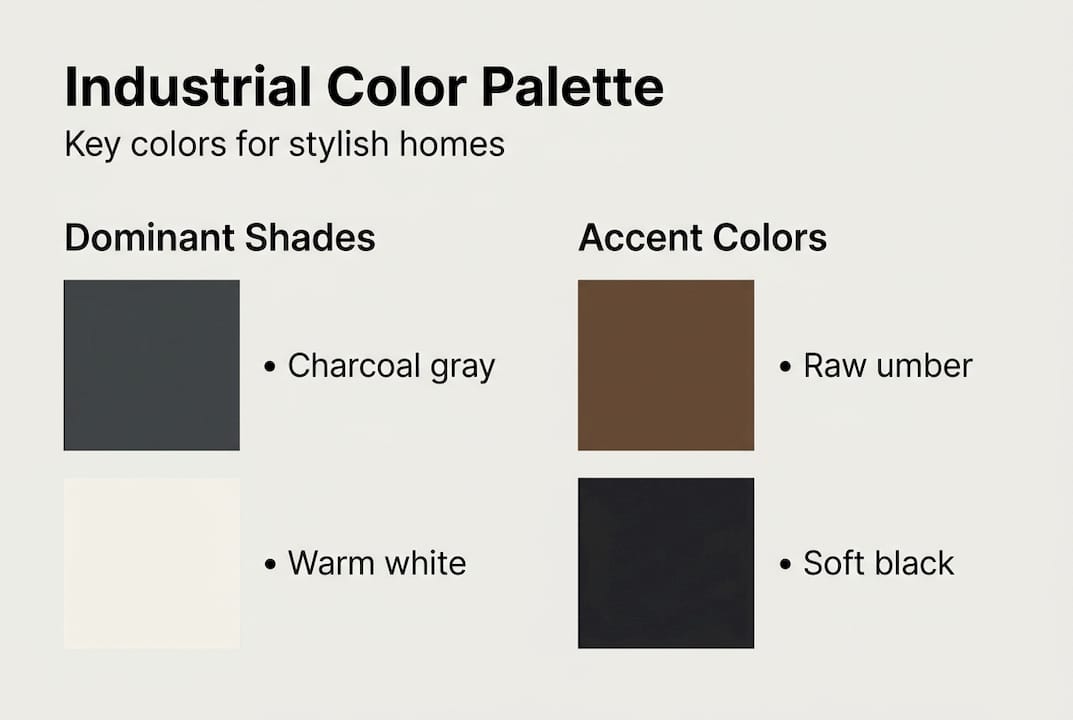
Dominant palette colors include charcoal gray, warm white, soft black, raw umber brown, and taupe. Accent shades that work well include rust orange, mustard yellow, aged brass, and deep olive green. These accents appear on throw pillows, light fixtures, small decor objects, and plant pots rather than on large surfaces.
Combining rough and smooth surfaces is one of the most effective techniques in industrial design. A rough reclaimed wood dining table paired with sleek steel chairs creates a satisfying tension. A smooth concrete countertop becomes more interesting next to a rough brick backsplash. This interplay of textures prevents the room from feeling flat or monotonous.
Shopping tips for authentic industrial materials:
- Look for furniture with visible hardware and unfinished edges
- Prioritize pieces with metal frames over painted wood frames
- Choose leather goods with visible stitching and natural color variation
- Seek light fixtures with Edison bulbs or exposed filaments
- Check for reclaimed wood with visible nail holes, knots, and patina
- Avoid overly polished or lacquered finishes, which feel too refined for this style
Furniture and layout: Functionality meets style
Furniture is where industrial decor becomes livable. Functionality drives every choice: metal-framed tables, leather sofas, open shelving, and storage pieces with visible construction are all hallmarks of the style. Nothing is decorative for its own sake. Every piece has a clear purpose and an honest form.
Layout principles in industrial design favor openness. Open floor plans and large windows maximize natural light and reinforce the loft-like sense of space that is central to the aesthetic. If you cannot change the structure of your home, you can still apply these principles by removing unnecessary partitions, keeping furniture low to the ground, and avoiding heavy window treatments.
Must-have industrial furnishings for your home:
- A metal-legged coffee table with a wood or concrete top
- A leather sofa or armchair with visible stitching
- Open shelving with steel brackets and reclaimed wood shelves
- A dining table with a distressed wood top and metal base
- Industrial pendant lights with exposed bulbs over key areas
- A storage unit with metal frames and open compartments
- Bar stools with steel frames and minimally upholstered seats
Minimal decor is the rule rather than the exception. Resist the urge to fill shelves with small objects. Instead, use a few large, purposeful pieces like a ceramic vase, a stack of design books, or a small trailing plant. Speaking of plants, they are one of the most powerful tools for warming up an industrial space. The organic softness of greenery contrasts beautifully with metal and concrete, making the room feel alive and inviting rather than sterile.
An industrial round side table is a simple and affordable way to introduce the style into your living room without committing to a full redesign. Place it next to a sofa or armchair, add a metallic table lamp, and you have an instant industrial moment.
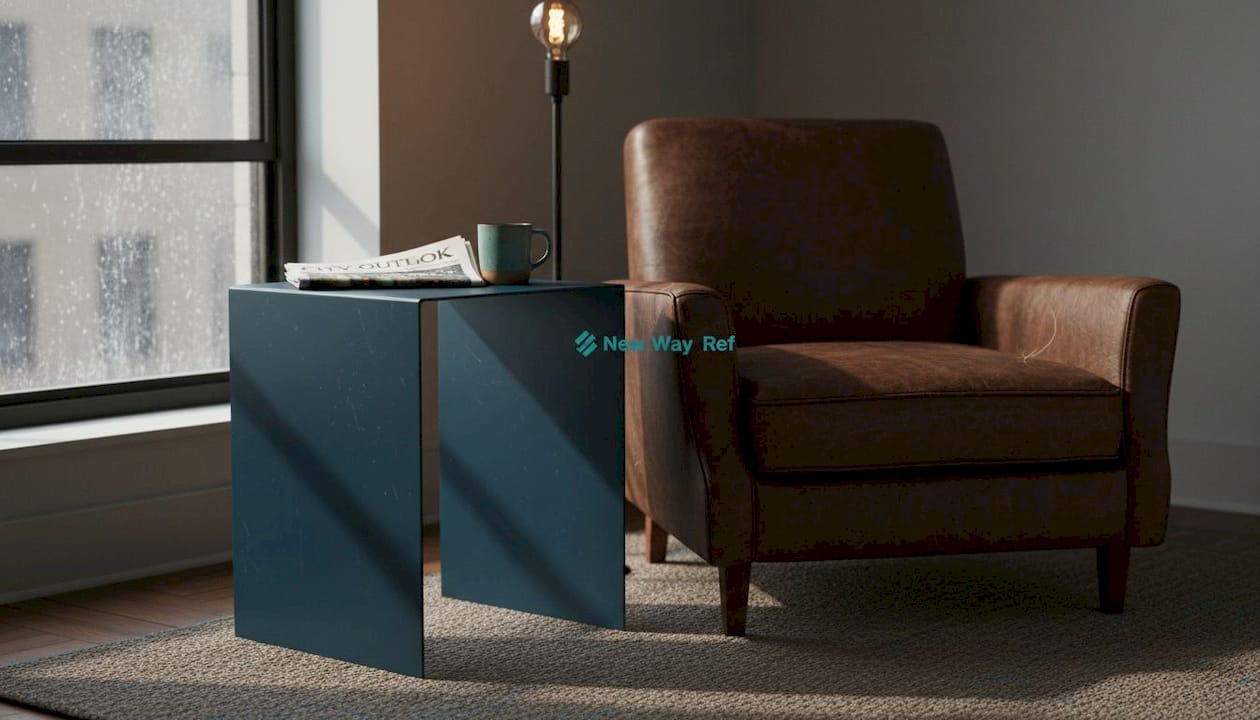
Pro Tip: Layer different textiles for unexpected warmth. A sheepskin throw over a leather armchair, a chunky wool rug under a metal coffee table, and linen curtains in a warm taupe all soften the harder elements of the room without diluting the industrial character.
Industrial style for small and modern spaces
One of the most common objections to industrial decor is that it only works in large, open spaces with high ceilings and architectural bones. This is simply not true. With a few targeted adjustments, you can bring the look confidently into a small apartment or a modest suburban home.
Step-by-step approach for small rooms:
- Start with one accent wall using peel-and-stick brick wallpaper or textured concrete-effect panels. This is the fastest way to signal the style without major renovations.
- Swap out existing hardware throughout the room, cabinet pulls, drawer handles, and curtain rods, for matte black or brushed steel versions. This small change has a surprisingly large visual impact.
- Choose one or two key furniture pieces with metal frames, like a side table or a shelving unit, to anchor the industrial feel.
- Add an Edison bulb pendant light or a metal floor lamp to build on the aesthetic in a vertical direction.
- Incorporate a vintage sign, an industrial clock, or a framed blueprint print as wall decor to add character and reinforce the theme.
- Use vertical shelving to draw the eye upward and create the impression of more height, especially important in rooms with standard ceiling heights.
Lighting is particularly important in small industrial spaces. A well-placed pendant light or a metal track lighting system can make a compact room feel considered and intentional rather than cramped. Using multiple light sources at different heights also creates depth and a sense of layering that is central to the style.
Urban decor approaches often lean into industrial elements naturally, making this style a practical fit for city apartments and compact living. For renters who cannot make permanent changes, faux brick and concrete materials like wallpaper, metal accents, vintage accessories, and multifunctional furniture pieces make the look completely achievable without a single nail in the wall.
Pro Tip: Use a large mirror with a metal frame to reflect light and visually double the size of a small room. It adds an industrial element while solving the practical challenge of making a compact space feel open and airy.
Industrial chic: Blending with modern and minimalist decor
Pure industrial design, while striking, can feel a bit severe in an everyday family home. That is exactly where the concept of industrial chic comes in. Industrial chic softens the raw edges by blending industrial elements with textiles, plants, leather, and mid-century or minimalist pieces to create a space that is both stylish and genuinely comfortable.
The minimalist decor approach pairs especially well with industrial elements because both prioritize function, simplicity, and honest materials. Where minimalism adds clean lines and uncluttered surfaces, industrial decor brings texture and warmth through its raw materials.
Ways to warm up an industrial space:
- Add a large, plush area rug under your seating arrangement to anchor the room and soften the floor
- Introduce potted plants at varying heights, from small succulents on shelves to tall fiddle-leaf figs in corners
- Layer soft textiles like wool throws, linen cushions, and velvet accent pillows across seating
- Use warm-toned Edison or filament bulbs instead of cool white lighting throughout the space
- Incorporate mid-century modern chairs or a vintage wooden dresser to break the strictness of pure industrial forms
- Display personal objects like books, travel finds, and framed photos to add humanity and story to the space
Blending modern style ideas with industrial foundations is particularly effective for homeowners who want a polished, grown-up space without giving up texture and character. A sleek modern sofa in a neutral fabric, paired with an industrial steel shelving unit and a reclaimed wood coffee table, gives you the best of both worlds.
As your tastes evolve, industrial chic is easy to update. Swap out textiles seasonally, add new vintage finds over time, or introduce a new accent color through accessories. The neutral base of an industrial space means almost any addition will work without clashing. Explore modern decor for small spaces for more specific ideas on how to layer styles effectively within a compact footprint.
Our take: Why industrial style works for real homes today
Here is the honest truth that most design guides skip: industrial style has lasted so long not because it looks cool in magazine photos, but because it is one of the most practical and forgiving aesthetics available to everyday homeowners. When a material already looks aged and raw, a scratch or a scuff on your reclaimed wood table is not a problem. It is a feature.
The real misconception is not that industrial decor is cold. It is that people believe they need to commit to the full look to benefit from it. You do not. Even adding a single industrial element, like a metal pendant lamp or an open steel shelf, changes the energy of a room. The style rewards gradual investment and personal layering far more than it rewards a single expensive redesign.
What we find most compelling about this aesthetic is its authenticity. Every modern decor benefit you get from industrial design, durability, visual interest, timelessness, comes from the materials themselves rather than from surface-level styling. A steel coffee table base will look as good in fifteen years as it does today. A distressed wood top will only get richer with age.
The homes that pull off industrial style best are the ones that treat it as a foundation rather than a costume. They start with honest materials, keep the palette neutral, and then layer in warmth, personality, and comfort over time. That is not a difficult brief. It is just a thoughtful one.
“Industrial style endures because it trusts the materials to do the work. Your job is to let them.”
Bring industrial style home with modern options
Ready to put what you’ve learned into practice? Whether you’re starting with a single statement piece or refreshing an entire room, the right furniture and accessories make all the difference.
Browse our industrial-inspired home decor collection to find thoughtfully curated pieces that bring the look to life in any space. From metal-framed accent tables to warm-toned lighting and textured accessories, everything is selected to work together. Explore the full range of modern decor collections and find the pieces that fit your home, your budget, and your personal style. Free shipping on orders over $50 means it’s easy to start transforming your space today.
Frequently asked questions
What colors are most common in industrial style decor?
Industrial decor uses a neutral palette of grays, blacks, browns, whites, and taupes, with metallic or warm accents like rust or mustard added for occasional vibrancy.
How can I achieve an industrial look in a small apartment?
Use brick wallpaper and metal accents alongside multi-use furniture and light neutrals to create a spacious, industrial feel without permanent renovations.
Is industrial style the same as modern decor?
They share minimalist principles, but industrial style emphasizes raw and textured materials while modern decor typically favors smooth, clean, and polished finishes.
What are must-have materials for industrial decor?
Exposed brick, concrete, and reclaimed wood, combined with metals like steel and iron and leather upholstery, are the core materials that define authentic industrial spaces.
Can industrial style decor be made cozy?
Absolutely. Industrial chic blends textiles, plants, warm lighting, and vintage accessories with raw industrial elements to create spaces that feel both stylish and genuinely inviting.