

You might think rugs are just decorative accessories that tie a room together, but they actually serve as powerful design tools that transform how your living room looks and feels. Modern rugs do far more than cover bare floors. They define spaces, absorb sound, add warmth, and anchor furniture arrangements in ways that make contemporary interiors feel cohesive and intentional. This guide shows you exactly how to select and use rugs that complement your modern furnishings while enhancing both style and comfort in your living space.
Table of Contents
- Key takeaways
- Why rugs are essential in modern living rooms
- Choosing the right rug: size, material, and color
- Integrating rugs with contemporary furniture and decor styles
- Practical care and maintenance tips for lasting beauty
- Enhance your living room with our curated rug collection
- FAQ
Key Takeaways
| Point | Details |
|---|---|
| Rugs anchor furniture | Rugs create a visual anchor that ties seating and other furnishings into a cohesive zone defining layout. |
| Rug size matters | Choosing a rug large enough for the front legs to rest on the rug creates balanced sightlines and prevents awkward gaps. |
| Noise reduction and warmth | Rugs absorb sound to reduce ambient echoes and add warmth underfoot. |
| Color and material choices | Color and material choices set the room mood by influencing perceived size and texture, with neutrals enlarging spaces and darks adding drama. |
Why rugs are essential in modern living rooms
Rugs create visual anchors that tie disparate furniture pieces into a unified composition. When you place a rug beneath your seating arrangement, it signals to the eye that these elements belong together as a functional group. This becomes especially valuable in open floor plans where benefits of modern decor include defining separate zones within open layouts without physical barriers.
Beyond aesthetics, rugs deliver practical advantages that directly impact your daily comfort. They add texture and warmth to hard flooring surfaces, making spaces feel more inviting during colder months. Sound absorption stands out as one of the most underrated benefits. Hard surfaces like wood, tile, and concrete reflect sound waves, creating echo and amplifying noise. A quality rug absorbs these vibrations, reducing ambient sound levels by up to 30% in typical living rooms.
The style narrative of your room depends heavily on rug selection. A geometric pattern introduces visual energy and contemporary edge. Neutral textures provide subtle sophistication. Bold colors create focal points that draw attention and spark conversation.
Key functional benefits of living room rugs:
- Define conversation areas and traffic patterns
- Protect flooring from furniture scratches and wear
- Provide cushioning that reduces fatigue when standing
- Trap dust and allergens for easier cleaning
- Add layered visual interest through texture contrast
Pro Tip: Place your rug so all front furniture legs rest on it, or position it entirely under the seating group. Avoid the awkward middle ground where only coffee table legs touch the rug while sofas and chairs sit completely off it.
Choosing the right rug: size, material, and color
Size determines whether your rug enhances or undermines your living room layout. Proper rug sizing relative to furniture prevents awkward spacing and creates visual balance. For typical living rooms, aim for rugs large enough that at least the front legs of major seating pieces rest on the surface. This approach, explained in guides on how to style living room modern look, anchors furniture while maintaining flow.
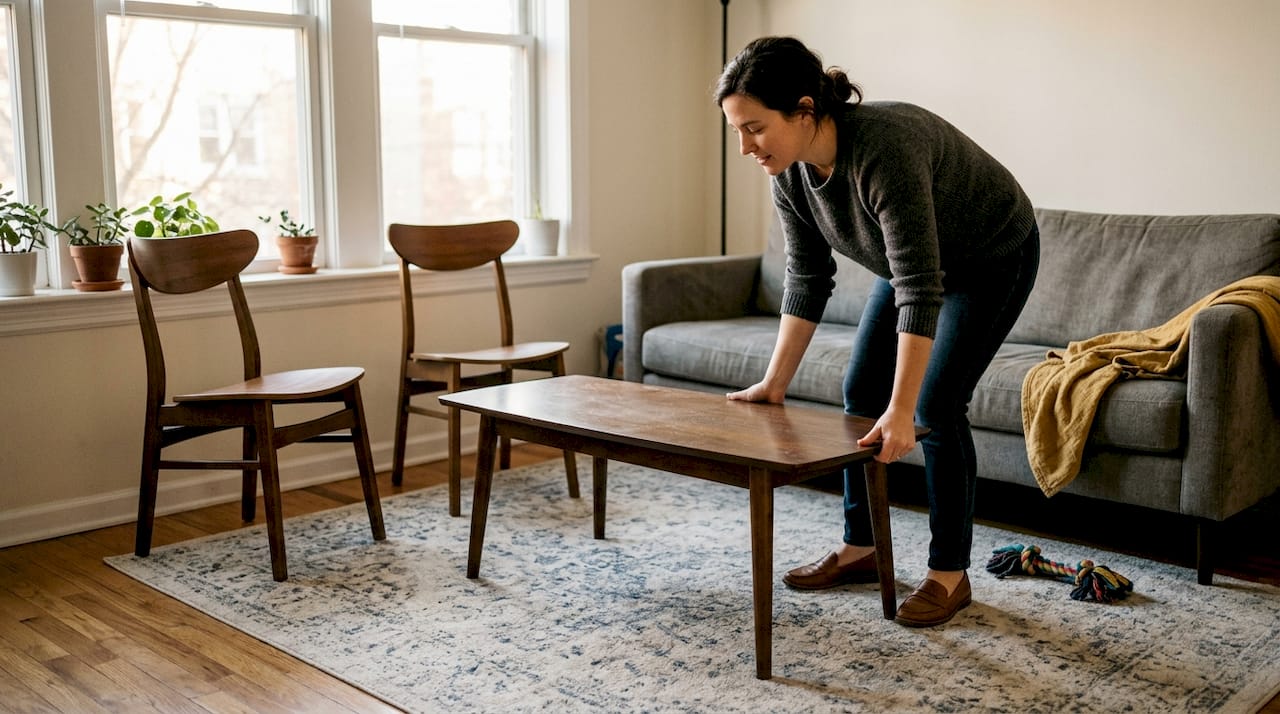
Small living rooms benefit from 5x7 or 6x9 foot rugs positioned under the coffee table with furniture arranged around the perimeter. Medium spaces work best with 8x10 foot options that accommodate front furniture legs. Large rooms often require 9x12 or larger rugs that fit the entire seating arrangement, creating a room within a room effect.
| Rug material | Best for | Maintenance level | Price range |
|---|---|---|---|
| Wool | High traffic, luxury feel | Medium (professional cleaning yearly) | $$$ |
| Synthetic (nylon, polyester) | Families, pets, stain resistance | Low (easy spot cleaning) | $ |
| Natural fiber (jute, sisal) | Casual, textured look | Medium (vacuum regularly) | $$ |
| Cotton | Low traffic, layering | Low (machine washable) | $ |
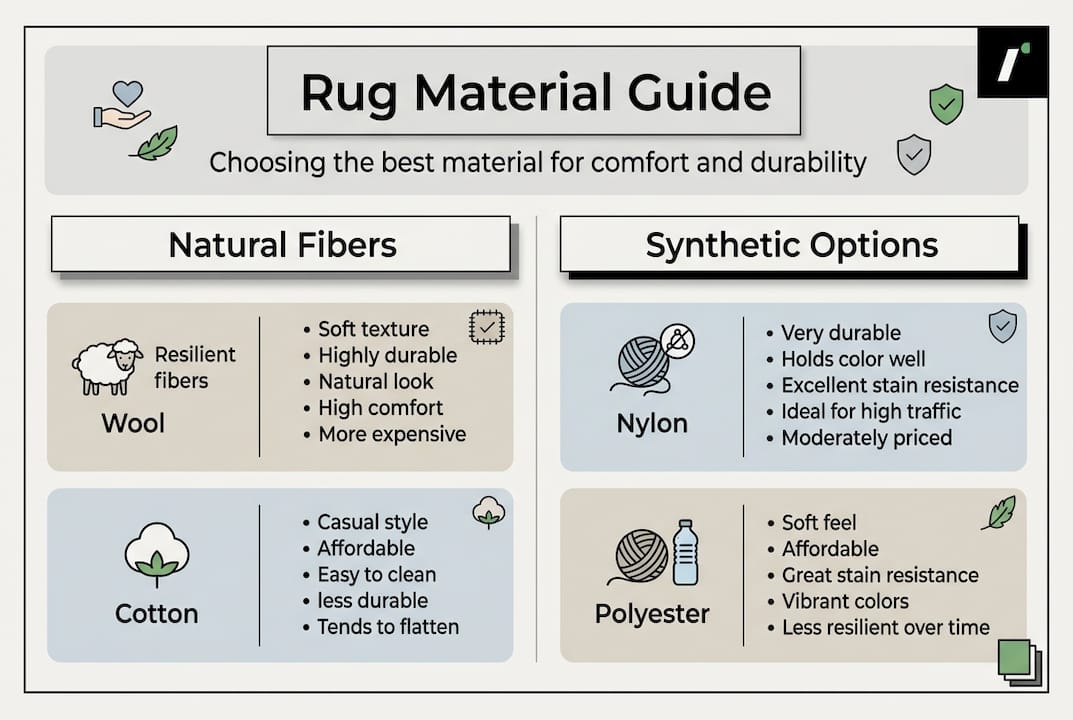
Material selection impacts durability, comfort, and maintenance requirements. Wool offers natural stain resistance and luxurious softness but requires professional cleaning. Synthetic options like nylon and polyester deliver excellent durability at lower price points while resisting moisture and fading. Natural fibers such as jute and sisal add organic texture but feel rougher underfoot and show wear faster in high traffic areas.
Color choice profoundly affects room mood and perceived size. Light neutrals like cream, beige, and soft gray make spaces feel larger and brighter while providing versatile backdrops for changing decor. Dark tones like charcoal, navy, and chocolate brown add drama and hide stains but can make small rooms feel cramped. Bold colors work best as accent pieces in otherwise neutral spaces.
Pattern guidelines for modern living rooms:
- Geometric designs complement contemporary furniture lines
- Abstract patterns add visual interest without overwhelming
- Solid colors provide calm foundations for busy decor
- Subtle textures create depth without competing for attention
Pro Tip: Bring paint swatches and fabric samples from your existing furniture when shopping for rugs. Natural lighting in stores differs dramatically from your home, and direct comparison prevents expensive color mismatches.
Integrating rugs with contemporary furniture and decor styles
Coordinating rugs with furniture styles enhances both comfort and aesthetic appeal, creating balanced spaces that feel intentionally designed. When you choose contemporary furniture with clean lines and minimal ornamentation, pair it with rugs that echo these qualities through geometric patterns or solid colors with interesting textures.
Match rug characteristics to your furniture’s visual weight and material finishes. Sleek leather sofas pair beautifully with low pile rugs in solid colors or subtle patterns. Upholstered pieces with visible texture benefit from complementary rug textures that add dimension without creating visual chaos. Glass and metal furniture elements shine against rugs with warm, organic materials that provide contrast.
Step-by-step rug integration process:
- Identify your dominant furniture color palette and select a rug that includes at least one matching hue
- Consider the visual weight of your furniture and choose rug patterns accordingly (heavy furniture works with bolder patterns, light pieces need subtler designs)
- Test rug placement by marking floor boundaries with painter’s tape before purchasing
- Layer smaller accent rugs over larger neutral bases to add depth and define specific zones
- Adjust furniture positioning so pieces relate to the rug edges in visually pleasing ways
Use rugs strategically to introduce or emphasize color accents that appear elsewhere in your decor. If throw pillows feature coral tones, a rug with coral elements ties the room together. This repetition creates visual rhythm that guides the eye naturally around the space.
Layering rugs adds sophisticated texture and visual interest to modern living rooms. Start with a large neutral base rug in jute or sisal, then layer a smaller patterned rug on top at an angle. This technique works especially well in large rooms where a single rug might feel insufficient.
“The right rug transforms a collection of furniture into a cohesive living space. It’s the foundation that makes everything else work together.”
Consider rug placement relative to natural and artificial lighting. Rugs positioned near windows may fade faster without UV protection. Place darker rugs in naturally dim areas to avoid making spaces feel cave-like. Position lighter rugs where they’ll reflect available light and brighten the room.
Practical care and maintenance tips for lasting beauty
Routine cleaning preserves both appearance and structural integrity. Proper care maintains rug comfort, a crucial aspect of home maintenance that extends lifespan significantly. Vacuum high traffic rugs twice weekly using appropriate settings for pile height. Turn off beater bars for delicate natural fibers to prevent damage. Low pile and flat weave rugs tolerate standard vacuum settings.
Address spills immediately to prevent permanent staining. Blot liquids with clean white cloths, working from the outside toward the center to avoid spreading. Never rub or scrub, as this pushes stains deeper into fibers and damages pile structure. For solid messes, scrape gently with a dull knife before blotting.
Essential maintenance schedule:
- Weekly: Vacuum high traffic areas and shake out small rugs outdoors
- Monthly: Vacuum entire rug surface including edges and underneath
- Quarterly: Rotate rug 180 degrees to distribute wear evenly
- Annually: Professional deep cleaning for wool and high value rugs
- As needed: Spot clean stains immediately with appropriate solutions
Rotation prevents uneven wear patterns and sun fading. Every three months, rotate your rug 180 degrees so different areas receive foot traffic and sunlight exposure. This simple habit can double the effective lifespan of quality rugs.
Sunlight causes gradual color fading even in fade-resistant materials. Position rugs away from direct sun exposure when possible. Use window treatments during peak sunlight hours to filter UV rays. Apply UV protective treatments available at home improvement stores for rugs that must sit in sunny spots.
Professional cleaning becomes necessary when home methods no longer refresh appearance or when deep stains set in. Wool rugs benefit from professional attention every 12 to 18 months. Synthetic rugs can go longer between professional cleanings, typically every 2 to 3 years depending on traffic levels. Always hire certified rug cleaners familiar with your specific rug type, as improper cleaning methods damage fibers and backing.
Pro Tip: Place rug pads underneath all area rugs regardless of flooring type. Quality pads prevent slipping, reduce wear, add cushioning, and protect both the rug and floor beneath. Replace pads every 3 to 5 years as they compress and lose effectiveness.
For homes with pets, choose rugs with tight weaves that resist snagging from claws. Darker patterns camouflage pet hair between vacuuming sessions. Treat new rugs with stain resistant sprays designed for the specific fiber type. Keep pet nails trimmed to minimize rug damage from scratching and digging behaviors.
Enhance your living room with our curated rug collection
Transforming your living room with the perfect modern rug becomes effortless when you explore our carefully selected home decor collection. We’ve curated pieces that complement contemporary furniture styles while delivering the comfort and durability today’s homes demand.

Our selection includes rugs in various sizes, materials, and patterns designed to anchor your seating arrangements and define your space with style. Whether you need a bold geometric statement piece or a subtle neutral foundation, you’ll find options that align with your vision. Browse complementary furniture and lighting that coordinate seamlessly with your rug choice, creating a cohesive modern aesthetic throughout your living room. Visit New Way Ref store to discover how the right rug elevates your entire living space.
FAQ
What size rug is best for a small living room?
Choose rugs that fit under furniture front legs or select smaller area rugs to avoid overwhelming the space. Ideal dimensions often range from 5x7 or 6x9 feet depending on your specific room layout and furniture arrangement. Measure your seating area and leave 12 to 18 inches of bare floor around the rug perimeter for balanced proportions.
How can I coordinate rug colors with existing furniture?
Pick rug hues that echo accent colors or neutral tones already present in your furniture and decor. Use patterns strategically to add visual contrast or blend seamlessly with your existing palette. Bring fabric swatches when shopping to ensure accurate color matching under different lighting conditions.
Are synthetic rugs suitable for high traffic living rooms?
Synthetic rugs offer excellent durability, stain resistance, and affordability, making them ideal for active households with children or pets. They require less intensive maintenance compared to natural fibers and resist moisture damage. Modern synthetic options rival natural materials in appearance while outperforming them in practical durability.
Can layering rugs add style to a modern living room?
Layering introduces texture, color variation, and subtle zoning in a sophisticated way that elevates contemporary interiors. Start with a large neutral base rug in jute or sisal, then add a smaller patterned rug on top at a slight angle. This technique works especially well in open concept spaces where you want to define distinct functional areas within a larger room.