

Finding the right balance between style and functionality is a daily challenge when living in a New York City apartment. Maximizing every inch of your home matters, especially when even the smallest layout changes can transform your experience. With a focus on thoughtful space planning and modern accessory choices, this guide will help you create a living space that feels spacious, stylish, and fully tailored to your life in the city.
Table of Contents
- Step 1: Assess Available Space And Layout
- Step 2: Select Modern Accessory Styles And Materials
- Step 3: Arrange Accessories For Optimal Flow
- Step 4: Enhance Lighting And Visual Appeal
- Step 5: Verify Comfort And Functionality
Quick Summary
| Essential Insight | Clear Explanation |
|---|---|
| 1. Assess Your Space Thoroughly | Measure room dimensions and note features to create a functional layout. |
| 2. Choose Modern Accessories Wisely | Select materials and styles that enhance aesthetics without overcrowding. |
| 3. Arrange Accessories with Intention | Create visual interest through strategic grouping and negative space usage. |
| 4. Use Lighting to Enhance Ambiance | Layer different light sources for multidimensional effects in your space. |
| 5. Confirm Comfort and Functionality | Ensure design choices facilitate daily activities and enhance usability. |
Step 1: Assess available space and layout
Mastering your urban home’s layout begins with a strategic approach to understanding your available space. Space planning involves carefully evaluating room dimensions, architectural features, and potential functional zones to create a comfortable and efficient living environment.
Start by gathering essential measurements. Take a tape measure and document the precise dimensions of each room, noting key details like:
- Wall lengths
- Window and door placements
- Ceiling height
- Potential architectural obstacles
Next, create a simple floor plan sketch. This doesn’t require professional design skills - just use graph paper or a digital floor planning tool to map out your space accurately. Sketch the room’s outline and mark where furniture might potentially sit, ensuring you maintain clear walking pathways and avoid overcrowding.
Effective space assessment transforms awkward layouts into functional, stylish living areas.
Consider your lifestyle and how you’ll use each area. An urban apartment might need multifunctional zones that serve several purposes, so think creatively about furniture placement and storage solutions that maximize every square foot.
Pro tip: Take photos of your space from multiple angles to help you visualize potential layout configurations more effectively.
Step 2: Select modern accessory styles and materials
Transforming your urban living space requires carefully curating accessories that reflect contemporary design sensibilities. Modern home accessories showcase innovative material choices that blend functionality with aesthetic appeal, helping you create a stylish and personalized environment.
When selecting modern accessories, focus on materials and styles that complement your urban space. Consider these key elements:
- Minimalist metal accent pieces
- Sleek glass decorative objects
- Sustainable composite materials
- Industrial-inspired design elements
- Scandinavian-influenced textures and forms
Pay close attention to how different material textures interact with your existing decor. Metal and glass accessories work wonderfully in contemporary spaces, offering clean lines and reflective qualities that make rooms feel more spacious. Look for pieces that serve both aesthetic and functional purposes, such as geometric bookends, abstract sculptures, or multifunctional decorative items.
Contemporary accessories are not just decorations but statements of personal style and spatial intelligence.
Consider the overall color palette and texture of your space when selecting accessories. Urban apartments often benefit from accessories that create visual interest without overwhelming the limited square footage. Choose pieces that add depth and character while maintaining a sense of openness.
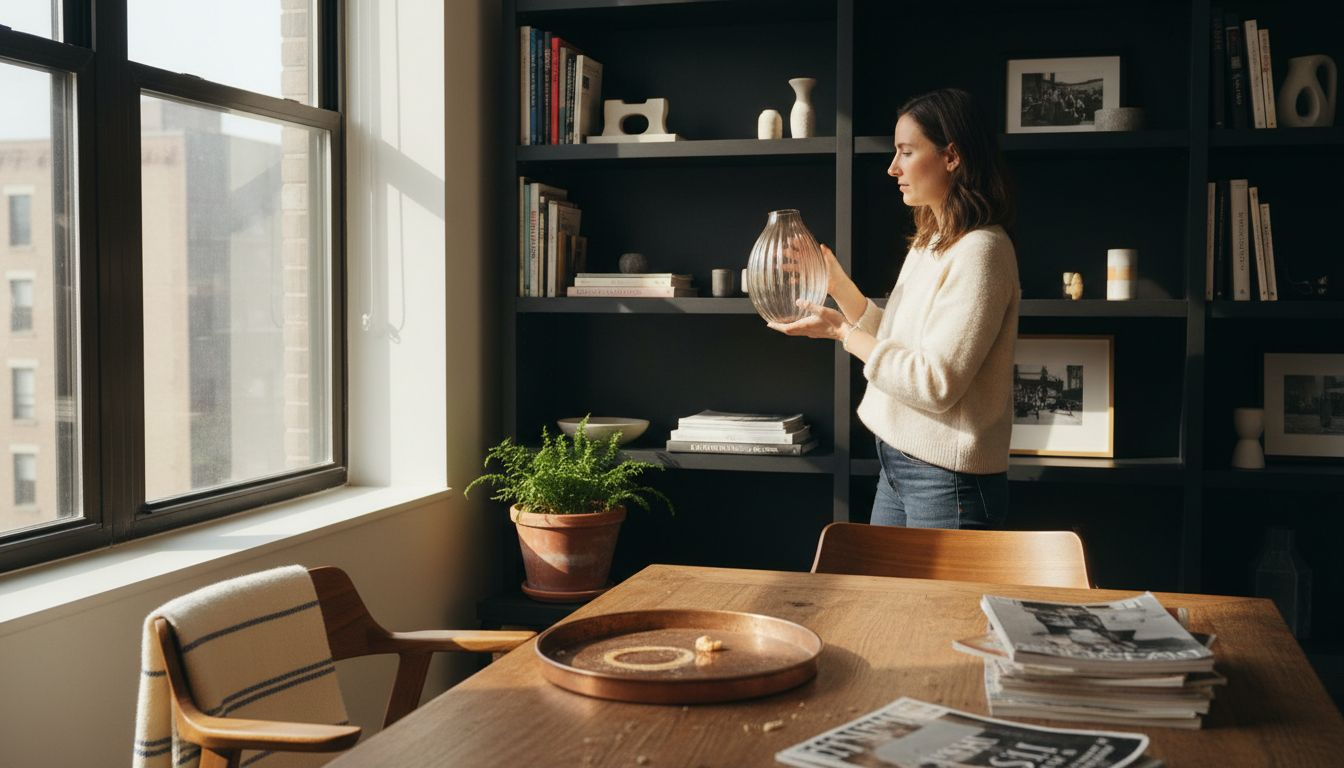
Pro tip: Mix textures and materials strategically, using a maximum of three different material types to maintain a cohesive and intentional design aesthetic.
Step 3: Arrange accessories for optimal flow
Creating a harmonious urban living space requires strategic placement of your carefully selected accessories. Advanced AI models now optimize indoor scene layouts to help homeowners achieve the perfect balance between functionality and aesthetic appeal.
Start by establishing visual hierarchy and flow in your space. Consider these key principles for arranging accessories:
- Create balanced groupings of 3-5 items
- Vary heights and textures within display areas
- Use negative space to prevent visual clutter
- Align accessories with architectural lines
- Maintain clear pathways between decorative elements
Pay special attention to strategic accessory clustering that creates visual interest without overwhelming your space. Group items with complementary shapes, colors, or materials, ensuring each arrangement tells a cohesive design story. Experiment with asymmetrical compositions that draw the eye across the room and create a sense of dynamic movement.
Thoughtful accessory arrangement transforms a room from simply decorated to intentionally designed.
Consider the visual weight and proportion of each accessory in relation to your furniture and architectural elements. Urban spaces demand a delicate balance between minimalism and personality, so choose placement that enhances rather than competes with your existing decor.
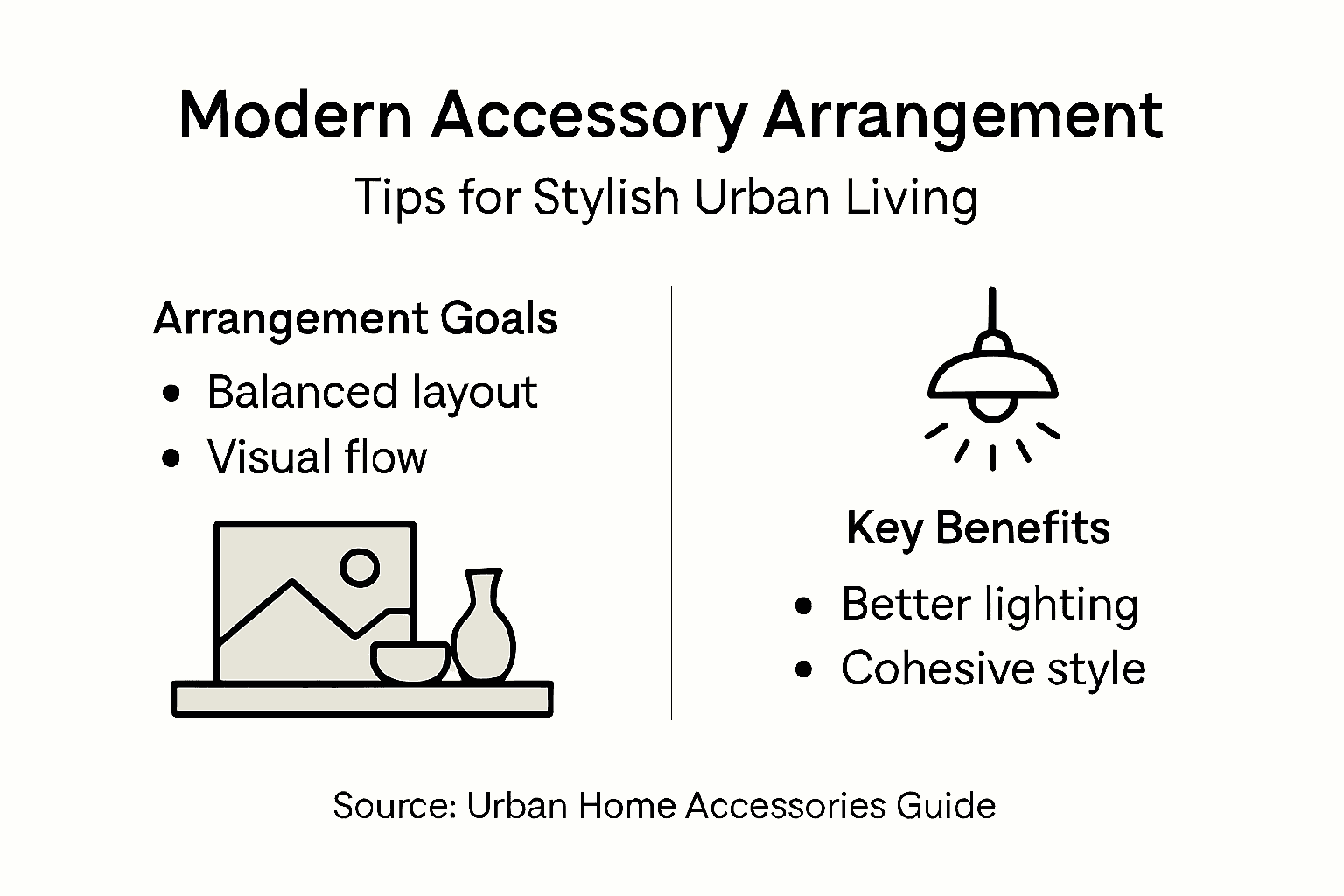
The following table summarizes key goals for accessory arrangement in urban homes:
| Arrangement Goal | Design Benefit | Practical Outcome |
|---|---|---|
| Visual Hierarchy | Guides attention | Organized appearance |
| Negative Space Usage | Prevents clutter | Spacious feeling |
| Asymmetrical Placement | Adds dynamic energy | Engages the eye |
| Clear Pathways | Supports functionality | Easy navigation |
Pro tip: Use the “rule of thirds” when arranging accessories, positioning key pieces at imaginary intersection points to create naturally appealing visual compositions.
Step 4: Enhance lighting and visual appeal
Transforming your urban space goes beyond selecting accessories - it’s about creating an atmosphere that feels both inviting and visually dynamic. Modern home decor strategies emphasize the critical role of lighting in defining spatial character and mood.
Illumination is a powerful design tool that can dramatically reshape your living environment. Consider these key lighting approaches:
- Layer different light sources
- Use adjustable fixtures for flexibility
- Integrate accent lighting for depth
- Experiment with warm and cool light tones
- Position lights to highlight key accessories
Focus on strategic lighting placement that creates depth and visual interest. Combine overhead lighting, task lighting, and accent lights to build a multidimensional illumination scheme. Floor lamps, table lamps, and wall sconces can help define different zones within your urban space, making compact areas feel more expansive and intentionally designed.
Here’s a quick comparison of common lighting types for urban spaces:
| Lighting Type | Typical Use | Visual Impact | Flexibility |
|---|---|---|---|
| Overhead Lighting | General room illumination | Provides uniform light | Often fixed position |
| Task Lighting | Focused work areas | Highlights function | Adjustable direction |
| Accent Lighting | Highlight decor & zones | Adds depth and drama | Easily repositioned |
| Ambient Lighting | Soft background glow | Creates mood/atmosphere | Variable intensity |
Lighting is the jewelry that completes your room’s design outfit.
Consider the color temperature and intensity of your lighting choices. Warm light around 2700-3000K creates a cozy atmosphere, while cooler lights around 4000-5000K provide a crisp, contemporary feel. Mix these temperatures strategically to create visual depth and emotional resonance in your urban home.
Pro tip: Install dimmer switches or smart bulbs to easily adjust lighting levels and create instant mood variations throughout the day.
Step 5: Verify comfort and functionality
Creating a stylish urban space isn’t just about aesthetics - it’s about designing an environment that genuinely supports your daily life. Practical home design strategies emphasize the critical balance between visual appeal and functional comfort.
To ensure your accessorized space truly works for you, conduct a comprehensive comfort assessment through these key evaluations:
- Test furniture and accessory ergonomics
- Check movement pathways between items
- Evaluate ease of cleaning and maintenance
- Assess storage functionality
- Confirm accessibility of frequently used items
Pay special attention to realistic daily usability of your design choices. Walk through your space and simulate typical activities to identify potential friction points. Ensure that your beautifully arranged accessories don’t compromise practical movement or create unnecessary obstacles in your living area.
Comfort is the silent language of great interior design.
Consider the energy efficiency and thermal comfort of your space. Strategic placement of accessories can help manage airflow, light distribution, and overall room temperature. Look for opportunities to enhance both aesthetic appeal and functional performance through thoughtful positioning and selection.
Pro tip: Take smartphone photos of your arranged space and review them objectively, as if seeing the layout through a stranger’s eyes to identify potential functionality issues.
Elevate Your Urban Space with Modern Accessories That Truly Work
Struggling to balance style and function in your urban home is a common challenge. This guide highlights how thoughtful space assessment, modern accessory selection, and lighting can transform cramped or awkward layouts into stylish, comfortable havens. If you want to avoid clutter and create a cohesive visual flow while enhancing comfort, it is vital to choose pieces that blend aesthetic appeal with everyday practicality.
Discover a wide range of options in our Home decor collection designed to complement urban living trends.
Now is the perfect time to refresh your space with accessories and lighting that enhance every corner. Visit New Way Ref to explore sleek, modern solutions in both Lighting and decor categories. Take advantage of free shipping on orders over $50 and start creating an inviting and highly functional home environment today.
Frequently Asked Questions
How can I assess the layout of my urban home for modern accessories?
To assess your urban home’s layout, start by measuring each room’s dimensions, noting wall lengths and door placements. Create a simple floor plan to visualize potential accessory placements that ensure clear walking pathways and functional zones.
What styles and materials should I consider for modern home accessories?
Focus on minimalist and industrial-inspired styles, such as metal and glass accessories, to blend functionality with aesthetic appeal. Aim to select a maximum of three different material types to maintain a cohesive design aesthetic throughout your space.
How do I arrange modern accessories for optimal visual flow?
Arrange your accessories in balanced groupings of 3-5 items and vary their heights and textures to create visual interest. Use negative space strategically to prevent clutter and maintain clear pathways between decorative elements, ensuring your arrangement enhances the room’s overall flow.
What lighting strategies can I use to enhance my urban space?
To enhance your urban space with lighting, layer different light sources like overhead, task, and accent lighting. Experiment with both warm and cool light tones to create depth and atmosphere, ensuring that key accessories are well-lit and visually appealing.
How can I verify comfort and functionality in my decorated urban space?
Conduct a comfort assessment by testing furniture ergonomics and evaluating movement pathways between items. Simulate everyday activities to identify any obstacles, ensuring that your decor choices enhance both the visual appeal and practical usability of your space.