

Transforming your home into a modern sanctuary shouldn’t drain your wallet or leave you with buyer’s remorse. Yet 75% of homeowners make costly mistakes by rushing furniture purchases without proper planning. This guide walks you through every step to create a stylish, functional modern interior in 2026, from initial assessment to final touches, helping you avoid common pitfalls and maximize your investment.
Table of Contents
- Introduction To Modern Interior Design
- Prerequisites: What You Need Before Starting
- Stepwise Modern Interior Design Guide
- Troubleshooting Common Modern Design Mistakes
- Budget Considerations And Expected Timelines
- Expected Results And Success Metrics
- Discover Modern Furniture And Decor At New Way Ref
- Frequently Asked Questions About Modern Interior Design
Key Takeaways
| Point | Details |
|---|---|
| Modern design prioritizes clean lines and neutral palettes | Sustainable materials and minimalist aesthetics define contemporary 2026 interiors. |
| Accurate measurements prevent costly mistakes | Proper space assessment eliminates 75% of common redesign errors. |
| Strategic planning saves time and money | Following a stepwise approach ensures project completion within 8 to 12 weeks. |
| Budget wisely for realistic outcomes | Typical US modern interior projects cost between $12,000 and $18,000. |
| Success means improved functionality and aesthetics | Properly executed designs increase space usability by up to 30%. |
Introduction to Modern Interior Design
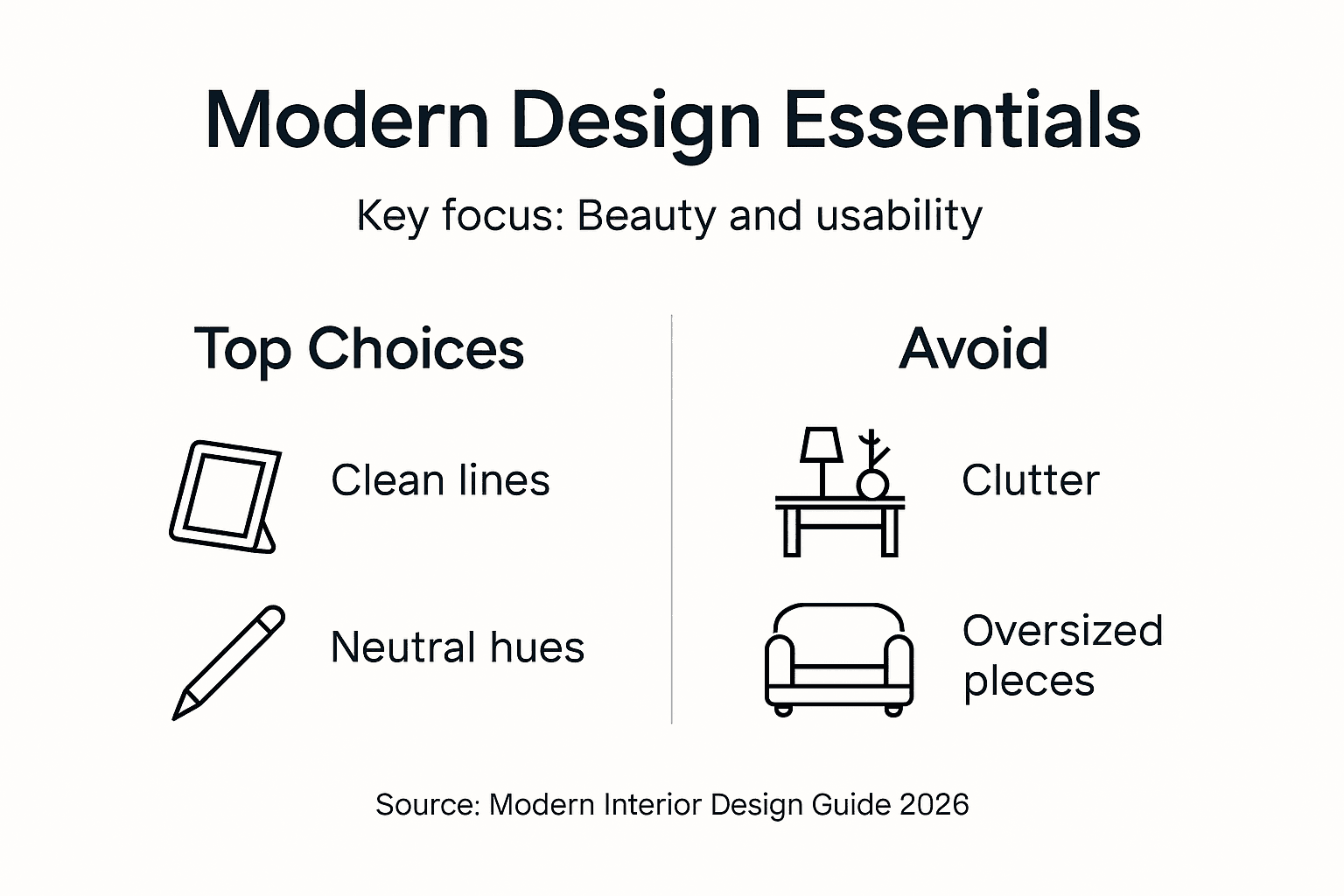
Modern interior design represents more than trendy aesthetics. It blends functionality with visual appeal through deliberate choices that enhance daily living. Understanding these modern decor principles helps you make informed decisions that stand the test of time.
The foundation of modern design rests on several key elements that distinguish it from other styles:
- Clean, uncluttered lines create visual calm and spaciousness
- Open floor plans maximize natural light and encourage flow between rooms
- Neutral color palettes with strategic accent colors establish sophisticated backdrops
- Sustainable materials reflect growing environmental consciousness in 2026
- Functional furniture serves multiple purposes without sacrificing style
Many assume modern design demands luxury spending, but that’s a misconception. The style actually emphasizes affordability through smart purchasing and versatile pieces. A well chosen sofa that converts to a guest bed delivers more value than an expensive statement piece used rarely.
The balance between beauty and usability defines successful modern interiors. Every item should justify its presence through function or aesthetic contribution. This intentionality prevents the clutter that plagues traditional decorating approaches and keeps your space feeling fresh for years.
Prerequisites: What You Need Before Starting
Rushing into furniture shopping without proper preparation guarantees frustration. Gather these essentials first to set yourself up for success.
Your toolkit should include:
- Measuring tape and laser distance measurer for accurate dimensions
- Graph paper or digital floor planning apps to visualize layouts
- Color swatches to test palette combinations in different lighting
- Budget spreadsheet to track expenses and prevent overspending
Basic design knowledge pays dividends throughout your project. Familiarize yourself with color theory fundamentals so you understand how hues interact. Review modern design planning steps to grasp the sequence of decisions you’ll face.
Budget planning deserves serious attention before you browse a single catalog. Research shows typical modern interior projects for US homes range from $12,000 to $18,000 depending on scope. Break this into categories like furniture, lighting, accessories, and installation to maintain control.
| Prerequisite | Purpose | Estimated Cost |
|---|---|---|
| Measuring tools | Ensure accurate furniture fit | $30 to $80 |
| Floor planning software | Visualize layouts before purchasing | Free to $50 |
| Color consultation | Establish cohesive palette | $100 to $300 |
| Design inspiration board | Maintain style consistency | Free |
Assess your current space honestly. What works? What frustrates you daily? Write down specific pain points like inadequate storage or poor traffic flow. These observations guide your design goals and prevent you from repeating existing problems with new furniture.
Stepwise Modern Interior Design Guide
Follow this proven sequence to transform your space systematically. Each step builds on the previous one, creating momentum toward your vision.
- Assess your space and set clear goals by measuring every room and identifying functional needs
- Create detailed floor plans showing furniture placement, traffic patterns, and focal points
- Develop your color scheme starting with neutral base tones and adding 2 to 3 accent colors
- Select minimalist furniture with clean lines that maximizes space efficiency
- Plan lighting layers combining ambient, task, and accent sources for flexibility
- Source sustainable materials prioritizing quality over quantity for longevity
- Purchase strategically using your checklist to avoid impulsive decisions
- Install and arrange furniture following your floor plan with minor adjustments as needed
- Add finishing touches like artwork and plants to personalize without cluttering
- Evaluate results against your initial goals and make final refinements
Start with space assessment because accurate measurements prevent most furniture disasters. Measure doorways, ceiling heights, and wall lengths twice. Document awkward corners or architectural features that limit placement options.
Layout planning determines whether your space feels cramped or spacious. Open floor plans work best for modern aesthetics, so consider removing non load bearing walls if budget allows. Arrange furniture to encourage conversation while maintaining clear pathways.
Furniture selection makes or breaks your design. Research confirms minimalist furniture with functional form significantly enhances modern aesthetics while maximizing perceived space. Choose pieces serving multiple roles like ottomans with hidden storage.

Lighting deserves equal attention to furniture. Modern lighting integration transforms ambiance through smart systems controlling brightness and color temperature. Layer different light sources to create mood variations throughout the day.
Pro Tip: Prioritize multifunctional furniture when working with rooms under 200 square feet to dramatically increase usability without visual crowding.
Troubleshooting Common Modern Design Mistakes
Even careful planners encounter obstacles. Recognizing these frequent errors helps you course correct quickly.
Over cluttering ranks as the top mistake undermining modern design. The minimalist philosophy requires restraint. If a room feels busy, remove 20% of items and reassess. You’ll likely prefer the cleaner look.
Measurement failures cause expensive headaches. That perfect sofa becomes a problem when it won’t fit through your doorway or blocks a heating vent. Always verify dimensions against your space before purchasing, accounting for delivery paths.
Style coordination challenges emerge when buying pieces over time. Mixing too many design languages creates visual chaos. Establish your aesthetic early and reference it for every purchase decision.
Impulsive buying leads to regret. Statistics show avoiding unplanned furniture purchases prevents 75% of redesign mistakes. Sales tempt us, but discipline saves money long term.
| Approach | Common Mistake | Better Solution |
|---|---|---|
| Minimalist | Buying too many small decorative items | Select 3 to 5 statement pieces maximum |
| Traditional | Filling every wall and surface | Leave intentional negative space |
| Furniture selection | Choosing style over function | Prioritize comfort and usability first |
| Color scheme | Using too many competing hues | Stick to 3 to 5 coordinated colors |
Color mismatches frustrate homeowners who don’t test samples in actual lighting. Paint stores offer small tester pots for this reason. Apply swatches to multiple walls and observe them morning, afternoon, and evening before committing.
Pro Tip: Create a shopping checklist including exact measurements, color codes, and style keywords before visiting stores to maintain focus and avoid furniture mistakes.
Budget Considerations and Expected Timelines
Realistic financial planning prevents the stress of mid project funding shortfalls. Understanding typical costs helps you allocate resources wisely.
Modern interior design projects for average US homes cost between $12,000 and $18,000 in 2026. This range varies based on room size, furniture quality, and whether you hire professional help. Breaking costs into phases makes the investment more manageable.
| Project Phase | Average Cost | Typical Duration |
|---|---|---|
| Planning and design | $500 to $1,500 | 1 to 2 weeks |
| Furniture purchase | $8,000 to $12,000 | 2 to 4 weeks |
| Lighting and fixtures | $1,500 to $2,500 | 1 to 2 weeks |
| Accessories and decor | $1,000 to $1,500 | 1 week |
| Installation and setup | $1,000 to $2,000 | 3 to 5 weeks |
Most projects complete within 8 to 12 weeks from initial planning to final styling. Delays typically stem from custom furniture orders or contractor scheduling. Build buffer time into your timeline for unexpected issues.
Cost saving strategies deliver results without compromising quality:
- Focus on multifunctional furniture reducing the total pieces needed
- Shop end of season sales for significant discounts on quality items
- Mix investment pieces with budget friendly accents strategically
- DIY simple installations like curtain rods and wall art hanging
- Prioritize high impact areas like living rooms before secondary spaces
Investing in modern design increases both home value and daily comfort. The functional improvements and aesthetic appeal make the expenditure worthwhile for most homeowners planning to stay in their homes beyond three years.
Expected Results and Success Metrics
Measuring your project’s success helps you know when you’ve achieved your goals and where adjustments might help.
Successful modern interior design delivers tangible improvements you’ll notice immediately:
- Perceived space increases up to 30% through minimalist furniture and strategic layout
- Cohesive aesthetic reflecting clean lines and intentional color choices throughout
- Enhanced natural light distribution from open floor plans and strategic mirror placement
- Improved functionality with everything serving a clear purpose in daily life
- Positive emotional response when entering rooms, feeling calm rather than overwhelmed
Functional metrics matter as much as aesthetics. Your lighting should adapt to different activities seamlessly. Storage solutions should accommodate belongings without visible clutter. Traffic flow should feel natural without furniture obstacles.
Timeline completion within your projected 8 to 12 weeks indicates good planning and execution. Significant delays suggest unrealistic initial estimates or scope creep where you kept adding elements mid project.
Personal satisfaction serves as the ultimate metric. If you feel genuinely happy in your redesigned space and usability exceeds 85% of your hopes, you’ve succeeded. Modern design should enhance your lifestyle, not create maintenance burdens or buyer’s remorse.
Document your space with before and after photos. The visual comparison often reveals improvements you’ve grown accustomed to and no longer consciously notice. Share these with friends considering their own projects to help them visualize possibilities.
Discover Modern Furniture and Decor at New Way Ref
Ready to bring your modern interior vision to life? New Way Ref simplifies the execution phase with carefully curated collections matching 2026 design trends.
Our modern furniture and decor selection features sustainably sourced pieces emphasizing the clean lines and functional forms you’ve learned about. From minimalist coffee tables to versatile storage solutions, each item supports the principles outlined in this guide. Browse stylish home décor options that add personality without cluttering your carefully planned spaces.
Expert guides complement our product collections, helping you make confident choices. Whether you need to upgrade your living room furniture or integrate smart lighting, we provide the resources and products to execute your design successfully. Free shipping on orders over $50 makes it easy to furnish your entire project affordably.
Frequently Asked Questions About Modern Interior Design
What are the key colors for modern interior design?
Neutral bases like white, gray, and beige dominate modern palettes in 2026, providing calm backdrops. Add 2 to 3 accent colors such as navy, forest green, or terracotta through pillows and artwork for visual interest without overwhelming the space.
How do I measure my space accurately before buying furniture?
Use a laser distance measurer for precise wall lengths, then create a scaled floor plan on graph paper or digital apps. Measure doorways, hallways, and stairwells to ensure delivery access, and mark electrical outlets and heating vents that affect placement.
What lighting styles work best in modern homes?
Layered lighting combining recessed ambient fixtures, adjustable task lamps, and accent spotlights offers maximum flexibility. Smart bulbs with adjustable color temperature enhance modern aesthetics while supporting different activities throughout the day.
How long does a typical modern design project take?
Most projects complete within 8 to 12 weeks from planning through final installation. Custom furniture orders may extend timelines by 4 to 6 weeks, so factor this into your schedule when choosing bespoke pieces over ready made options.
How can I stay within budget when modernizing my home?
Create a detailed budget allocating 60% to furniture, 15% to lighting, 15% to accessories, and 10% contingency. Shop end of season sales, prioritize multifunctional pieces, and tackle one room completely before starting another to maintain financial control.