

TL;DR:
- Modern sofas in 2026 feature diverse styles including low-slung loungers, curved sculptural pieces, and structured minimalist designs.
- Performance fabrics now combine durability with stylish appearance, suitable for households with kids or pets.
- Selecting a sofa depends on space, lifestyle needs, comfort preferences, and long-term durability considerations.
Choosing the right sofa can feel like one of the most consequential decisions in your home. The options keep multiplying, trends shift fast, and a poor choice can leave you with a piece that looks great in a showroom but frustrates you every day at home. Today’s modern sofa landscape spans low-slung loungers, bold curved silhouettes, and cleanly structured frames, each with a distinct personality and purpose. This guide breaks down the most compelling styles of 2026, with practical examples and honest comparisons so you can make a confident, well-informed decision.
Table of Contents
- How to choose a modern sofa: Key criteria and style considerations
- Low-slung and deep-seated sofas: The lounge revolution
- Curved and sculptural sofas: Organic shapes for conversation spaces
- Minimalist and structured sofas: The new refined silhouette
- Modern sofa styles at a glance: Feature comparison table
- Which sofa style suits your space? Real-world scenarios
- Our perspective: Why modern sofa trends are about more than just looks
- Ready for your perfect modern sofa?
- Frequently asked questions
Key Takeaways
| Point | Details |
|---|---|
| Match style to lifestyle | Choose a sofa style that complements how you live and use your space. |
| Embrace performance fabrics | Modern textiles offer durability for kids and pets without sacrificing style. |
| Pair shape with room layout | Curved or structured designs each serve different aesthetic and functional needs. |
| Prioritize both comfort and design | Today’s best sofas deliver lounge-worthy relaxation with contemporary elegance. |
How to choose a modern sofa: Key criteria and style considerations
Before you fall for any particular look, it helps to get clear on what actually matters to you. A sofa is a long-term investment, and the best one for your space is the one that balances your priorities rather than just hitting one mark.
Start by listing your key needs:
- Comfort level: Do you want a sink-in, lounging experience, or firm and upright support?
- Aesthetic goal: Clean and minimal, bold and sculptural, or warm and relaxed?
- Durability requirements: Do you have kids, pets, or high-traffic socializing?
- Room function: Is this your main living room, a secondary lounge, or a multipurpose studio?
- Size constraints: What’s the footprint you’re working with, and how does the sofa flow with surrounding furniture?
One major shift in 2026 is the rise of performance fabrics. These performance fabrics mimic luxury textiles, combining pet and kid durability without sacrificing visual appeal. So if you’ve been avoiding stylish sofas because you’re worried about spills and scratches, that tradeoff is largely obsolete now. You can have both a beautiful fabric and a resilient one.
When it comes to shape and size, measure your room before you browse. A sofa that’s too deep will crowd a small living room. One that’s too narrow will look lost in a large open-plan space. Think about traffic flow and leave at least 18 inches between your sofa and the coffee table for comfortable movement.
For furniture comfort and style tips, frame quality matters just as much as the fabric. Look for kiln-dried hardwood frames and eight-way hand-tied springs as indicators of lasting construction. Seat depth is another overlooked factor: deeper seats (22 inches or more) favor lounging, while shallower seats (18 to 20 inches) work better for upright sitting and conversation.
Pro Tip: When you visit a showroom or browse online, check the seat depth measurement specifically. Many stylish sofas sacrifice practical seat depth for a sleek profile, and you’ll feel the difference after the first hour of use.
Low-slung and deep-seated sofas: The lounge revolution
If you want your living room to feel like a high-end retreat, the low-profile sofa is the style to know. These pieces sit close to the floor, offer generous seat depth, and usually feature cushions you can actually sink into. They’re unapologetically relaxed.
Key features of this style include:
- Extra-deep seats: Usually 24 inches or more, encouraging a reclining posture
- Low back height: Keeps sightlines open in the room
- Smooth, continuous lines: Minimal visual clutter, often with integrated arms or none at all
- Oversized cushions: Loose, plush fills in boucle, velvet, or performance linen
These sofas are the natural choice for home theaters, casual family rooms, and spaces where lounging is the primary purpose. They work especially well in rooms with higher ceilings, where their low profile creates a dramatic contrast and makes the space feel grounded.
“Low-slung, deep-seated sofas with plush cushions emphasize lounge comfort over structure, ideal for movie nights and relaxation.”
The tradeoff in a family setting is upkeep. Loose cushions can scatter, and very plush fills may flatten over time with regular use. Look for foam and fiber blended cushion cores if you want the cloud-like feel without rapid deterioration.
If you’re considering upgrading living room furniture and your household centers on cozy evenings and informal entertaining, this style is a strong contender. Pair it with a low media console and a soft area rug to complete the grounded, relaxed aesthetic.
Curved and sculptural sofas: Organic shapes for conversation spaces
Curved sofas have moved firmly out of the niche category and into mainstream interior design, and they deserve every bit of attention they’re getting. These pieces bring an architectural quality to a room that rectangular furniture simply cannot replicate.
The signature traits of this category:
- Sweeping, organic curves: Often a continuous arc that wraps around the sitter
- Asymmetrical or armless silhouettes: Less traditional, more expressive
- Velvet, boucle, and textured upholstery: Materials that emphasize the sculptural form
- Available in modular configurations: Allows customization to fit different spaces
Curved and sculptural sofas with organic shapes soften rooms, promote conversation, and add genuine architectural interest to any layout. That softening effect is particularly valuable in open-plan spaces where angular furniture can feel stark or disconnected.
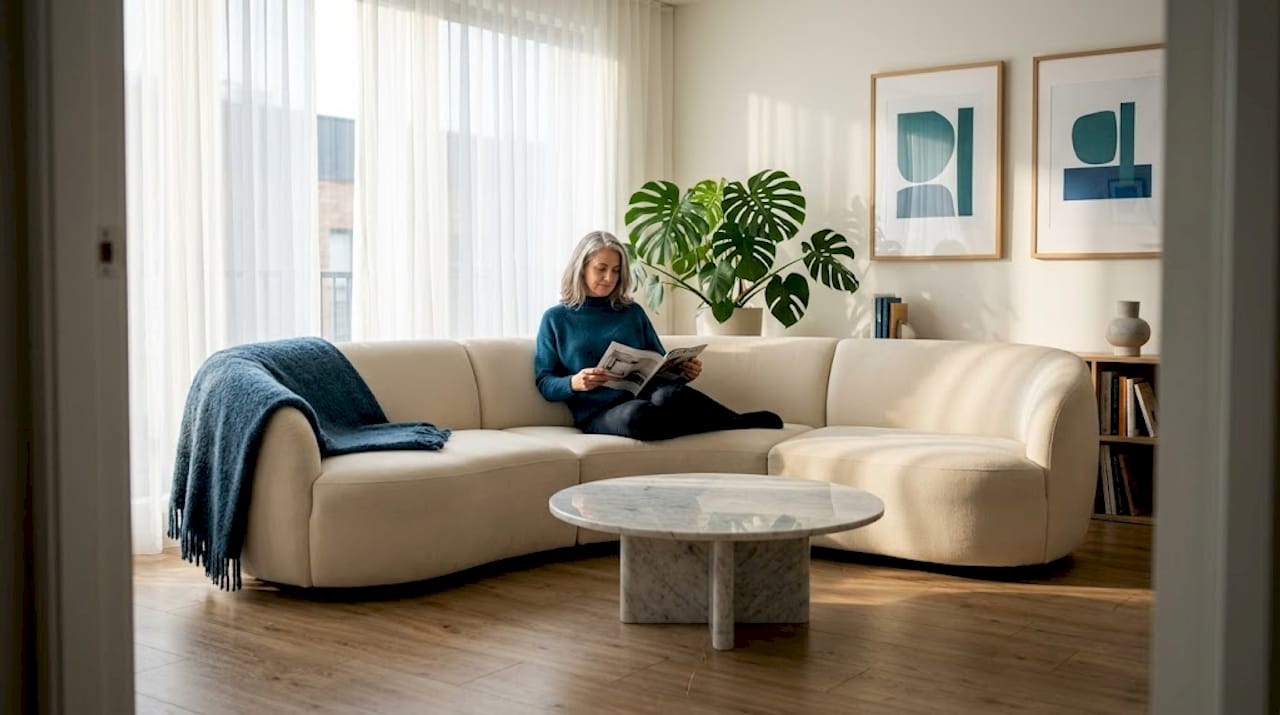
For positioning, curved sofas work best when they define a zone rather than sit against a wall. Floating the sofa in the center of an open plan area, with accent chairs arranged around its curve, instantly creates a conversation-friendly layout. The curve naturally draws people toward each other, making it a social design choice as much as an aesthetic one.
Pro Tip: Pair a curved sofa with a round or oval coffee table rather than a rectangular one. The complementary shapes create visual harmony and reinforce the organic feeling of the overall space. You can also see tips for arranging furniture with curved sofas to get the layout right from the start.
One thing to plan for: curved sofas require more floor space than their rectangular counterparts of similar seating capacity. Make sure you have at least a 12x15 foot area before committing to a full curved sectional.
Minimalist and structured sofas: The new refined silhouette
For years, the “cloud couch” aesthetic dominated modern interior spaces. Soft, oversized, and formless, it looked lush but came with practical downsides: difficult to clean, hard to move, and often inconsistent in long-term support. In 2026, there’s a clear and welcome correction happening.
Refined minimalist styles shift from exaggerated cloud couches to structured yet comfortable silhouettes with cleaner lines. This doesn’t mean stiff or cold. It means purposeful. These sofas have clear edges, slim arms, and frames that don’t dominate the room.
Core traits of the minimalist structured sofa:
- Clean, boxy silhouette: Defined armrests, straight back, consistent proportions
- Slim profiles: Often on low legs, creating a sense of visual lightness
- Modular options: Many structured sofas come in L-shaped or expandable configurations
- High-performance upholstery: Often in neutral tones, linen, or tight-woven fabrics
These sofas shine in apartments, multipurpose rooms, and spaces where you want the furniture to support the room’s design without overpowering it. They’re also easier to style with other pieces because their neutral form doesn’t compete.
Here’s a quick comparison to help you decide between the cloud style and the structured approach:
| Feature | Cloud/plush sofa | Structured minimalist sofa |
|---|---|---|
| Comfort style | Sink-in, enveloping | Supportive, upright |
| Upkeep | Frequent refluffing | Low maintenance |
| Visual weight | Heavy | Light |
| Space suitability | Large rooms | Small to mid-size rooms |
| Longevity | Variable | Generally more durable |
| Styling flexibility | Statement piece | Versatile, easy to pair |
For deeper context on this shift in design philosophy, exploring contemporary furniture helps explain why clean, functional design keeps coming back as the preferred baseline. And if you’re still getting familiar with the term, defining contemporary style is a good starting point for understanding what separates it from modern, transitional, or traditional.
Modern sofa styles at a glance: Feature comparison table
After walking through each style in detail, here’s a side-by-side reference you can use to quickly compare your top options:
| Style | Core features | Best for | Key strength | Possible downside |
|---|---|---|---|---|
| Low-slung, deep-seated | Low profile, plush cushions, deep seats | Lounging, home theater, casual rooms | Ultimate relaxation | Cushion upkeep, not ideal for formal use |
| Curved and sculptural | Organic arcs, armless options, bold form | Open-plan spaces, entertaining | Architectural impact, social layout | Requires more floor space |
| Minimalist and structured | Clean lines, slim arms, defined silhouette | Apartments, multipurpose rooms | Versatile, low maintenance | Less immersive comfort |
| Modular sectional | Configurable units, customizable layout | Families, large or changing rooms | Flexibility, adaptable | Can look bulky if oversized |
You can browse types of living room furniture for a broader look at how sofas fit into the overall furniture picture for your space.
Which sofa style suits your space? Real-world scenarios
Understanding the styles is one thing. Knowing which one actually fits your life is where the real decision happens. Here are four common home scenarios and the sofa styles that match them best:
-
The apartment dweller: You’re working with a single-room layout that serves as living room, workspace, and sometimes guest room. A structured minimalist sofa in a neutral tone gives you flexibility without visual clutter. Look for a modular version so you can reconfigure when needed.
-
The open-plan entertainer: Your home is built around gathering. A large curved sectional defines your social zone and pulls guests naturally into conversation. Choose a performance velvet or boucle fabric that handles frequent use while looking polished.
-
The busy family room: You need comfort and durability in equal measure. A low-slung sofa with performance fabric is your best move. It handles daily wear from kids and pets while keeping the room feeling relaxed and inviting.
-
The creative studio or loft: Your aesthetic is intentional and layered. A sculptural single-arm curved sofa in a bold tone becomes the anchor piece in a curated space. Keep surrounding furniture minimal so the sofa commands attention.
Pro Tip: If you’re unsure about committing to one configuration, prioritize modular sofas. You can start with a three-piece setup and add sections as your space or family grows, without replacing the entire piece. Visit essential home furniture or check out ideas for modern living room styling to see how sofa choices anchor the whole room.
Our perspective: Why modern sofa trends are about more than just looks
Here’s something worth saying plainly: the most stylish sofa in the room is not automatically the best sofa for your home. We’ve seen it happen again and again. A homeowner invests in a stunning curved velvet piece, and within six months, it’s covered in throw blankets because it wasn’t comfortable enough for daily use, or it’s become impractical now that a new baby or dog is in the picture.
The real lesson is that a sofa has to earn its place through daily life, not just photographs. When you evaluate a style, think about what your living room actually looks like on a Tuesday evening, not just when guests arrive on Saturday. Does the sofa support how you actually sit? Does the fabric tolerate how your household actually lives?
The brands and designers pushing contemporary furniture forward understand this tension. The best pieces in 2026 aren’t just trend-chasing. They’re built around real use patterns and thoughtful construction. When a sofa is genuinely designed for your life, it doesn’t go out of style because it’s always performing exactly as it should.
Our honest take: buy one step beyond what you think you need. Better frame. Better fabric grade. A slightly larger size than feels necessary. You won’t regret having more comfort and durability, but you very well might regret cutting corners to save a few hundred dollars on a piece you use every single day.
Ready for your perfect modern sofa?
You’ve now got a clear picture of the major modern sofa styles and how they match different homes and lifestyles. The next step is finding pieces that actually deliver on both design and durability.

At New Way Ref, we’ve thoughtfully curated a selection of contemporary sofas and living room furniture designed to transform your space. Whether you’re drawn to the plush comfort of a deep-seated lounger or the clean lines of a structured minimalist piece, you’ll find options that match your style and your life. Explore our full collection and take advantage of free shipping on orders over $50. Your ideal sofa is closer than you think.
Frequently asked questions
What defines a modern sofa style?
Modern sofa styles are typically characterized by clean lines, innovative forms, and a balance between comfort and visual simplicity. As noted in couch predictions for 2026, the current direction favors structured silhouettes that move away from exaggerated forms toward purposeful, refined comfort.
Are curved sofas practical for small living rooms?
Yes, curved sofas can work in compact spaces when sized appropriately, and they often create a more natural, conversational layout than angular alternatives. Organic curved shapes soften rooms and define social zones without requiring wall placement.
Which sofa fabrics are best for homes with kids or pets?
Performance fabrics are the top choice for durability, and modern performance textiles now replicate the feel and appearance of luxury fabrics while handling spills, scratches, and heavy use far better.
How do deep-seated sofas compare to minimalist sofas?
Deep-seated sofas prioritize a relaxed, immersive comfort experience, while minimalist structured sofas focus on space efficiency and a cleaner visual profile. Plush lounge sofas are ideal for casual rooms, whereas structured options from refined minimalist trends suit multipurpose spaces and smaller footprints better.