

Finding the right lighting for your home often feels like decoding a puzzle that changes with every room and mood. The way light interacts with your furniture, walls, and daily activities quietly shapes how inviting and comfortable your space feels. By understanding bold concepts like layered lighting, color temperature, and energy efficiency, you can create an atmosphere that matches your style without falling for common myths or wasted expense.
Table of Contents
- Lighting in Interiors: Core Principles and Myths
- Key Lighting Types for Home Spaces
- How Lighting Shapes Mood and Perception
- Practical Lighting Choices for Modern Decor
- Mistakes to Avoid in Interior Lighting Design
Key Takeaways
| Point | Details |
|---|---|
| Understand Core Principles | Lighting design relies on three pillars: quality, quantity, and energy efficiency. Awareness of these factors helps avoid common pitfalls in lighting choices. |
| Layer Your Lighting | Combine ambient, task, and accent lighting for flexibility, visually appealing spaces, and proper functionality tailored to each room’s purpose. |
| Match Color Temperature | Select color temperatures based on room activity: warm light for relaxation and cool light for focus to enhance mood and productivity. |
| Avoid Common Mistakes | Relying on a single light source and neglecting the interaction between light and materials can lead to poor lighting outcomes. Plan thoughtfully to prevent costly errors. |
Lighting in Interiors: Core Principles and Myths
Good lighting isn’t about accident or luck. It follows real principles that shape how you experience your space. Understanding these fundamentals helps you avoid common misconceptions that lead to poor lighting choices.
Lighting design operates on three core pillars: quality, quantity, and energy efficiency. Quality refers to how light looks and feels in your space—its color temperature and how it renders colors accurately. Quantity means having enough light for your activities without creating glare or harsh shadows. Energy efficiency ensures your lighting works hard without wasting power or running up bills.
The most damaging myth: more light always means better results. This simply isn’t true. A room flooded with harsh overhead light often feels uncomfortable and uninviting. Your eyes actually prefer layered lighting that combines different sources at various intensities.
Another widespread misconception is that lighting is purely functional. People often treat it as an afterthought, something you add last. In reality, quality lighting standards work hand-in-hand with your design choices to create mood, highlight architectural features, and make spaces feel larger or cozier.
Key principles that matter:
- Layer your lighting: Combine ambient, task, and accent lighting for flexibility and visual interest
- Match color temperature to activity: Warm light (2700K) works well in bedrooms and living areas; cooler light (4000K+) suits kitchens and offices
- Consider your room’s materials: Light behaves differently on matte versus reflective surfaces, affecting how bright a space feels
- Plan for shadows: Strategic shadows add depth and prevent that flat, artificial appearance
One myth that deserves debunking: “natural light is always superior.” Natural light changes throughout the day and doesn’t work alone. You need artificial lighting that complements daylight without conflicting with it.
Another false belief: expensive fixtures mean better lighting. Price doesn’t determine quality. A thoughtfully positioned mid-range fixture often outperforms luxury options placed in wrong locations.
The relationship between lighting and psychology matters too. Poor lighting causes eye strain, headaches, and reduced productivity. Proper lighting improves focus, mood, and how inviting your space feels. Interior lighting design principles show that this connection runs deeper than most homeowners realize.
Common mistake: treating every room the same way. Your bedroom needs different lighting than your kitchen or home office. Each space demands distinct intensity levels and color temperatures based on its purpose.
People often assume dimmer switches solve everything. They help, but only when your baseline lighting is right to begin with. Dimming poor light doesn’t create good light—it just makes it darker.
Pro tip: Start with one room and observe how natural light moves through it at different times of day. This reveals where you’ll need artificial lighting support and helps you choose fixtures that complement rather than fight your space’s natural patterns.
Key Lighting Types for Home Spaces
Every lighting setup relies on three fundamental types that work together. Think of them as building blocks—each serves a specific purpose, and they’re strongest when combined thoughtfully.
Ambient lighting is your baseline. It provides general illumination throughout a room so you can safely move and see. Ceiling fixtures, recessed lights, and wall sconces typically handle this role. Without ambient lighting, task lighting would feel isolated and strange.

Task lighting targets specific areas where you need extra brightness. Kitchen countertops, reading nooks, and home office desks demand focused light for detail work. A desk lamp or under-cabinet lighting in your kitchen counts as task lighting. It prevents eye strain and makes activities more enjoyable.
Accent lighting adds visual interest and highlights architectural features or décor. It draws attention to artwork, plants, or architectural details you want to emphasize. Accent lighting creates depth and prevents rooms from feeling flat and one-dimensional.
Here’s a quick comparison of lighting types and their best use cases in home interiors:
| Lighting Type | Primary Function | Ideal Location | Typical Fixtures |
|---|---|---|---|
| Ambient | General illumination | Living room, hallway | Ceiling, recessed, sconces |
| Task | Focused work | Kitchen, office, desk | Desk lamp, under-cabinet |
| Accent | Highlight features | Artwork, plants, shelves | Spotlights, LED strips |
Here’s how they work together:
- Ambient sets the foundation and controls overall brightness
- Task adds focused light where you perform activities
- Accent enhances visual appeal and guides the eye
Light distribution matters as much as the type. Direct and diffuse lighting approaches create different moods. Direct light concentrates brightness in specific areas—great for task work. Diffuse light spreads evenly throughout a space—ideal for ambient lighting that feels welcoming.
Color temperature affects how each lighting type performs. Warm light (2700K) works best for ambient and accent lighting in living areas. Cool light (4000K and above) suits task lighting in kitchens and offices where clarity matters.
Layering these three types gives you complete control over your space’s atmosphere and functionality.
Bright recessed lights alone create harsh, uninviting spaces. Layered lighting creates flexibility. You can dim ambient light for relaxation or brighten task lighting for focused work. This adaptability matches modern living where rooms serve multiple purposes.
Energy-efficient options exist for all three types. LED fixtures reduce power consumption while maintaining quality light output. Smart bulbs let you adjust color temperature and brightness based on the time of day.
Pro tip: Start by identifying each room’s primary activity, then add one light source for each of the three types—ambient for general use, task for focused work, and accent to highlight what makes the space special.
How Lighting Shapes Mood and Perception
Lighting doesn’t just help you see. It fundamentally changes how you feel, think, and perceive your surroundings. This connection between light and emotion runs deeper than most people realize.
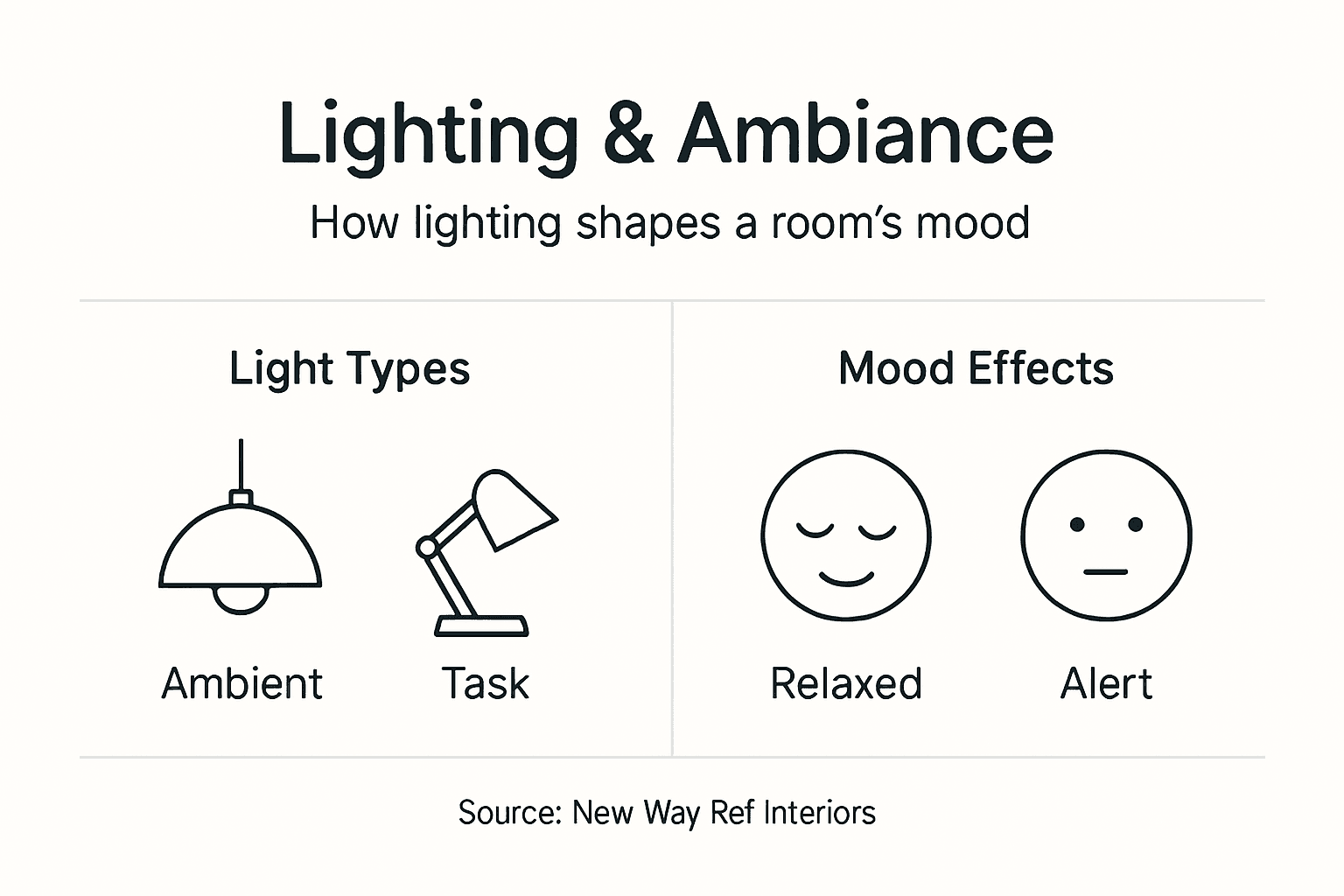
Your brain responds to light at a biological level. Different light wavelengths trigger specific neurological reactions that affect alertness, mood, and even sleep quality. This isn’t psychology—it’s biology wired into your nervous system.
Warm light (around 2700K) signals relaxation to your brain. It lowers cortisol levels and promotes melatonin production, making you feel calmer. This is why warm light works so well in bedrooms and living rooms where you want to unwind.
Cool light (4000K and above) increases alertness and focus. Blue light wavelengths boost attention and cognitive performance during the day. This makes cool light ideal for kitchens, home offices, and workspaces where you need mental sharpness.
Use this table to understand how color temperature influences mood and activity:
| Color Temperature | Visual Feel | Mood Effect | Recommended Spaces |
|---|---|---|---|
| 2700K (Warm) | Soft, yellowish | Relaxing, cozy | Bedroom, living room |
| 3000K (Neutral) | Clear, natural | Balanced, inviting | Dining area, hallway |
| 4000K+ (Cool) | Crisp, bluish | Alert, energizing | Kitchen, office |
Here’s what happens when lighting matches your activity:
- Morning and daytime: Cooler light supports focus and energy
- Afternoon transitions: Slightly warmer light prevents mid-day slumps
- Evening: Warm light prepares your body for sleep
Yellow and orange light create feelings of warmth and comfort. Red light feels intimate and cozy but can be overstimulating in work areas. Green light promotes balance and reduces eye fatigue during extended focus periods.
The color temperature you choose literally rewires your brain’s chemical responses for those hours you spend in the space.
Brightness matters as much as color. Dim lighting can feel cozy or depressing depending on context. Overly bright lighting creates anxiety and eye strain. The sweet spot combines appropriate brightness with the right color temperature for your activity.
Daylight exposure during morning hours sets your circadian rhythm for the entire day. This is why natural light matters so much. When you supplement it with artificial light later, matching your evening lighting to natural color shifts helps your body wind down naturally.
People often underestimate how much lighting affects their mood. Moving from a dim, warm living room to a bright, cool kitchen creates a tangible shift in mental state. This happens almost instantly and happens every day in your home.
LED technology lets you adjust both brightness and color temperature in real time. Smart bulbs can shift from cool morning light to warm evening light automatically, supporting your natural rhythm throughout the day.
Pro tip: Install adjustable lighting in spaces where you spend extended time—bedrooms and home offices especially—so you can match your lighting to your activity and time of day rather than fighting against it.
Practical Lighting Choices for Modern Decor
Choosing lighting for modern spaces means balancing style, function, and efficiency. Your selections should complement your decor while actually working for how you live in the space.
LED fixtures dominate modern lighting for good reason. They use 75% less energy than incandescent bulbs and last 25 times longer. This saves money while reducing your environmental footprint significantly. LEDs come in countless styles to match any modern aesthetic.
Fixture placement matters as much as the fixture itself. Recessed lighting works beautifully in contemporary spaces with clean lines. Pendant lights over kitchen islands add both function and visual interest. Wall sconces flanking mirrors create balanced, flattering light in bathrooms. Consider your room layout before choosing fixture types.
Here’s what to prioritize:
- Energy efficiency: LED technology reduces monthly utility costs substantially
- Dimmer compatibility: Choose dimmable bulbs for flexibility and ambiance control
- Color rendering: Ensure light accurately shows true colors, especially in kitchens and closets
- Smart controls: Programmable systems adapt lighting automatically throughout the day
Color temperature selection depends on room purpose. Living spaces and bedrooms benefit from warm white (2700K) for relaxation. Kitchens and offices need bright white (4000K) for clarity and task work. Modern homes often use 3000K as a compromise that works across most spaces.
High-efficiency luminaires paired with smart dimmers create responsive lighting that adjusts to your needs. Motion sensors in hallways and entryways eliminate the need to flip switches. Programmable systems can shift color temperature gradually throughout the day, matching your natural rhythm.
Modern decor demands lighting that disappears into the design rather than dominating it.
Minimalist fixtures with clean lines suit contemporary interiors best. Avoid ornate designs that fight modern aesthetics. Track lighting offers flexibility without permanent installation, perfect for renters wanting to upgrade their space.
Material choices matter too. Matte finishes reduce glare and feel more refined. Brushed metal, frosted glass, and fabric shades create sophisticated looks while controlling light distribution. Chrome and polished finishes work in industrial or transitional styles.
Smartbulbs give you control without fixture replacement. You can change color temperature or brightness from your phone, creating custom scenes for different moods. This technology transforms standard fixtures into adaptable lighting solutions.
Layering remains essential in modern design. A single ceiling fixture never provides complete lighting. Combine overhead ambient light with task lighting at work areas and accent lights highlighting architectural features or artwork.
Pro tip: Start with energy-efficient fixtures and dimmers in your most-used room, then gradually upgrade other spaces as budget allows, ensuring each choice complements your decor while delivering the functionality you actually need.
Mistakes to Avoid in Interior Lighting Design
Poor lighting choices create problems that persist long after you’ve installed fixtures. Understanding common mistakes helps you avoid expensive fixes and frustration later.
The biggest mistake: relying on one light source. A single overhead fixture floods your space with harsh, unflattering light. It creates shadows under eyes and around furniture, making rooms feel cave-like. You need layered lighting that combines ambient, task, and accent sources.
Ignoring how light interacts with your room’s materials causes unexpected results. Dark paint absorbs light, requiring brighter fixtures than lighter walls. Glossy surfaces create glare while matte finishes absorb light. Understanding material reflectance ensures your lighting plan actually works in your specific space.
Common mistakes include:
- Inadequate task lighting: Poor light at work areas causes eye strain and frustration
- Excessive glare: Bare bulbs or reflective surfaces create discomfort
- Poor shadow placement: Shadows in wrong locations make spaces feel awkward
- Ignoring circadian rhythm: Wrong color temperature disrupts sleep and energy
- No dimmer controls: Fixed brightness limits flexibility and mood options
Placing fixtures without considering how you’ll use the space wastes money and time. A pendant light directly over your reading chair creates shadows on your book. Task lighting installed too high or at wrong angles leaves dark spots. You need to evaluate actual usage before deciding fixture location.
Fixing lighting mistakes after installation costs far more than planning correctly upfront.
Neglecting energy efficiency adds unnecessary costs. Traditional bulbs generate heat waste while LEDs convert most energy to light. Switching to efficient fixtures reduces utility bills significantly while improving light quality.
Failing to coordinate with your interior finishes creates clashing aesthetics. A sleek modern fixture looks wrong in a traditional room. Industrial fixtures jar against farmhouse decor. Your lighting should enhance your design style, not fight against it.
Poor client communication creates designs that fail in reality. What looks good in a showroom may not work for how you actually live. Discussing specific activities, preferred brightness levels, and aesthetic preferences prevents costly mistakes.
Overlooking accessibility needs leaves elderly residents or those with vision challenges struggling. Adequate lighting prevents falls and improves safety. Task lighting makes reading and detailed work comfortable for everyone.
Pro tip: Before finalizing any fixture purchases, spend time in your space at different times of day to observe natural light patterns, then test temporary lighting solutions in those exact locations to confirm they create the ambiance and functionality you want.
Transform Your Space with Perfect Lighting Solutions
Many homeowners struggle with creating the right ambiance because lighting is often treated as an afterthought instead of an essential part of interior design. This article highlights crucial challenges like balancing ambient, task, and accent lighting to avoid harsh glare or dull environments. Achieving the correct color temperature and layering your lights can increase comfort, productivity, and make every room feel inviting and balanced.
At New Way Ref, we understand these precise needs and offer a wide range of modern and energy-efficient fixtures that help you master the art of lighting in your home. Whether you are seeking warm tones for cozy living rooms or crisp bright light for your kitchen or office, our curated Lighting collection features versatile options designed to complement your style and daily activities.

Discover lighting that enhances your home environment with beautiful, functional designs available now at New Way Ref. Shop our selection, enjoy free shipping on orders over $50, and take the first step toward transforming your interiors with the perfect light that shapes mood and elevates every space.
Frequently Asked Questions
What are the core principles of lighting design in interiors?
Lighting design operates on three core pillars: quality, quantity, and energy efficiency, each influencing how a space feels and functions.
How does layering different types of lighting affect a room’s ambiance?
Layering ambient, task, and accent lighting creates a flexible and visually interesting environment, enhancing the overall mood and usability of the space.
What role does color temperature play in setting the mood within a room?
Color temperature significantly impacts mood; warm light (2700K) promotes relaxation, while cooler light (4000K and above) enhances alertness and focus, making it ideal for workspaces.
How can poor lighting choices negatively affect my well-being?
Poor lighting can cause eye strain, headaches, and reduced productivity, whereas proper lighting can improve focus, mood, and the inviting nature of a space.