

Clutter costs you more than you think. The average American spends 8.5 minutes daily searching for misplaced items, and shoes are among the biggest culprits. Beyond the lost time, 73% of people admit to hiding parts of their home from guests out of embarrassment. A dedicated shoe cabinet solves both problems at once. This guide walks you through why shoe cabinets matter, how the different types work, how to match them with your decor, and how to keep them fresh for years.
Table of Contents
- Why shoe cabinets matter: Decluttering, privacy, and first impressions
- Types of shoe cabinets and how they work
- Shoe cabinets vs racks: Which is right for you?
- Style meets function: Integrating shoe cabinets with your home decor
- Maintenance, ventilation, and maximizing your cabinet’s lifespan
- Find your perfect shoe cabinet and home upgrades
- Frequently asked questions
Key Takeaways
| Point | Details |
|---|---|
| Tames shoe clutter | Shoe cabinets save daily time and reduce stress by organizing footwear out of sight. |
| Combines style with function | Modern shoe cabinets enhance home decor while keeping entryways tidy. |
| Prevents odors and mildew | Ventilated, well-maintained cabinets protect shoes and boost indoor air quality. |
| Fits any space | Slim, multifunctional designs work even in small apartments and entryways. |
Why shoe cabinets matter: Decluttering, privacy, and first impressions
Shoe clutter is one of the most common and most overlooked sources of household stress. The average US household owns 6 to 12 shoe pairs per person, and with multiple family members, that adds up fast. Piles of shoes near the front door create a chaotic first impression and make daily routines harder than they need to be.
The psychological impact is real. When your entryway looks messy, it sets a stressful tone for the entire home. Studies show that clutter causes 48% of people to run late because they cannot find what they need. A shoe cabinet removes that friction entirely by giving every pair a designated spot.
Beyond function, shoe cabinets contribute to the overall feel of your space. Understanding the benefits of modern decor shows how purposeful furniture choices elevate a room from ordinary to polished. A well-chosen cabinet signals care and intention to anyone who walks through your door.
Here is what shoe clutter is actually costing you:
- Time: Minutes lost every morning searching for matching pairs
- Stress: Visual disorder raises cortisol levels and reduces focus
- Embarrassment: Guests notice a messy entryway before anything else
- Shoe damage: Shoes left in piles wear out faster from pressure and moisture
“A dedicated shoe cabinet does not just store footwear. It protects your investment, preserves your home’s atmosphere, and gives you back your mornings.”
Types of shoe cabinets and how they work
Not all shoe cabinets are built the same, and choosing the wrong type for your space is one of the most common mistakes homeowners make. The main categories are slim or tall cabinets, wide or bench-style cabinets, modular units, and entryway-specific designs. Each one serves a different lifestyle and floor plan.
Adjustable shelves, flip-down drawers, pull-out trays, and ventilation features like slatted doors, mesh panels, or perforated holes are the core mechanics that separate a good cabinet from a great one. Flip-down drawers are especially space-efficient because they allow shoes to be stored at an angle, fitting more pairs per shelf. Ventilated panels prevent moisture and odor from building up inside.
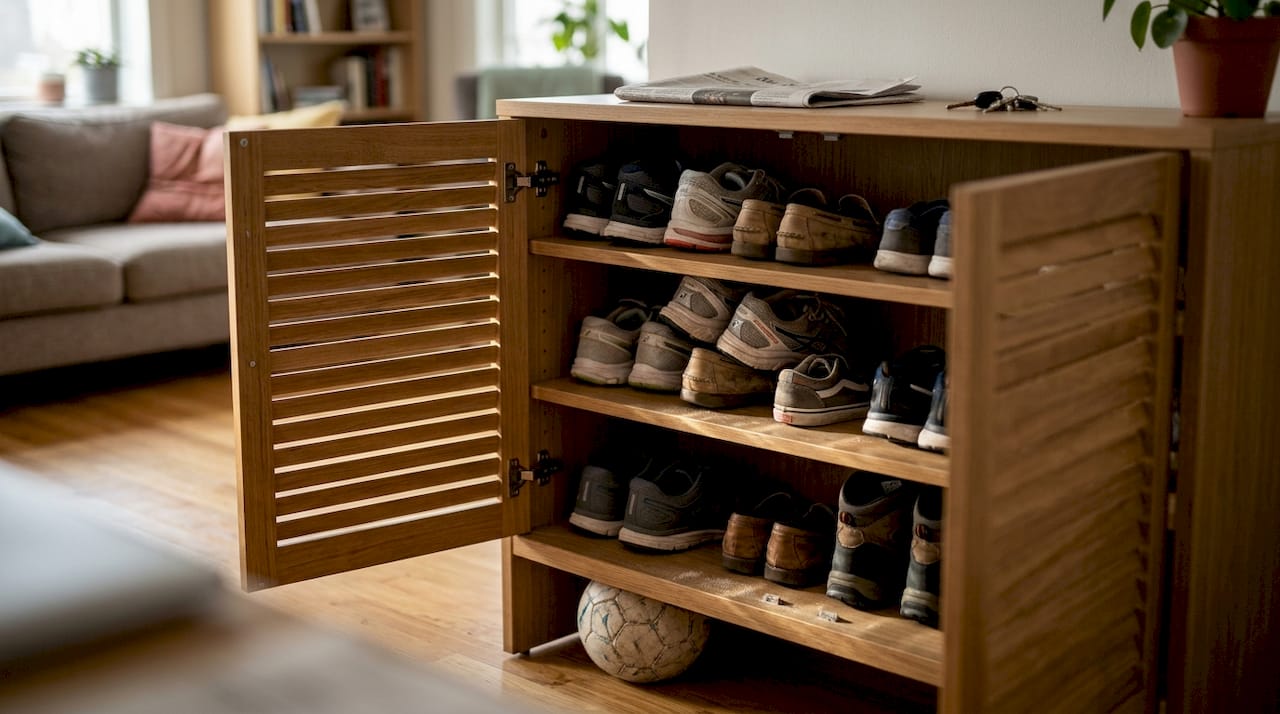
Here is a quick breakdown of the main types:
| Cabinet type | Best for | Key feature |
|---|---|---|
| Slim or tall | Narrow entryways | Vertical storage, small footprint |
| Wide or bench | Families, mudrooms | Seating plus storage |
| Modular | Growing collections | Expandable, customizable |
| Rotating | Small rooms, easy access | 360-degree reach, compact design |
| Multi-door | Large households | High capacity, concealed storage |
If you want something that works in tight spaces without sacrificing style, the 360-degree rotating shoe cabinet is a smart pick. It spins to give you full access without needing extra floor space. For larger households, the spacious white shoe cabinet with four doors and a drawer offers serious capacity while keeping everything hidden behind clean lines.
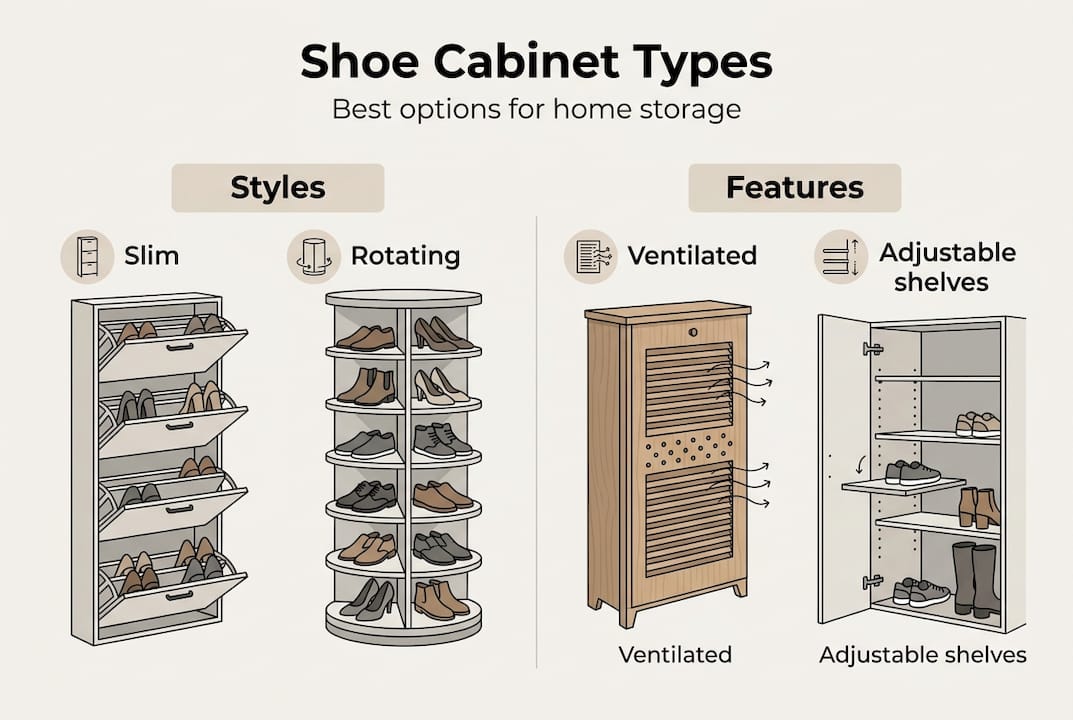
Pro Tip: Always prioritize ventilated cabinets over fully sealed ones. Trapped moisture is the number one cause of shoe odor and cabinet damage over time.
Key features worth looking for in any cabinet:
- Adjustable shelves to fit boots, heels, and sneakers of different heights
- Soft-close hinges to protect both the cabinet and your shoes
- A bench or top surface for sitting while putting on shoes
- Neutral finishes that blend with existing furniture
Shoe cabinets vs racks: Which is right for you?
Shoe racks are cheaper and more breathable, but they leave everything on display. Cabinets hide clutter, protect shoes better, and enhance your home’s style, while racks are more affordable and allow airflow but tend to collect dust on exposed footwear. The right choice depends on your priorities.
If you care about how your home looks to guests, a cabinet wins every time. If you live alone, rotate shoes frequently, and have a dedicated utility space, a rack might be all you need. Many homeowners find that a ventilated cabinet gives them the best of both worlds.
| Feature | Shoe cabinet | Shoe rack |
|---|---|---|
| Conceals clutter | Yes | No |
| Protects from dust | Yes | No |
| Airflow and ventilation | Varies (look for slats) | Excellent |
| Aesthetic appeal | High | Low to medium |
| Cost | Medium to high | Low |
| Space efficiency | High (vertical) | Medium |
The white brown shoe cabinet with three doors, two drawers, and a hanger is a great example of a hybrid solution. It combines concealed storage with a built-in hanger for bags or coats, making it a multifunctional piece rather than just a shoe holder.
Pro Tip: If you are torn between a rack and a cabinet, ask yourself one question: would you be comfortable with guests seeing your shoe storage as soon as they walk in? If the answer is no, go with a cabinet.
Who benefits most from each option:
- Shoe cabinet: Families, renters with visible entryways, style-conscious homeowners
- Shoe rack: Garages, utility rooms, minimalist setups with few shoes
- Ventilated cabinet: Anyone who wants concealment without sacrificing air circulation
Style meets function: Integrating shoe cabinets with your home decor
A shoe cabinet that clashes with your existing furniture is almost as bad as no cabinet at all. The goal is to find a piece that looks intentional, not like an afterthought. Start by identifying your home’s dominant style, whether that is modern minimalist, Scandinavian, farmhouse, or transitional, and match the cabinet’s finish and hardware accordingly.
Blending slim or tall cabinets with your decor, rotating shoes seasonally, and drying shoes before storage are three habits that keep both your cabinet and your footwear in top condition. Seasonal rotation is especially practical. You do not need every pair accessible year-round, so storing off-season shoes in labeled bins inside the cabinet frees up prime shelf space.
For more inspiration on pulling a room together, the modern home accessories guide offers practical ideas for layering furniture and decor. You can also follow the modern home decor guide for a step-by-step approach to creating a cohesive look throughout your home.
Here is a simple process for integrating a shoe cabinet into your space:
- Measure your entryway or target wall before buying anything. Width, height, and depth all matter.
- Match the finish to your existing furniture. White cabinets work in bright, airy spaces. Wood tones suit warmer, cozier interiors.
- Consider the hardware. Brushed gold handles feel luxurious. Matte black is modern and sleek. Simple bar pulls are timeless.
- Add a small rug or runner in front of the cabinet to anchor it visually and protect your floor.
- Use the top surface. A small plant, a tray for keys, or a framed photo turns a cabinet into a styled vignette.
“The entryway is the first and last thing you see every day. Make it work for you, not against you.”
Maintenance, ventilation, and maximizing your cabinet’s lifespan
Even the best shoe cabinet becomes a problem if you ignore maintenance. Shoes carry in dirt, moisture, and bacteria from outside, and a closed cabinet traps all of it. The good news is that a simple routine keeps everything fresh with minimal effort.
Ventilation is critical, and the ideal indoor humidity for shoe storage sits between 45 and 55 percent. Cabinets with louvered doors or mesh panels allow air to circulate naturally. If your cabinet is fully sealed, leave the doors open for 30 minutes after adding freshly worn shoes.
For small spaces where every square foot counts, smart lighting tips for small spaces can make your entryway feel larger and more welcoming, which complements a well-organized cabinet beautifully.
Follow this maintenance routine to protect your cabinet and your shoes:
- Clean the interior every two weeks with a damp cloth and mild cleaner. Wipe down shelves and the inside of doors.
- Air out the cabinet monthly by leaving doors open overnight.
- Control humidity with a small silica gel packet or a compact dehumidifier nearby.
- Dry shoes completely before placing them inside. Wet shoes are the primary cause of mold and odor.
- Inspect hinges and drawer slides every few months and tighten any loose hardware.
Natural odor control options that actually work:
- Cedar shoe inserts or blocks: Absorb moisture and leave a pleasant, natural scent
- Baking soda pouches: Cheap, effective, and easy to replace monthly
- Activated charcoal bags: Excellent for high-humidity climates or mudrooms
- Essential oil sachets: Lavender or eucalyptus add a subtle fragrance without chemicals
Pro Tip: Never store wet or damp shoes directly in a closed cabinet. Even one pair of wet sneakers can create enough moisture to cause mold on surrounding shoes within a few days.
Find your perfect shoe cabinet and home upgrades
Everything you have read points to one clear takeaway: the right shoe cabinet transforms your entryway from a source of daily frustration into a space you are proud of. It protects your footwear, reduces stress, and makes your home look more put-together with almost no effort.
At New Way Ref, we carry a curated selection of shoe cabinets designed to fit real homes and real lifestyles. From compact rotating designs to spacious multi-door units, every piece balances style with serious storage capacity. Browse the full home decor collection to find shoe cabinets, accent furniture, and accessories that work together seamlessly. Free shipping is available on orders over $50, so it has never been easier to upgrade your space today.
Frequently asked questions
How many shoes can a typical cabinet hold?
A typical shoe cabinet holds 8 to 24 pairs, depending on the size and internal configuration. Larger multi-door models can accommodate even more when shelves are adjusted for smaller footwear.
Can shoe cabinets prevent odors and mildew?
Yes. Cabinets with slatted doors or mesh panels allow air to circulate, which prevents the moisture buildup that causes odor and mildew. Adding cedar inserts or baking soda pouches boosts protection further.
Do shoe cabinets work in small entryways?
Slim and tall cabinets are specifically designed for narrow spaces and can hold a surprising number of pairs without taking up much floor area. Multifunctional designs with benches or hangers add even more value per square foot.
What is the most durable material for shoe cabinets?
Solid wood and high-quality MDF are the most durable options, offering long-term stability with proper care. MDF is especially resistant to warping in humid environments when it has a sealed finish.
How often should I clean my shoe cabinet?
Cleaning every two weeks and using natural deodorizers like cedar or activated charcoal keeps your cabinet hygienic and odor-free. A monthly full airing-out session adds an extra layer of freshness.