

TL;DR:
- Shoe cabinets organize footwear, protect shoes, and improve entryway aesthetics.
- They come in various materials, designs, and capacities to fit different spaces and needs.
- Using a shoe cabinet enhances home cleanliness, extends shoe life, and creates a polished look.
Shoes pile up faster than most of us expect. A family of four can easily accumulate 40 or more pairs, and without a proper system, entryways and bedroom floors pay the price. Yet most homeowners skip right past shoe cabinets when planning their storage, assuming they are bulky, plain, or just not worth the effort. That assumption is costing you both space and style. A well-chosen shoe cabinet does more than hide footwear. It organizes your entry, protects your shoes, and adds a polished look to any room. This article covers what shoe cabinets are, the types available, how they solve common problems, and how to pick the right one.
Table of Contents
- What is a shoe cabinet?
- Main features and types of shoe cabinets
- How shoe cabinets solve real-life storage problems
- Choosing the right shoe cabinet for your home
- Why most people underestimate shoe cabinets
- Where to find stylish, practical shoe cabinets
- Frequently asked questions
Key Takeaways
| Point | Details |
|---|---|
| Shoe cabinet essentials | A shoe cabinet is a stylish, dedicated furniture piece designed to organize and protect your footwear. |
| Main features | Top cabinets offer adjustable shelves, ventilation, and capacity for up to 30 pairs. |
| Solves clutter | Shoe cabinets minimize entryway and bedroom mess and maximize floor space. |
| Selection tips | Pick cabinets based on shoe types, household size, waterproofing, and style preferences. |
| Real impact | A well-chosen shoe cabinet transforms both organization and home aesthetics. |
What is a shoe cabinet?
A shoe cabinet is a dedicated piece of furniture designed specifically to store and organize footwear. Unlike a basic shelf or a bin by the door, a shoe cabinet uses enclosed compartments, doors, and structured shelving to keep shoes neatly out of sight while still being easy to access. Think of it as the wardrobe equivalent for your shoe collection.
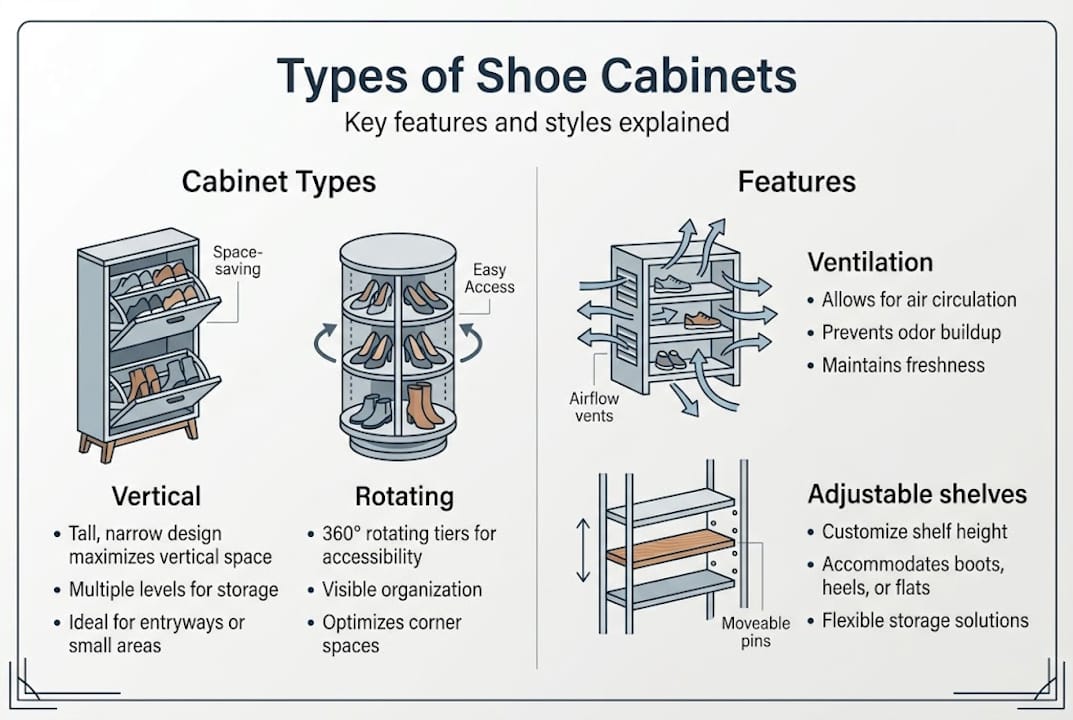
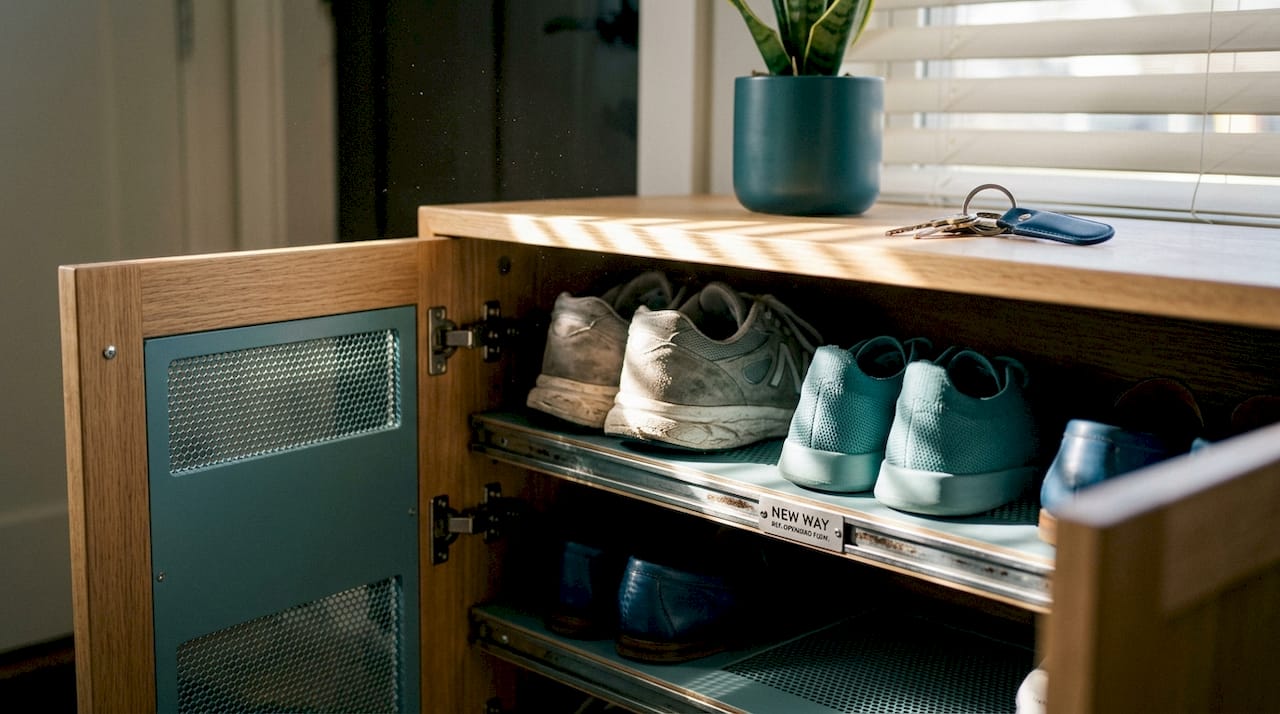
Most shoe cabinets are built from wood, engineered wood (like MDF), metal, or a combination of materials. They come with front-opening or side-opening doors that hide the contents from view, which instantly cleans up the appearance of any entryway or bedroom corner. Many models include back panels with small ventilation gaps or mesh sections to allow airflow, which helps shoes dry out and prevents odors from building up.
Learning the shoe cabinet basics before you shop makes a real difference in finding a piece that fits your lifestyle. The internal layout of a shoe cabinet is what separates a good one from a frustrating one.
Here are the core features you will typically find inside a quality shoe cabinet:
- Adjustable shelves that let you change the height between rows to fit boots, sneakers, or heels
- Double-row compartments that angle pairs heel-to-toe to double the storage density
- Ventilation gaps or mesh panels on the back or sides for airflow
- Soft-close or magnetic doors that keep the cabinet looking clean and shut
- A top surface that doubles as a display area or a place to set bags and keys
“Shoe cabinets often include adjustable shelves, ventilation features, and double rows per compartment to maximize capacity, holding 18-30 pairs depending on size.”
Capacity matters a great deal. A compact two-door cabinet typically stores around 18 pairs, while a larger four-door model can hold up to 30 pairs or more. That range covers most household sizes, from a single person with a casual collection to a family with kids whose shoe sizes keep changing.
The purpose of a shoe cabinet goes beyond simple storage. It protects your shoes from dust, sunlight, and getting crushed. Shoes stored flat on open shelves or piled in a heap lose their shape faster and scuff more easily. Good home decluttering tips consistently point to dedicated storage as the single most effective way to reduce floor clutter, and a shoe cabinet delivers exactly that.
Main features and types of shoe cabinets
Understanding what a shoe cabinet is leads naturally to exploring the different types and features available. Not every cabinet suits every home, and knowing your options helps you spend your money wisely.
Materials play the biggest role in durability and appearance. Solid wood and engineered wood cabinets offer a warm, furniture-grade look that blends well with traditional or Scandinavian interiors. Metal frames are more industrial and suit modern or minimalist spaces. Plastic or laminate cabinets are the most affordable and easiest to clean, making them practical for mudrooms or garages. If your entryway gets wet from rain or snow, prioritize waterproof materials that resist moisture damage and warping.
Design orientation is the second big variable. Here is a quick breakdown of the main types:
| Type | Capacity | Best for | Style fit |
|---|---|---|---|
| Vertical (tall) | 20-30 pairs | Small floor footprint, large collection | Modern, contemporary |
| Horizontal (wide) | 18-24 pairs | Wide entryways, bench seating | Traditional, farmhouse |
| Rotating (360-degree) | 20-36 pairs | Corner spaces, large collections | Modern, novelty |
| Bench-style | 8-16 pairs | Seating + storage combo | Rustic, transitional |
Vertical cabinets are the most space-efficient option for tight entryways because they build upward rather than outward. A large capacity shoe cabinet with four doors and a drawer, for example, stores an impressive number of pairs while keeping a relatively compact footprint on the floor.
A multi-functional shoe cabinet adds extra value with features like built-in hangers for coats or bags, which effectively turns one piece of furniture into a full entryway station. That kind of versatility is worth considering if your entryway doubles as a coat closet.
For corner spaces or walk-in wardrobe areas, a rotating shoe cabinet with a 360-degree spin mechanism lets you access every pair without bending or digging through rows.
Pro Tip: Always look for adjustable shelves, even if you do not need them right away. Your shoe collection will change over time, and a cabinet with fixed shelves at standard heights will struggle to accommodate tall boots or chunky sneakers as your wardrobe evolves.
Ventilation features deserve more attention than most buyers give them. Shoes trap moisture from sweat, and a closed cabinet without airflow can develop musty odors within weeks. Look for models with louvered doors, mesh panels, or spaced back panels that allow air to circulate without exposing your shoes to dust.
Finally, consider finish and color. White cabinets brighten small entryways and make them feel larger. Dark wood tones create a grounded, sophisticated look. Gray finishes are versatile and pair well with almost any wall color. Choosing a finish that matches or complements your existing furniture keeps the space feeling cohesive rather than cluttered with mismatched pieces.
How shoe cabinets solve real-life storage problems
With knowledge of features and types, it is essential to see how shoe cabinets effectively address real-world storage challenges. The theory is useful, but the day-to-day impact is what makes the investment worthwhile.
The most immediate benefit is entryway transformation. An entryway scattered with shoes sends a visual signal of disorder that affects your mood every time you walk in or out. Sliding everything into a cabinet takes under five minutes, and the resulting sense of calm is noticeable. For small spaces especially, these small space furniture tips confirm that vertical storage paired with enclosed furniture dramatically improves how spacious a room feels.
Here is a practical look at how different household sizes benefit:
| Household type | Estimated pairs | Recommended cabinet size |
|---|---|---|
| Single adult | 10-15 pairs | 2-door vertical cabinet |
| Couple | 15-25 pairs | 3-door vertical or bench style |
| Family with kids | 25-40 pairs | 4-door large or rotating model |
| Shared rental | 30-50 pairs | Multiple units or rotating cabinet |
Numbered solutions to the most common shoe storage headaches:
- Shoes taking over the entryway floor. A vertical cabinet places everything behind closed doors, recovering floor space immediately.
- Shoes losing their shape. Angled compartments or flat shelves keep pairs upright and correctly positioned, preserving toe boxes and heels.
- Can’t find matching pairs quickly. Organized rows by type (work shoes, sneakers, sandals) mean you locate what you need without searching.
- Odors spreading into the hallway. Enclosed cabinets with ventilation contain smells rather than letting them circulate.
- No seating to put shoes on. A bench-style cabinet solves both problems at once, giving you a surface to sit on and storage below.
Pro Tip: If your household includes people with larger shoe sizes, check the internal shelf depth before buying. Large boots and size 11+ shoes often do not fit standard compartments without adjustment, so look for models where shelves can be removed entirely to create a taller opening.
One common edge case that buyers overlook is tall boots and oversized footwear. Most standard cabinets are optimized for flats and sneakers, with shelf heights set around 4 to 5 inches. Knee-high boots, ski boots, and oversized sizes typically do not fit without removing a shelf or selecting a model with extra-tall compartments. If you own several pairs of tall boots, make that a primary filter when shopping rather than an afterthought.
These space-saving ideas show that combining a shoe cabinet with other smart storage choices creates a genuinely functional home without sacrificing style.
Choosing the right shoe cabinet for your home
Once you understand how shoe cabinets solve storage problems, it is time to focus on choosing the right one for your household. A few clear steps make the decision much easier.
Start with measurements. Measure the wall space where you plan to place the cabinet, including the height clearance if you are considering a tall vertical model. Note whether a door opens into that space and whether there is clearance for cabinet doors to swing open fully. Many buyers pick a cabinet they love online only to find it blocks a door or overwhelms a narrow hallway.
Estimate your shoe count. Count the pairs your household currently owns, then add a reasonable buffer for future purchases. Most standard cabinets hold 18-30 pairs depending on the model and shelf configuration. If you are close to the upper limit now, size up rather than trying to squeeze everything in, which defeats the purpose of organized storage.
Consider your environment. Is the cabinet going in a dry bedroom or a damp mudroom? If moisture is a factor, choose a cabinet built with waterproof laminate or treated wood rather than bare MDF, which swells and warps when it absorbs water. An entryway in a rainy climate needs a different level of material durability than a bedroom closet.
Before you buy, ask yourself these questions:
- Does the cabinet’s footprint fit my available floor space without blocking traffic?
- Do I need adjustable shelves for varied shoe heights?
- Will the finish coordinate with my current furniture and wall color?
- Do I want a top surface for display items or keys?
- Do I need bonus features like drawers, hangers, or a bench seat?
- Is ventilation important for odor control in my specific space?
Understanding living room storage tips and furniture selection tips can also help you see how a shoe cabinet fits into a broader storage plan, especially if you are reorganizing multiple rooms at once.
Pro Tip: If you are buying for a family with growing kids, adjustable shelves are not just helpful, they are essential. Children’s shoe sizes change every few months, and a cabinet that accommodates sizes 2 through 10 will serve you far longer than one locked into fixed shelf heights.
Style alignment is the finishing touch. A shoe cabinet that clashes with your existing furniture creates visual noise even when it is technically functional. White or light-toned cabinets work in almost any space. Wood grain finishes suit warmer interiors. Clean-lined modern designs pair well with contemporary decor. Choosing with intention means your cabinet becomes part of the room’s look rather than something you apologize for when guests arrive.
Why most people underestimate shoe cabinets
Most homeowners treat a shoe cabinet as a purely practical purchase, something to contain the chaos without much thought beyond capacity. That narrow view leaves a lot of value on the table.
A well-placed shoe cabinet does something more interesting than store shoes. It defines the entry experience of your home. The first space you and your guests encounter sets the emotional tone for everything beyond it. A tidy, organized entryway with a clean-lined cabinet communicates care and intention. A pile of shoes by the door does the opposite.
There is also the footwear preservation angle that most people ignore. Shoes stored properly in a cabinet last noticeably longer than shoes that get piled on each other or left exposed to dust and UV light. You are protecting an investment, not just managing clutter. This perspective on shoe cabinet impact is one that most buyers only appreciate after they make the switch.
The real missed opportunity is treating a shoe cabinet as furniture rather than mere storage. When you choose one that fits your decor and genuinely elevates the room, you get functional benefit and a design asset. That combination is worth seeking out.
Where to find stylish, practical shoe cabinets
Ready to transform your entryway or bedroom storage? Finding a cabinet that balances style, capacity, and durability does not have to be complicated.
At New Way Ref, you will find a thoughtfully curated selection of shoe cabinets designed for real homes and real collections. From compact two-door verticals to large four-door models with drawers, there is a style and size for every household. Whether you need waterproof materials for a mudroom or a sleek rotating design for a walk-in wardrobe, the options cover a wide range of needs. Shop shoe cabinets to browse current styles, view dimensions, and take advantage of free shipping on orders over $50. You can also visit New Way Ref to explore the full range of home furniture and decor products available.
Frequently asked questions
How many shoes can a typical cabinet store?
Most shoe cabinets hold 18-30 pairs depending on the model, shelf configuration, and the size of the shoes being stored.
Will a shoe cabinet fit large boots or oversized shoes?
Standard cabinets best fit flats and sneakers. Tall boots and size 11+ footwear often require adjustable or removable shelves, or a model specifically designed with taller compartments.
What is the best material for a shoe cabinet in a damp area?
For entryways or mudrooms prone to moisture, waterproof laminate or treated materials are the safest choice, as bare MDF and untreated wood can swell and warp over time.
Are shoe cabinets effective for decluttering entryways and bedrooms?
Yes. A shoe cabinet stores multiple pairs behind closed doors, removes visual clutter from floors, and makes the space feel significantly larger and more organized with minimal effort.