

TL;DR:
- Space-saving furniture offers multifunctional, compact solutions to maximize small urban apartments.
- Durability and ease of assembly are key factors when choosing quality multifunctional pieces.
- Effective space transformation combines smart furniture with decluttering and strategic interior design.
Urban apartments are shrinking. The multifunctional furniture market was valued at roughly USD 15 billion in 2025 and is projected to reach USD 25 billion by 2032, driven by more people choosing city life. But here’s what most small-space guides get wrong: they assume you have to choose between a room that looks good and one that actually works. You don’t. The right space-saving furniture lets you have both. This guide walks you through what these pieces are, how to choose them wisely, and how to arrange your home so every square foot counts.
Table of Contents
- What is space-saving furniture?
- Key features to look for in multifunctional pieces
- Common types of space-saving furniture for urban homes
- Real-life tips to maximize your small space
- A new mindset: Why maximizing space is about more than just furniture
- Ready to transform your own space?
- Frequently asked questions
Key Takeaways
| Point | Details |
|---|---|
| Multipurpose is key | Choose furniture that serves more than one function to make the most of your space. |
| Check suitability | Look for load ratings, assembly methods, and renter-friendly options before buying. |
| Plan your layout | Thoughtful arrangement and maintenance keep your small home comfortable and safe. |
| Style meets function | Today’s space-saving furniture blends modern design with practical solutions for small homes. |
What is space-saving furniture?
Space-saving furniture is exactly what it sounds like: furniture designed to do more with less floor area. Each piece is built to serve multiple purposes, fold away when not needed, or store items inside itself. The goal is simple. You get the function of several pieces of furniture without giving up half your living room to fit them all.
This category goes well beyond the classic futon. Today’s options include:
- Convertible sofas that fold out into full guest beds
- Loft beds that free up the floor below for a desk or wardrobe
- Nesting tables that stack together and spread out when company arrives
- Wall-mounted desks that fold flat against the wall after work hours
- Storage ottomans that serve as seating, a footrest, and a hidden chest
These pieces work because urbanization and shrinking apartments have made traditional bulky furniture impractical for most city homes. A standard sofa and a separate guest bed together might occupy 80 square feet. A quality sofa bed uses roughly half that.
Here’s a quick comparison to show the difference:
| Feature | Traditional furniture | Space-saving furniture |
|---|---|---|
| Floor space used | High | Low to moderate |
| Number of functions | Single | Two or more |
| Storage included | Rarely | Often |
| Suitable for renters | Usually | Designed for it |
| Style variety | Wide | Growing rapidly |
The trade-off used to be style. Early multifunctional pieces looked utilitarian and cheap. That’s changed. Brands now invest heavily in smart furniture for small spaces that blends seamlessly into a modern interior. If you want to understand how these pieces fit into broader design trends, a quick read on modern home decor explained gives solid context on how function and aesthetics are merging in today’s homes.
The core appeal is that space-saving furniture respects your life. Your apartment doesn’t just look better. It actually adapts to how you live each day.
Key features to look for in multifunctional pieces
Not all space-saving furniture is created equal. Knowing what separates a smart buy from a frustrating one saves you time, money, and a lot of returned packages.
Materials and durability matter more in multifunctional pieces than in standard furniture. A sofa that converts to a bed goes through twice the daily stress. Look for solid wood frames, high-density foam, and metal hardware with smooth mechanisms. Avoid particleboard frames in beds or sofas that bear weight regularly.

Load ratings are often overlooked. Every piece that folds, extends, or stacks has a weight limit. Check the manufacturer’s specs before buying, especially for sofa beds, loft beds, and wall-mounted shelving.
Ease of assembly is a real concern for renters. Renter-friendly options do not require permanent installation or wall damage, which protects your security deposit and lets you move the furniture when you relocate. Tool-free setups are worth the premium.
Here’s a practical checklist to run through before purchasing:
- Does the conversion mechanism feel smooth and sturdy?
- Is hidden storage accessible without moving the entire piece?
- Can the finish coordinate with different color palettes?
- Are spare parts or replacement hardware available?
- Does it include integrated features like USB charging or modular add-ons?
Style adaptability is also key. The best pieces work in multiple rooms and survive a change in your decor preferences. Neutral finishes in gray, white, or natural wood age better than trend-specific colors.
Smart features are becoming standard. Some modular sofas now include built-in wireless charging pads. Certain shelving units let you add or remove sections as your needs grow. These options cost more upfront but reduce future purchases.
For a deeper look at what works in living rooms specifically, the guide on types of living room furniture breaks down 40 percent more storage options that apply directly to apartment layouts.
Pro Tip: Always open every drawer, unfold every mechanism, and test every conversion before committing. If buying online, read reviews that specifically mention long-term use rather than just first impressions.
Common types of space-saving furniture for urban homes
Once you know what features to look for, it helps to match each furniture type to the room where it will work hardest. Here’s how the major categories break down.
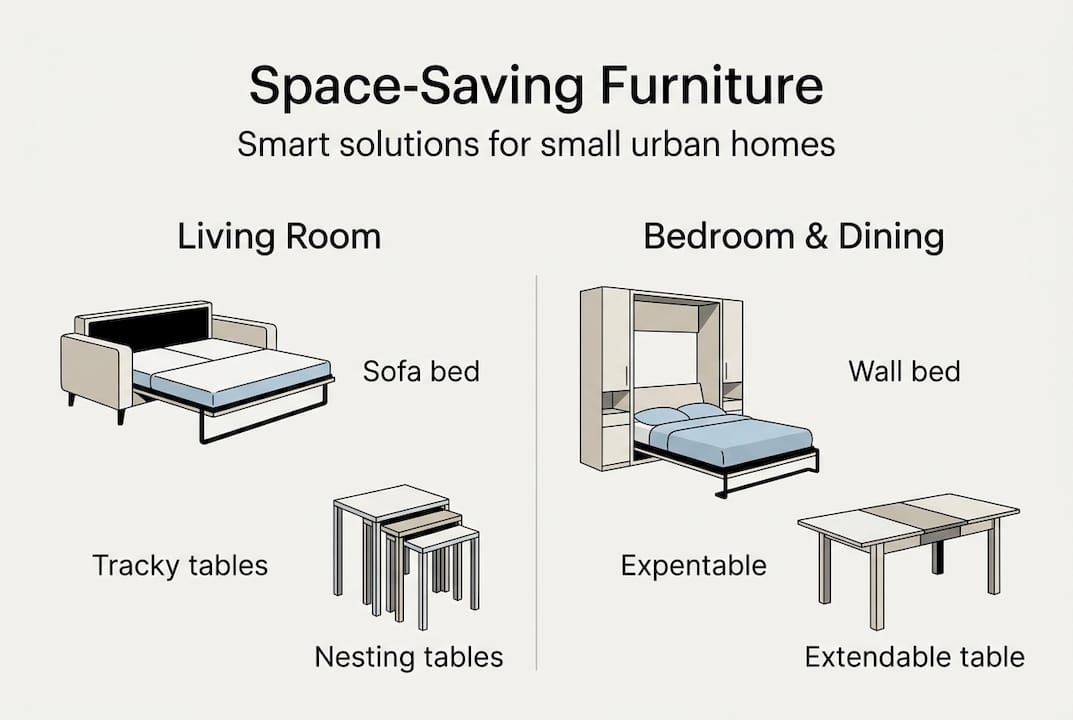
Sofa beds are the most recognized option. They handle guests without dedicating an entire room to them. The downside is real: firm mattresses in sofa beds may need toppers for comfort, frequent use causes wear, and they are not ideal for heavy loads unless the capacity is rated for it. For occasional guests, they’re excellent. For a daily sleeper, invest in a higher-end model.
Wall beds (Murphy beds) fold vertically into a cabinet. They reclaim an entire room when not in use. Paired with a fold-down desk, one bedroom can function as a home office during the day and a guest room at night.
Extendable dining tables seat two comfortably on a regular Tuesday and expand to seat eight for dinner parties. They’re a practical upgrade for anyone who loves hosting but lives in a smaller apartment.
Nesting tables and modular shelving round out the category. Nesting tables disappear when not needed. Modular shelving grows with your book collection or decor changes.
Here’s a room-by-room guide to what works best:
| Room | Best space-saving option | Why it works |
|---|---|---|
| Living room | Sofa bed or storage ottoman | Dual function, guest-ready |
| Bedroom | Wall bed with desk combo | Frees floor space entirely |
| Kitchen | Extendable dining table | Flexible for daily or entertaining use |
| Entryway | Slim console with hooks | Organizes without blocking flow |
| Home office | Wall-mounted fold-down desk | Disappears after work hours |
To make this more concrete, here’s a numbered approach to selecting the right piece:
- Identify the room’s primary function and secondary need
- Measure the available floor area when the piece is both open and closed
- Check load ratings against your actual daily use
- Compare at least three finishes to your existing palette
- Confirm the return or exchange policy before purchase
For renters especially, smart picks for small spaces and ideas on living room layout for city life are practical starting points that account for the limitations most apartment leases impose.
Real-life tips to maximize your small space
Buying the right furniture is step one. Actually making your space feel bigger and more functional is step two.
Use vertical space. Most apartments have wall space that goes completely unused above eye level. Tall bookshelves, wall-mounted cabinets, and hanging organizers push storage upward and keep floors clear. Clear floors make any room feel larger immediately.
Rotate function daily. A sofa bed that stays in bed mode defeats its purpose. Make the conversion part of your routine. Fold it up in the morning. Your living room returns, and your mindset shifts too. This habit is more powerful than it sounds.
Here are a few quick wins that compound over time:
- Keep surfaces clear: visual clutter makes rooms feel 30 percent smaller
- Use mirrors opposite windows to reflect light and add visual depth
- Choose furniture with legs rather than solid bases to show more floor
- Store seasonal items inside ottomans or under-bed drawers
- Group similar functions together to reduce furniture count
Lighting and decor have a measurable impact on how spacious a room feels. The right approach to lighting for small spaces shows how layered light sources eliminate the heavy shadows that make compact rooms feel cramped. Pair that with advice from a modern decor guide for urban spaces and your space transforms without a single new furniture purchase.
“By 2050, 68% of the world’s population will be urban. Small spaces aren’t a temporary inconvenience. They’re the future of how most people will live.”
Maintenance is the part nobody talks about. Frequent use can cause wobble from loose screws and general wear on mechanisms, so regular checks matter for safety and longevity.
Pro Tip: Set a calendar reminder every three months to tighten hardware on any convertible or adjustable furniture. Five minutes of maintenance prevents a frustrating failure at exactly the wrong moment.
A new mindset: Why maximizing space is about more than just furniture
Here’s an opinion that most buying guides skip: the furniture alone won’t save your space. We’ve worked with countless urban home setups, and the consistent pattern is this: people buy a great wall bed or a modular sofa, and then fill the newly freed space with more stuff. The room ends up just as cluttered.
True space transformation starts with intentional editing. Before you shop, remove what you don’t use. Keeping only items that earn their floor space changes how you relate to your home entirely. It’s a mindset shift, not just a shopping list.
Urban dwellers who’ve lived small for years know this instinctively. They don’t just own flexible furniture. They think flexibly. A dining table is also a workspace. A windowsill is also a plant shelf and a reading nook. Function layers onto function.
The urban decor guide we recommend captures this approach well: layout, lighting, and versatile pieces work as a system, not as separate decisions. Choosing to value adaptability over accumulation is what makes a small home genuinely comfortable.
Ready to transform your own space?
If this guide has given you a clearer picture of where to start, the next step is finding pieces that actually deliver on the promise of style and function together.
At New Way Ref, we’ve thoughtfully curated a selection of space-saving furniture and modern home accessories designed specifically for urban living. From storage-smart sofas to sleek entryway cabinets, every item is chosen with your square footage in mind. Browse our full range and discover practical pieces that make your home work harder without sacrificing an inch of style. For ideas tailored to compact rooms, our collection of furniture ideas for small spaces is a great place to start.
Frequently asked questions
What defines space-saving furniture?
Space-saving furniture is designed to maximize utility and efficiency in small areas through multifunctional features or compact forms. Growth in this category is directly tied to urbanization and shrinking apartments driving demand for smarter home solutions.
Is space-saving furniture really durable enough for everyday use?
Durability depends on construction quality and load ratings. Frequent use causes wear in sofa beds and convertible pieces, so always check materials, mechanisms, and manufacturer maintenance guidelines before buying.
Can renters use space-saving furniture without damaging the home?
Yes. Many modern pieces are specifically designed to be renter-friendly, with tool-free, no-wall-damage setups that protect your deposit and make moving easier.
What are some common drawbacks or things to watch for?
Watch for stiff or noisy conversion mechanisms, undisclosed weight limits, and hardware that loosens over time. Loose screws from frequent use are the most common maintenance issue, easily prevented with periodic checks.
Recommended
- Smart Furniture Choices for Small Spaces: Maximize Comfort – New Way Ref
- Lighting tips for small spaces to brighten urban homes – New Way Ref
- Why Optimize Living Room Layout for City Life – New Way Ref
- Types of living room furniture: 40% more storage & space – New Way Ref
- Creating Custom Furniture Masterpieces