

TL;DR:
- Effective NYC room makeovers require careful planning, measuring, and a clear budget.
- Follow a step-by-step process: define vision, measure, layout, paint, and layer lighting.
- Flexibility and personal style are key; adapt plans based on actual space and needs.
Living in New York means making the most of every square foot. Whether you’re working with a 400-square-foot studio in Brooklyn or a compact one-bedroom in Queens, a dull, cluttered room can feel draining fast. The good news? You don’t need a designer or a big budget to turn things around. A well-planned room makeover follows a clear sequence that anyone can apply, and when you do it right, even the smallest space can feel fresh, functional, and genuinely yours.
Table of Contents
- What you’ll need to start your room makeover
- Step-by-step room makeover process
- Furniture and decor selection: NYC edition
- Troubleshooting and common mistakes in room makeovers
- Final touches: verifying and refining your new space
- The real key to successful NYC room makeovers: flexibility and personal style
- Your affordable NYC transformation partner
- Frequently asked questions
Key Takeaways
| Point | Details |
|---|---|
| Start with a clear vision | Define the purpose and style of your room before buying anything. |
| Measure and plan first | Accurate measurements and floor tape layouts prevent costly mistakes. |
| Make smart furniture choices | Select space-saving and multi-use items to maximize small NYC rooms. |
| Test, tweak, and enjoy | Live in your new setup, adjust as needed, and let your style evolve. |
What you’ll need to start your room makeover
Now that you know what you’ll achieve, let’s break down exactly what you need before starting.
Before buying a single thing, you need a realistic picture of your budget and your supplies. Most people skip this and end up overspending or buying the wrong items. Getting organized now saves you money and headaches later.
Budget ranges to know:
According to budget benchmarks for makeovers, you can expect to spend:
| Makeover level | Estimated cost | What it covers |
|---|---|---|
| Quick refresh | Under $100 | Paint accents, throw pillows, small decor |
| Minor upgrade | Around $200 | Wall paint, new lighting, accessories |
| Full room overhaul | $1,200 and up | New furniture, flooring, full redesign |
Essential supplies to gather:
- Tape measure (non-negotiable for NYC apartments)
- Painter’s tape (for wall layouts and furniture footprints)
- Sample paint swatches and test pots
- Notepad or phone app for sketching layouts
- Cleaning supplies to clear the space first
Where to shop in NYC on a budget:
IKEA Brooklyn is a go-to for affordable, compact furniture that fits small spaces. Thrift stores in Bushwick, the Bronx, and Harlem often carry quality pieces for a fraction of retail. Craigslist and Facebook Marketplace are reliable for secondhand sofas, shelving units, and accent chairs. You can also check our home decor guide for more inspiration before you start shopping.
Initial actions before spending anything:
- Define what you want the room to do for you (work, relax, entertain)
- Clean and completely clear the space
- Measure every wall, doorway, and corner
Pro Tip: Decide on the room’s purpose and overall aesthetic before you buy anything. Mixing a rustic vibe with ultra-modern purchases leads to a disconnected look that no amount of styling can fix.
Step-by-step room makeover process
With the basics established, follow these steps to execute your room transformation.
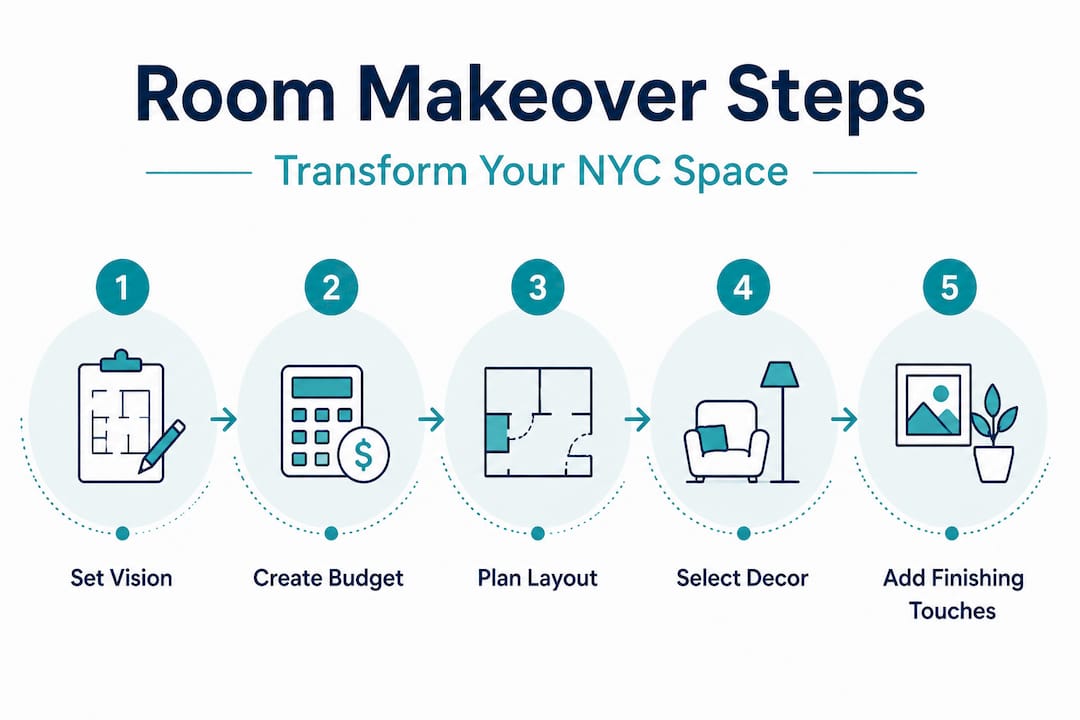
A clear sequence keeps you from making expensive mistakes. Good room design follows a tested process, and skipping steps usually means redoing work later. Here’s what that process looks like for a typical NYC apartment:
-
Define your vision. Pick two or three words that describe how you want the room to feel (calm, modern, cozy). Pull images from Pinterest or Instagram to build a loose mood board. Keep it simple and focused.
-
Measure everything. Record wall lengths, window heights, and door widths. NYC apartments often have narrow hallways and awkward doorframes, so knowing your dimensions before shopping is critical.
-
Map your layout on paper. Sketch the room to scale and draw where furniture would go. Use painter’s tape on the floor to mark furniture footprints. This step alone can save you from buying a sofa that won’t fit through your door.
-
Start with the walls. Paint is the single highest-impact, lowest-cost change you can make. Test at least two sample colors on the actual wall and observe them at different times of day. In low-light NYC apartments, light neutrals and warm whites tend to open up a room far better than bold colors.
-
Bring in furniture in order of size. Start with the largest anchor piece (usually the sofa or bed), then layer in secondary pieces like side tables and shelving. Learning how to arrange furniture properly makes a significant difference in how spacious the room feels.
-
Layer your lighting. One overhead light source is never enough. Add a floor lamp, a table lamp, and if possible, some under-shelf lighting. Layered lighting eliminates the harsh, shadowy feel that plagues so many NYC apartments.
-
Add decor last. Rugs, artwork, plants, and throw pillows all come after the big pieces are in place. This order prevents you from over-buying small items that then clash with furniture you chose later.
DIY vs. hiring pros: a quick comparison
| Task | DIY? | Hire out? |
|---|---|---|
| Painting walls | Yes, easy to DIY | Only if ceilings are very high |
| Furniture assembly | Yes, most flat-pack | Only if complex |
| Electrical changes | No | Always hire licensed |
| Hanging heavy shelves | Maybe | Hire if drilling into concrete |
| Plumbing changes | No | Always hire licensed |
For a full walkthrough on modern updates, check out our modern NYC upgrade guide.
Pro Tip: Before buying any furniture, lay out its footprint with painter’s tape and walk through the space. Check that you can open drawers, walk comfortably, and access windows and outlets. Traffic flow matters as much as aesthetics.
Furniture and decor selection: NYC edition
Once your layout is mapped, it’s time to fill your space with items you’ll love and that will actually fit.
Furniture selection in a New York apartment is a puzzle. Every piece needs to earn its place by being both functional and visually right. The key to smart furniture sizing starts with measuring your space carefully and taping footprints before committing to any purchase.
The 70/30 style rule:
Use 70% of your budget and visual space for your main style (say, modern minimalist), and leave 30% for accent pieces that add personality (a vintage lamp, a colorful rug, a woven basket). This formula gives the room a cohesive look without feeling sterile or showroom-flat.
NYC-specific furniture challenges and solutions:
- Narrow doors: Measure before buying anything larger than a loveseat. Many NYC building doors are 28 to 32 inches wide. Look for sofas with removable legs or modular sectionals.
- Limited storage: Use ottomans with interior storage, floating shelves, and furniture with built-in drawers. Every piece should serve at least two purposes in a small apartment.
- Low ceilings: Choose lower-profile furniture to create the illusion of height. Tall bookshelves that reach near the ceiling actually draw the eye upward, making rooms feel taller.
Quick wins that cost under $50:
- Throw pillows in a new color or texture
- Removable peel-and-stick wallpaper on a single accent wall
- A small indoor plant like a pothos or snake plant
- New cabinet hardware in the kitchen or bathroom
- A woven or jute rug to anchor the living area
Learn more about space-saving furniture options that work well for compact layouts, and check our furniture comfort and style guide for help narrowing down choices.
Budget split recommendation:
Spend roughly 45 to 55% of your total makeover budget on the main room (living room or bedroom). That’s where you spend most of your time, so those purchases deliver the best return in daily comfort and satisfaction.
Pro Tip: Mirrors are one of the most effective tools in small-space decorating. A large mirror on a narrow wall reflects light and creates the visual impression of double the square footage. Pair it with light-colored walls for an even stronger effect.
Troubleshooting and common mistakes in room makeovers
Even with careful planning, every project faces snags. Here’s how to keep things on track.
Most makeover mistakes are predictable, and that means they’re avoidable. Common renovation pitfalls include not measuring carefully, chasing trends without thinking about function, and paying contractors upfront without a clear written agreement.
Watch out for these specific mistakes:
- Not measuring doors and stairwells. In NYC buildings, getting furniture to the third floor can be its own obstacle course. Always confirm delivery routes before purchasing.
- Choosing furniture based only on photos. Scale is hard to judge online. Always confirm dimensions and compare them to your taped floor layout.
- Blocking outlets or windows. This is more common than you’d think. A sofa pushed too far to the right covers the only outlet in the room. Mark outlet and window locations on your floor plan before finalizing furniture placement.
- Over-trending. Buying furniture just because it looks trendy on social media often leads to buyer’s remorse within a year. Choose classic shapes and add trends through low-cost accessories instead.
- Skipping functional testing. Make sure every drawer can fully open, every chair can slide back from the table, and every light can be switched on without reaching over furniture.
“The biggest mistake people make in a renovation is not thinking about how they’ll actually live in the space. Great design solves real problems first.”
If you want to understand the deeper why behind a room refresh, start with why upgrade your living room for context on what a well-designed space actually does for your daily quality of life.
Final touches: verifying and refining your new space
After finishing the main steps, ensure your room feels and functions as you envisioned.
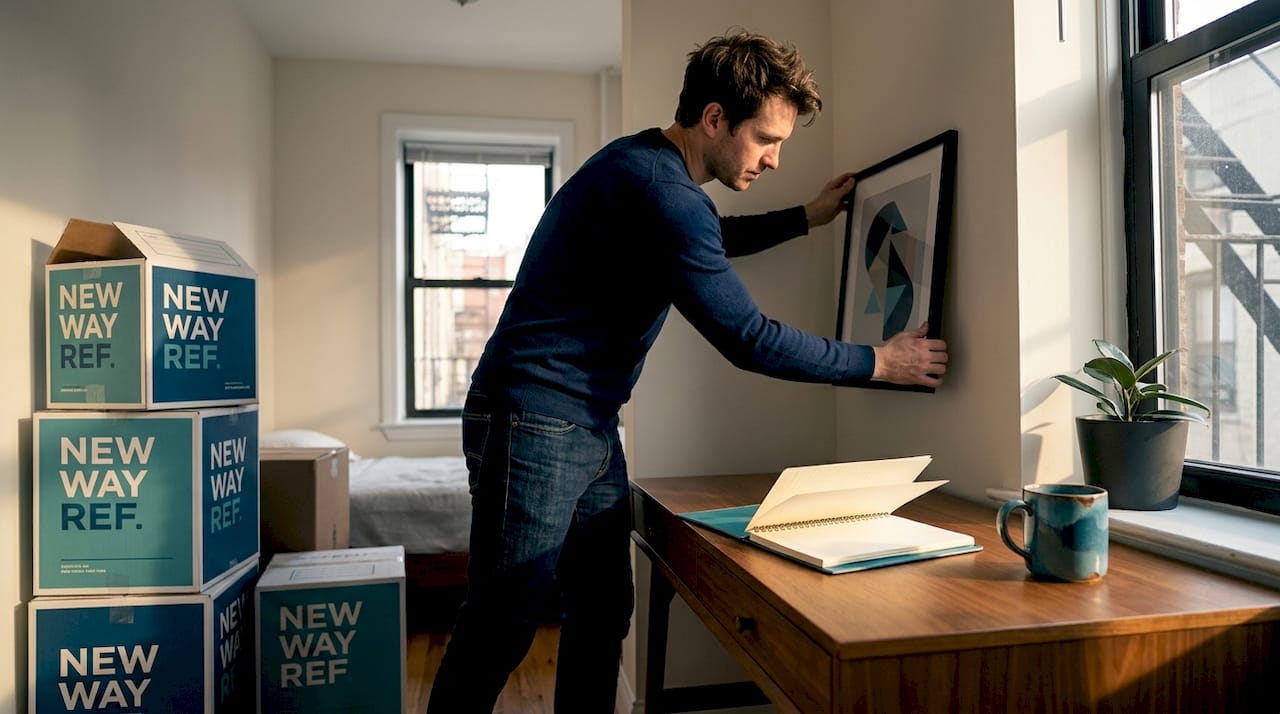
Finishing is not the same as being done. The best-looking rooms get that way because someone actually lived in the space for a few days and made small, thoughtful adjustments. Testing your layout for comfort, lighting, and traffic flow is the final step that most people skip but designers never do.
Evaluation checklist:
- Walk through every traffic path. Can you move from the sofa to the kitchen without bumping anything?
- Sit in every seat. Does every chair or sofa feel comfortable and positioned well?
- Test the lighting at night. Does the room feel warm and layered, or harsh and shadowy?
- Check the view from the doorway. Does the room look balanced and intentional?
- Confirm nothing is blocking outlets, radiators, or windows.
Adjustments to try before spending more money:
- Swap artwork between rooms for a fresh look at zero cost
- Raise or lower lamp heights to shift the light quality
- Rotate or reposition a rug to change the room’s anchoring point
- Add a plant or small tray of objects to a previously empty surface
“Don’t block your windows and don’t rely on one overhead light. Layer your lighting, and let natural light do as much work as possible.”
Visit our lighting for small spaces guide for specific lamp and fixture ideas that work well in NYC apartments with limited overhead options.
Give yourself three to five days living with the new layout before making any final purchases. What feels off on day one might feel perfect by day three, and what seemed fine at first might reveal a problem once you’re actually using the space daily.
The real key to successful NYC room makeovers: flexibility and personal style
With your refreshed space ready, here’s something most makeover articles don’t address.
Every guide, including this one, lays out a process that looks clean and linear on paper. In reality, room makeovers are rarely that tidy. You measure twice, and the sofa still doesn’t clear the stairwell landing. You pick a paint color you loved in the store, and it reads completely different under your apartment’s specific light. That’s not failure. That’s how design actually works.
The most successful NYC apartment transformations happen when people treat the steps as a starting framework, not a rigid rulebook. Some of the best interior changes come from mid-project pivots. A wall that was supposed to stay white becomes a deep sage green because the room needed warmth. A planned bookshelf gets replaced by a pegboard system that works better for the actual habits of the person living there.
Our space planning insights reinforce this point: knowing your space’s quirks, from odd wall angles to radiator placement to the direction morning light hits, is more valuable than any design formula. Professional designers adapt constantly. You should feel free to do the same.
The real goal isn’t to follow steps perfectly. It’s to end up with a room that genuinely reflects how you live and what you love, within a budget that doesn’t create stress. Bold choices made with real intention almost always look better than safe choices made out of uncertainty. Trust your eye, stay flexible, and adjust as you go.
Your affordable NYC transformation partner
Ready for your own upgrade? Take the next step with options designed for real NYC living.
Finding furniture and decor that works for small New York spaces doesn’t have to mean compromising on style. New Way Ref’s curated selection includes modern, thoughtfully sized pieces from shoe cabinets and coffee tables to sofas and lighting fixtures, all chosen with urban living in mind.
Whether you’re starting from scratch or adding the finishing touches to a room refresh, we make it easy to find options that fit your space and your budget. Orders over $50 ship free, and our featured collections are updated regularly with trending and functional home products. For even more budget-smart home products, browse our extended range at New Way Ref filters. Your next room upgrade is closer than you think.
Frequently asked questions
What is the cheapest way to do a room makeover in NYC?
Shop your own home first, then hit thrift stores and use paint or removable wallpaper for the highest visual impact at the lowest possible cost.
How much should I budget for a DIY room makeover?
Set aside at least $100 for quick refreshes, around $200 for minor upgrades, or 10 to 20% of your home value for full furniture replacement across a room.
How do I measure and plan furniture for a small NYC apartment?
Always measure your room and doorways first, then tape furniture footprints on the floor, and keep at least 30 to 36 inches for walkways between pieces.
Should I hire a contractor for a room makeover or do it all myself?
DIY most décor work, but always hire licensed professionals for electrical or plumbing changes and get detailed written quotes before any work begins.