

Arranging modern home accessories can feel overwhelming when you’re juggling style goals with practical function. Many homeowners and young professionals in New York struggle to create cohesive, organized spaces that reflect their personal aesthetic while remaining livable. Without a clear workflow, accessories pile up, spaces feel cluttered, and that magazine-worthy look stays frustratingly out of reach. This guide walks you through a proven, step-by-step workflow to master your modern home accessories in 2026, blending preparation, execution, and ongoing maintenance into a system that delivers lasting style and effortless organization.
Table of Contents
- Preparing Your Space And Selecting Modern Home Accessories
- Executing Your Modern Home Accessories Workflow: Step-By-Step Placement And Arrangement
- Maintaining And Updating Your Modern Home Accessories Workflow For Lasting Style
- Discover Stylish Modern Accessories At New Way Ref
Key takeaways
| Point | Details |
|---|---|
| Workflow structure matters | An effective workflow blends preparation, execution, and verification for great results |
| Selection drives success | Choosing the right accessories and placement is crucial for both style and function |
| Maintenance sustains style | Regular updates and care keep your space fresh and organized over time |
| Dual-purpose pieces win | Accessories that combine decor appeal with utility maximize value in modern homes |
Preparing your space and selecting modern home accessories
Before you dive into styling, proper preparation sets the foundation for success. Start by assessing your room layouts and natural lighting conditions. Walk through each space at different times of day to understand how light shifts and where shadows fall. This awareness helps you position reflective or matte accessories strategically.
Define your modern style preferences early. Are you drawn to minimalist lines, warm mid-century wood tones, or edgy industrial metals? Pinpointing your aesthetic direction prevents impulse purchases that clash with your vision. Create a dedicated planning area where you can sketch layouts, test color palettes, and store accessories before placement.
Selecting accessories that complement your home’s style significantly improves overall decor cohesion. Focus on pieces that serve dual purposes whenever possible. A sculptural vase holds flowers but also acts as standalone art. A decorative tray corrals remote controls while adding texture to your coffee table. This approach maximizes value and reduces visual clutter.
Pro Tip: Start with versatile statement pieces that anchor your design. A bold floor lamp or oversized wall art establishes your style direction and makes subsequent accessory choices easier.
Consider these preparation essentials:
- Measure your surfaces and wall spaces to avoid scale mismatches
- Document existing furniture colors and materials for coordination
- Identify high-traffic zones where function must outweigh pure decoration
- Gather inspiration images that capture your target aesthetic
- Set a realistic budget that prioritizes quality over quantity
| Accessory Type | Functional Benefit | Stylistic Benefit | | — | — | | Decorative trays | Organize small items, contain clutter | Add texture, define zones on surfaces | | Statement lighting | Illuminate tasks, set ambiance | Create focal points, showcase design taste | | Textured throws | Provide warmth, comfort | Introduce color, soften hard surfaces | | Wall-mounted shelves | Maximize vertical storage | Display curated collections, add dimension | | Sculptural objects | None (pure decor) | Express personality, anchor color schemes |
Your preparation phase should also include a realistic inventory of what you already own. Pull out every accessory from closets and storage. Group similar items together. You’ll likely discover forgotten pieces that fit your new vision perfectly, saving money and reducing waste. Donate or sell anything that no longer serves your style goals.
Executing your modern home accessories workflow: step-by-step placement and arrangement
With preparation complete, you’re ready to execute a systematic placement workflow. A systematic approach to arranging accessories prevents clutter and enhances living space functionality. Follow this numbered sequence for optimal results:
- Identify focal points in each room where eyes naturally land first
- Place your largest statement piece at the primary focal point
- Build outward from that anchor with complementary smaller accessories
- Layer items by varying heights to create visual interest and depth
- Introduce contrasting textures to prevent monotony
- Step back frequently to assess balance and make adjustments
- Test functional flow by moving through the space as you normally would
- Refine placement based on how accessories impact daily activities
Start with surfaces that guests see immediately, like entryway consoles and coffee tables. These areas set the tone for your entire home. On coffee tables, arrange items in triangular formations rather than straight lines. This asymmetry feels more organic and intentional.
Pro Tip: Use grouping in odd numbers for visual appeal. Three candlesticks look more dynamic than two or four. Five small frames create better rhythm than six.
Common accessory types to group or highlight include:
- Candles of varying heights for ambient warmth
- Books stacked horizontally as pedestals for smaller objects
- Plants that introduce life and soften hard edges
- Mirrors that reflect light and expand perceived space
- Artwork that reinforces your color palette
When styling shelves, follow the rule of thirds. Divide each shelf visually into three sections. Fill roughly two-thirds with accessories and leave one-third empty for breathing room. This negative space prevents the cramped, overstuffed look that plagues many modern homes.
| Workflow Step | Key Action | Common Mistake to Avoid |
|---|---|---|
| Focal point selection | Choose one dominant feature per room | Competing focal points that confuse the eye |
| Height variation | Mix tall, medium, and short pieces | Uniform heights that create visual flatness |
| Texture layering | Combine smooth, rough, soft, and hard | Single-texture arrangements that lack depth |
| Color distribution | Repeat accent colors in three places | Random color placement without cohesion |
| Functional testing | Walk through and use the space | Placing decor that blocks daily activities |
Pay special attention to lighting as you arrange accessories. Position reflective surfaces where they’ll catch and bounce natural light during peak hours. Place matte or absorptive textures in dimmer corners to create cozy contrast. Table lamps should sit at eye level when you’re seated to avoid glare.
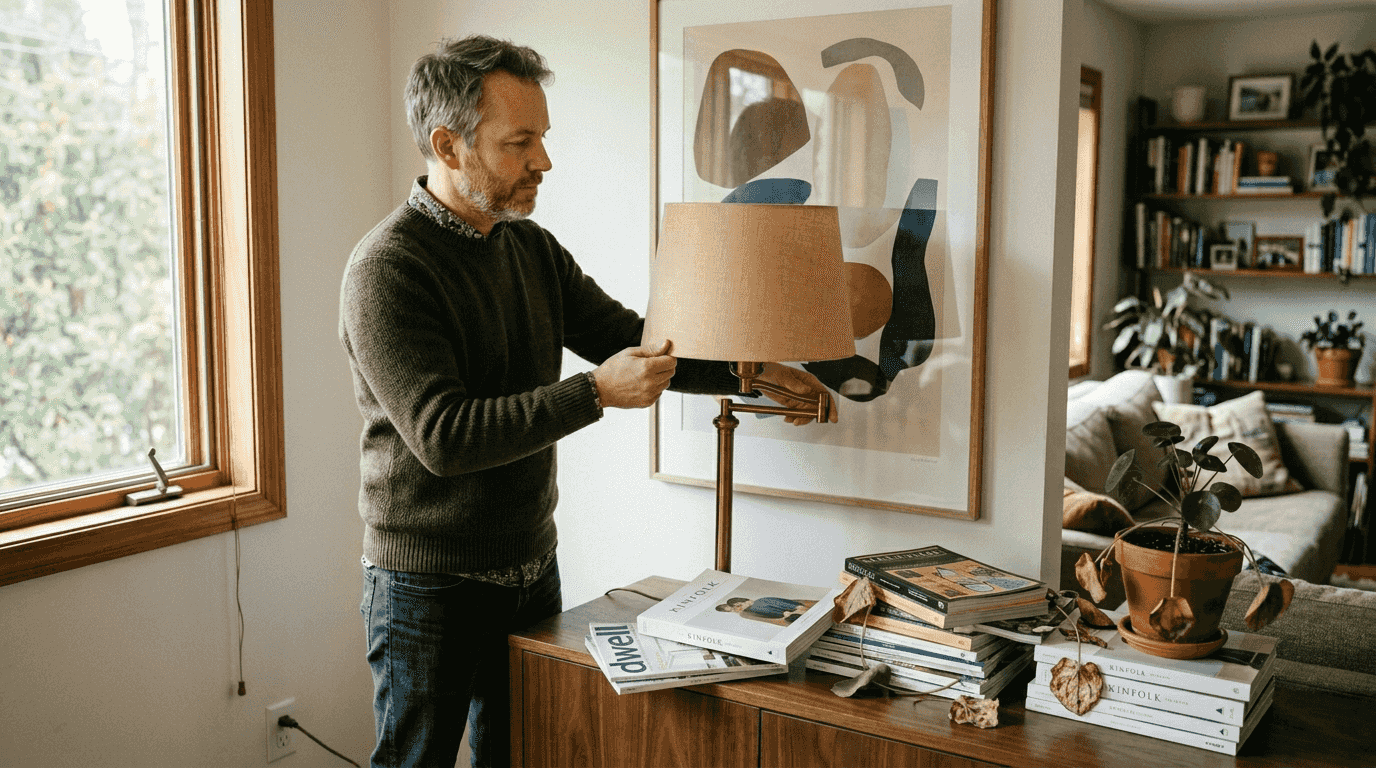
For wall arrangements, use painter’s tape to mock up layouts before hammering nails. This simple step saves walls from unnecessary holes and lets you experiment with spacing. Maintain consistent gaps between frames, typically two to three inches for a cohesive gallery wall effect.
Maintaining and updating your modern home accessories workflow for lasting style
Your initial styling effort is just the beginning. Regular maintenance and thoughtful updates are key to sustaining modern decor aesthetics. Schedule seasonal reviews every three to four months to assess what’s working and what needs refreshing.
During each review, remove everything from a surface or wall. Clean the area thoroughly. Evaluate each accessory with fresh eyes. Does it still spark joy and serve your current lifestyle? Has it accumulated dust or damage? Be ruthless about retiring pieces that no longer earn their place.
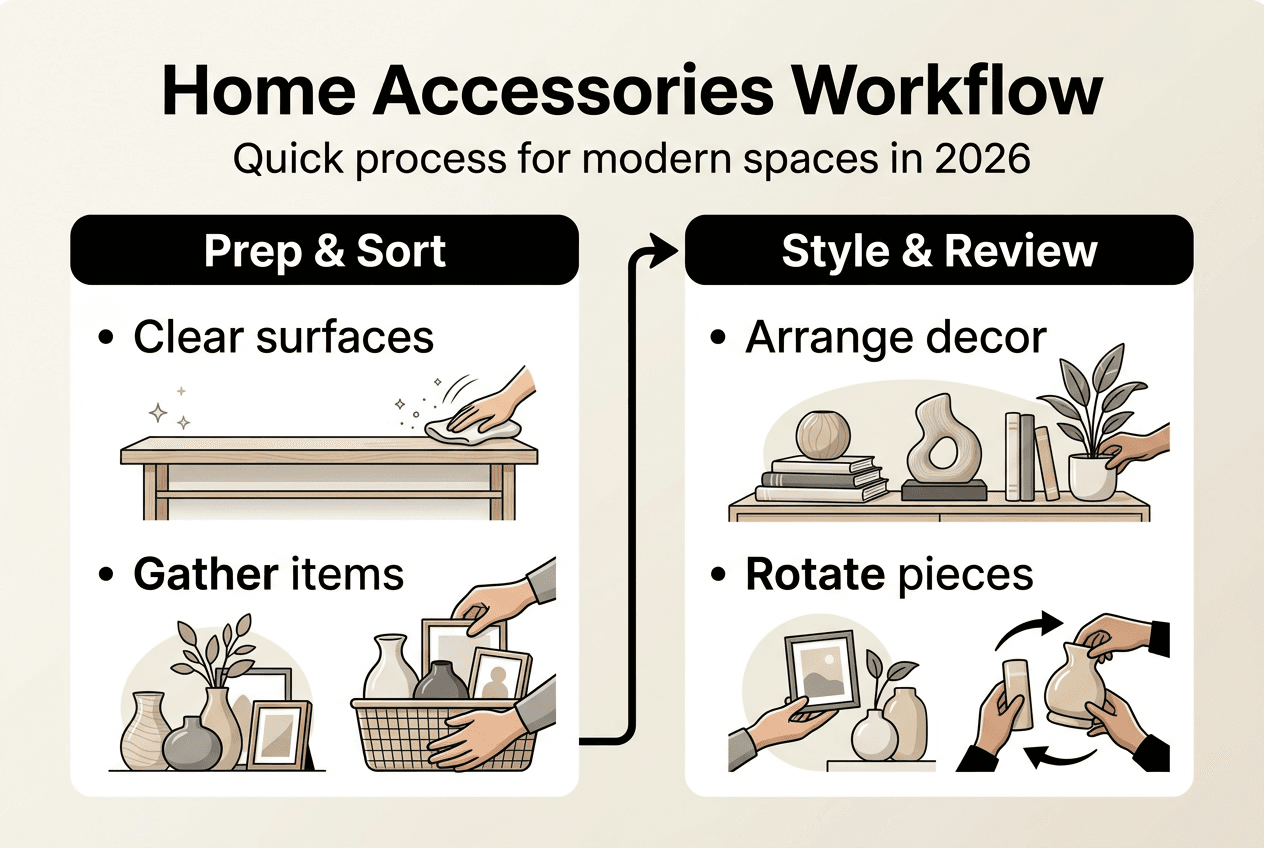
Rotate statement pieces to renew visual interest without spending money. That sculptural vase currently on your mantel might feel brand new when moved to your bedroom dresser. Swap artwork between rooms to give each space a subtle refresh. This rotation strategy keeps your home feeling curated and intentional.
Pro Tip: Keep a style journal or mood board for inspirational ideas. Screenshot images that resonate, tear pages from magazines, or pin ideas digitally. Reference this collection during your seasonal reviews to guide updates.
Maintenance tasks should include:
- Dusting all surfaces and accessories weekly to prevent buildup
- Deep cleaning textiles like throws and pillow covers monthly
- Inspecting lighting fixtures for burnt bulbs or loose connections
- Tightening any wall-mounted shelves or hooks that have loosened
- Refreshing plants by trimming dead leaves and adjusting placement
Stay aware of emerging trends without becoming a slave to them. Modern design evolves, but your personal style should remain the guiding force. If warm terracotta tones are trending but you love cool grays, don’t abandon your palette. Instead, introduce a single terracotta accent piece to test the waters.
Consider the changing seasons when updating accessories. Lightweight, airy pieces work beautifully in spring and summer. Heavier textures like chunky knits and rich metallics feel appropriate in fall and winter. This seasonal rotation keeps your home aligned with the world outside your windows.
Document your favorite arrangements with photos. When you nail a perfect styling moment, capture it from multiple angles. These reference images help you recreate successful looks after cleaning or when you’ve moved things around temporarily. They also track your style evolution over time, revealing patterns in what consistently works for your space.
Build relationships with quality makers and retailers who understand modern design. Following their new releases helps you discover accessories that genuinely fit your aesthetic rather than chasing every passing trend. Quality pieces from trusted sources also tend to age better, maintaining their appeal through multiple seasons.
Discover stylish modern accessories at New Way Ref
Executing a streamlined workflow becomes infinitely easier when you source accessories from curated collections designed for modern living. New Way Ref offers an extensive range of home decor pieces that balance form and function perfectly for urban spaces. From sculptural objects to practical storage solutions, each item is selected to enhance contemporary homes.
Explore the lighting collection to find statement fixtures that anchor your design while providing essential illumination. Whether you need ambient floor lamps or focused task lighting, you’ll discover options that complement your workflow and aesthetic goals. The New Way Ref store simplifies the selection process with expert curation, helping you build a cohesive modern home without the overwhelm of endless options.
FAQ
What are the essential tools for organizing modern home accessories?
Basic tools include storage trays for corralling small items, wall-mounted shelves for vertical display, decorative hooks for hanging textiles, and clear containers for seasonal rotation storage. Measuring tape and a level ensure proper placement and alignment. A quality step stool provides safe access to high surfaces during styling and maintenance.
How often should I update my modern home accessories arrangement?
A seasonal review every three to four months keeps arrangements fresh and functional. This timing aligns with natural shifts in light, temperature, and lifestyle needs throughout the year. More frequent minor adjustments are fine, but avoid constant rearranging that prevents you from truly living in and enjoying your space.
Can technology improve my modern home accessories workflow?
Smart home decor solutions like app-controlled lighting let you adjust ambiance instantly to highlight different accessories. Digital inventory apps help track what you own and where items are stored. Virtual room planning tools allow you to test arrangements before physically moving heavy pieces. Calendar reminders ensure you complete seasonal maintenance tasks on schedule.
What’s the biggest mistake people make when styling modern home accessories?
Overcrowding surfaces is the most common error. Modern design thrives on negative space and intentional placement. Resist the urge to fill every inch. Each accessory should have room to breathe and be appreciated individually. When in doubt, remove one more item than feels comfortable. You can always add back later if the space truly feels empty.
How do I choose accessories that will stay relevant beyond current trends?
Invest in classic shapes and neutral colors for your largest, most visible pieces. Trendy elements work best as small, easily swapped accents like throw pillows or small decorative objects. Quality materials like solid wood, natural stone, and metal age beautifully and transcend temporary fads. Choose pieces that resonate with your personal story rather than what’s popular on social media.