

TL;DR:
- Texture adds depth, warmth, and character to spaces, transforming flat rooms into inviting environments. Layering three to five distinct textures using the base, middle, and accent system creates visual cohesion and prevents monotony. Incorporating textured walls and surfaces enhances light, sound, and color perception, elevating a home’s overall luxury and comfort.
Most people spend hours picking paint colors and then wonder why their room still feels flat. Color matters, but it’s only part of the story. Texture adds depth, warmth, and character to living spaces in ways that color alone simply cannot achieve. A room dressed entirely in cream can feel either sterile or incredibly luxurious depending entirely on how texture is used. This guide breaks down the science and practical strategy behind texture so you can create spaces that genuinely feel as good as they look.
Table of Contents
- Why texture matters in interior design
- Layering textures for visual depth and cohesion
- How texture shapes light, sound, and color perception
- Texture as the secret to luxury: Minimalism, maximalism, and beyond
- Emerging trends: Textured walls and tactile innovation
- Why most people underuse texture—and how to get it right
- Discover stylish texture decor with New Way Ref
- Frequently asked questions
Key Takeaways
| Point | Details |
|---|---|
| Texture creates ambience | Texture adds warmth, depth, and luxury to any room, more powerfully than color alone. |
| Layer for visual impact | Combining three to five textures in each space results in a more cohesive and stylish look. |
| Influences sound and light | Textures absorb or reflect sound and light, shaping comfort and perception in every area. |
| Fits any style | Texture elevates both minimalist and maximalist designs so rooms feel curated, not chaotic. |
| Trends favor textured walls | Tactile, layered wall treatments are on the rise, defining modern and luxury interiors in 2026. |
Why texture matters in interior design
Texture is the tactile and visual surface quality of any material in your space. It’s the roughness of a woven rug underfoot, the smoothness of a lacquered coffee table, the softness of a linen throw draped over a sofa. You experience texture with both your eyes and your hands, which is exactly why it carries such emotional weight in a room.
“Texture is what separates a room that looks put-together from one that actually feels livable. It’s the sensory layer of design that color and pattern alone can never replace.”
Without intentional texture, even a beautifully colored room can feel lifeless. Think of a hotel room decorated entirely in flat, uniform surfaces. The colors might be fine, but the space feels cold and impersonal. Now imagine adding a woven throw, a rough-hewn wooden table, and a plush area rug. Instantly, the room breathes.
Here’s why texture deserves more attention in your home:
- It prevents visual monotony, giving your eye places to rest and places to explore
- It communicates personality and comfort even in a neutral, colorless palette
- It adds perceived warmth, making rooms feel genuinely inviting rather than just styled
- It creates depth that photographs well and impresses in person even more
When you decorate with texture across styles, you’ll notice that texture is the thread running through every successful interior, from Scandinavian minimalism to rich maximalism. The key is learning how to use it intentionally. Designers who match art and interior texture consistently produce spaces that feel curated rather than assembled.
Layering textures for visual depth and cohesion
Once you understand why texture matters, the next step is learning how to combine multiple textures without making your space feel chaotic. The most effective method is layering, and it’s more structured than it sounds.
Layering textures works best when you think in three tiers: base, middle, and accent. Ideally, you want three to five distinct texture types per room. More than five can feel overwhelming; fewer than three often feels too sparse.
Here’s a straightforward breakdown of how the layering system works in practice:
| Layer | Examples | Purpose |
|---|---|---|
| Base | Jute rug, hardwood floor, concrete tile | Sets the foundational tactile tone |
| Middle | Upholstered sofa, linen curtains, woven chair | Adds comfort and volume |
| Accent | Velvet cushions, ceramic vases, knit throws | Creates visual focal points |
How to layer textures step by step:
- Choose your base texture first. A natural fiber rug, such as jute or sisal, is one of the most versatile starting points. It grounds the room visually and physically.
- Select your middle layer for comfort. Upholstered furniture, fabric window treatments, or even a textured wall treatment all work here. Choose materials that contrast with your base (smooth against rough, soft against structured).
- Add accent textures in groups of two or three. Velvet cushions next to a ceramic lamp and a woven basket create rhythm without clutter.
- Repeat each texture at least twice. If you use boucle on one cushion, bring it back somewhere else, maybe a small stool or chair accent.
- Stand back and edit. Remove any texture that doesn’t feel connected to the others. Cohesion comes from restraint as much as from addition.
Learning to use layered rugs is one of the fastest ways to build a strong base layer. Layering a smaller patterned rug over a large neutral one immediately adds richness. For even more inspiration, look at a layered textures room example to see how professionals pull multiple textures together without losing clarity. If you want to achieve depth in decor beyond just textiles, layered lighting works alongside texture to create fully realized spaces.
Pro Tip: Start with your largest, most foundational textile first and build upward with smaller accents. Never start with the pillows and work backward. The base sets the tone for everything else.
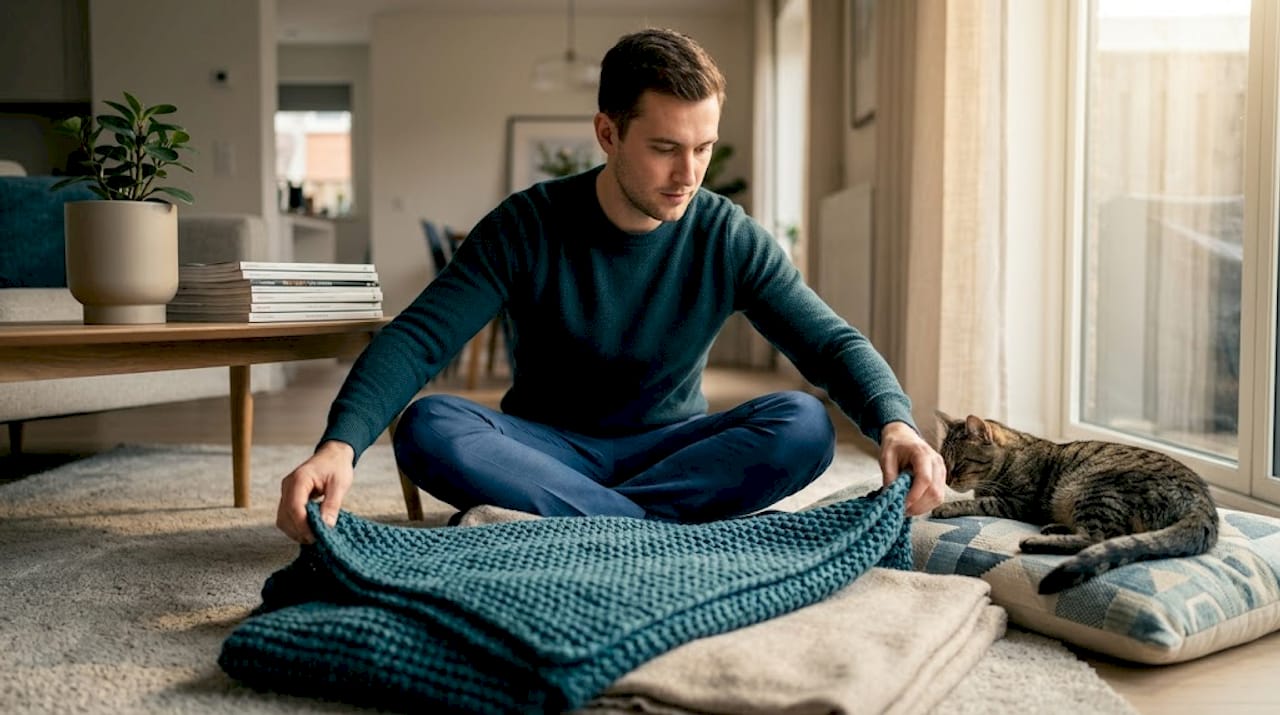
If you’re aiming to create cozy interiors, layering both your lighting and your textures at the same time creates a compounding effect where the whole becomes much more inviting than any single element.
How texture shapes light, sound, and color perception
This is where texture gets genuinely surprising. Most homeowners think of texture as purely visual or tactile, but it also changes how sound and light behave in a room. That shift in acoustic quality and light quality directly affects how welcoming or formal a space feels.
According to design research on effects of texture on light and sound, rough and soft surfaces absorb both light and sound, which makes rooms feel quieter, cozier, and more intimate. Smooth and hard surfaces do the opposite: they reflect light and amplify sound, giving spaces an energetic, formal quality.
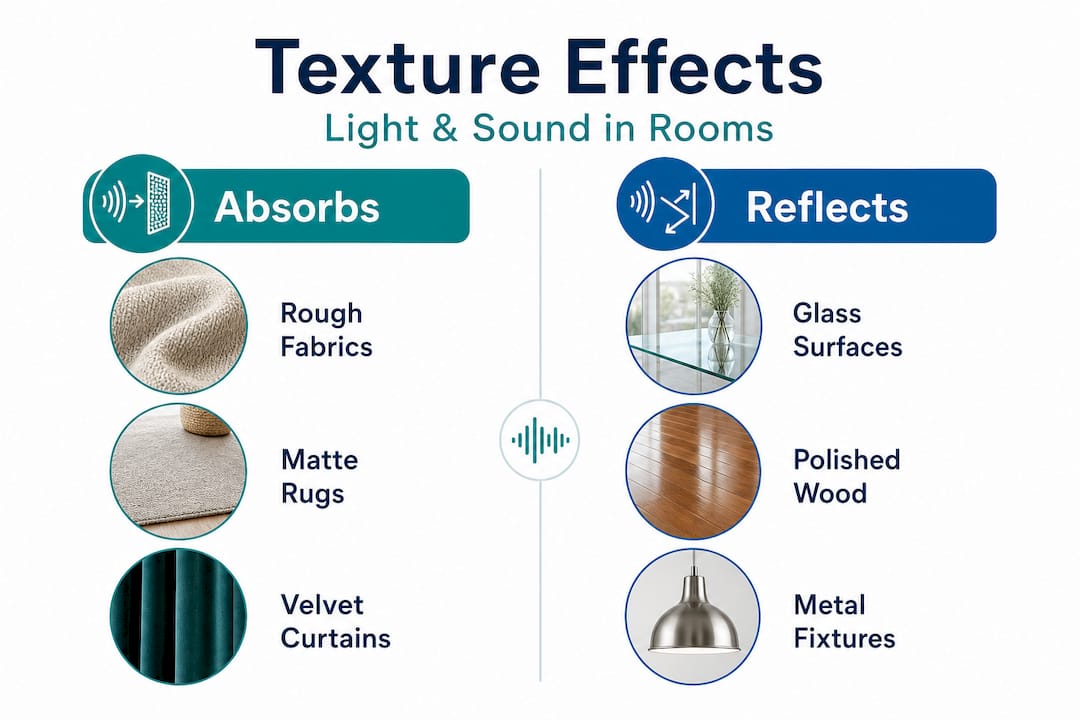
Here’s a quick comparison to help you decide which textures fit your goals:
| Texture Type | Light Effect | Sound Effect | Mood Created |
|---|---|---|---|
| Rough/soft (wool, velvet, plaster) | Absorbs, diffuses | Dampens echo | Cozy, intimate, warm |
| Smooth/hard (glass, lacquer, metal) | Reflects, brightens | Amplifies sound | Energetic, formal, sleek |
| Matte finishes | Deepens color | Neutral | Rich, grounded |
| Glossy finishes | Brightens color | Slight reflection | Airy, crisp, lively |
This insight changes how you should approach layered lighting techniques as well. A room with all matte, soft textures will feel warm but may absorb too much light and feel dim. Introducing a glossy ceramic vase or a mirrored surface alongside plush textiles balances the light equation perfectly.
Pro Tip: Mix at least one absorptive texture (like a wool rug or linen curtains) with one reflective surface (like a glazed lamp or polished side table) in every room. This balance controls the mood without requiring you to change your lighting setup at all.
Color perception shifts with texture too. A deep navy wall in matte plaster will look richer and more grounded than the same navy in a satin finish. A soft beige sofa in velvet will appear warmer than the identical color in a flat microfiber. This means texture is actually doing color work for you, making your palette feel more intentional without adding a single new hue.
Texture as the secret to luxury: Minimalism, maximalism, and beyond
One of the biggest misconceptions about texture is that it belongs only in rustic farmhouses or boho-inspired rooms. That’s simply not true. Texture is what separates a truly luxurious minimalist space from a cold, empty one.
As one design authority notes, texture outperforms color in neutral and minimalist settings, where it becomes the primary tool for perceived luxury and comfort without relying on bold palettes. This means if your home skews neutral, texture isn’t optional. It’s essential.
Here’s how texture functions across different design philosophies:
- In minimalist spaces: A single statement texture (like a chunky knit throw on a white sofa or a raw linen curtain against a plaster wall) carries enormous visual weight. It prevents the space from feeling sterile and gives the eye something meaningful to rest on.
- In maximalist spaces: Texture must be curated, not piled on. The goal is contrast and rhythm. A velvet sofa beside a rattan chair beside a stone coffee table creates richness because each texture complements the others rather than competing.
- In transitional or modern spaces: Natural textures like wool, jute, linen, and wood deliver timeless value. They age beautifully and connect easily to almost any color palette or furniture style.
- On walls and floors: Textured wall treatments (plaster, grasscloth, stone cladding) and layered floor coverings add dimension that paint color simply cannot replicate.
“The most welcoming homes are never defined by one great piece. They’re built layer by layer, texture by texture, until the whole space tells a single coherent story.”
For those exploring minimalist decor, texture becomes the primary design tool rather than a secondary one. And if you’re looking for specific ideas for a contemporary lifestyle, these modern decor ideas show how texture works within current, practical design frameworks. For wall-specific inspiration, minimalist texture ideas demonstrate just how much a single textured wall element can elevate an otherwise simple room.
Emerging trends: Textured walls and tactile innovation
The biggest shift happening in home design right now is the migration of texture from soft furnishings to walls and structural surfaces. Textured walls are no longer a niche preference reserved for luxury renovations. They’re becoming a standard tool for homeowners who want affordable impact.
The industry shift to textured walls reflects a broader appetite for tactile richness in everyday living spaces. Designers consistently report that client requests for wall textures have grown noticeably year over year, with more homeowners seeking alternatives to flat painted surfaces.
Here are the most relevant trends shaping how texture is being used right now:
- Venetian plaster and microcement are increasingly popular for feature walls because they add depth and movement without being visually loud
- Grasscloth wallcovering is making a strong comeback, offering a natural, woven surface that transforms a room without paint
- Layered wall art using plaster, resin, or mixed media creates tactile focal points that function as both art and texture
- DIY-friendly textured paints and plasters are now widely available, letting homeowners experiment without contractor budgets
- Three-dimensional wall panels in natural materials like bamboo and cork bring acoustic benefits alongside visual interest
For a full picture of where wall texture design is heading, check out wall texture trends 2026 to see the styles gaining the most traction in modern interiors. And if plaster texture art interests you, it’s one of the most elegant ways to bring both artistry and tactility to a blank wall.
Key stat: Design professionals now cite textured wall treatments among the top five requests from homeowners redecorating in 2026, ahead of furniture updates and lighting changes.
Why most people underuse texture—and how to get it right
Here’s the honest truth: most homes feel forgettable not because of bad color choices but because of under-textured spaces. Rooms where every surface has the same smooth, flat finish. Furniture that matches in material as well as color. Walls that are perfectly painted but offer nothing for the eye or hand to explore.
The fear driving this problem is usually the same: “I don’t want my room to look messy.” But over-matching is not the same as clean. It’s just safe. And safe doesn’t translate to stylish or welcoming.
Texture is not exclusive to any one design style. It’s not a boho thing or a farmhouse thing. It belongs in sleek modern apartments, contemporary family homes, and creating calm with texture in minimal, serene environments just as naturally as anywhere else. The most memorable rooms you’ve ever walked into almost certainly had multiple textures working together, even if you couldn’t name them in the moment.
Our take: Start with one hero texture and commit to it. Maybe that’s a gorgeous boucle sofa or a jute rug with serious presence. Then build rhythm around it by repeating similar or contrasting textures in smaller doses through cushions, throws, and decor objects. The rhythm is what makes a room feel intentional rather than assembled. Randomness feels like clutter; rhythm feels like design.
The goal is never to fill every surface. It’s to place texture where it matters most, then let those choices breathe.
Discover stylish texture decor with New Way Ref
Ready to bring these ideas to life in your own home? Texture-forward decor doesn’t have to mean a full renovation or a designer budget.
At New Way Ref, we’ve thoughtfully curated a selection of home decor products designed to help you layer textures with confidence. From modern textiles and accent pieces to statement furniture built for both comfort and visual depth, our collections are chosen with real living spaces in mind. Explore our curated home decor range to find pieces that bring tactile richness to any room, whether you’re starting from scratch or adding finishing layers to a space you already love. Free shipping on orders over $50 makes it even easier to experiment.
Frequently asked questions
What are the most impactful textures for a cozy living room?
Rough woven rugs, plush pillows, and soft throws all add warmth and depth for a cozy ambiance. According to layering principles, combining base, middle, and accent textures in natural fibers gives the most noticeable warmth.
How do I mix textures without making my space look cluttered?
Limit to three to five purposeful textures per room and repeat them through accents for visual cohesion. The three-tier layering approach of base, middle, and accent keeps combinations intentional rather than random.
Does texture really matter if I already have a lot of color?
Yes, adding texture gives rooms physical warmth and character, even with bold color palettes. Texture adds depth that color alone cannot replicate, making rooms feel finished and three-dimensional.
Can texture influence the acoustics of my home?
Soft and rough textures absorb noise and reduce echo, making spaces quieter and more comfortable. Research confirms that rough and soft surfaces dampen sound significantly, while smooth and hard surfaces amplify it.
Are textured walls out of style?
No, textured walls are a growing trend increasingly featured in modern and luxury interiors. The industry shift toward textured walls reflects strong and sustained homeowner demand that shows no sign of slowing in 2026.