

TL;DR:
- Side tables provide accessible surfaces for everyday items and help define seating areas in a room. They should be appropriately scaled in size and height to match nearby furniture and avoid clutter. Well-chosen side tables enhance both the functionality and visual balance of living rooms.
A side table is defined as a small, freestanding surface placed beside seating to provide immediate access to everyday items while anchoring the visual balance of a room. The role of side tables in a living room goes well beyond holding a drink. These pieces serve a dual purpose: functional convenience and design equilibrium. Interior designers treat them as finishing elements that signal a room has been thoughtfully arranged. Without them, even a well-furnished room can feel incomplete and unresolved.
How do side tables enhance convenience and daily living room functionality?
The function of side tables is to put the things you reach for most within arm’s length. A lamp, a glass of water, a phone charger, a book. These are the items that end up on the floor or the sofa cushion when no surface is nearby. A side table solves that problem without requiring you to get up or rearrange anything.
Size matters more than most homeowners realize. A functional surface area of at least 30 by 40 centimeters gives you enough room to hold a lamp, a drink, and a phone simultaneously. That is roughly the size of a standard sheet of paper doubled. Anything smaller forces you to choose what stays on the table and what gets left on the floor.
Scale relative to your seating also affects comfort. The best side table height aligns with seating arm height, which is typically around 65 centimeters. A table that sits too low forces an awkward reach. One that sits too high creates visual tension and makes the seating feel cramped.
Common items placed on side tables include:
- Lamps: A table lamp on a side table adds layered lighting without floor space loss.
- Drinks and snacks: The most practical use, keeping surfaces off sofas and floors.
- Remotes and phones: Keeps electronics accessible and reduces clutter on coffee tables.
- Books and magazines: Stacked neatly, they add personality and stay within reach.
- Small plants or candles: Adds a decorative layer without requiring a shelf or console.
Pro Tip: Avoid choosing a side table that is wider than the arm of the adjacent chair. An oversized table boxes in the seating and reduces the visual breathing room around it.
What role do side tables play in living room aesthetics and design balance?
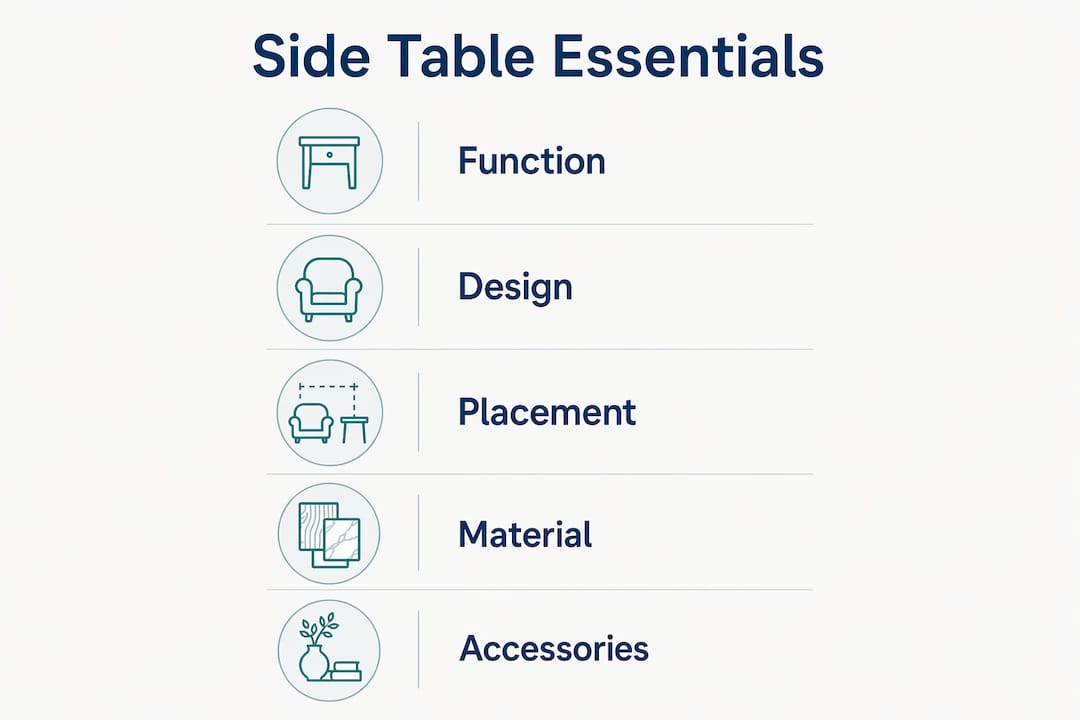
Side tables are primary tools for managing negative space in a living room. Negative space refers to the empty areas around and between furniture. Too much of it makes a room feel sparse. Too little makes it feel crowded. A well-placed side table fills a visual gap without adding bulk.
The importance of side tables in design goes beyond their physical presence. A side table placed at the end of a sofa, paired with a floor lamp and a small plant, creates what designers call a vignette. A vignette adds vertical interest and resolves empty wall or corner space without structural changes. It is one of the most cost-effective design moves in a living room.
Materials play a significant role in how a side table affects the room’s feel. Consider these options:
- Stone or marble: Adds weight and formality. Works well in rooms with neutral upholstery.
- Natural wood: Brings warmth and texture. Pairs well with linen sofas and woven rugs.
- Glass or acrylic: Creates lightness. Ideal for small spaces where visual clutter is a concern.
- Metal: Adds an industrial or modern edge. Works as a contrast piece in soft, fabric-heavy rooms.
- Rattan or cane: Introduces organic texture. Suits relaxed, coastal, or bohemian aesthetics.
Using a stone side table next to an upholstered sofa is a foundational layering technique that prevents monotony in room design. The contrast between hard and soft surfaces adds depth without requiring additional furniture.
“A side table acts as a silent narrator. Its presence tells the room it has been finished and balanced. Its absence leaves a feeling of incompleteness.” — Interior design principle on intentional finishing pieces
What should you consider when choosing and placing side tables?
Choosing side tables for decor requires matching three things: height, scale, and style. Get all three right and the table disappears into the room in the best possible way. Get one wrong and it draws attention for the wrong reasons.
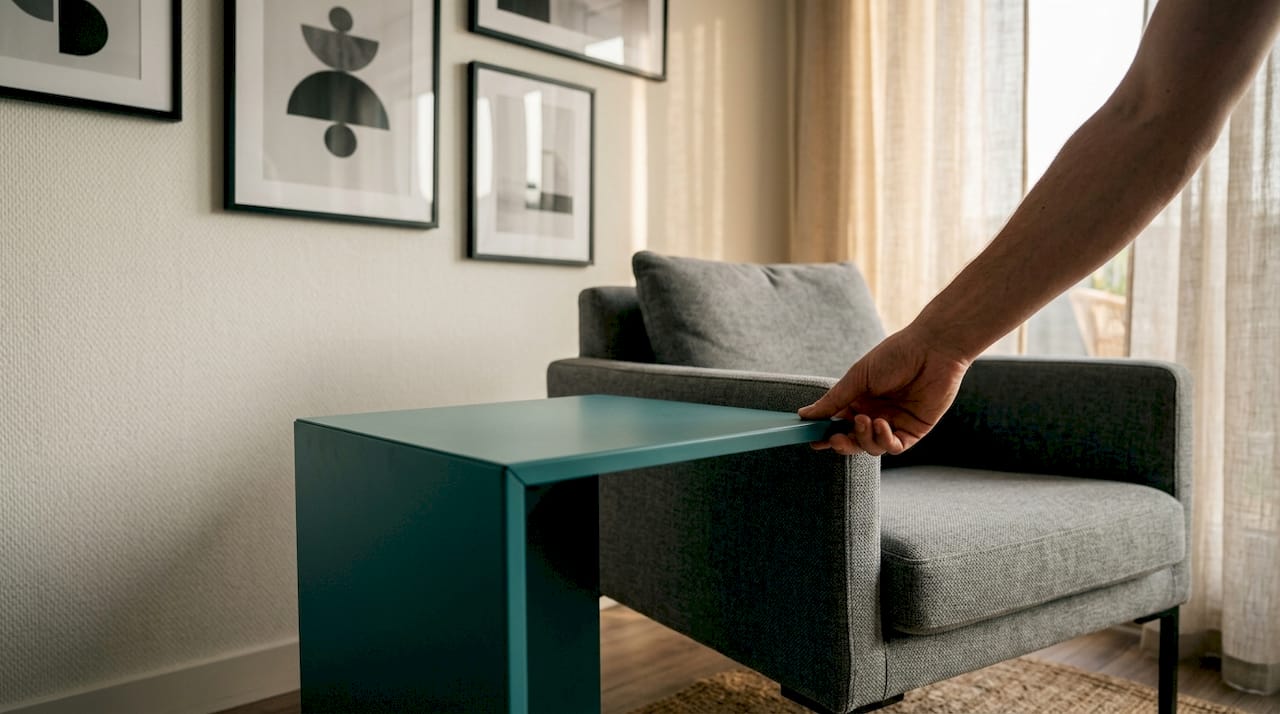
Height and scale are the starting point. Match the table height to the arm of your sofa or chair. For most standard sofas, that means a table between 55 and 70 centimeters tall. For low-profile sofas, go lower. For high-backed chairs, go taller. The goal is a level surface that requires no awkward reach.
Style and material should complement your existing furniture, not match it exactly. A room where every piece matches looks staged rather than lived in. Choose a side table that shares one element with nearby furniture, such as a wood tone, a metal finish, or a color, and contrasts in another. That single point of connection is enough to create cohesion.
| Seating type | Recommended table height | Best material pairing |
|---|---|---|
| Standard sofa | 55–65 cm | Wood, metal, or stone |
| Low-profile sofa | 45–55 cm | Glass or acrylic |
| Accent chair | 60–70 cm | Rattan, wood, or metal |
| Sectional sofa | 55–65 cm | Nesting tables or round designs |
Quantity and placement follow the seating layout. Most living rooms benefit from at least one side table per seating zone that lacks a nearby surface. A sofa with two open ends needs two side tables. A single accent chair in a corner needs one. The number is driven by use, not decoration.
Pro Tip: Renters benefit most from lightweight, multi-use side table designs. A small drum table works as a side surface, a stool, and a display pedestal. It moves easily and leaves no marks.
Layering accessories on a side table follows a simple rule: vary the height. Place a lamp at the tallest point, a small plant or object at mid-height, and a flat item like a book or tray at the base. This three-level approach creates visual interest without clutter. For more guidance on mixing home accessories, the principle applies across every surface in the room.
How can side tables be used creatively beyond traditional functions?
Side tables are highly versatile pieces that adapt functionally to each room and context. In a living room, that versatility extends well past the sofa end position.
Creative uses for side tables include:
- Display platforms: A side table in a corner becomes a pedestal for sculpture, a stack of art books, or a trailing plant. It draws the eye to an otherwise dead zone.
- Room entry utility: A small side table near the living room entrance holds keys, a small tray, or a lamp. It creates a functional landing spot without a full console table.
- Nesting table sets: Two or three tables of graduated sizes nest together when not in use and spread out when you need extra surface area for guests. They are the best side tables for small spaces because they give you flexibility without permanent footprint.
- Mixing shapes: Pairing a round side table with a rectangular sofa softens the geometry of the room. Mixing a square table with a curved sectional adds structure. Shape contrast is an underused design tool.
- Material mixing: Placing a metal table beside a wood coffee table introduces contrast that makes both pieces look more intentional. Side tables are an ideal testing ground for material layering because the commitment is small and the impact is immediate.
For homeowners working with limited square footage, a glass or acrylic side table is the most practical choice. It occupies physical space without occupying visual space. The room reads as larger because the eye passes through the table rather than stopping at it. Pair it with a slim table lamp and a single small object to keep the effect clean. You can find more ideas for optimizing a compact layout in rooms where every square foot counts.
Key Takeaways
Side tables serve both a functional and an aesthetic purpose, and getting the height, scale, and placement right is what separates a finished room from one that feels incomplete.
| Point | Details |
|---|---|
| Surface size matters | A minimum of 30 by 40 cm gives enough room for a lamp, drink, and phone. |
| Match height to seating | Align table height with sofa arm height, typically 55–70 cm, for comfortable reach. |
| Use tables to manage space | Strategic placement fills visual gaps and defines seating zones without adding bulk. |
| Material contrast adds depth | Pairing stone or metal with upholstered furniture prevents monotony and adds dimension. |
| One table per seating zone | Every seating area without a nearby surface benefits from at least one side table. |
Why I think most people underestimate the side table
Most homeowners spend weeks choosing a sofa and five minutes picking a side table. That order of priority is backward. The sofa defines the room’s size and comfort. The side table defines whether the room feels finished.
The most common mistake I see is choosing a table that is too small. A tiny table beside a large sofa looks like an afterthought. It does not anchor the seating zone. It just floats there. Go slightly larger than you think you need, and the table will hold its own visually.
The second mistake is treating the side table as purely functional. A bare table with only a remote on it is a missed opportunity. Three objects at varying heights, chosen with some intention, turn that table into a design moment. You do not need expensive objects. A library book, a small candle, and a trailing plant cost almost nothing and do the job well.
What I find most satisfying about a well-placed side table is how invisible it becomes once it is right. You stop noticing it as a piece of furniture. You just notice that the room feels complete. That is the goal. Not to add something that stands out, but to add something that makes everything else look better. For anyone rethinking their living room furniture arrangement, the side table is the easiest place to start and often the most rewarding.
— Enn
Side tables from Newwayref for every living room style
Newwayref carries a range of side tables built for real living rooms, not just showrooms. Whether your space leans modern, minimal, or warm and textured, the selection covers the styles and sizes that actually work beside standard sofas and accent chairs.
Each piece is sized for practical use, with surface areas that hold a lamp, a drink, and a phone without crowding the seating beside it. Materials range from clean metal frames to warm wood finishes, giving you the contrast options that make a room feel layered rather than flat. Free shipping applies to orders over $50. Browse the full home furniture collection at Newwayref and find the side table that completes your seating zone.
FAQ
What is the main role of a side table in a living room?
A side table provides an accessible surface beside seating for everyday items like lamps, drinks, and phones. It also fills visual gaps and helps define seating zones in the room layout.
Do you need a side table if you already have a coffee table?
A coffee table serves the center of the room, but it does not reach the ends of a sofa or beside an accent chair. Side tables fill those gaps and reduce the need to lean or stretch across the room.
What height should a side table be relative to a sofa?
The table height should align with the arm of the adjacent sofa or chair, typically between 55 and 70 centimeters. This creates a level surface that is comfortable to reach from a seated position.
What are the best side tables for small spaces?
Glass or acrylic tables work best in small spaces because they take up physical room without adding visual weight. Nesting table sets are also practical since they expand when needed and stack away when not in use.
How many side tables does a living room need?
Most living rooms need at least one side table per seating zone that lacks a nearby surface. The number is determined by use and seating layout, not by a fixed decorating rule.