

TL;DR:
- Balance in interior design involves arranging visual weight to create stability and harmony within a space. It influences both the aesthetics and functionality of a room by guiding movement, reducing visual clutter, and defining zones through techniques like scale, color, and furniture placement. Achieving effective balance requires considering style preferences, circulation needs, and living habits, using practical methods like anchoring with large pieces, testing layouts, and adapting principles to real-life use.
Balance in interior design is defined as the deliberate arrangement of visual weight across a room to create stability, comfort, and harmony. The role of balance in room layout goes beyond aesthetics. It shapes how a space feels to move through, live in, and look at. Whether you are arranging a living room from scratch or adjusting a bedroom that has always felt slightly off, understanding balance gives you a clear framework to work from. This guide covers the core principles, practical techniques, and real trade-offs that help you create a room that feels intentional and inviting.
What is the role of balance in room layout?
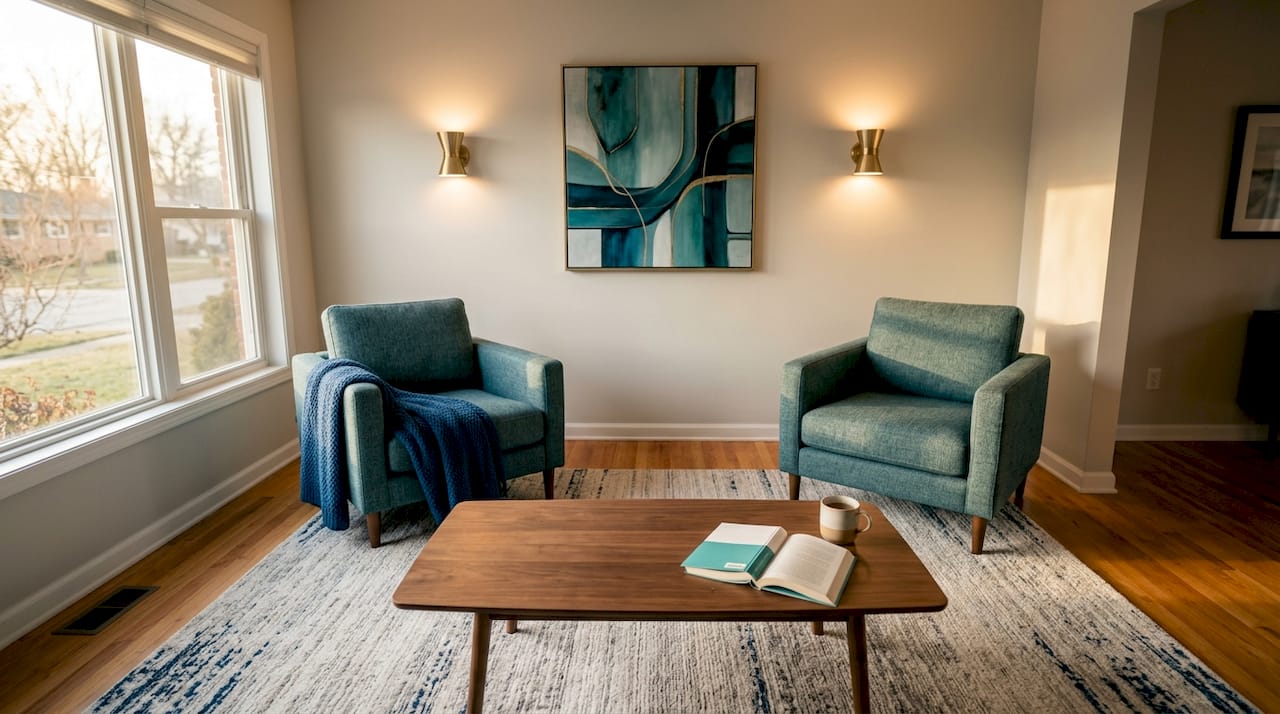
Visual balance is achieved by arranging furnishings so that elements suggest equilibrium, typically across a vertical axis that divides the room into left and right halves. When a room lacks balance, it feels lopsided or arbitrarily composed rather than thoughtfully designed. That discomfort is not imaginary. It is a direct response to mismatched visual weight pulling your eye in one direction without resolution.
Balance in interior design operates through three main types: symmetrical, asymmetrical, and radial. Symmetry uses near-identical elements on both sides of an axis. Asymmetry relies on matching relative visual weight without mirroring. Radial balance centers everything around a focal point, like a round dining table with chairs arranged outward. Each type creates a distinct mood and suits different room purposes and personal styles.
The importance of balance in design extends to function, not just appearance. A well-balanced room guides natural movement, reduces visual noise, and makes the space feel larger and more welcoming. Rooms that feel cramped or chaotic are often suffering from a balance problem, not a size problem.
How visual weight and scale affect balance in room layouts
Visual weight is the perceived heaviness of an object based on its size, color saturation, texture, and complexity. A dark velvet sofa carries more visual weight than a light linen chair of the same size. A heavily patterned rug draws more attention than a solid one. Experienced designers balance relative visual weight across color, texture, scale, and complexity rather than relying on matching pairs, achieving equilibrium without mirroring.
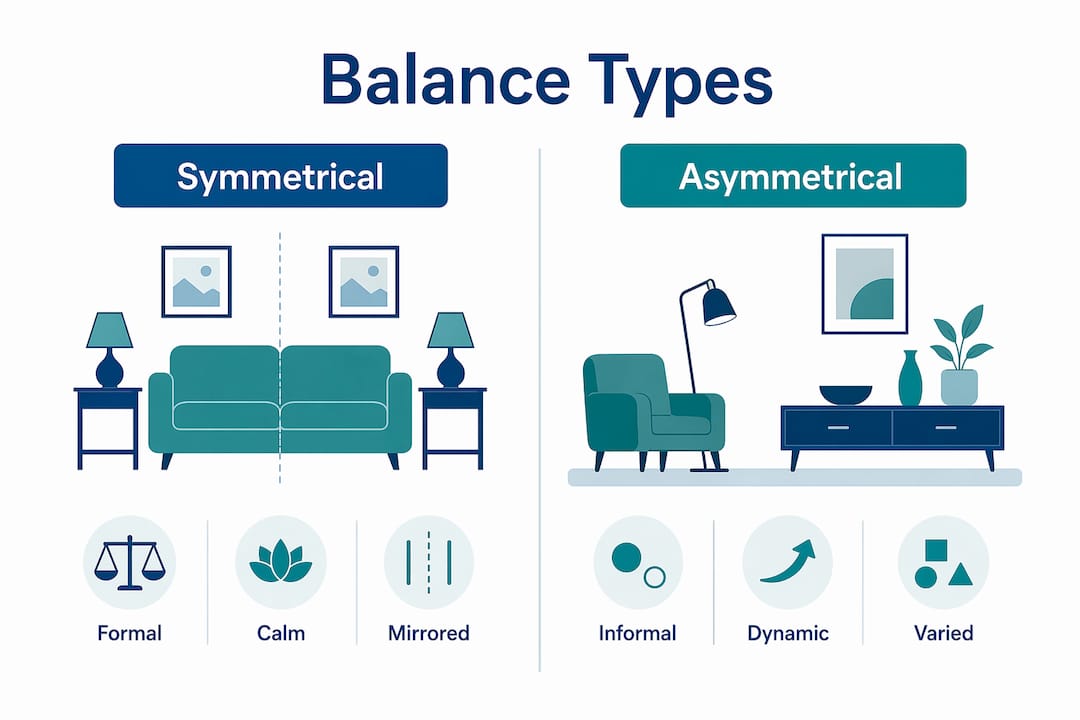
Scale is the relationship between the size of a piece and the room or other pieces around it. Getting scale wrong is one of the most common layout mistakes. A sofa should occupy about two-thirds of the wall behind it, or one-third of room width if floating, to maintain balanced scale. That guideline exists because mismatched pairings, like a tiny side table next to an oversized sectional, create visual tension that makes the whole room feel unstable.
Here is how visual weight and scale interact in practical terms:
- Size: Larger pieces anchor a room but need counterweights on the opposite side, such as a tall bookcase or a gallery wall.
- Color: Deep, saturated colors like navy or charcoal carry more visual weight than soft neutrals. One dark accent wall can balance several lighter pieces across the room.
- Texture: Rough, layered textures such as woven throws or brick surfaces feel heavier than smooth, reflective ones like glass or polished metal.
- Complexity: A piece with intricate detail, like a carved wood cabinet, draws more visual attention than a plain one of the same size.
Rugs are one of the most effective tools for managing scale and visual weight in a seating area. Rugs sized so that the front legs of all seating pieces rest on them create cohesive, balanced zones. An undersized rug fragments the space and makes it look smaller than it is.
Pro Tip: Before buying a rug, use painter’s tape on the floor to mark the dimensions. Walk around it and sit in your furniture to confirm the scale feels right before committing.
Symmetrical vs. asymmetrical balance: what fits your room and style?
Formal symmetrical balance uses near repetition of elements on both sides of a vertical axis, while informal asymmetrical balance relies on relative visual weight to achieve equilibrium without mirroring. Both approaches work. The right choice depends on your room’s purpose and your personal style.
| Feature | Symmetrical balance | Asymmetrical balance |
|---|---|---|
| Visual effect | Ordered, formal, calm | Dynamic, relaxed, modern |
| Best for | Dining rooms, formal living rooms, bedrooms | Casual living rooms, studios, eclectic spaces |
| Typical elements | Matching nightstands, paired sofas, identical lamps | Mixed seating, varied heights, contrasting textures |
| Difficulty | Easier to execute | Requires more design judgment |
| Risk | Can feel rigid or predictable | Can feel chaotic if visual weights are misread |
Contemporary interiors often favor informal balance for a relaxed feel while still maintaining equilibrium. Asymmetry suits casual, relaxed settings, while symmetry works best in formal rooms. Radial balance, centered on a focal point, works well in dining rooms and reading nooks.
Practical considerations for choosing your approach:
- If your room has a strong architectural feature like a centered fireplace, symmetry reinforces it naturally.
- If your furniture collection is eclectic or collected over time, asymmetry gives you more flexibility without requiring matched sets.
- Mixing both types in one room is common. A symmetrical sofa arrangement can coexist with an asymmetrical gallery wall above it.
- Asymmetrical balance requires you to think in terms of visual weight, not just object count. Two small chairs can balance one large sofa if their combined weight reads as equivalent.
How does movement and circulation affect room balance?
Proper clearance of approximately 3 feet in main walking paths preserves circulation and visual ease, preventing a crowded room feeling. This is where balance and harmony in spaces becomes a lived experience rather than a visual exercise. A room can look balanced in a photograph and still feel uncomfortable to move through.
Follow these steps to protect both circulation and visual balance when arranging your layout:
- Identify your focal point first. Every room needs one anchor, whether it is a fireplace, a large window, or a media console. Furniture placement should follow room function and movement, starting with a focal point and an anchor piece.
- Place your largest piece toward the focal point. The sofa or primary seating faces the focal point. This establishes the room’s visual center of gravity.
- Map your walking paths before adding secondary pieces. Mark the routes from the entrance to the seating area and to other exits. Keep those paths clear.
- Float furniture away from walls. Floating seating areas anchored with a rug improve openness compared to pushing furniture against walls, which makes rooms feel smaller and more rigid.
- Test the layout by walking through it. Sit in each seat and observe sightlines. If any position feels blocked or awkward, adjust before finalizing.
Pro Tip: Use blue painter’s tape on the floor to outline furniture footprints before moving anything heavy. This lets you test traffic flow and visual balance without physical effort.
Balance in room layout must protect movement and function. A visually balanced photo is less important than the lived experience of natural traffic flow and comfort. That distinction matters most in smaller rooms where every inch of clearance counts.
Practical techniques to create and adjust balance in your home layout
Creating balance in interior design starts with a clear sequence. Jumping straight to accessories before placing anchor furniture is the most common reason rooms feel unresolved. Work from large to small, and from structural to decorative.
Start with these core techniques:
- Anchor with your largest piece. Place your sofa, bed, or dining table first. An improperly scaled anchor piece destabilizes a room’s balance: too small makes the room feel ungrounded, too large compresses circulation and overwhelms visual weight.
- Apply the rule of thirds informally. Divide your room into thirds horizontally and vertically. Place key visual elements at the intersections rather than dead center or pushed to the edges.
- Use color to redistribute visual weight. If one side of the room feels heavy, introduce a bold accent color on the opposite side through a pillow, artwork, or lamp. You do not need to add more furniture to rebalance.
- Edit before you add. Clutter is the enemy of visual balance. Remove pieces that do not contribute to the room’s visual weight equation before buying anything new.
- Use lighting as a balancing tool. A floor lamp on one side of a sofa can balance a heavy bookcase on the other side. Light sources carry visual weight, especially at night.
Rugs serve as structural tools in open or multi-zone rooms by creating psychological boundaries and reducing visual competition between areas. In open-plan spaces, a rug under the seating zone and a separate rug under the dining table define two distinct, balanced areas without walls.
For small rooms, check out small space decorating tips that address scale and visual flow in limited footprints. Evaluating balance through photographs is also genuinely useful. Snap a photo of your room from the doorway. The camera flattens the space and makes visual imbalances easier to spot than they are in person.
Prototype layouts with tape or mockups help validate balance practically, confirming that layouts feel comfortable in real use despite what static photos suggest. Balance feels successful when movement and sightlines are unobstructed, not just when the room looks symmetrical.
Key takeaways
Effective room balance requires managing visual weight, scale, and circulation together. No single element creates harmony on its own.
| Point | Details |
|---|---|
| Define your balance type | Choose symmetrical, asymmetrical, or radial balance based on room purpose and personal style. |
| Anchor pieces set the foundation | Place your largest furniture first and scale all other pieces relative to it. |
| Rugs unify and define zones | Size rugs so front legs of all seating rest on them to create cohesive, balanced areas. |
| Circulation is part of balance | Maintain 3-foot walking clearances and float furniture away from walls for openness. |
| Test before finalizing | Use tape mockups and photographs to evaluate balance in real use, not just visual appearance. |
Why balance is a tool, not a formula
I have seen homeowners follow every symmetry rule perfectly and still end up with rooms that feel sterile and lifeless. The issue is treating balance as a checklist rather than a design intention. Balance is a tool. Sometimes a deliberate imbalance, like one oversized piece of art on an otherwise bare wall, creates exactly the tension that makes a room memorable.
Balance is about visual stability and reducing distraction, but harmony composes differences toward a shared purpose. Focusing solely on balance can flatten a design. Harmony brings purpose and dynamic connections. That distinction changed how I approach every layout. I stopped asking “is this balanced?” and started asking “does this feel resolved?”
The rooms I find most successful are the ones where the owner adapted general principles to their actual life. A family with young children needs clear floor paths more than perfect symmetry. A collector needs asymmetrical flexibility more than matched pairs. Real balance accounts for movement and lived experience, not just visual weight. Test your layout by living in it for a week before making permanent decisions. Your daily movement through the space will tell you more than any design formula.
Transform your space with Newwayref

Achieving a well-balanced room layout starts with the right furniture and the right guidance. Newwayref offers a thoughtfully curated selection of sofas, coffee tables, rugs, and lighting fixtures designed to help you build rooms that feel both stylish and functional. Explore the full furniture collection to find anchor pieces scaled for real living spaces. For layout guidance, the Newwayref blog covers furniture arrangement for style and comfort and modern rug sizing to help you get every zone right. Free shipping on orders over $50 makes it easy to start your refresh today.
FAQ
What does balance mean in interior design?
Balance in interior design is the arrangement of visual weight across a room to create stability and harmony. It operates through symmetrical, asymmetrical, and radial types, each producing a different mood and suited to different room styles.
How do I know if my room is unbalanced?
A room feels unbalanced when one side draws significantly more visual attention than the other, creating a lopsided or unsettled feeling. Taking a photograph from the doorway makes imbalances easier to identify because the flat image removes depth perception.
Should furniture touch the walls in a balanced layout?
Pushing all furniture against walls typically makes a room feel smaller and less balanced. Floating seating anchored with a rug creates better openness and defines the space more effectively than wall-adjacent placement.
What is the difference between balance and harmony in a room?
Balance refers to visual stability through equal distribution of weight. Harmony connects different elements toward a shared purpose, giving the room a cohesive feel. A room can be balanced without feeling harmonious if the pieces lack a unifying color, texture, or style thread.
How big should a rug be for a balanced living room?
A rug should be large enough for the front legs of all major seating pieces to rest on it. This size creates a unified seating zone and prevents the fragmented look that comes from an undersized rug floating in the center of the room.