

TL;DR:
- Cushions serve both ergonomic and aesthetic purposes, shaping a room’s comfort and visual harmony.
- Proper use of color, texture, and quantity enhances room coherence while avoiding clutter and ineffectiveness.
Most people think of cushions as an afterthought. You buy a sofa, toss a few pillows on it, and call it done. But the role of cushions in home aesthetics goes far deeper than that. Cushions are one of the most flexible, affordable, and visually powerful tools you have for shaping how your living space looks and feels. Get them right and your room feels intentional, warm, and pulled together. Get them wrong and even a beautiful sofa starts to look cluttered or cold. This article shows you exactly how to use cushions to your advantage.
Table of Contents
- Key takeaways
- The role of cushions in home aesthetics and comfort
- How cushions shape color, texture, and room harmony
- Styling principles for effective cushion arrangement
- Common pitfalls and how to fix them
- My honest take on cushions and home styling
- Transform your space with Newwayref
- FAQ
Key takeaways
| Point | Details |
|---|---|
| Cushions serve dual purposes | They provide ergonomic support while actively shaping the visual tone of your room. |
| Color unity matters most | Mixing patterns works when all cushions share at least one common color thread. |
| Quantity depends on style | Minimalist rooms need 0-2 cushions per seat; maximalist rooms can go higher with discipline. |
| Texture beats quantity | Layering knit, velvet, and silk creates a rich look without overwhelming the space. |
| Seasonal swaps refresh a room | Changing cushion covers is one of the most cost-effective ways to update your decor. |
The role of cushions in home aesthetics and comfort
Cushions do not just sit there looking decorative. They actively change how comfortable your furniture is to use. Most standard sofas are designed for an average body type, but few households consist entirely of average-sized people. A sofa that feels perfectly deep for one person leaves another person’s feet dangling uncomfortably. Cushions solve that problem by adapting seat depth and providing lumbar and neck support that factory cushioning rarely delivers on its own.
This is why a well-placed lumbar cushion behind the lower back is not just a design choice. It is a genuine comfort upgrade. The same logic applies to neck support when watching TV. Cushions let you customize any piece of furniture to the actual people living with it.
Here are the core functional benefits cushions deliver:
- Lumbar support: A firm, rectangular cushion behind the lower back corrects posture and reduces fatigue during long sitting sessions.
- Seat depth adjustment: Placing a cushion at the back of a deep sofa effectively shortens the seat depth, making it usable for shorter people.
- Neck and head rest: Oversized cushions propped against the sofa arm create a comfortable reading position without any furniture modification.
- Seating capacity: On wide sectionals, cushions can define individual seating zones so the sofa does not feel like a formless slab.
Pro Tip: If your sofa feels too deep to sit in comfortably, place two medium-sized cushions flat against the back rest. It instantly resolves the problem and costs nothing if you already own the cushions.
How cushions shape color, texture, and room harmony
Think of cushions the way a stylist thinks about accessories. Cushions act as accessories in a room, much like shoes and a handbag complete an outfit. They can tie an entire look together or wreck it with one wrong choice.
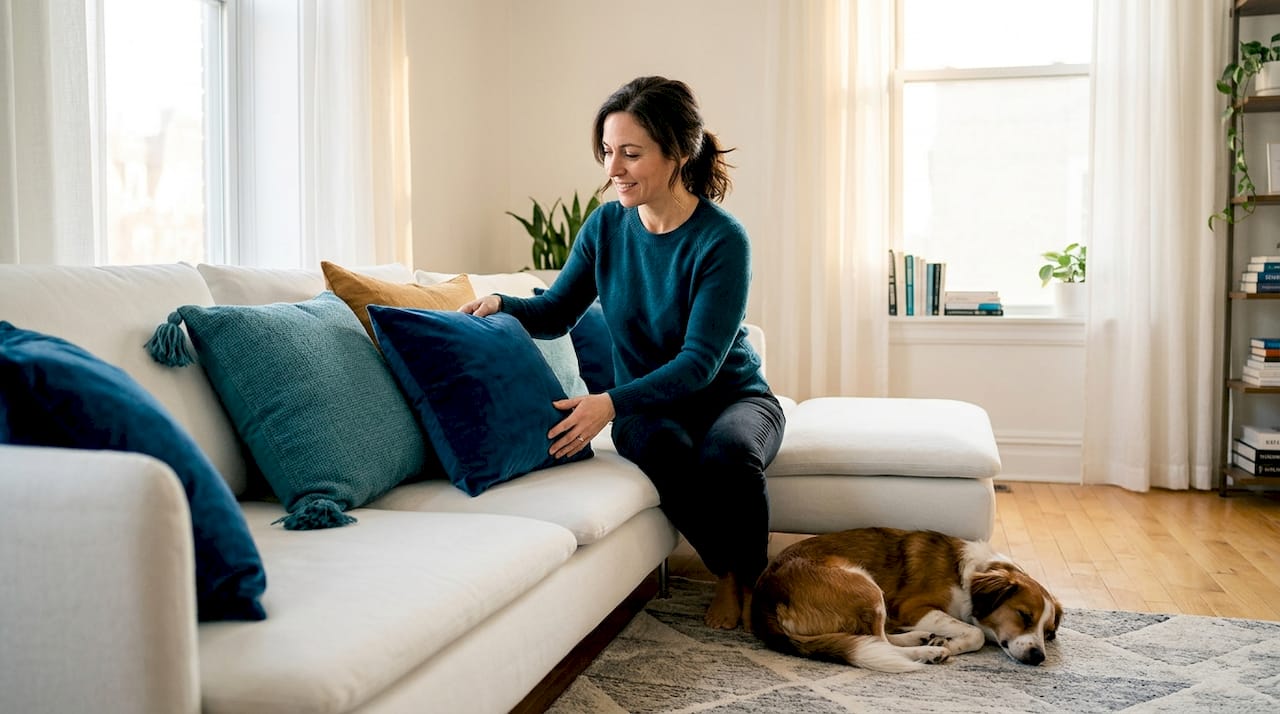
The most practical use of cushions from a color standpoint is creating visual continuity across your space. If your dining room has blue curtains and your living room sits adjacent to it, a blue cushion on your sofa creates a cohesive interior flow between the two spaces without you needing to repaint or reupholster anything. It is a simple trick that professional designers use constantly, and most homeowners overlook it entirely.
Texture is where cushions get particularly interesting. A velvet cushion next to a chunky knit and a silk-edged pillow creates visual depth that feels expensive and deliberate. According to styling research, mixing textures like knit, leather, and silk creates an intentional layered look without appearing messy. The key word is intentional. The mix has to feel curated, not random.
“Tonal clashing works beautifully when cushions share a unifying color thread. Mix plaid, stripes, and velvet freely, but ground them all in one palette.” Inspired by tonal clashing principles
Here is how to manage cushion impact on decor through color and texture:
- Anchor with neutrals: Start with two neutral cushions, then add one or two accent pieces in your room’s dominant color.
- Vary scale, not just pattern: Pair a large geometric print with a smaller repeating pattern to avoid visual competition.
- Use room color strategies as your guide: Your cushion palette should reflect the broader color choices already present in the room.
- Limit your palette: Three colors maximum. More than that and the arrangement reads as chaotic rather than eclectic.
The decorative cushions benefits you see in well-styled interiors always come back to restraint within creativity. Freedom of expression, but with a framework.
Styling principles for effective cushion arrangement
The most common question homeowners ask about home styling with cushions is: how many is too many? The answer depends entirely on your design approach and the size of your sofa.
Different styling approaches recommend very different cushion counts per seat:
| Style | Cushions per seat | Visual result | Best for |
|---|---|---|---|
| Minimalist | 0-2 | Clean, open, furniture-forward | Modern, Scandinavian interiors |
| Moderate | 3-4 | Balanced, cozy, practical | Most family living rooms |
| Maximalist | 5+ | Lush, textured, expressive | Eclectic, bohemian, or formal spaces |
The 2026 trend toward pared-back pillow arrangements signals a collective preference for letting furniture speak for itself rather than burying it beneath layers of cushions. That does not mean fewer cushions are always better. It means the cushions you keep should earn their place.
Size variation matters just as much as quantity. Mixing cushion sizes and placement breaks the monotony of horizontal stacking and creates more visual interest than a row of identical pillows ever could. A practical arrangement for a three-seat sofa: two large cushions (24 inches) at the outer edges, two medium cushions (18 inches) inside those, and one smaller accent cushion (12-14 inches) in front or to the side.
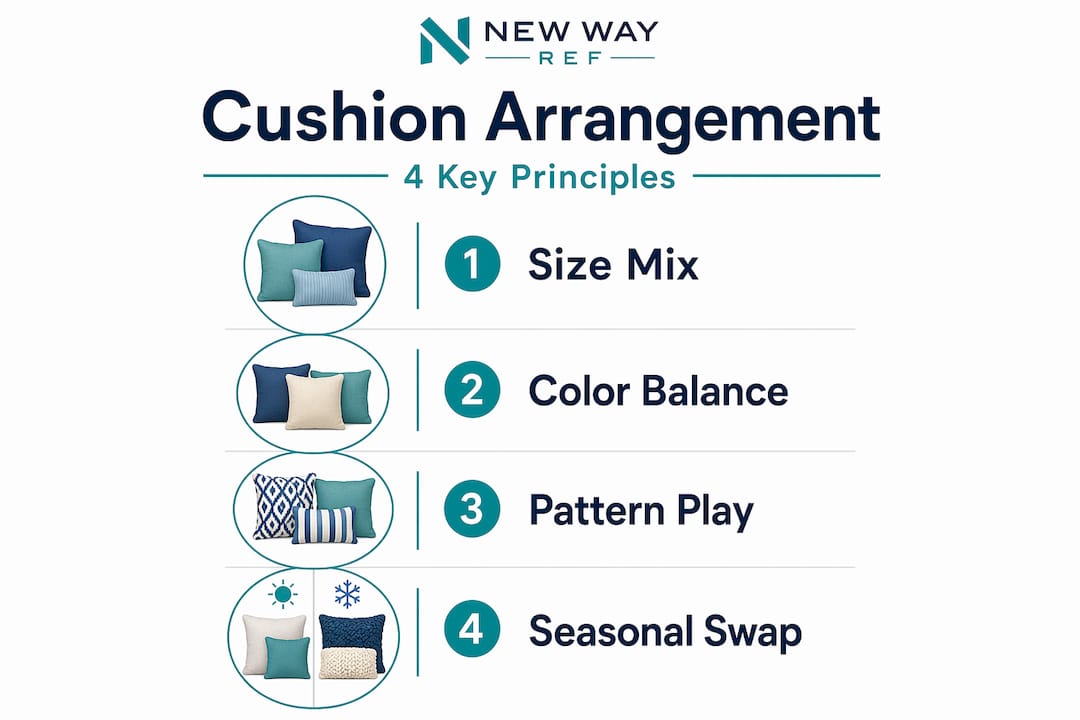
Pro Tip: Try rearranging your cushion combinations before committing to a layout. Swap patterns, flip cushions, try asymmetry. What looks obvious in your head often looks different on an actual sofa.
Symmetry versus asymmetry is a real design decision worth thinking through. Symmetrical arrangements feel formal and orderly. An asymmetrical layout with one large cushion propped at an angle feels more relaxed and lived-in. Neither is wrong. They just create different impressions. For how cushions enhance aesthetics in your specific space, consider the mood you want the room to project and let that guide your arrangement.
Seasonal updates are also worth mentioning here. Swapping cushion covers for different seasons is one of the most cost-effective ways to refresh a room. Affordable cushion options make it realistic to maintain separate sets for summer and winter without significant expense.
Common pitfalls and how to fix them
Overcrowding is the most frequent mistake in the function of cushions in interiors. When cushions cover more than 60% of your seating surface, the sofa becomes unusable. Standard comfortable seating requires about 24 inches per person. Pile too many cushions onto a three-seat sofa and you end up with a one-seat sofa surrounded by decorative obstacles.
Practical households, especially those with children or pets, face additional challenges. Excess cushions in high-traffic homes trap pet hair, collect dirt, and create genuine hazards for small children. A better approach for busy households is a smaller, more deliberate selection of cushions with removable, washable covers.
Here are the most practical fixes for common cushion mistakes:
- The “piling” problem: If you have to remove five cushions before sitting down, cut the count in half. Cushions should add to comfort, not create a barrier.
- Mismatched chaos: Buy cushions as a set or stick to a predefined palette. Buying individually without a plan produces visual noise rather than personality.
- The wear-and-flatten issue: Rotate and fluff cushions regularly. A flat, shapeless cushion makes expensive furniture look neglected.
- Too many statement pieces: One standout cushion per sofa arrangement is usually enough. Two or more statement cushions compete and cancel each other out.
Pro Tip: When preparing for guests or changing seasons, store off-season cushions in a labeled bin. It forces you to edit your current arrangement and often reveals you had too many in the first place.
When your living space involves a lot of activity, consider replacing some decorative cushions with a well-placed throw. A textured throw draped over a sofa arm delivers warmth and visual interest with zero functional obstruction. You can also explore how to choose furniture for comfort alongside your cushion choices to make sure every piece in the room works together.
My honest take on cushions and home styling
I’ve spent enough time thinking about interiors to have a genuine opinion on this: most people are either afraid of cushions or addicted to them, and both extremes miss the point.
I’ve seen beautifully furnished rooms completely undermined by a jumbled pile of mismatched pillows. I’ve also seen sparse, modern sofas that felt cold and uninviting simply because the owner was afraid to add texture. The truth I’ve come to is that two or three thoughtfully chosen cushions do more for a room than ten random ones ever will.
What I find most interesting is the tonal clashing principle. In my experience, it is the most forgiving styling approach for people who love color and pattern but worry about looking overdone. Pick a palette. Work within it. Then let yourself mix plaid against velvet against a geometric print without anxiety. It works because the eye reads the shared color first and the pattern variety second.
I also think people underestimate how much a single cushion can connect different parts of a home. That blue cushion referencing the blue curtains in the next room? It sounds trivial. But standing in the space, it creates a coherent feeling that is hard to explain and immediately noticeable. Interior design is full of these small, high-leverage decisions.
My practical advice: resist the urge to buy cushions for the sake of filling space. Buy them with intention, tie them back to your existing palette, and arrange your living room in a way that lets your furniture breathe. Your room will thank you for the restraint.
— Enn
Transform your space with Newwayref
At Newwayref, you’ll find thoughtfully curated cushions and home accessories designed to complement any style, from clean minimalist interiors to rich, layered looks. Whether you want to update your color scheme for the season or add texture to a room that feels flat, the Newwayref home collection offers modern, stylish options at accessible prices. With free shipping on orders over $50, refreshing your living space has never been more practical. Browse the full range today and find the cushions that make your room feel complete.
FAQ
What is the role of cushions in home aesthetics?
Cushions influence color coordination, texture contrast, and overall room harmony. They function as design accessories that tie a room’s visual elements together while also providing ergonomic comfort.
How many cushions should I put on a sofa?
It depends on your style preference. Minimalist rooms work well with 0-2 cushions per seat, moderate arrangements use 3-4, and maximalist styles go higher, though covering more than 60% of seating surface reduces usability.
Can mixing cushion patterns look good?
Yes, as long as all the cushions share a common color thread. Mixing plaid, stripes, and velvet works when the palette stays cohesive across the arrangement.
How do cushions and color schemes work together?
A cushion in your room’s accent color can reference colors from adjacent spaces, creating visual continuity across your home without any structural changes. Limiting your cushion palette to three colors keeps the look intentional.
What is the most affordable way to refresh a room with cushions?
Swapping cushion covers seasonally is one of the most cost-effective decor updates available. Budget-friendly cushion options make it practical to maintain separate sets for different seasons or moods.