

TL;DR:
- Soft furnishings enhance home comfort and aesthetics by absorbing sound, trapping heat, and adding texture. They are flexible tools that define spatial zones and create visual balance through strategic layering and placement. Prioritizing textiles from the start transforms rooms into cozy, harmonious spaces that feel both inviting and well-designed.
Soft furnishings are defined as textile-based elements, including curtains, cushions, rugs, throws, and upholstered furniture, that shape both the visual appeal and physical comfort of a residential interior. The role of soft furnishings extends well beyond decoration. They regulate acoustics, retain warmth, define spatial zones, and create the sensory experience that makes a house feel like a home. Designer Albert Hadley put it plainly: rooms must look good and feel good, and textiles are the primary tool that achieves both at once. In 2026, with tactile comfort ranking as a top priority for homeowners, understanding how to use these elements effectively is more relevant than ever.
What is the role of soft furnishings in your home?
Soft furnishings serve a dual function that no other interior element replicates. They contribute to the visual composition of a room while simultaneously delivering physical and sensory comfort. Upholstery on a sofa, a wool rug underfoot, or velvet cushions on a reading chair all communicate warmth before you even touch them. This is why layered textiles feel foundational to perceived comfort, and rooms without them tend to feel staged rather than lived-in.
Textiles are sometimes called “quiet architects” because they subtly reshape the mood and function of a space without structural changes. A linen curtain softens harsh afternoon light. A jute rug anchors a seating area and defines it within an open-plan layout. These effects are non-permanent and cost-effective, which means you can refresh a room seasonally without a renovation.
The importance of soft furnishings also lies in their flexibility. Unlike paint or flooring, textiles can be swapped, layered, or removed. This makes them the most accessible design tool available to homeowners at any budget level.
How soft furnishings enhance comfort and wellbeing
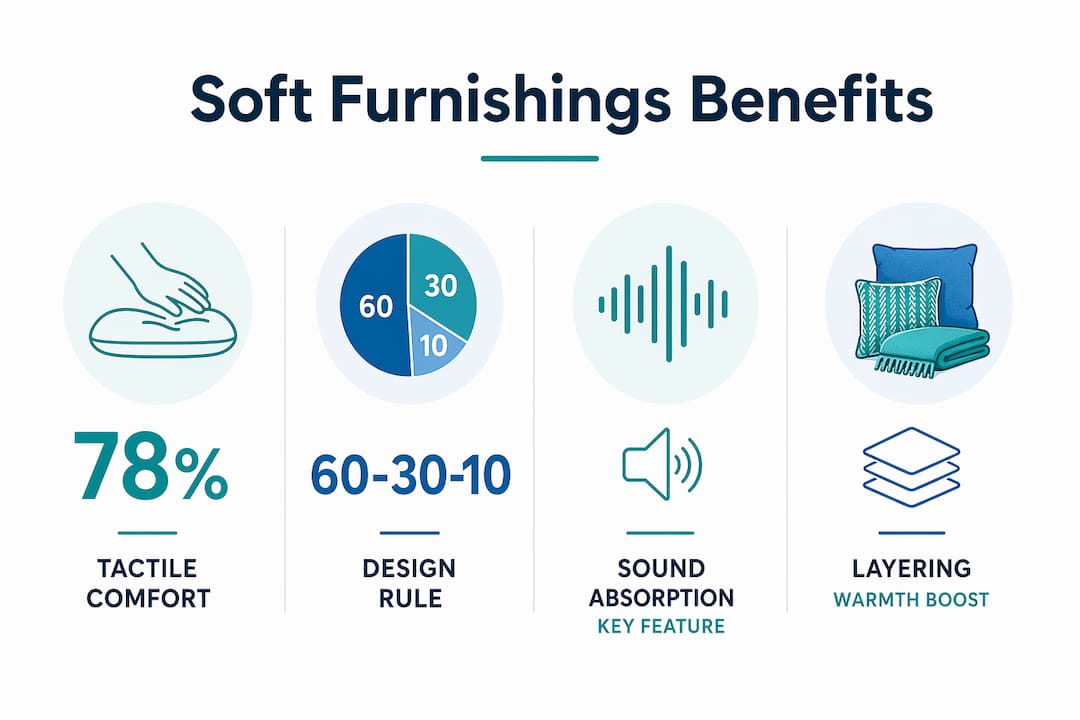
The comfort benefits of textiles are both physical and psychological. 78% of homeowners prioritize tactile comfort as a leading factor in interior design decisions in 2026. That figure reflects a broader shift toward interiors that feel good to inhabit, not just look good in photographs.
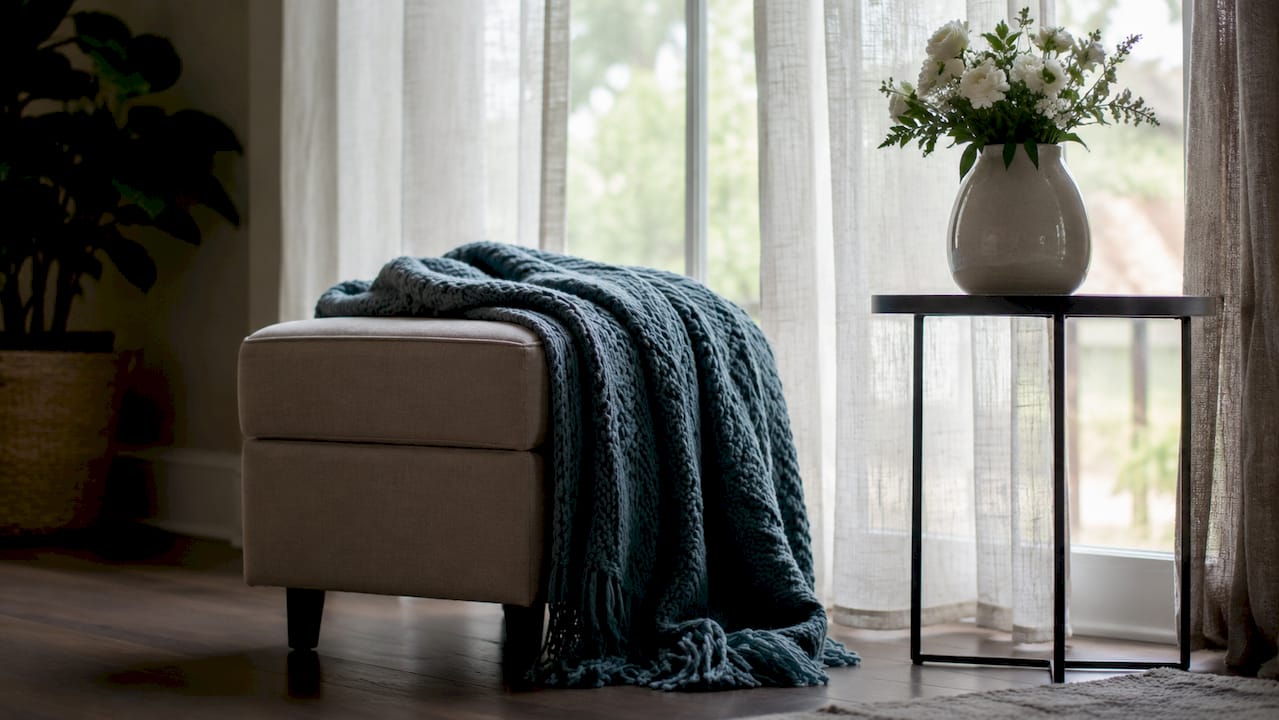
Sound is one of the most overlooked factors in home comfort. Hard surfaces like concrete floors, glass walls, and bare plaster reflect sound waves and create echo. Soft furnishings absorb those waves. An Rw/STC rating above 10 reduces perceived noise by approximately 50%, and that rating is directly influenced by the density and layering of textiles in a room. A living room with a thick rug, upholstered seating, and heavy curtains will feel noticeably quieter than the same room with bare floors and blinds.
Thermal comfort follows a similar pattern. Textiles trap air and slow heat transfer, making rooms feel warmer in winter without changing the thermostat. Experts consistently note that overuse of hard surfaces makes interiors feel cold and clinical, and that textiles restore the human-centric balance a home requires. This is especially relevant in modern open-plan spaces where hard materials dominate.
The psychological dimension matters too. Soft textures signal safety and relaxation to the nervous system. A chunky knit throw draped over a sofa communicates rest. A plush area rug in a bedroom signals that the space is for unwinding. These cues are subtle but consistent.
Key comfort benefits of soft furnishings include:
- Sound absorption: Heavy drapes, upholstered furniture, and layered rugs reduce echo and ambient noise.
- Thermal insulation: Curtains and rugs slow heat loss, improving perceived warmth.
- Tactile satisfaction: Varied textures like velvet, linen, and wool engage the senses and signal comfort.
- Psychological relaxation: Soft materials visually and physically communicate rest and safety.
Pro Tip: Layer at least three different fabric weights in a single room, such as a lightweight linen curtain, a medium-weight upholstered chair, and a heavy wool rug, to maximize both acoustic and thermal comfort simultaneously.
How do soft furnishings influence the look of a room?
Aesthetics in interior design depend heavily on texture, color, and proportion. Soft furnishings contribute to all three. A room with only hard surfaces and flat colors reads as flat and cold. Add a textured cushion, a patterned rug, or a draped throw, and the same room gains depth and visual interest. Soft furnishings add texture, color balance, and light control, tying together architectural elements that would otherwise feel disconnected.
The 60-30-10 textile rule is the most practical framework for achieving visual balance. Sixty percent of your textile presence should be a dominant anchor, such as a large sofa fabric or area rug. Thirty percent goes to secondary elements like curtains or accent chairs. Ten percent is reserved for statement details, including cushions, throws, or decorative pillows. This distribution prevents visual chaos and creates a cohesive, harmonious look without requiring professional design training.
Curtains and rugs are particularly powerful for defining zones in open-plan spaces. A rug placed under a dining table separates that area from the adjacent living zone without a wall. Floor-to-ceiling curtains draw the eye upward and make ceilings feel taller. These spatial effects are part of why texture in home decor is one of the most discussed topics among interior design enthusiasts.
| Soft furnishing type | Primary aesthetic effect |
|---|---|
| Curtains | Control light, add height, define room boundaries |
| Rugs | Anchor zones, introduce pattern, warm up flooring |
| Cushions | Add color accents, introduce texture contrast |
| Throws | Create layered depth, signal relaxation |
| Upholstery | Set the dominant color and texture tone of a room |
What are the main types of soft furnishings and their roles?
Understanding the specific contribution of each type helps you make deliberate choices rather than decorating by instinct alone.
-
Curtains and drapes: These control light, provide privacy, and absorb sound. Heavier fabrics like velvet or blackout-lined drapes offer the most acoustic and thermal benefit. For maximum sound absorption, curtains placed 90 to 110mm from the wall perform significantly better than curtains mounted flush against it. The air gap allows sound waves to dissipate rather than reflect.
-
Rugs and area rugs: Rugs define zones, protect flooring, and add the most surface area of any soft furnishing. A large rug in a living room anchors the entire seating arrangement and reduces floor-level noise transmission. Natural fibers like wool and jute offer durability alongside texture.
-
Cushions and pillows: These are the most flexible and affordable soft furnishing category. They introduce accent colors, contrast textures, and can be changed seasonally without significant cost. Cushions also contribute to home aesthetics in ways that are disproportionate to their size.
-
Throws and blankets: Throws serve a dual purpose. They add a layer of visual texture when draped over a sofa or chair, and they provide immediate physical warmth. Chunky knit throws work particularly well in living rooms and bedrooms where comfort is the priority.
-
Upholstery: Sofas, armchairs, and ottomans covered in fabric set the dominant textile tone of a room. Upholstery choices affect durability, maintenance, and the overall color palette more than any other soft furnishing category.
Mixing textures across these categories creates richness. A smooth linen sofa paired with a chunky wool throw and a patterned silk cushion creates contrast that reads as intentional and sophisticated.
Pro Tip: Before finalizing any fabric choice, test swatches under different lighting conditions throughout the day. A fabric that reads as warm beige in morning light may shift to gray under evening artificial light, changing the entire mood of the room.
Practical tips for using soft furnishings effectively
Getting the most from your textiles requires a few deliberate decisions. The benefits of soft furnishings only materialize when they are chosen and placed with intention.
- Start with the rug. In most rooms, the rug is the largest textile surface and sets the color and texture foundation. Choose it before selecting cushions or throws.
- Follow the 60-30-10 rule. Assign your dominant fabric to 60% of the visual space, your secondary fabric to 30%, and your accent pieces to 10%. This prevents any single element from overwhelming the room.
- Mix fabric weights deliberately. Pair lightweight fabrics like linen or cotton with heavier options like velvet or wool to create contrast and depth. Rooms with only one fabric weight feel flat.
- Match fabric to room function. High-traffic areas like family rooms need durable, washable fabrics. Bedrooms can accommodate more delicate textures like silk or cashmere blends.
- Refresh seasonally. Swap out cushion covers and throws between summer and winter to keep the space feeling current. This is the most cost-effective way to update your interior without purchasing new furniture.
- Layer without cluttering. Limit cushion arrangements to an odd number, typically three or five, and vary their sizes. More than five cushions on a single sofa tends to read as excessive rather than layered.
For a deeper look at how to combine these elements with lighting and layout, the guide on cozy interior layering at Newwayref covers the full picture. If you are also selecting furniture alongside your textiles, the resource on choosing furniture for comfort provides a practical framework for making both decisions together.
Key takeaways
Soft furnishings are the single most flexible and impactful tool for improving both the comfort and visual quality of a residential interior.
| Point | Details |
|---|---|
| Dual function | Soft furnishings serve both aesthetic and practical comfort roles simultaneously. |
| Acoustic benefit | Layered textiles with an Rw/STC rating above 10 can cut perceived noise by roughly 50%. |
| Visual balance | The 60-30-10 textile rule distributes fabric presence to create harmony without visual clutter. |
| Curtain placement | Mounting curtains 90 to 110mm from the wall maximizes their sound absorption performance. |
| Seasonal flexibility | Swapping cushion covers and throws is the most cost-effective way to refresh a room’s look. |
Why I think most people underestimate what textiles actually do
Most homeowners treat soft furnishings as the final step, something you add after the “real” design decisions are made. That is the wrong order. In my experience, the rooms that feel genuinely comfortable and visually coherent are the ones where textiles were considered from the start, not added as an afterthought.
The acoustic argument alone should change how people approach this. Most of us have sat in a room that felt oddly loud or echoey without understanding why. The answer is almost always a lack of soft furnishings. Hard floors, bare walls, and minimal upholstery create a room that amplifies sound rather than absorbing it. Adding a single large rug and a set of lined curtains can transform that experience without touching the architecture.
The other thing I find consistently overlooked is the emotional weight of texture. A room with only smooth, hard surfaces communicates efficiency. A room with layered textiles communicates rest. That distinction matters enormously in spaces where you are supposed to relax. You do not need expensive fabrics to achieve this. A well-placed wool throw and a few cushions in contrasting textures will do more for the feel of a room than a new piece of furniture.
The balance between style and comfort is not a compromise. It is the actual goal of good interior design, and soft furnishings are the most direct path to achieving it.
— Enn
Discover Newwayref’s curated home textile collection

Newwayref offers a thoughtfully curated selection of soft furnishings designed to help you transform your living space with both style and comfort in mind. From cushions and throws to rugs and upholstered pieces, the Newwayref home collection covers every textile category discussed in this article. Each product is selected for its design appeal and practical quality, so you get the acoustic, thermal, and aesthetic benefits without the guesswork. Browse the full range at Newwayref and find the pieces that bring your interior to life.
FAQ
What are soft furnishings in interior design?
Soft furnishings are textile-based elements used in residential interiors, including curtains, cushions, rugs, throws, and upholstered furniture. They contribute to both the aesthetic appeal and physical comfort of a space.
Why are soft furnishings important for home comfort?
Soft furnishings absorb sound, retain warmth, and provide tactile comfort. Research shows that layered textiles are foundational to perceived comfort, and rooms without them tend to feel staged and incomplete.
How do curtains improve acoustics in a room?
Curtains reduce noise by absorbing sound waves rather than reflecting them. Sound absorption improves significantly when curtains are placed with an air gap of 90 to 110mm from the wall, as confirmed by acoustic research from FibreGuard.
What is the 60-30-10 rule for soft furnishings?
The 60-30-10 rule divides textile presence into 60% dominant anchor, 30% secondary elements, and 10% statement accents. This distribution creates visual balance and prevents any single fabric from overwhelming the room.
How often should you update soft furnishings?
Seasonal updates, typically twice a year, keep interiors feeling fresh. Swapping cushion covers and throws between warm and cool seasons is the most cost-effective approach, as textiles enable quick room updates without structural changes.