

TL;DR:
- Statement furniture serves as a bold focal point, anchoring a room’s visual narrative and defining its character. Limiting each space to one standout piece creates visual harmony, personal expression, and effortless style. Choosing the right piece involves understanding its style, scale, and longevity, ensuring it complements the room’s design and purpose.
Statement furniture is defined as a single bold, eye-catching piece that acts as the central focal point of a room, anchoring its visual narrative and setting the tone for everything around it. Interior designers from studios like Studio McGee to Kelly Wearstler have long relied on this principle to give rooms a clear identity without overloading them with competing elements. The role of statement furniture goes beyond aesthetics. It creates spatial clarity, reflects personal style, and gives every other piece in the room a clear purpose. Get this one decision right, and the rest of your interior design falls into place.
What makes furniture a statement piece?
Statement furniture is defined by possessing at least two specific attributes: bold color, unique silhouette, unexpected material, or dramatic scale. A deep emerald velvet sofa, an oversized sculptural armchair in boucle, or a coffee table with an asymmetric marble top all qualify. These traits combine to create visual weight that draws the eye immediately upon entering a room.

The distinction between a statement piece and an accent piece matters. Accent furniture adds detail and texture. Statement furniture commands the room. A brass side table is an accent. A curved, forest-green sectional sofa is a statement. The difference lies in whether the piece could stand alone and still define the space.
Common statement furniture types include:
- Sofas and sectionals in bold colors or unusual shapes, such as curved or modular designs
- Armchairs with sculptural frames or unexpected upholstery like velvet or boucle
- Dining tables in raw stone, live-edge wood, or dark lacquered finishes
- Lighting fixtures that double as furniture-scale art, such as oversized pendants or arc floor lamps (explore how statement lighting transforms homes for more on this)
- Bed frames with dramatic headboards in upholstered or carved wood finishes
Pro Tip: Always test comfort before committing. A sculptural piece that is unusable as practical decor fails regardless of its visual impact. Sit in it, lean on it, and consider how it will hold up after five years of daily use.
Statement furniture design trends in 2026 favor organic shapes, earthy tones, and tactile materials. Curved silhouettes in terracotta, sage, and warm taupe are replacing the sharp-edged minimalism of the previous decade. The shift reflects a broader move toward interiors that feel personal and lived-in rather than showroom-perfect.
How does statement furniture transform a room?
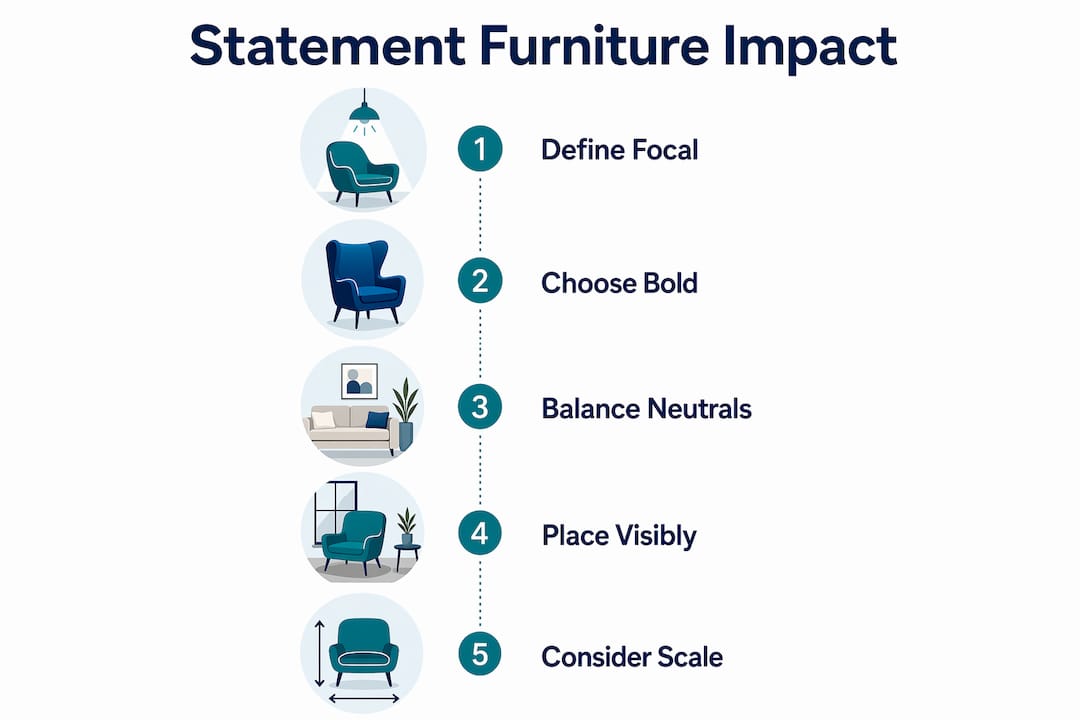
The “one statement piece” rule is the most reliable principle in residential interior design. It resolves scattered, unfocused layouts by limiting a room to a single standout item. Every other element then works in support rather than in competition. The result is a room that feels intentional and polished rather than busy.
Rooms without a clear focal point suffer from visual noise. Your eye has nowhere to land, so it keeps moving, creating a restless, unsettled feeling. A well-chosen statement piece stops that movement. It gives the room a center of gravity, and the emotional atmosphere shifts immediately. Spaces feel calmer, more confident, and more memorable.
The table below illustrates the difference clearly:
| Feature | Room without a statement piece | Room with a statement piece |
|---|---|---|
| Visual focus | Scattered, no clear anchor | Single clear focal point |
| Atmosphere | Busy or undefined | Calm, intentional, confident |
| Design effort | High, many competing elements | Lower, supporting pieces follow the lead |
| Personal expression | Diluted across many items | Concentrated in one defining piece |
| Perceived quality | Average, despite good individual pieces | Elevated, even with modest secondary items |
Successful rooms balance one bold piece with 80 to 90 percent neutral or restrained secondary elements. That ratio is not arbitrary. It reflects how human perception works. The brain identifies contrast quickly, and a single point of contrast reads as intentional. Multiple points of contrast read as chaos.
Pro Tip: Place your statement piece where it is visible from the room’s main entry point. The first object noticed sets the design tone for the entire space. Position matters as much as the piece itself.
Designers also consider scale relative to ceiling height and floor area. A statement piece that is too small for the room disappears. One that is too large overwhelms. Proportion and scale relative to room size are non-negotiable factors in making a focal point work.
How to integrate statement furniture without visual chaos
The most common mistake homeowners make is treating “statement” as a license to go loud everywhere. Real statement furniture is self-assured, not aggressive. It introduces contrast thoughtfully and reflects personality without overwhelming the senses. The difference between a room that impresses and one that exhausts is almost always restraint.
Visual harmony depends on giving your statement piece breathing room. Adequate negative space around the piece allows its details and design to be fully appreciated. Crowding it with other furniture, rugs, or decor objects cancels out its impact. Think of it the way a museum displays a sculpture: the space around the object is part of the experience.
Here are the most practical rules for integrating a statement piece without creating visual noise:
- Limit competing bold elements. One statement piece per room is the rule. A bold sofa and a bold rug and a bold wallpaper pattern is three statements fighting for attention.
- Build your color palette from the piece outward. Pull one or two colors from your statement furniture and repeat them in smaller doses through cushions, artwork, and accessories.
- Use texture as a supporting tool. Materials like velvet, boucle, wood grain, and metal add depth and personality without adding visual competition.
- Keep secondary furniture neutral. If your statement sofa is deep navy, pair it with natural linen armchairs, a light oak coffee table, and white walls. The contrast makes the sofa sing.
- Edit ruthlessly. Every item in the room should either support the statement piece or serve a clear functional purpose. If it does neither, remove it.
For bedrooms specifically, the same logic applies. A dramatic upholstered headboard works best against a clean, uncluttered backdrop. Learn more about how to decorate without overwhelming the space for room-specific guidance.
The room’s design foundation should be your statement piece, with every other element playing a supporting role. This is not a limitation. It is a creative framework that makes decision-making easier and results more consistent.
How to choose statement furniture that lasts
Choosing the right statement piece starts with understanding your room’s existing aesthetic. A raw industrial loft calls for different boldness than a light Scandinavian apartment or a warm bohemian living room. The statement piece should feel like a natural extension of the space’s personality, not a foreign object dropped in from another design world.
Follow this process to make a confident choice:
- Identify your room’s dominant style. Is it modern, bohemian, industrial, traditional, or eclectic? Your statement piece should amplify that style, not contradict it. Read more about contemporary furniture choices if your home leans modern.
- Choose the piece before buying anything else. Designers advise building room concepts around the statement piece rather than selecting it randomly after the room is furnished. Treat it as the protagonist and coordinate everything else accordingly.
- Test it in person when possible. Sit in the chair. Lie on the sofa. Run your hand across the table surface. Scale and texture read very differently in a showroom photo versus your actual room.
- Consider the long view. Trend-driven statement pieces can feel dated within three years. Choose a bold silhouette or material that has design longevity. A curved sofa in a classic neutral with interesting texture outlasts a bright-orange sofa in a trendy shape.
- Edit your existing furniture before the new piece arrives. Remove items that will compete with or crowd the new focal point. A fresh arrangement around a new statement piece often reveals that you need less furniture overall, not more.
For guidance on choosing home furniture that balances comfort and style, Newwayref offers practical resources alongside its product catalog. The importance of statement pieces lies not just in their visual impact but in how they simplify every other design decision you make.
Key takeaways
Statement furniture works because it gives a room a single, clear focal point that organizes every other design element around it, creating visual harmony and personal expression simultaneously.
| Point | Details |
|---|---|
| One statement piece per room | Limiting bold elements to one piece reduces visual competition and creates a polished, intentional look. |
| Bold attributes define the piece | Color, silhouette, material, and scale are the four traits that distinguish statement furniture from ordinary pieces. |
| Build the room outward from it | Choose your statement piece first, then coordinate color, texture, and secondary furniture around it. |
| Breathing room is non-negotiable | Negative space around the piece allows its design to register fully and prevents visual clutter. |
| Comfort must match visual impact | A sculptural piece that fails functionally undermines the entire room’s design, regardless of how it looks. |
Why statement furniture is the best design investment you can make
I have seen homeowners spend thousands on multiple mid-range furniture pieces and end up with rooms that feel forgettable. Then I have seen a single well-chosen sofa or armchair transform a space that previously had no identity at all. The math is not complicated. One great piece beats five average ones every time.
What surprises most people is how much easier the rest of the room becomes once the statement piece is in place. You stop second-guessing every cushion and side table because the focal point gives you a clear reference. Does this item support the sofa? Yes or no. That clarity is worth more than any design rule you could follow.
The mistake I see most often is confusing boldness with loudness. A statement piece does not need to be the brightest thing in the room. A beautifully proportioned walnut dining table with an unusual base can be just as commanding as a cobalt blue velvet sofa. The confidence comes from the piece’s design integrity, not its volume.
My honest advice: treat your statement furniture as an investment in your home’s identity. Buy it thoughtfully, give it space, and let it do the work. Restraint in everything else is not a compromise. It is what makes the statement piece actually land.
— Enn
Transform your space with Newwayref’s curated furniture
Newwayref offers a thoughtfully curated selection of modern furniture designed to serve as the focal point your living space deserves. From sculptural sofas and bold coffee tables to distinctive lighting fixtures, every piece is chosen with both style and function in mind. Whether you are starting a room from scratch or replacing a piece that no longer works, the collection gives you real options at accessible prices, with free shipping on orders over $50.
Browse the full range at Newwayref and find the statement piece that makes your room click into place.
FAQ
What is the role of statement furniture in interior design?
Statement furniture acts as the focal point of a room, anchoring its visual narrative and giving every other design element a clear reference point. It defines the room’s character and reflects the homeowner’s personal style in a single, deliberate choice.
How many statement pieces should a room have?
A room should have only one statement piece. The “one statement piece” rule exists because multiple bold elements compete for attention, creating visual noise rather than a polished, intentional look.
What types of furniture work best as statement pieces?
Sofas, armchairs, dining tables, bed frames, and large lighting fixtures are the most effective statement furniture types. The piece must possess at least two defining traits: bold color, unique silhouette, unexpected material, or dramatic scale.
Does statement furniture have to be expensive?
No. The impact of a statement piece comes from its design attributes, not its price tag. A well-proportioned secondhand armchair reupholstered in a striking fabric can outperform an expensive but generic sofa in terms of visual impact.
How do I choose statement furniture that fits my existing decor?
Build your room outward from the statement piece by using its color palette and finish to guide your secondary furniture and accessory choices. Choose the statement piece first, then coordinate everything else around it rather than retrofitting a bold piece into an already-furnished room.