

TL;DR:
- Effective home storage combines multiple solutions organized by usage frequency, emphasizing decluttering first.
- Start with affordable baskets and stackable boxes to test habits before investing in permanent modular systems suited to your needs.
Types of home storage solutions are the organizational tools and furniture systems designed to manage household items, reclaim wasted space, and bring lasting order to your living environment. The right combination can improve space efficiency by up to 40%, which means a two-bedroom apartment can feel significantly larger without a single renovation. Options range from multipurpose baskets and clear plastic containers to modular wall-mounted units, each serving a distinct purpose depending on your space and habits. Matching the solution to your actual routine, not an idealized one, is what separates a system that lasts from one that collapses within a month.
1. Types of home storage solutions you should know
Understanding the full range of storage options available in 2026 gives you the power to build a system that fits your home, your budget, and your lifestyle. Below are ten proven categories, each with distinct strengths.
Storage trunks
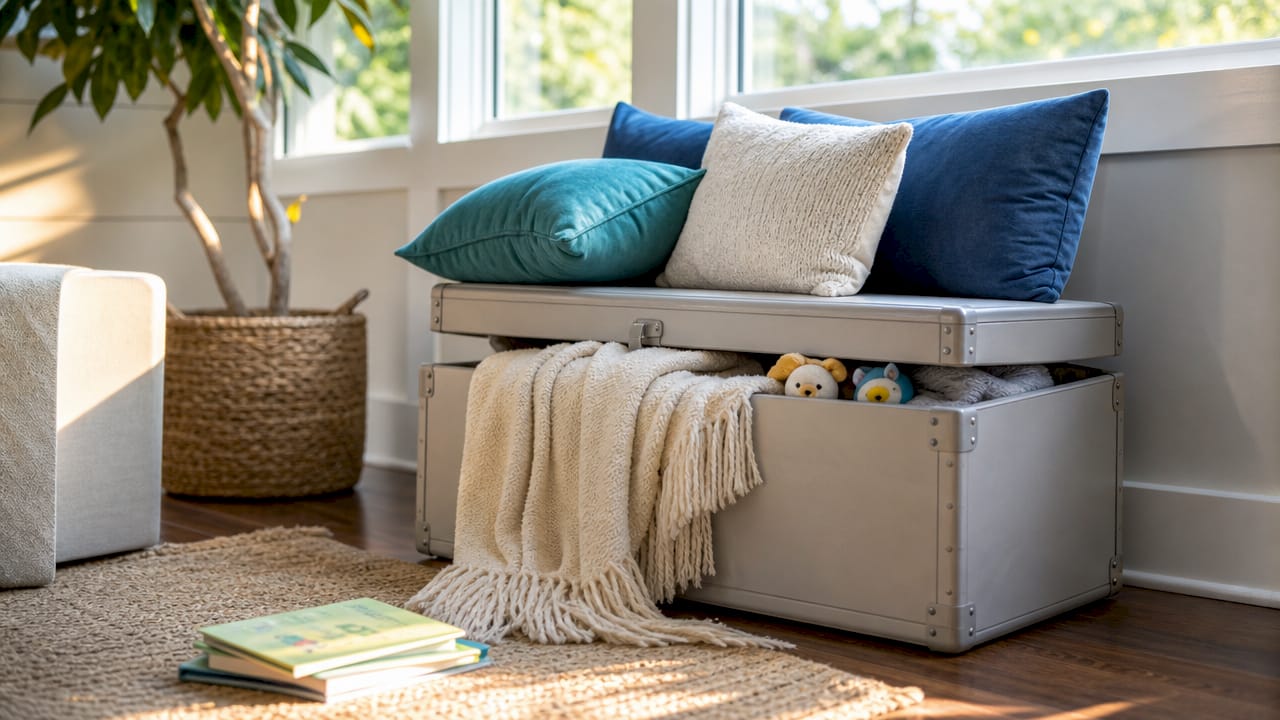
Storage trunks serve double duty as seating, coffee tables, or bedroom benches while concealing blankets, toys, or seasonal items inside. Styles range from wicker and fabric to solid wood and faux leather. They work especially well in living rooms where floor space is limited but visual clutter needs to disappear fast.
Multipurpose storage baskets
Baskets are among the most flexible storage tools available, priced between $18 and $55 depending on material and size. Woven, fabric, and collapsible versions stack neatly in closets or sit open on shelves for quick access. Their visual warmth makes them a go-to for living rooms, nurseries, and bathrooms where hard plastic feels out of place.
Rolling storage carts
Rolling carts bring mobility to your storage system. A three-tier metal cart can move from the kitchen to the craft room to the bathroom without any tools or effort. Portable rolling carts are particularly well-suited for renters who need non-permanent options that leave no marks on walls or floors.
Stackable storage boxes
Stackable boxes maximize vertical space in closets, garages, and under-stair areas. Clear versions let you identify contents at a glance, which cuts down on search time considerably. Opaque versions with labels work well for items you access less frequently, such as holiday decorations or archived documents.
Folding storage cubes
Folding fabric cubes collapse flat when not in use, making them ideal for seasonal storage or homes with fluctuating needs. They fit inside cube shelving units from brands like IKEA’s Kallax or similar modular systems, creating a clean, uniform look. At roughly $10 to $25 per set, they rank among the most affordable home storage options available.
Decorative bins
Decorative bins prioritize style without sacrificing function. Rattan, seagrass, and patterned fabric bins blend into living spaces while corralling remotes, mail, or pet supplies. The trade-off is capacity: decorative bins tend to be shallower than utilitarian alternatives, so they work best for lighter, frequently accessed items.
Storage cabinets
Storage cabinets offer the highest capacity of any freestanding option, with enclosed doors that keep contents out of sight. Modern designs from furniture retailers include built-in shelving, adjustable compartments, and slim profiles suited to hallways or bedrooms. Costs for dedicated storage rooms can reach $1,200 or more when cabinets anchor the layout, but a single hallway cabinet typically runs $80 to $300.
Wall cubby organizers
Wall-mounted cubbies use vertical space that most homes leave completely unused. Pegboards, floating shelves, and grid panels from brands like IKEA, Umbra, or similar retailers attach to walls and hold everything from kitchen tools to office supplies. Vertical storage via walls and door backs is one of the most effective ways to free up floor space in compact rooms.
Plastic storage containers
Clear plastic containers priced between $10 and $100 cover everything from small drawer organizers to large lidded bins for garage shelving. Locking lids protect contents from dust and moisture, making them the preferred choice for basements and attics. Their transparency is a genuine functional advantage: you see what you have without opening a single lid.
Modular storage units
Modular systems are the most customizable option in this category. Units from brands like IKEA’s Kallax, Closet Factory, or similar providers range from $70 to $400 and can be reconfigured as your needs change. They suit homeowners more than renters because installation often involves wall anchoring, but freestanding modular cubes work in rental situations too.
Pro Tip: Start with affordable baskets and stackable boxes to test your organizing habits before committing to modular furniture. You will learn exactly what you need before spending on permanent systems.
| Storage Type | Price Range | Best For | Portability |
|---|---|---|---|
| Multipurpose baskets | $18–$55 | Living rooms, nurseries | High |
| Plastic containers | $10–$100 | Closets, garages, attics | High |
| Rolling carts | $25–$80 | Kitchens, craft rooms | Very high |
| Storage cabinets | $80–$300+ | Bedrooms, hallways | Low |
| Modular units | $70–$400 | Full rooms, closets | Medium |
2. How to choose the right storage solution for your space
Choosing storage based on room alone is a common mistake. Organizing by category rather than by room produces more objective sorting and better use of available space. For example, grouping all craft supplies together regardless of where they currently live reveals the true volume you are dealing with before you buy a single bin.
Frequency of use is the most practical filter you can apply. Items used daily belong at arm’s reach, ideally at or below the 80 cm shelf height that ergonomic guidelines recommend for daily essentials. Monthly items go higher or farther back. Items used once a year belong in underbed storage solutions or high closet shelves.
Zone-based organizing works best when you dedicate 2 to 3 hours to a single zone rather than attempting an entire room at once. This approach builds sustainable habits because the wins are visible and manageable. Tackling a whole apartment in a weekend typically leads to exhaustion and regression within weeks.
Decluttering before purchasing storage is not optional. Buying matching containers before you purge only beautifies clutter rather than solving it. A thorough review of items not touched in 12 months, followed by donation or disposal, almost always reveals that you need less storage than you thought. Read more about why decluttering first produces better long-term results before you spend a dollar on containers.
Pro Tip: Estimate your budget by space size. A small closet organization project runs $50 to $200. A dedicated storage room with cabinets and modular units can exceed $1,200. Set a ceiling before you shop.
3. Storage solutions designed for small homes and renters
Small homes and rental units demand storage that works without permanent installation. Space-saving furniture with built-in storage, such as ottomans with hidden compartments or beds with drawers underneath, delivers the highest return per square foot of any category.
Door backs are one of the most underused surfaces in any home. Over-the-door organizers from brands like SimpleHouseware or mDesign hold shoes, cleaning supplies, pantry items, and toiletries without touching a single wall. Combined with pegboards and floating shelves, vertical space on walls can absorb a significant portion of what currently sits on counters and floors.
For renters specifically, the priority is portability and reversibility. Rolling carts, collapsible fabric cubes, stackable clear bins, and over-door organizers all move with you when your lease ends. A coffee table trunk doubles as storage and seating without requiring any assembly beyond what you can undo in minutes. These creative storage hacks cost less than a single cabinet and adapt to any floor plan.
Pro Tip: Before buying any storage product for a rental, check whether it requires wall anchoring. Freestanding and over-door options protect your security deposit while still solving the space problem.
- Over-the-door organizers: no tools, no damage, instant vertical storage
- Rolling carts: relocate as your needs shift between rooms
- Collapsible fabric cubes: store flat when not in use, saving space between seasons
- Underbed storage solutions: flat bins with wheels slide under most bed frames and hold linens, shoes, or off-season clothing
- Coffee table trunks: multifunctional pieces that store and furnish simultaneously
4. Comparing storage types: strengths, limitations, and costs
No single storage type solves every problem. The most effective home organization systems combine two or three complementary types matched to specific zones. The table below summarizes the key trade-offs to help you decide.
| Storage Type | Strength | Limitation | Ideal Use Case |
|---|---|---|---|
| Decorative bins | Stylish, blends with decor | Limited capacity | Living room, entryway |
| Stackable boxes | Space-efficient, transparent | Rigid sizing | Closets, garages |
| Modular units | Fully customizable | Higher cost, needs anchoring | Dedicated storage rooms |
| Rolling carts | Highly mobile | Smaller capacity per tier | Kitchens, craft spaces |
| Storage cabinets | High capacity, concealed | Heavy, low portability | Bedrooms, hallways |
| Folding cubes | Affordable, collapsible | Less durable long-term | Seasonal storage |
Affordable, flexible options like baskets, stackable boxes, and decorative bins should come before long-term investments like cabinets and modular systems. This sequencing lets you test your organizing habits before locking in a layout. Families with young children benefit most from rolling carts and labeled bins at low heights, while couples in studio apartments tend to get the most value from vertical wall systems and underbed storage.
Mixing types is not just acceptable. It is the recommended approach. A bedroom might use a modular closet system for clothes, clear plastic bins on the top shelf for seasonal items, and a fabric basket on the nightstand for daily essentials. Each type handles a different frequency and category of item, which is exactly how best closet storage options are designed to function.
Key takeaways
The most effective home storage system combines multiple solution types organized by frequency of use, not by room, and always starts with decluttering before purchasing.
| Point | Details |
|---|---|
| Declutter before buying | Purchasing storage before purging only relocates clutter rather than eliminating it. |
| Organize by category and frequency | Daily items belong at arm’s reach; seasonal items go high or far back. |
| Start affordable, then scale | Begin with baskets and bins before investing in modular cabinets or built-in systems. |
| Renters need portable options | Rolling carts, over-door organizers, and collapsible cubes move with you at lease end. |
| Mix storage types by zone | No single type covers every need; combining two or three types per zone produces the best results. |
What I’ve learned from watching people organize their homes
Most people approach home organization backwards. They buy the matching containers first, arrange them beautifully, and then wonder why the system falls apart within three weeks. The problem is not the containers. The problem is that organizing systems built around aspirational routines rather than actual ones are designed to fail.
What actually works is unglamorous. You spend an afternoon pulling everything out of one zone, discarding what you have not touched in a year, and then deciding what storage format fits what remains. That sequence matters more than the brand of bin you choose or whether your labels are printed or handwritten.
I have also noticed that people consistently overestimate how much storage they need. A thorough purge almost always reveals that the real problem is volume, not a lack of containers. Once the volume is right, even basic stackable boxes from a dollar store do the job.
The one place I do recommend spending real money is on modular systems, but only after you have lived with a simpler setup for at least two months. By then, you know exactly which zones need the most capacity, which items you reach for daily, and where the current system breaks down. That knowledge makes a $200 modular investment far more precise than a $400 guess made on day one.
Start with one zone. Get it right. Then move to the next. That is the entire system.
— Enn
Transform your space with Newwayref’s storage collection
Newwayref offers a thoughtfully curated selection of storage furniture and home organization products designed for modern homes of every size. From multipurpose baskets and stackable containers to modular shelving units and storage cabinets, you will find options that fit both your space and your budget. Whether you are furnishing a studio apartment or organizing a family home, Newwayref’s product range covers the full spectrum of storage needs. Free shipping is available on orders over $50, making it easy to start small and build your system over time. Visit Newwayref to browse the full collection and find the right fit for your home.
FAQ
What are the main types of home storage solutions?
The main types include storage trunks, multipurpose baskets, rolling carts, stackable boxes, folding cubes, decorative bins, storage cabinets, wall cubbies, plastic containers, and modular units. Each serves a different space, budget, and frequency-of-use need.
What storage works best for small spaces and renters?
Rolling carts, over-the-door organizers, collapsible fabric cubes, and underbed storage solutions work best for renters because they require no permanent installation and move easily at the end of a lease.
Should I declutter before buying storage products?
Yes. Buying storage before decluttering only beautifies clutter rather than solving it. Purge items unused in the past 12 months first, then assess what storage format fits what remains.
How much does home storage typically cost?
Costs range from $50 to $200 for a small closet organization project and can exceed $1,200 for a dedicated storage room with cabinets and modular units, depending on the products selected.
What is the most affordable home storage option?
Multipurpose baskets ($18 to $55) and clear plastic containers ($10 to $100) are the most affordable starting points, offering flexibility and visibility without a large upfront investment.