

TL;DR:
- Choosing the right shoe cabinet depends on your hallway width, household size, and material preferences.
- Proper ventilation and space-saving designs help prolong shoe life and maintain a tidy entryway.
Types of shoe cabinets are classifications based on design, storage style, and functionality that help you organize shoes neatly and enhance your entryway or storage space. The right shoe cabinet does more than hide clutter. It protects your footwear from dust, controls odors, and adds a finished look to your home. Whether you live in a compact apartment or a spacious house, the style you choose determines how well your entryway actually works. This guide covers every major shoe cabinet design, from tilt-out units to wall-mounted floating models, so you can pick the one that fits your space and your life.
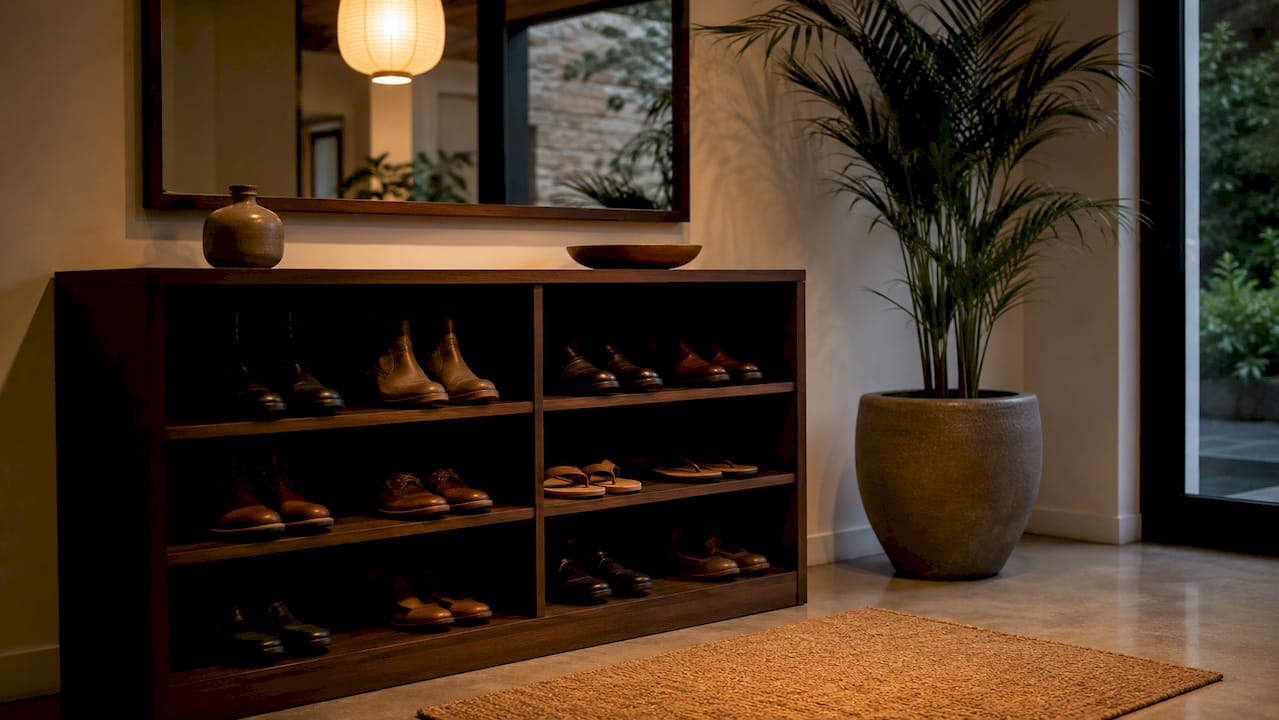
1. What are the main types of shoe cabinets?
Shoe storage furniture falls into several distinct categories, each built around a different storage priority. Knowing the difference between them saves you from buying the wrong piece.
- Tilt-out shoe cabinets: Compartments tilt forward to reveal shoes without requiring door swing space. Tilt-out designs provide a slim profile and easy access, making them ideal for narrow entryways and modern homes. They look like a flat panel when closed, which keeps your entryway looking clean.
- Multi-door freestanding cabinets: These units come in 3, 4, or 5 door configurations to accommodate multiple users. Multi-door freestanding units offer large storage capacity suitable for families with many shoes. A 4-door cabinet can typically hold 16 or more pairs depending on shelf spacing.
- Wall-mounted shoe cabinets: Mounted units do not contact the floor, making cleaning easier and entryways feel more open. Wall-mounted cabinets free floor space and create a minimalist, floating effect that works well in small apartments or condos.
- Shoe benches: These combine seating and storage, providing practical entryway furniture with closed compartments or open shelving below. Shoe benches offer dual functionality and contribute to home comfort. They are especially useful in mudrooms or family entryways where people sit to put on shoes.
- Open shoe racks: These are the most affordable and accessible option. Shoes stay visible and easy to grab, but they collect dust faster than closed cabinets. Open racks work best inside closets or utility rooms.
- Rotating shoe cabinets: A 360-degree rotating design lets you spin the unit to access shoes on all sides. This style maximizes vertical space and works well in corners or walk-in closets.
Each style suits a different living situation. Renters in small spaces gravitate toward wall-mounted or tilt-out models. Families with large shoe collections benefit most from multi-door freestanding units.
2. How do shoe cabinet door types affect functionality and space use?
The door mechanism on a shoe cabinet directly controls how much floor space the cabinet requires and how easy it is to use daily. Selecting the wrong door style for your hallway width is one of the most common mistakes buyers make.
| Door Style | Best For | Space Needed | Key Advantage |
|---|---|---|---|
| Sliding doors | Narrow hallways | Minimal | No door swing required |
| Swing doors | Spacious entryways | Moderate to large | Wide opening, easy access |
| Tilt-out doors | Slim profiles | Minimal | Shoes displayed at angle |
| Louvered/ventilated | Odor control | Any | Airflow prevents moisture |
| Flip-down/flip-up | Wall-mounted units | Minimal | Doubles as a shelf surface |
| Folding doors | Medium spaces | Low to moderate | Compact when open |
Sliding doors are preferred in ultra-narrow hallways because they open without swinging into the room. That single feature makes them the go-to choice for apartment entryways under 36 inches wide. Swing doors require larger clearance and suit bigger, open entryways where the door can open fully without obstruction.
Louvered or ventilated doors allow air circulation that prevents odors and moisture buildup inside enclosed cabinets. Trapped moisture degrades shoe materials over time, so ventilation is not just a comfort feature. It actively protects your footwear investment.
2026 industry guidance emphasizes selecting door styles based on floor clearance and hallway width for optimal usability. Measure your entryway before you buy, not after.
Pro Tip: Measure the full arc of a swing door before purchasing. A door that opens 18 inches into a hallway can block foot traffic entirely in a narrow space.
3. What are the best space-saving shoe cabinet designs?
Space-saving shoe cabinets solve a specific problem: storing a meaningful number of shoes without consuming floor area that your entryway cannot spare. Several design approaches accomplish this effectively.
- Wall-mounted and floating cabinets attach directly to the wall, leaving the floor completely clear. This makes the entryway feel larger and simplifies sweeping or mopping. They work especially well in apartments where floor space is limited. Pair them with a small bench below for a complete entryway setup.
- Vertical tall cabinets stack multiple narrow shelves in a single column. A cabinet that is 70 inches tall but only 12 inches deep holds a surprising number of pairs without extending far into the room. These fit well beside a door or in a corner.
- Combination furniture merges shoe storage with another function. A cabinet with an integrated mirror on the door serves double duty. A unit with a built-in coat hanger adds even more utility. The White Brown Shoe Cabinet with 3 Doors, 2 Drawers, and Hanger is a strong example of this approach.
- Modular and stackable units let you start small and add sections as your collection grows. This is particularly useful for renters who move frequently and need furniture that adapts to different floor plans.
- Adjustable dividers inside organizer units allow customized compartment sizes for different shoe types, from flats to sneakers to boots. Fixed shelves often waste space because shoes vary so much in height and width.
The 360 Degree Rotating Shoe Cabinet is another strong space-saving pick. It uses vertical height efficiently and lets you access every pair by spinning the unit rather than opening multiple doors.
4. How do materials and ventilation choices influence durability and shoe care?
The material a shoe cabinet is made from determines how long it lasts, how it looks in your home, and how well it protects your shoes. Ventilation is equally important and often overlooked at the point of purchase.
Wood cabinets offer the best combination of aesthetic appeal and structural durability. Solid wood and engineered wood (MDF with veneer) are the two most common options. Solid wood handles humidity better over time. MDF is more affordable and resists warping in stable indoor environments. Wooden cabinet doors come in styles including recessed, raised, relief, mirror, and ventilated designs to suit both aesthetic and functional needs.
Metal cabinets provide sturdiness and a modern industrial look. They resist scratches and are easy to wipe clean. Metal does not breathe, so ventilation cutouts or louvered panels matter even more in metal designs.
Plastic and fabric organizers are lightweight and inexpensive. They work well inside closets but rarely hold up as standalone entryway furniture. Use them for secondary storage rather than as your primary shoe cabinet.
- Choose wood for living areas and entryways where appearance matters.
- Choose metal for utility spaces, garages, or mudrooms.
- Choose plastic or fabric organizers for inside closets only.
- Always prioritize ventilated louvered doors for enclosed cabinets to prevent odors and moisture damage that degrade shoe integrity over time.
Pro Tip: Place a small packet of activated charcoal inside any closed shoe cabinet. It absorbs moisture and neutralizes odors far better than sprays, and it lasts for months.
Key takeaways
The most effective shoe cabinet is the one that matches your door clearance, household size, and material preference before anything else.
| Point | Details |
|---|---|
| Match door style to hallway width | Sliding doors suit narrow spaces; swing doors need open clearance to function well. |
| Prioritize ventilation in closed cabinets | Louvered or ventilated doors prevent moisture and odor damage to your shoes. |
| Use wall-mounted units for small spaces | Floating cabinets free floor space and make entryways feel larger. |
| Choose multi-door units for families | Cabinets with 3, 4, or 5 doors provide enough capacity for multiple users. |
| Match material to location | Wood works best in living areas; metal suits utility spaces; plastic belongs inside closets. |
What I’ve learned from years of watching people buy the wrong shoe cabinet
Most people buy a shoe cabinet based on how it looks in a product photo. That is the wrong starting point. The first question should always be: how wide is your hallway, and which direction does your front door open?
I have seen beautifully designed swing-door cabinets become unusable because the door arc collides with the front door. A tilt-out or sliding-door model in the same space would have worked perfectly. The door mechanism is the most functional decision you make, and most buyers treat it as an afterthought.
The second mistake is ignoring ventilation. Closed cabinets without airflow turn into odor traps within weeks, especially in humid climates. A louvered door panel costs almost nothing extra at the manufacturing level, but it makes a real difference in how your entryway smells and how long your shoes last.
My honest recommendation for most homeowners: start with a shoe storage guide before you shop. Know your pair count, your hallway width, and whether you need seating. Then choose the cabinet style that checks all three boxes. A shoe bench with a ventilated top cabinet is the single most practical combination for a family entryway. It gives you seating, closed storage, and airflow in one piece.
For renters, a wall-mounted cabinet paired with a modular open rack inside the closet covers most situations without requiring permanent installation. The space-saving furniture options available today make it easy to build a complete entryway system without committing to heavy, fixed furniture.
— Enn
Find your perfect shoe cabinet at Newwayref
Newwayref carries a thoughtfully curated selection of shoe cabinets designed to suit every entryway, from compact apartments to large family homes. You will find tilt-out models, multi-door freestanding units, and wall-mounted designs in modern finishes that complement any decor.
Every cabinet in the Newwayref collection is selected for both functionality and design appeal. Whether you need a spacious 4-door cabinet for a growing collection or a slim tilt-out unit for a narrow hallway, you will find the right fit. Browse the full range at Newwayref and transform your entryway into a space that actually works for you.
FAQ
What is the most space-saving type of shoe cabinet?
Wall-mounted shoe cabinets are the most space-saving option because they attach to the wall and leave the floor completely clear. Tilt-out models are the best freestanding alternative for narrow entryways.
Which door style is best for a narrow hallway?
Sliding doors are the best choice for narrow hallways because they open without swinging into the room. Tilt-out doors are a close second for the same reason.
Do shoe cabinets need ventilation?
Yes. Enclosed shoe cabinets without ventilation trap moisture and odors that damage shoe materials over time. Louvered or ventilated door panels solve this problem by allowing continuous airflow.
How many pairs does a standard multi-door shoe cabinet hold?
A standard multi-door freestanding cabinet with 3 to 5 tilt-out compartments typically holds 12 to 20 pairs, depending on shelf spacing and shoe size. Larger units with 5 doors can accommodate an entire family’s collection.
What material is best for a shoe cabinet in an entryway?
Wood or engineered wood is the best material for an entryway shoe cabinet. It offers durability, a finished appearance, and holds up well in stable indoor environments. Metal works better in utility spaces like mudrooms or garages.