

TL;DR:
- Accent furniture adds character, contrast, and visual interest to a room without replacing primary pieces, creating a balanced and intentional space. Proper selection involves matching scale, using the 60-30-10 color rule, and deliberately mixing textures to enhance the room’s personality and cohesion. Strategic placement of accent furniture in each room elevates its style, mood, and functionality, making your space feel personalized and complete.
Most people walk into a well-decorated room and feel something without knowing why. The colors feel balanced. The space has personality. Nothing looks random. What is accent furniture doing in that equation? More than you might expect. Accent furniture is the category of pieces that adds character, contrast, and visual interest to a room without serving as the main functional furniture. It is not clutter. It is the design element that makes your space feel intentional, layered, and genuinely yours.
Table of Contents
- Key takeaways
- What is accent furniture, exactly
- Types and styles of accent furniture
- How to choose accent furniture for your home
- Placing accent furniture room by room
- My honest take on accent furniture
- Find your accent pieces at Newwayref
- FAQ
Key takeaways
| Point | Details |
|---|---|
| Accent furniture definition | Secondary pieces that add character, contrast, and focal points without replacing core furniture. |
| Types to know | Accent chairs, side tables, ottomans, benches, and statement cabinets cover most common uses. |
| Choosing by scale | Match piece size to room scale and proportion to avoid pieces that look like mistakes. |
| Color coordination | The 60-30-10 rule helps accent furniture add energy without overwhelming the overall palette. |
| Avoid the showroom look | Mix materials and textures deliberately to create a lived-in, personalized space. |
What is accent furniture, exactly
The accent furniture definition is straightforward: these are secondary pieces that support, contrast, and enrich a room’s primary furniture without replacing it. Your sofa, bed, and dining table are your anchors. Accent furniture works around them.
“Accent pieces are the ‘haute couture’ of a room, commanding attention while harmonizing with overall design to complete the space.”
What qualifies as accent furniture covers a wide territory. A velvet accent chair in the corner of a living room. A sculptural side table next to a sofa. An antique bench at the foot of a bed. A bold cabinet in an entryway. All of these share one trait: they draw the eye and add something distinct to the room that the primary furniture alone cannot provide.
Here is what accent furniture actually does in a room:
- Creates focal points. Accent furniture serves as a centralized visual anchor, drawing attention and organizing how people move through and experience a space.
- Adds contrast and depth. A light-colored room benefits from one darker, textured piece. A minimalist setup comes alive with one expressive chair.
- Communicates personality. Your sofa tells people you own a sofa. Your accent pieces tell people who you are.
- Improves proportion. Strategically placed smaller pieces balance large furniture and prevent rooms from feeling empty or one-dimensional.
The difference between accent furniture and primary furniture is function. A primary piece carries the room’s workload: seating, sleeping, storage, dining. An accent piece supports the room’s mood. You could technically live without an accent chair. You cannot live without the sofa. But remove the accent chair and you will feel the loss.
Types and styles of accent furniture
Understanding the types of accent furniture helps you make smarter choices. Each type serves a different purpose, fits different rooms, and suits different styles.
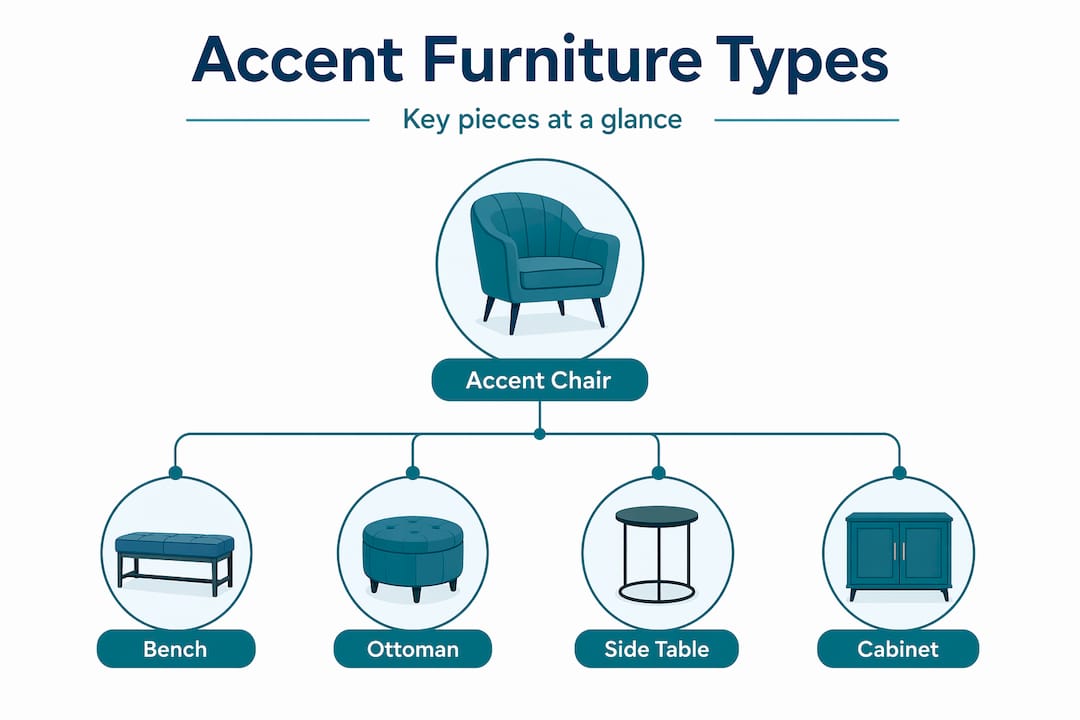
| Type | Best style fit | Typical use case |
|---|---|---|
| Accent chair | Modern, vintage, eclectic | Extra seating, reading corner, bedroom anchor |
| Side table | Rustic, glam, contemporary | Beside sofa or bed, holding lamps and drinks |
| Ottoman | Boho, traditional, modern | Footrest, coffee table alternative, extra seating |
| Entryway bench | Farmhouse, transitional | Seating while putting on shoes, layering textiles |
| Statement cabinet | Glam, eclectic, modern | Storage with visual impact in living rooms or hallways |
Accent chairs are among the most popular choices. Accent chair sets function as secondary seating that adds style, color, texture, or contrast to primary furniture in living rooms, bedrooms, and entryways. They also create conversational zones within open-plan spaces, which makes them especially practical in modern homes.
Style matters a lot here. A room full of mid-century modern furniture calls for an accent chair with tapered legs and clean lines. A bohemian living room welcomes a rattan side table or a low pouf. A glamorous bedroom benefits from a tufted velvet bench. The accent furniture style you choose either reinforces the room’s existing mood or introduces a deliberate contrast that makes both elements more interesting.
Pro Tip: Do not match your accent pieces too precisely to your main furniture. A small visual tension, like pairing a brass side table with a gray linen sofa, is what gives a room its depth. Perfect matching reads as flat.
The US accent chair set market is forecast to grow 5 to 8% through 2035, driven largely by consumers choosing higher-end fabric grades and artisan styles. This reflects a broader shift toward treating accent furniture as a real investment rather than an afterthought.
How to choose accent furniture for your home
Choosing accent furniture well comes down to four practical considerations. Get these right and your pieces will feel cohesive. Get them wrong and your room will look like a random collection of items.
-
Match scale to the room. A large accent cabinet in a small bedroom dominates the space. A tiny side table next to a sprawling sectional disappears. Before buying, measure your room and note the scale of existing furniture. Your accent piece should be proportionally relevant without competing for dominance.
-
Use the 60-30-10 color rule. In a well-designed room, 60% of the color comes from dominant surfaces like walls and flooring, 30% from secondary furniture, and 10% from accents. That final 10% color splash is where your accent furniture lives. A bold emerald green ottoman or a rust-colored accent chair can tie an entire palette together without overwhelming it.
-
Mix materials and textures deliberately. Mixing wood with metal, or velvet with leather, breaks the uniformity that makes rooms look like showrooms. If your primary furniture is all smooth surfaces and neutral tones, introduce an accent piece with texture. A woven ottoman, a matte ceramic lamp base, or a reclaimed wood side table all add the tactile contrast that makes spaces feel lived-in.
-
Create a visual narrative, not just fill space. Treating accent furniture as mere space-fillers is one of the most common decorating mistakes. Small isolated pieces placed without intention look like mistakes rather than design choices. Ask yourself: what is this piece adding to the story of this room?
Pro Tip: Before buying an accent piece, identify one specific role for it. Is it adding color? Creating a reading corner? Grounding an awkward empty wall? A piece with a clear purpose always looks better than one placed because “it seemed like a good idea.”
You can learn more about balancing comfort and style when selecting furniture for your home, which applies directly to the accent furniture selection process.
Placing accent furniture room by room
Knowing where to put accent furniture is just as important as knowing what to buy. Different rooms have different needs, and the same piece can succeed or fail depending on placement.
Living room. This is where accent furniture has the most impact. A pair of accent chairs opposite the sofa creates a conversational zone. A bold coffee table alternative, like a large ottoman with a tray, adds function and softness. Use accent tables strategically beside your sofa to anchor lighting and add surface variety.
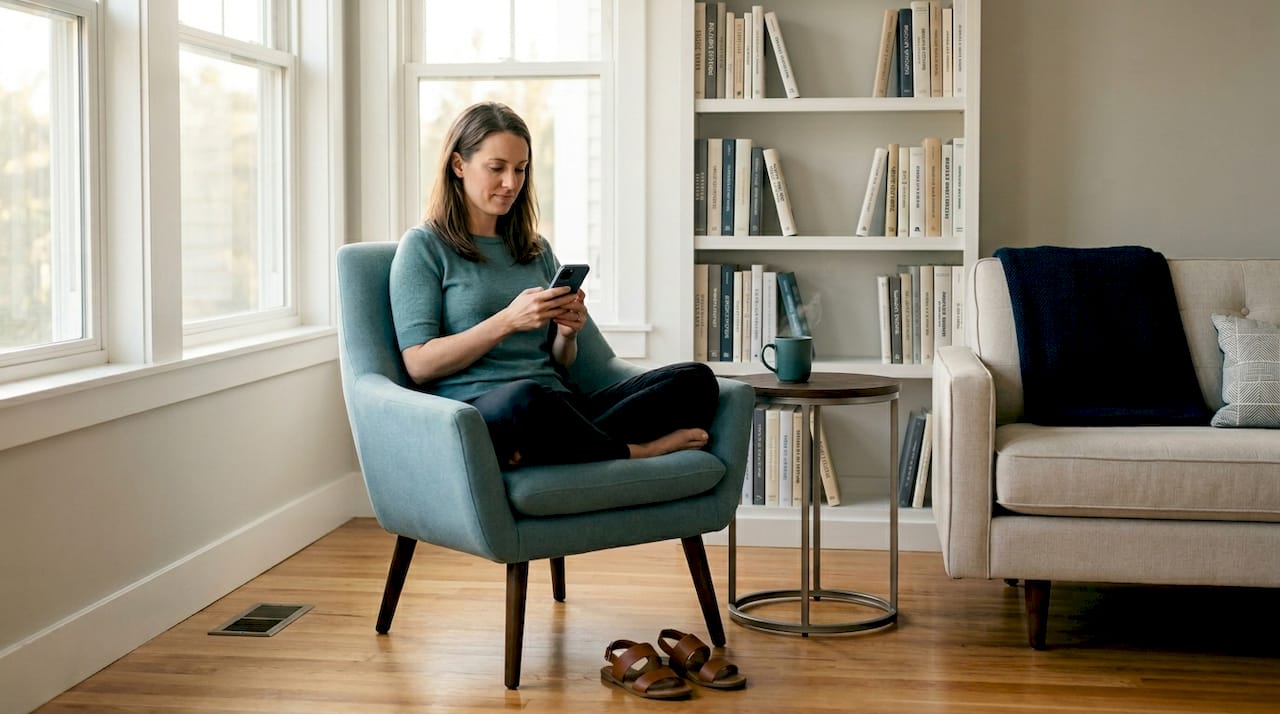
Bedroom. An accent bench at the foot of the bed is one of the most underused pieces in home decor. It adds visual weight to the bed without cluttering the room. A statement chair in the corner with a small floor lamp creates a reading nook that makes the room feel complete.
Entryway. Your entryway sets the tone for your entire home. A narrow console table with a mirror above it, or a bench with a basket underneath, adds both function and personality. This is the one room where an accent piece does the heaviest lifting with the least square footage.
Kitchen and dining area. A pair of bar stools with a distinctive finish, or a small side cabinet in the dining room, adds accent value without disrupting function. Textural contrast matters here too. A rattan stool beside a modern kitchen island pulls the warmth in without clashing.
Here is a quick list of placement dos and don’ts:
- Do position accent chairs at angles, not flat against walls. Angled placement feels dynamic and intentional.
- Do group accent pieces when possible. A side table, a lamp, and a small plant together read as a curated vignette.
- Don’t scatter accent pieces randomly across a room. Three unrelated small pieces in three separate corners create visual noise.
- Don’t block natural pathways. Accent furniture should enhance flow, not interrupt it.
- Do use accent pieces to address awkward spaces. An empty corner becomes a reading nook. A dead hallway gains presence with a console table.
My honest take on accent furniture
I’ve watched people spend significant money on sofas, beds, and dining tables, then add whatever was on sale for accents. The result is always the same: a room that looks almost right but never quite lands. The key to styling accent pieces is intentionality, and that is the one thing you cannot shortcut.
What I’ve learned from paying attention to rooms that genuinely work is this: accent furniture is not a finishing touch. It is part of the design plan from the beginning. The best rooms I’ve seen were built with a clear idea of what accent pieces would do before the main furniture was even placed.
I also see people overcorrect. They read that accent pieces add personality and then buy five statement items that fight each other for attention. One strong accent piece in a room does more than five competing ones. Think of it the way you would think about accessories in an outfit. One great bag completes a look. Five statement bags at once creates chaos.
The furniture category getting the most interesting right now is accent chairs, and I think the reason is that they are the easiest way to introduce a bold color or texture without committing to it across the whole room. A chartreuse velvet accent chair is a risk you can take. Chartreuse walls are not. That flexibility is what makes accent chairs worth investing in.
My advice: decide what you want each accent piece to accomplish before you buy it. Then find the piece that does that job beautifully.
— Enn
Find your accent pieces at Newwayref
If you have been inspired to rethink your space, Newwayref offers a thoughtfully curated selection of home furniture and decor products designed to help you do exactly that. From modern accent chairs and side tables to statement cabinets and stylish ottomans, the collection covers every type and style covered in this guide. Each piece is chosen with design appeal and real-home usability in mind. Browse the full furniture collection to find accent pieces that suit your room’s scale, style, and color palette. Free shipping is available on orders over $50, making it easy to experiment without the extra cost. Your space deserves pieces that are worth noticing.
FAQ
What is the accent furniture definition?
Accent furniture refers to secondary pieces that add visual interest, character, and contrast to a room without serving as primary functional furniture. Common examples include accent chairs, side tables, ottomans, and entryway benches.
What are the most common types of accent furniture?
The most common types include accent chairs, side tables, ottomans, benches, and statement cabinets. Each serves a different purpose and fits different rooms and design styles.
How do I choose accent furniture that fits my decor?
Focus on scale, proportion, and color using the 60-30-10 rule, and mix materials deliberately to avoid a flat, uniform look. Every piece should have a clear visual role in the room.
How does accent furniture differ from primary furniture?
Primary furniture carries the room’s functional load, such as seating, sleeping, and storage. Accent furniture supports the room’s mood, personality, and visual balance without replacing those core pieces.
Can accent furniture work in small rooms?
Yes. In small rooms, accent furniture should be scaled down and placed with intention. One well-chosen accent chair or a compact side table can add significant character without crowding the space.