

Finding stylish furniture that actually fits your city apartment can feel overwhelming for young professionals juggling work and personal life. Contemporary furniture stands out because it blends minimalist design with multi-functional convenience and a clear focus on sustainability. As urban living spaces shrink, the need for aesthetic, adaptable, and environmentally conscious pieces has never been greater. Discover how contemporary furniture helps you build a modern home that truly reflects your fast-paced, design-driven lifestyle.
Table of Contents
- Defining Contemporary Furniture Today
- Distinct Types And Signature Styles
- Key Characteristics And Materials Used
- Why Contemporary Furniture Suits Urban Living
- Practical Buying Tips And Common Mistakes
Key Takeaways
| Point | Details |
|---|---|
| Contemporary Furniture Design | Represents a blend of functionality, aesthetics, and sustainability, reflecting modern lifestyles and technology. |
| Diverse Styles | Encompasses various styles like Industrial Modern and Minimalist, allowing personalization while adhering to contemporary principles. |
| Material Innovation | Focuses on eco-friendly materials and advanced manufacturing techniques that prioritize both aesthetics and environmental impact. |
| Urban Living Solutions | Addresses the challenges of compact spaces with multifunctional, flexible designs that cater to dynamic lifestyles. |
Defining Contemporary Furniture Today
Contemporary furniture represents more than just functional home decor - it’s a dynamic design philosophy reflecting current lifestyles, technological innovations, and aesthetic preferences. Evolving furniture design has transformed from purely utilitarian objects into artistic expressions that capture societal values and technological advances.
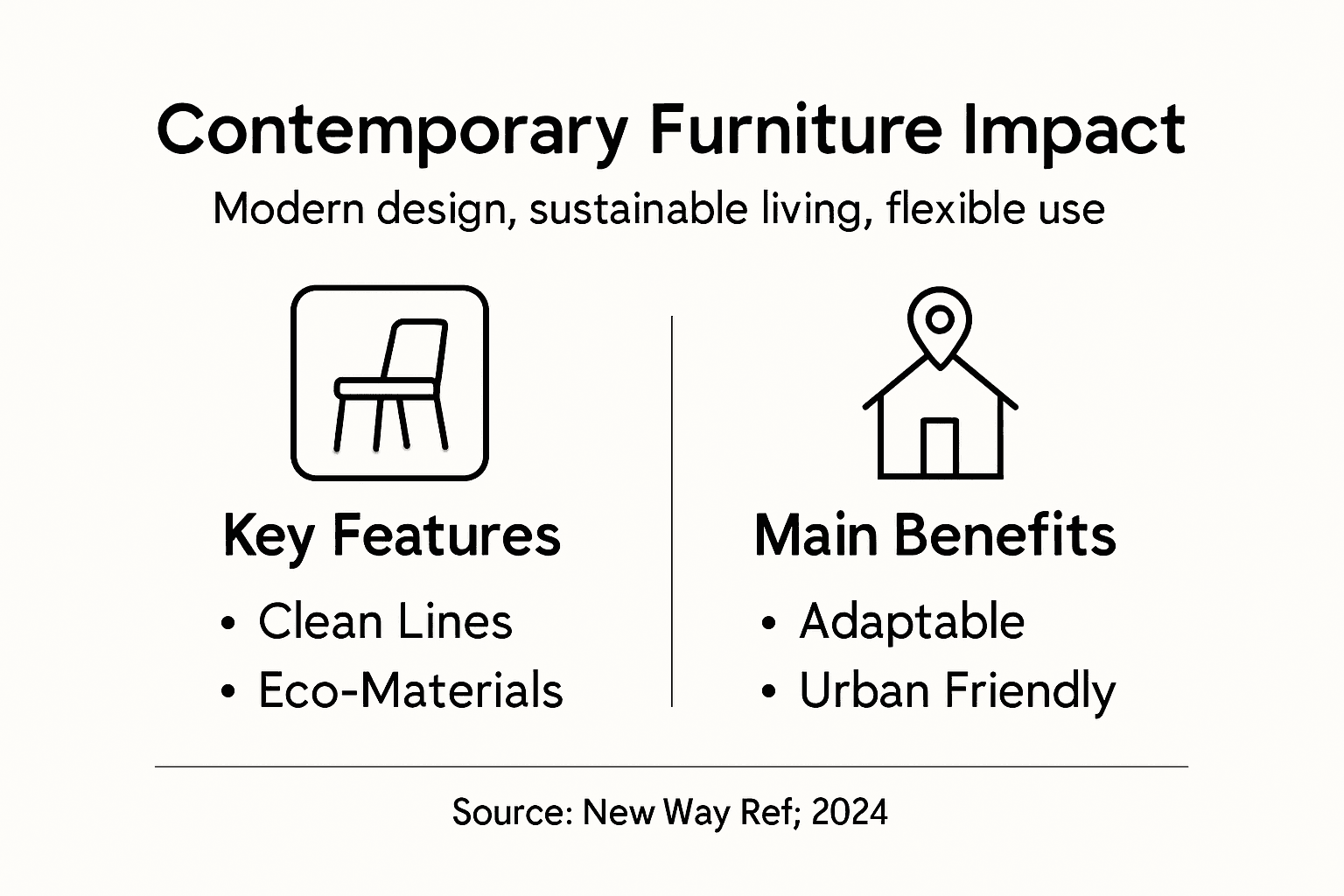
Today’s contemporary furniture is characterized by several distinctive features:
- Minimalist design principles
- Clean, uncluttered lines
- Multifunctional capabilities
- Focus on ergonomic comfort
- Integration of smart materials and technologies
Unlike traditional furniture styles tied to specific historical periods, contemporary design remains fluid and responsive to current trends. It blends elements from various design traditions while maintaining a core commitment to simplicity, functionality, and aesthetic sophistication. Contemporary styles strategically combine neutral color palettes with innovative materials like polished metal, glass, and natural wood.
The contemporary furniture movement prioritizes not just visual appeal, but also sustainability and ethical manufacturing. Designers increasingly incorporate eco-friendly materials, digital fabrication techniques, and production methods that minimize environmental impact. This approach transforms furniture from mere objects into thoughtful statements about modern living and responsible consumption.
Pro tip: When selecting contemporary furniture, prioritize pieces that offer versatility, clean aesthetics, and sustainable manufacturing to create a living space that feels both modern and conscientious.
Distinct Types and Signature Styles
Contemporary furniture encompasses several distinctive styles that reflect evolving design philosophies and functional needs. Furniture types demonstrate remarkable diversity in their approach to form, function, and aesthetic expression, ranging from industrial modern to minimalist configurations.
The key contemporary furniture styles include:
- Industrial Modern: Characterized by raw materials like exposed metal, reclaimed wood, and utilitarian design
- Minimalist: Emphasizing clean lines, neutral colors, and reduction of unnecessary elements
- Scandinavian: Focusing on simplicity, functionality, and light color palettes
- Modular: Featuring adaptable, configurable pieces that transform to suit changing spaces
- Mid-Century Modern: Incorporating organic curves, functional design, and retro-inspired aesthetics
Each style brings unique characteristics to interior design, allowing individuals to express personal taste while maintaining contemporary principles of simplicity and functionality. These styles often blend elements from different design traditions, creating hybrid approaches that feel both timeless and current.
The evolution of contemporary furniture styles reflects broader societal shifts towards flexibility, sustainability, and personalized living environments. Designers continuously reinterpret traditional concepts, integrating advanced materials and innovative manufacturing techniques to create furniture that is not just visually appealing, but also responsive to modern lifestyle demands.
Pro tip: When selecting contemporary furniture, mix styles strategically to create a personalized space that feels cohesive yet individually expressive.
Explore how contemporary furniture styles differ in their core influences and design impact:
| Style | Influential Materials | Unique Design Traits | Typical Purpose |
|---|---|---|---|
| Industrial Modern | Reclaimed wood, metal | Raw finishes, exposed construction | Loft spaces, creative studios |
| Minimalist | Clean woods, matte metal | Uncluttered, calming visual simplicity | Home offices, quiet retreats |
| Scandinavian | Pale wood, soft textiles | Light hues, cozy functionality | Living rooms, family spaces |
| Modular | Plastic, lightweight alloys | Configurable, easily movable pieces | Urban apartments, flexible areas |
| Mid-Century Modern | Walnut, molded composites | Organic curves, retro accents | Dining rooms, social settings |
Key Characteristics and Materials Used
Contemporary furniture design is revolutionizing interior spaces through innovative material selection and sustainable technologies. The intersection of form, function, and environmental consciousness drives designers to explore cutting-edge materials that deliver both aesthetic appeal and ecological responsibility.
Key materials commonly used in contemporary furniture include:
- Natural Woods: Sustainably sourced hardwoods and reclaimed timber
- Metals: Brushed aluminum, stainless steel, and lightweight alloys
- Composites: Polymer blends with enhanced durability and reduced environmental impact
- Natural Fibers: Bamboo, cork, and plant-based reinforcement materials
- Recycled Elements: Repurposed plastics, glass, and industrial materials
The selection of materials in contemporary furniture goes beyond mere appearance. Eco-materials create harmonious environments that connect human living spaces with natural elements, prioritizing density, strength, and sustainability. Advanced polymer composites and natural fiber reinforcements allow designers to push functional boundaries while maintaining ecological standards.
Material innovation represents a critical evolution in contemporary furniture design. Designers now carefully balance performance metrics, environmental impact, and aesthetic appeal, creating pieces that are not just furniture, but statements about responsible consumption and thoughtful living. This approach transforms furniture from static objects into dynamic expressions of technological and environmental consciousness.
Pro tip: When selecting contemporary furniture, examine the material composition and prioritize pieces that balance aesthetic appeal with sustainable manufacturing practices.
Here’s a quick guide to material innovations and their benefits for modern interiors:
| Material Type | Environmental Benefit | Typical Application |
|---|---|---|
| Recycled Plastics | Reduces landfill waste | Tabletops, storage bins |
| Bamboo | Rapid renewable source | Chairs, shelving |
| Stainless Steel | Long-lasting, low maintenance | Frames, hardware |
| Composites | Lower carbon footprint | Modular seating, panels |
| Cork | Biodegradable and sustainable | Floor mats, accent details |
Why Contemporary Furniture Suits Urban Living
Urban living demands furniture that adapts to dynamic, compact spaces, and contemporary design meets these challenges perfectly. Young professionals navigating smaller apartments and rapidly changing lifestyles require versatile, intelligent furniture solutions that maximize functionality without compromising aesthetic appeal.
Key advantages of contemporary furniture for urban spaces include:
- Space Optimization: Multifunctional pieces that serve multiple purposes
- Minimalist Design: Clean lines that create visual breathing room
- Technological Integration: Smart features supporting modern digital lifestyles
- Flexibility: Easily reconfigurable furniture for evolving living arrangements
- Sustainable Materials: Eco-friendly options reducing environmental impact
Urban furniture enhances public and private spaces by combining practicality with innovative design. Contemporary pieces are engineered to address the unique challenges of city living - supporting comfort, encouraging social interaction, and reflecting individual personality within limited square footage. The modular nature of these designs allows residents to transform their living environments quickly and efficiently.

Contemporary furniture represents more than just decor; it’s a strategic approach to urban living. By prioritizing adaptability, technological integration, and sustainable manufacturing, these designs provide solutions that extend beyond traditional furniture paradigms. Urban dwellers can now curate living spaces that are both highly functional and deeply personal, reflecting their dynamic lifestyles and forward-thinking values.
Pro tip: Invest in contemporary furniture pieces that offer multiple functions and can be easily reconfigured to adapt to changing living spaces.
Practical Buying Tips and Common Mistakes
Shopping for contemporary furniture requires strategic planning and careful consideration. Essential buying tips help consumers navigate complex furniture selections, ensuring investments that balance style, functionality, and long-term value.
Crucial steps for smart contemporary furniture shopping include:
- Precise Measurements: Carefully measure room dimensions and furniture entryways
- Budget Planning: Establish a realistic spending range before shopping
- Lifestyle Assessment: Choose pieces that match your daily living requirements
- Material Quality: Verify durability and maintenance needs of potential purchases
- Style Coherence: Ensure new pieces complement existing interior design
Smart furniture shopping involves strategic decision-making that goes beyond aesthetic appeal. Consumers should prioritize versatility, material quality, and potential longevity. Understanding the nuanced differences between contemporary and modern styles helps prevent impulsive purchases that might quickly feel dated.
Common mistakes can derail furniture shopping experiences. Buyers often underestimate the importance of comprehensive research, neglect to consider long-term functionality, and fail to anticipate maintenance requirements. By approaching contemporary furniture purchases with a methodical, informed perspective, consumers can create living spaces that are both visually striking and practically intelligent.
Pro tip: Always request fabric swatches and sit on display furniture to thoroughly assess comfort and quality before making a final purchase.
Transform Your Space with Contemporary Furniture Solutions
Struggling to find furniture that matches your modern lifestyle and maximizes your living space Read how contemporary furniture’s clean lines, multifunctionality, and sustainable materials solve key urban living challenges Explore a curated selection of stylish and versatile pieces in our Home & Kitchen – New Way Ref category that bring minimalist design and ergonomic comfort right to your doorstep
Elevate your home environment with furniture crafted for flexibility and lasting appeal Shop now at New Way Ref to find smart solutions that blend aesthetic sophistication with practical functionality Don’t miss out on creating a living space that truly reflects your values and modern needs Act today to experience free shipping on orders over $50 and transform your home into a contemporary haven
Frequently Asked Questions
What defines contemporary furniture?
Contemporary furniture is defined by its minimalist design principles, clean lines, multifunctional capabilities, ergonomic comfort, and the integration of smart materials and technologies. It reflects current lifestyles and societal values, emphasizing both aesthetic appeal and sustainability.
How do I choose the right contemporary furniture for my space?
When selecting contemporary furniture, prioritize pieces that offer versatility, align with your lifestyle needs, and maintain a clean aesthetic. Consider the material quality and sustainability practices of each item to ensure long-term value and suitability for your living environment.
What are the key characteristics of contemporary furniture styles?
Contemporary furniture styles often include industrial modern, minimalist, Scandinavian, modular, and mid-century modern. Each style features unique materials and design traits, allowing for personal expression while adhering to the overarching principles of simplicity and functionality.
Why is sustainability important in contemporary furniture design?
Sustainability is crucial in contemporary furniture design as it reflects modern consumer values regarding environmental consciousness. Designers increasingly use eco-friendly materials and production methods to reduce environmental impact, turning furniture into statements of responsible consumption and thoughtful living.