

Many believe home staging is only for luxury homes, but research shows staged homes sell 73% faster and can yield up to 15% over asking price across most price points. Home staging is the strategic process of preparing a property for sale by creating neutral, aspirational spaces that help buyers envision themselves living there. Whether you’re a homeowner preparing to list or a real estate professional looking to close deals faster, this guide delivers evidence-backed strategies, practical steps, and expert insights to maximize your property’s appeal and market performance.
Table of Contents
- What is home staging?
- Why home staging matters: The ROI and buyer impact
- Key steps in making homes more appealing to buyers
- Prioritizing principal rooms for maximum effect
- When to stage and when to skip it
- Avoiding common staging mistakes
- Elevate your staging with the right decor
- Frequently asked questions
Key Takeaways
| Point | Details |
|---|---|
| Staging boosts value | A professionally staged home sells faster and can command higher offers than un-staged properties. |
| Focus on key rooms | Staging the living room, main bedroom, and kitchen offers the best return for your investment and effort. |
| Small changes, big impact | Decluttering, depersonalizing, and fresh decor can drastically enhance buyer appeal on any budget. |
| Market timing matters | Staging is most effective in competitive or balanced markets but may be optional in hot seller’s markets. |
| Avoid common mistakes | Over-staging, poor lighting, and ignoring key rooms can undermine results even with good intentions. |
What is home staging?
Home staging is more than arranging furniture or adding decorative touches. Home staging is the process of preparing a property for sale by decluttering, depersonalizing, rearranging or adding furniture and decor to highlight strengths and help buyers envision living there. The purpose is simple: create neutral, welcoming environments that appeal to the broadest range of potential buyers.
Staging differs fundamentally from decorating or renovating. Decorating reflects personal taste and lifestyle. Renovating involves structural changes or upgrades. Staging focuses exclusively on presentation and buyer psychology, using existing assets or minimal additions to showcase a home’s best features.
“Staging transforms a house into a product that sells itself by removing distractions and emphasizing possibilities.”
Main staging methodologies include in-person staging, where professionals rearrange or bring in furniture and decor; consultations, where experts provide actionable recommendations for DIY execution; and virtual staging, which digitally enhances listing photos. Each approach serves different budgets and timelines, but all share the same goal: helping buyers see the property’s full potential.
Why home staging matters: The ROI and buyer impact
The financial case for staging is compelling. According to the NAR 2025 Profile, 29% of agents report 1-10% higher offers, 49% see reduced days on market, and 83% of buyers’ agents say staging makes it easier for clients to visualize the property as their future home. These aren’t marginal gains. They represent real money and time saved.
ROI benchmarks tell an even stronger story. A 1-3% investment of list price typically yields 5-15% over asking, with average ROI ranging from 200% to 3551%. Staged homes sell 73% faster than unstaged properties, cutting holding costs and reducing seller stress.
Staging Impact by Metric
| Metric | Staged Homes | Unstaged Homes |
|---|---|---|
| Average Days on Market | 23 days | 87 days |
| Offers Above Asking | 29% of cases | 8% of cases |
| Buyer Visualization | 83% easier | Baseline |
| Investment ROI | 200-3551% | N/A |
Key Statistic: Staged homes receive offers 73% faster and sell for 5-15% above asking price on average.
Results are strongest for vacant properties and homes with unusual layouts. Empty rooms photograph poorly and feel cold during showings. Awkward floor plans confuse buyers. Staging solves both problems by defining spaces and demonstrating functionality. Even occupied homes benefit when staging removes clutter and personalizes the environment for broad appeal.
Key steps in making homes more appealing to buyers
Preparing a property for staging follows a proven sequence. Each step builds on the last, creating cumulative impact that transforms how buyers perceive your space.
-
Declutter ruthlessly. Remove at least 50% of belongings from every room. Clear countertops, closets, and surfaces. Buyers need to see storage capacity and room flow, not your stuff.
-
Depersonalize completely. Take down family photos, personal collections, and unique decor. The goal is creating a blank canvas where buyers project their own lives. Depersonalizing spaces allows universal appeal.
-
Apply neutral colors. Repaint bold or dated walls in soft grays, beiges, or whites. Neutral palettes photograph well and appeal to diverse tastes.
-
Optimize furniture placement. Arrange pieces to maximize flow and highlight room function. Remove oversized or excess furniture. Decluttering for functionality creates breathing room.
-
Enhance lighting. Replace dim bulbs with bright, warm LEDs. Open curtains and blinds. Add lamps to dark corners. Well-lit spaces feel larger and more inviting.
-
Boost curb appeal. Mow the lawn, trim bushes, plant flowers, and power-wash walkways. First impressions form in seconds.
-
Deep clean everything. Scrub floors, windows, baseboards, and fixtures until they shine. Cleanliness signals care and maintenance.
These key techniques deliver high impact with relatively low cost. Most homeowners can handle steps 1-7 themselves, though professionals often achieve superior results faster.
Pro Tip: Prioritize changes that show up in listing photos. Buyers scroll through dozens of properties online. If your photos don’t grab attention immediately, you’ve lost the showing before it starts.
The DIY approach works for motivated sellers with time and design sense. Hiring professionals makes sense when you lack either, need results quickly, or want to maximize sale price in competitive markets.
Prioritizing principal rooms for maximum effect
Not all rooms carry equal weight in buyer decisions. Research shows living rooms rank highest at 37-91% importance among staged spaces, followed by primary bedrooms at 34-83%, and kitchens at 23%. Focus your staging budget and effort where it matters most.
Room Staging Priority and ROI
| Room | Buyer Importance | Staging Frequency | Effort Required | ROI Impact |
|---|---|---|---|---|
| Living Room | 91% | 37% staged | Medium | Highest |
| Primary Bedroom | 83% | 34% staged | Low-Medium | High |
| Kitchen | 23% | Variable | Medium-High | Medium |
| Bathrooms | Moderate | Low | Low | Medium |
| Outdoor Spaces | High | Low | Medium | High |
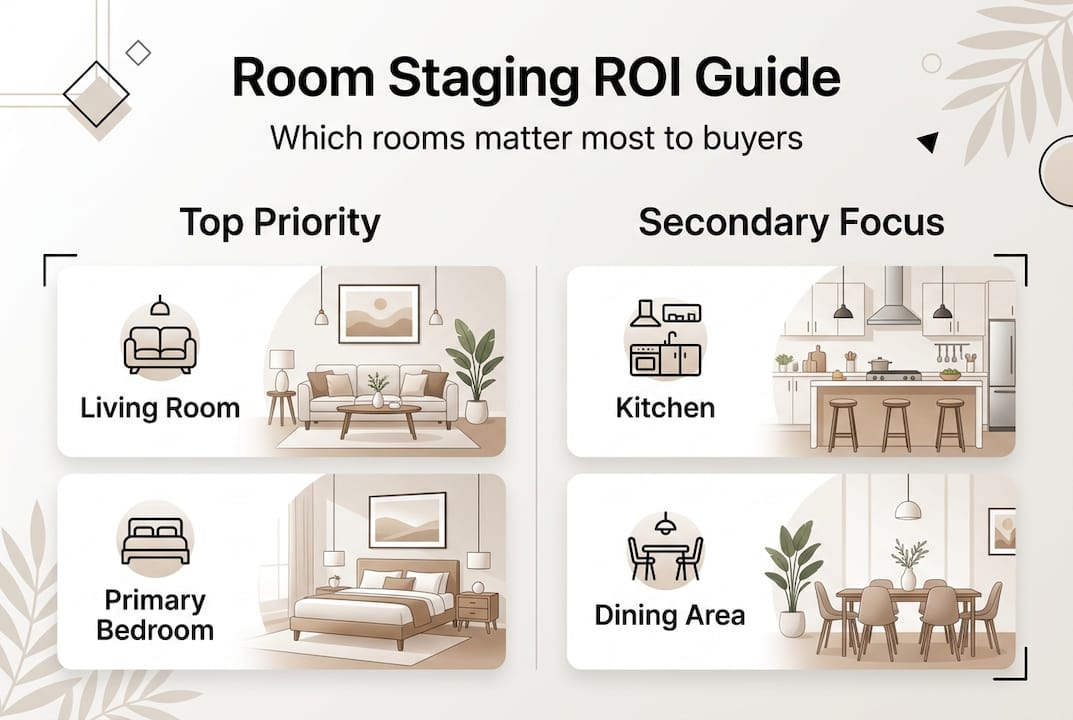
In living rooms, focus on creating conversation areas that demonstrate how the space accommodates daily life and entertaining. Optimizing living room layout with properly scaled furniture and clear traffic paths makes rooms feel larger and more functional. Add modern living room style through simple accessories like throw pillows, area rugs, and artwork.
Primary bedrooms should feel like retreats. Essential touchpoints include:
- Fresh, hotel-quality bedding in neutral colors
- Cleared nightstands with minimal, matching lamps
- Empty closets showing ample storage
- Soft lighting creating a calm atmosphere
Kitchens require less furniture staging but demand spotless counters, updated hardware if needed, and strategic styling with a fruit bowl or coffee station. These spaces create emotional resonance by helping buyers imagine their morning routines and family gatherings.
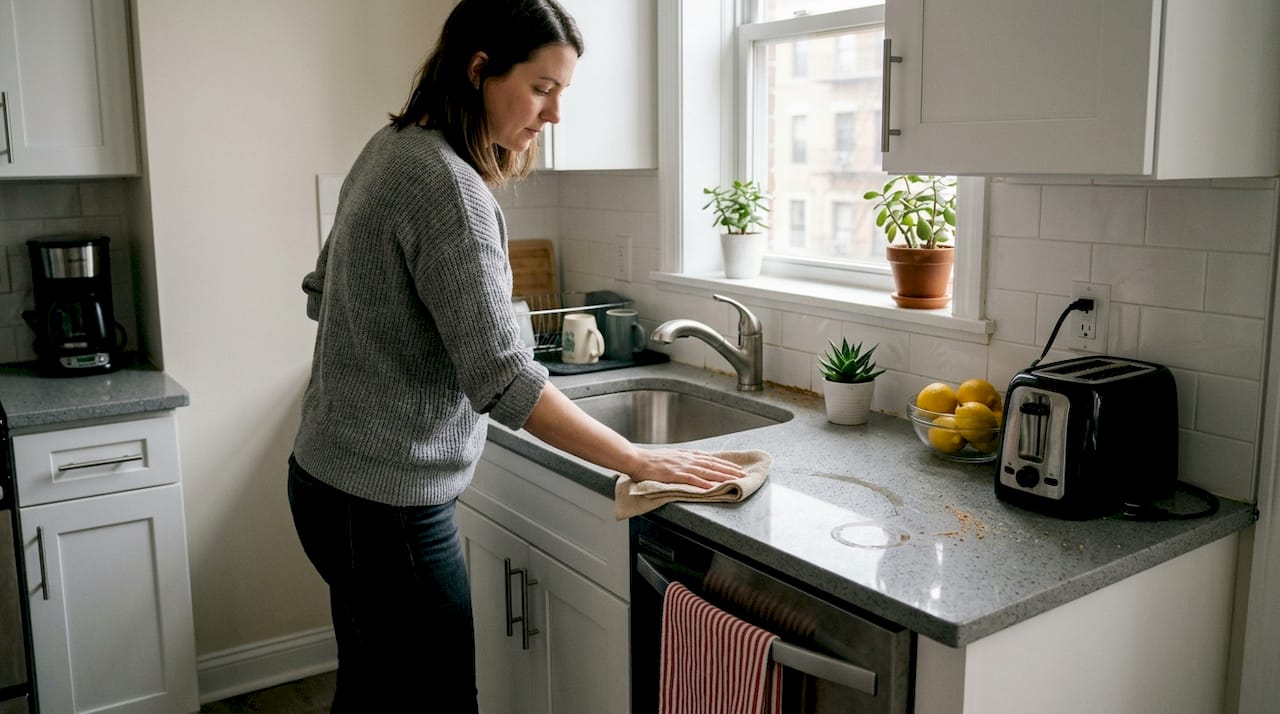
Urban space transformations demonstrate how even compact rooms can feel open and inviting with the right approach.
When to stage and when to skip it
Staging isn’t always necessary or cost-effective. Understanding when to invest and when to skip saves money and focuses effort where it counts.
Stage when:
- Your property is vacant or sparsely furnished
- You’re in a buyer’s market or balanced market with inventory
- The home has an unusual layout or awkward spaces
- Comparable properties are staged and competing for the same buyers
- You need to justify a premium price point
- Listing photos are scheduled soon
Skip or minimize staging when:
- You’re in an extreme seller’s market with low inventory and high demand
- The property is marketed as a teardown or fixer-upper
- Your home is already magazine-ready with current, neutral decor
- The price point is too low to justify staging costs
- Tenants occupy the property and won’t cooperate
Market conditions heavily influence staging decisions. In hot markets where homes sell in days, basic decluttering and cleaning may suffice. In slower markets, staging becomes essential for standing out.
Pro Tip: Assess your property’s staging need by comparing recent sold listings in your area. If most successful sales show professional staging, you’ll likely need it too. If homes are selling quickly without staging, you might skip it.
Virtual or hybrid staging offers a budget-friendly middle ground. Digitally staged photos attract online attention at a fraction of traditional staging costs, though you’ll still need the home presentable for in-person showings.
Avoiding common staging mistakes
Even well-intentioned staging can backfire when common errors creep in. Recognizing and fixing these mistakes separates amateur attempts from professional results.
Frequent staging errors and fixes:
-
Over-staging: Too much furniture or decor makes spaces feel cluttered and small. Fix: Remove pieces until the room breathes. Less is more.
-
Leaving personal items: Family photos, religious items, or hobby collections distract buyers. Fix: Pack everything personal before staging begins.
-
Poor lighting: Dim or mismatched bulbs create uninviting atmospheres. Fix: Use consistent, bright warm-white LEDs throughout. Aim for 2700-3000K color temperature.
-
Wrong furniture scale: Oversized pieces overwhelm rooms; undersized pieces look lost. Fix: Choose appropriately scaled furniture that fits the room’s proportions.
-
Staging too late: Waiting until after listing photos or first showings wastes the most critical marketing window. Fix: Stage before photography, always.
-
Ignoring sensory details: Musty smells, loud colors, or rough textures repel buyers subconsciously. Fix: Address all five senses with fresh scents, soft textures, and pleasant visuals.
-
Partial room staging: Staging the living room but ignoring the dining room creates inconsistency. Fix: Stage all visible spaces to the same standard.
Experts emphasize avoiding these nuances because buyers notice details even when they can’t articulate what feels wrong. A home decor checklist helps ensure nothing gets overlooked.
Flow matters enormously. Buyers should move naturally through spaces without navigating around furniture or feeling cramped. Avoiding furniture mistakes in placement and scale keeps the focus on the home’s architecture and potential, not the staging itself.
Subtlety wins. The best staging feels invisible, enhancing the property without calling attention to itself. When buyers remember the home instead of the furniture, you’ve succeeded.
Elevate your staging with the right decor
Successful staging relies on selecting pieces that enhance without overwhelming. The right decor creates the neutral, aspirational environment buyers respond to, while poor choices distract or date your space.
Quality matters more than quantity. A few well-chosen accessories in each room outperform cluttered surfaces every time. Think in terms of texture, scale, and color harmony rather than filling every shelf and table.
Our curated home decor collection offers staging essentials designed for modern spaces. From neutral throw pillows and area rugs to minimalist lighting and functional storage, each piece supports the clean, welcoming aesthetic that helps properties sell faster. Whether you’re staging yourself or working with a professional, having access to versatile, affordable decor simplifies the process and improves results.
Explore our full range of furniture and accessories at newwayref.store to discover more staging ideas and transform your space into a buyer’s dream home.
Frequently asked questions
Is professional home staging worth the cost?
Professional staging typically delivers strong ROI, especially in competitive markets or vacant homes, by attracting higher offers and shorter selling times. Investment of 1-3% of list price yields 5-15% over asking with average ROI exceeding 200%.
How much does home staging cost?
Staging often ranges from 1-3% of the list price, depending on the property’s size, condition, and local market. Costs vary based on whether you need full staging, consultation only, or virtual staging services.
Can I stage my own home or should I hire a pro?
You can handle basic staging tasks yourself, but professionals yield better results and save time, especially before listing photos or open houses. DIY works for motivated sellers with design sense; pros excel when speed and maximum impact matter.
What are the most important rooms to stage?
Focus on the living room, primary bedroom, and kitchen, as research shows buyers give these spaces the most weight at 91%, 83%, and 23% importance respectively.
When is home staging unnecessary?
You may not need staging in a hot seller’s market, for teardowns, or when properties are already showcase-ready. Low ROI price points and tenanted properties also make staging less practical.