

Many homeowners think smart lighting is complicated tech reserved for early adopters. That’s outdated thinking. Modern smart house lighting has become accessible, affordable, and surprisingly easy to install. This guide explains what smart lighting is, how it works, the types available, key benefits including energy savings, and practical installation tips for both renters and homeowners looking to modernize their spaces.
Table of Contents
- What Is Smart Lighting? Understanding The Basics
- Types Of Smart Lighting Retrofits: Bulbs, Switches, And More
- Wireless Protocols Shaping Smart Lighting Reliability And Scale
- Benefits Of Smart Lighting: Energy Savings, Convenience, And Ambiance
- Explore Smart Lighting And Home Decor At New Way Ref
Key takeaways
| Point | Details |
|---|---|
| Smart lighting basics | Combines LED fixtures with wireless network controls for automated scheduling, remote access, and personalized comfort. |
| Two retrofit paths | Smart bulbs offer plug-and-play simplicity for renters, while smart switches provide consistent whole-fixture control for homeowners. |
| Wireless protocols matter | Wi-Fi works for small setups, Zigbee and Thread excel in larger systems, and Matter ensures cross-brand compatibility. |
| Energy and convenience gains | Smart lighting delivers up to 80% energy savings through sensors and scheduling while automating daily lighting tasks. |
| Installation accessibility | Most smart lighting requires no electrical work, making it suitable for renters, DIY enthusiasts, and homeowners alike. |
What is smart lighting? Understanding the basics
Smart lighting represents the fusion of LED technology with networked digital controls. Unlike traditional switches that simply turn lights on or off, smart house lighting enables scheduling, automation triggers, remote smartphone control, and voice commands through virtual assistants.
The technology creates lighting environments that adapt to your lifestyle. You can program lights to gradually brighten as your alarm goes off, dim automatically during movie time, or turn off when motion sensors detect an empty room. These automated behaviors save energy while enhancing daily comfort.
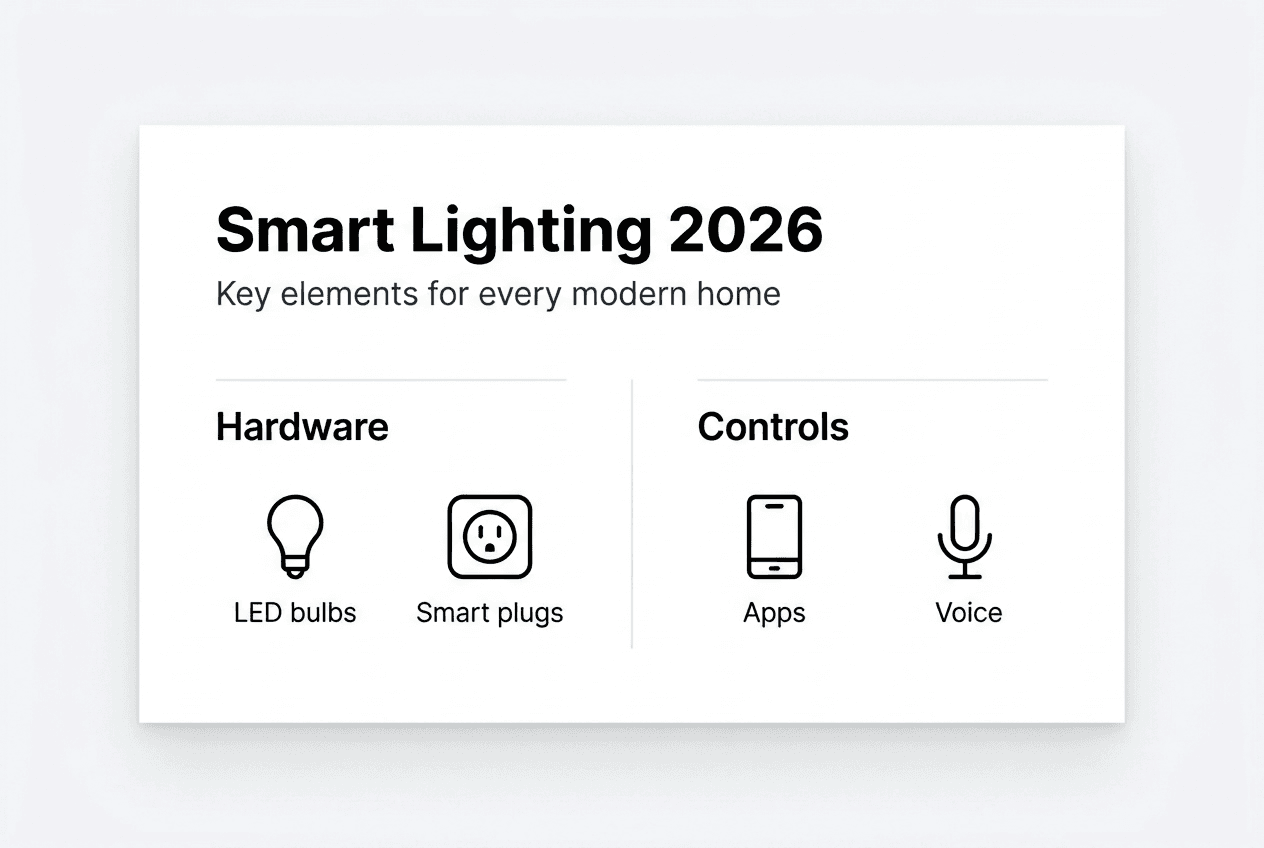
Smart lighting systems typically include several key components:
- Smart LED bulbs that connect directly to your wireless network
- Smart switches or dimmers that replace traditional wall controls
- Motion sensors and ambient light detectors for automation
- Smart plugs that convert standard lamps into connected devices
- Central hubs or controllers that coordinate multiple devices
The heart of any smart lighting setup is wireless communication. Devices talk to each other and your phone through protocols like Wi-Fi, Zigbee, or Thread. This invisible network layer enables the scheduling, scenes, and automation that define modern smart lighting.
Understanding these basics helps you evaluate which approach fits your home. Renters might prefer bulbs that travel with them, while homeowners often invest in switches for permanent whole-home control. Explore modern home lighting explained to see how these concepts apply across different room types and design preferences.
Types of smart lighting retrofits: bulbs, switches, and more
Two primary paths exist for adding smart lighting to existing homes: replacing bulbs or upgrading switches and relays. Each approach suits different living situations and control preferences.
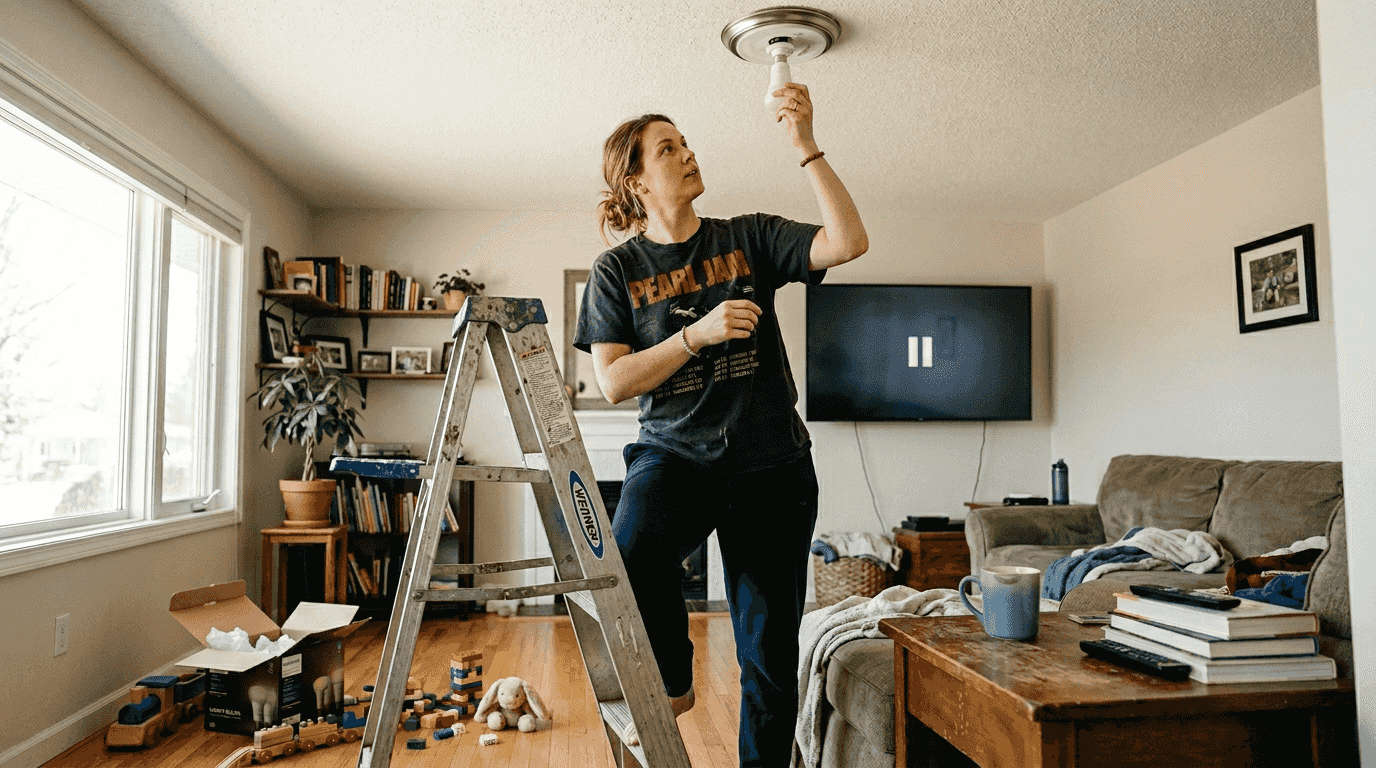
Smart bulbs screw into standard light sockets and connect wirelessly to your network. They’re perfect for renters because installation requires no electrical work. You take them when you move. They work brilliantly in lamps, pendant fixtures, and ceiling lights with Edison bases. Color-changing models let you shift from warm white for dinner to cool blue for focused work.
Smart switches and relays replace traditional wall controls. They provide centralized control over entire fixture groups, ensuring lights respond to both physical switch presses and app commands. This consistency matters in multi-bulb chandeliers or recessed lighting arrays where individual smart bulbs would prove expensive.
| Retrofit Type | Best For | Installation | Cost Factor | Control Consistency |
|---|---|---|---|---|
| Smart Bulbs | Renters, lamps, individual fixtures | Screw in like standard bulbs | Higher per bulb, lower upfront | Each bulb controlled separately |
| Smart Switches | Homeowners, multi-bulb fixtures | Requires basic wiring | Lower per light, higher upfront | Entire fixture group unified |
| Smart Plugs | Table lamps, floor lamps | Plug between outlet and lamp | Very low cost | Individual lamp control |
| Smart Relays | In-wall retrofit, existing fixtures | Behind-switch installation | Moderate cost | Preserves existing switches |
Smart plugs expand your options by converting any lamp with a standard plug into a connected device. They’re incredibly affordable and require zero installation skill. Just plug the smart plug into your outlet, plug your lamp into the smart plug, and connect it to your app.
Pro Tip: If you’re renting, start with smart bulbs in your most-used spaces like the living room and bedroom. If you own your home and have multiple recessed lights or chandeliers, smart switches deliver better value and cleaner control than outfitting every socket.
Your choice depends on several factors. Consider whether you rent or own, how many bulbs each fixture uses, your budget, and whether you want color-changing capability. The home decor checklist essential steps can help you prioritize which rooms to upgrade first based on your lifestyle and design goals.
Wireless protocols shaping smart lighting reliability and scale
The invisible network connecting your smart lights matters as much as the bulbs themselves. Different wireless protocols offer distinct advantages for small setups versus whole-home systems.
Wi-Fi connects smart bulbs directly to your home router. It’s straightforward for a few devices because you’re already running Wi-Fi for phones and laptops. No extra hub required. But Wi-Fi bulbs drain more power than alternatives, and adding dozens can congest your network. Best for small apartments or targeted room upgrades.
Zigbee and Z-Wave create dedicated mesh networks where devices relay signals to each other. This mesh structure extends range throughout your home and reduces power consumption. Each added device strengthens the network. These protocols excel when you’re controlling 15, 30, or 50+ smart lights across multiple floors.
Thread represents newer technology built on IPv6 networking. It delivers Zigbee’s mesh benefits with improved reliability and native internet connectivity. Thread networks self-heal when devices go offline and handle interference better than older protocols.
Matter changes the game by creating a common standard across brands and protocols. Matter devices from different manufacturers work together seamlessly. You’re no longer locked into one ecosystem. A Matter-certified bulb from Brand A works with a Matter hub from Brand B and voice assistant from Company C.
Key protocol considerations:
- Network range and reliability for your home’s size and construction
- Number of devices you plan to connect now and later
- Power efficiency for battery-operated sensors and switches
- Ecosystem compatibility with existing smart home devices
- Future-proofing through Matter certification
Pro Tip: If you’re starting fresh in 2026, prioritize Matter-certified devices. They offer maximum flexibility as you expand your system and ensure compatibility across brands you might add later.
Understanding protocols helps you avoid compatibility headaches. A Wi-Fi bulb won’t talk to a Zigbee switch without a hub that bridges both. Plan your network architecture before buying hardware. The smart home decor explained guide shows how to integrate lighting controls with other connected home elements for a cohesive experience. For deeper technical insight into ecosystem selection, Philips Hue’s smart lighting guide offers manufacturer perspective on protocol choices.
Benefits of smart lighting: energy savings, convenience, and ambiance
Smart lighting delivers measurable advantages beyond the cool factor of voice-controlled lights. The benefits span financial savings, environmental impact, and daily quality of life.
Energy efficiency tops the list. Smart lighting systems cut consumption through automated scheduling and presence sensing. Lights turn off in empty rooms instead of burning electricity for hours. Dimming capabilities reduce power draw during times when full brightness isn’t needed. LED smart bulbs already use 75% less energy than incandescent bulbs, and automation compounds those savings.
Real-world data proves the financial impact. A hospital lighting retrofit saved $350,000 annually and eliminated 2,160 metric tons of CO₂ emissions. While your home operates at smaller scale, proportional savings of 50 to 80 percent on lighting costs are achievable through smart controls and LED efficiency combined.
| Benefit Category | Specific Advantages | Impact Measure |
|---|---|---|
| Energy Savings | Automated off when unneeded, dimming reduces power draw, scheduling optimizes use | 50-80% reduction in lighting energy costs |
| Convenience | Voice control, remote access, automated scenes, no manual switching | Hours saved monthly, reduced mental load |
| Ambiance Control | Color temperature adjustment, brightness tuning, multi-zone scenes | Improved comfort and mood across activities |
| Home Security | Automated presence simulation, vacation lighting schedules | Enhanced deterrent effect when away |
| Longevity | LED bulbs last 15-25 years, reducing replacement frequency | Lower maintenance costs and waste |
Convenience improvements enhance daily routines. Morning lights that gradually brighten ease your wake-up. Evening scenes that dim warm lighting signal your body it’s time to wind down. You adjust everything from your phone without leaving the couch. Voice commands through Alexa or Google Assistant make control hands-free while you’re cooking or carrying groceries.
Personalized ambiance transforms how spaces feel and function. Cool white light energizes your home office during work hours. Warm amber tones create cozy dinner atmospheres. Vibrant colors set the mood for parties or movie nights. You customize each room’s character to match its purpose and your preferences.
Security features add peace of mind. Randomized lighting schedules simulate occupancy when you’re traveling. Motion-triggered lights deter intruders and illuminate pathways safely. Integration with door sensors can automatically light entry routes as you arrive home after dark.
These benefits align with broader sustainable living goals while improving everyday comfort. The role of lighting home design explores how strategic lighting choices enhance both aesthetics and functionality across residential spaces.
Explore smart lighting and home decor at New Way Ref
Ready to bring smart lighting into your home? New Way Ref offers a curated selection of modern lighting fixtures and home decor that blend technology with style. Whether you’re upgrading a single room or transforming your entire space, you’ll find products designed for easy installation and contemporary aesthetics.

Browse the lighting collection to discover fixtures that complement smart bulbs and switches, from minimalist pendants to statement chandeliers. Pair your new lighting with coordinating pieces from the home decor collection to create cohesive, tech-savvy spaces that reflect your personal style. With free shipping on orders over $50 and a focus on modern design, New Way Ref makes it simple to upgrade your home lighting and decor in one convenient destination.
What is smart lighting? Frequently asked questions
Is smart lighting hard to install?
Most smart lighting requires no electrical expertise. Smart bulbs screw into existing sockets like traditional bulbs. Smart plugs simply insert between outlets and lamps. Only smart switches require basic wiring knowledge, and many homeowners handle this themselves or hire an electrician for quick installation.
Do I need a hub for smart lighting?
It depends on your chosen protocol. Wi-Fi smart bulbs connect directly to your router without a hub. Zigbee and Z-Wave devices require a hub to bridge communication. Matter-certified products often work with existing smart home hubs from major platforms, simplifying setup.
Can smart lighting really save money on energy bills?
Yes, through multiple mechanisms. LED efficiency alone cuts energy use by 75% versus incandescent bulbs. Add automated scheduling, dimming, and motion sensing, and total lighting costs can drop 50 to 80 percent. Actual savings depend on your current setup and how aggressively you implement automation.
Will smart lights work if my internet goes out?
It varies by system. Smart switches with manual controls continue working like traditional switches during outages. Smart bulbs lose app and voice control but may retain last settings. Zigbee and Thread mesh networks function locally without internet, though cloud features pause. Plan for basic manual fallbacks in critical spaces.
Are smart bulbs compatible with dimmer switches?
Generally no. Smart bulbs need constant power to maintain wireless connectivity. Traditional dimmers that reduce voltage interfere with smart bulb operation and can damage them. If you’re using smart bulbs, replace dimmer switches with standard on/off switches or smart switches designed for LED compatibility.
How long do smart LED bulbs last?
Quality smart LED bulbs typically last 15,000 to 25,000 hours, translating to 15 to 25 years at three hours daily use. This longevity dramatically reduces replacement frequency and maintenance compared to incandescent or CFL bulbs, offsetting their higher initial cost through extended lifespan and energy savings.
Recommended
- Modern Home Lighting: Enhancing Style and Functionality – New Way Ref
- Role of Lighting in Home Decor – Enhancing Style and Function – New Way Ref
- Smart Home Decor: Blending Style With Technology – New Way Ref
- 7 Essential Steps for a Smart Home Decor Checklist – New Way Ref
- Almond Wall Plate Dimmer Legrand Preset Slide Dimmer Switch - Almond Color, LED/CFL Compatible (LSCL543PLACCV4) Light Dimmer Switch Legrand LSCL543PLACCV4
- Liiketilan valonsäätöratkaisut – Tyyliä ja tehokkuutta Helsingissä - Tiimixi