

Most of us treat lighting like plumbing: purely functional, invisible until it breaks. But what if your light fixture could steal the show? Statement lighting flips this script entirely, transforming bold fixtures into sculptural centerpieces that define your room’s personality. Instead of hiding overhead or blending into walls, these eye-catching pieces command attention while illuminating your space. Whether you’re redesigning a dining room or refreshing a living area, understanding statement lighting unlocks a design tool that merges artistry with function, turning ordinary rooms into curated experiences that reflect your style.
Table of Contents
- Key takeaways
- Understanding statement lighting: definition and role
- Key design considerations for statement lighting
- How statement lighting differs from other lighting types
- Practical applications and tips for using statement lighting at home
- Explore statement lighting and home decor at New Way Ref
- Frequently asked questions
Key Takeaways
| Point | Details |
|---|---|
| Bold focal fixture | Statement lighting functions as a sculptural centerpiece that defines the room’s personality while providing illumination. |
| Scale and placement | Fixture diameter should be roughly one third of the room width or table width, such as a 48 inch table using a chandelier 16 to 20 inches in diameter. |
| Placement height | Hang thirty to thirty six inches above the table to balance drama with function and preserve sightlines. |
| Visual anchor | Statement fixtures establish the focal point that guides furniture placement and color choices. |
Understanding statement lighting: definition and role
Statement lighting refers to bold, eye-catching fixtures that serve as focal points in a room, combining artistry with functionality to elevate the space’s personality and decor. Unlike the recessed cans or simple pendants that fade into ceilings, these fixtures demand attention through size, shape, material, or finish. Think of an oversized geometric chandelier suspended over your dining table or a sculptural floor lamp that looks like it belongs in a gallery.
Common statement lighting types include:
- Oversized chandeliers with cascading crystals or branching arms
- Geometric pendant clusters in brass, black metal, or colored glass
- Sculptural floor lamps with organic shapes or unexpected materials
- Dramatic wall sconces featuring artistic silhouettes or textured finishes
- Industrial-style fixtures repurposing vintage elements into modern designs
What separates statement lighting from standard ambient lighting is intent. Ambient fixtures like recessed lights or flush mounts exist to provide general illumination without calling attention to themselves. They create a baseline glow that makes rooms usable. Statement pieces flip this priority, making the fixture itself the visual anchor while still delivering light. The [role lighting plays in home decor](https://newwayref.store/blogs/news/role lighting home decor) extends beyond visibility into emotional resonance and style expression.
Statement lighting also differs critically from accent lighting, which uses directional beams to highlight artwork, architectural features, or decorative objects. Accent lights remain subtle servants to other design elements. Statement fixtures become the art themselves. When you install a sculptural chandelier, guests notice the chandelier first, then the room around it. This reversal of hierarchy transforms how spaces feel and function, creating memorable impressions that outlast any furniture arrangement.
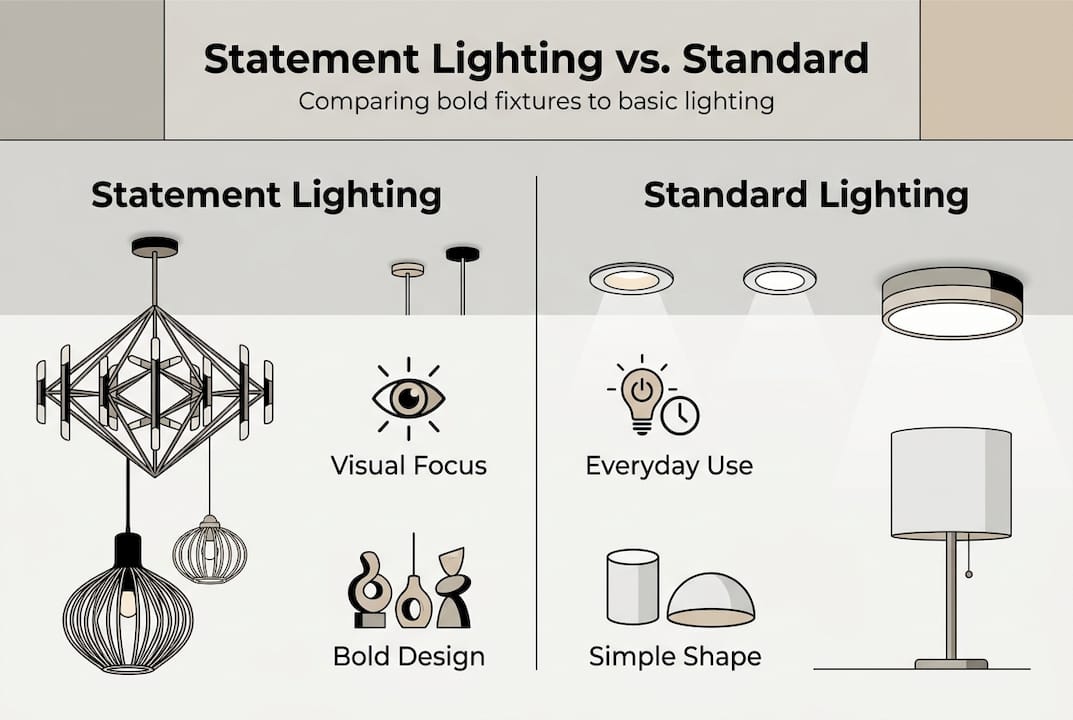
These fixtures work by establishing visual hierarchy instantly. Your eye travels to the boldest element in any room, and a well-chosen statement light claims that position deliberately. This anchoring effect lets you build the rest of your design around a clear focal point, simplifying decisions about furniture placement, color palettes, and accessory choices. Instead of scattered decorative attempts competing for attention, one confident fixture unifies the entire space.
Key design considerations for statement lighting
Scale determines whether your statement fixture looks intentional or awkward. Designers recommend matching fixture diameter to roughly one-third of your room’s width or the table it hangs above. For a dining table measuring 48 inches wide, aim for a chandelier around 16 to 20 inches in diameter. In a 12-by-16-foot dining room, a fixture measuring 28 inches across creates balanced proportions without overwhelming sightlines.
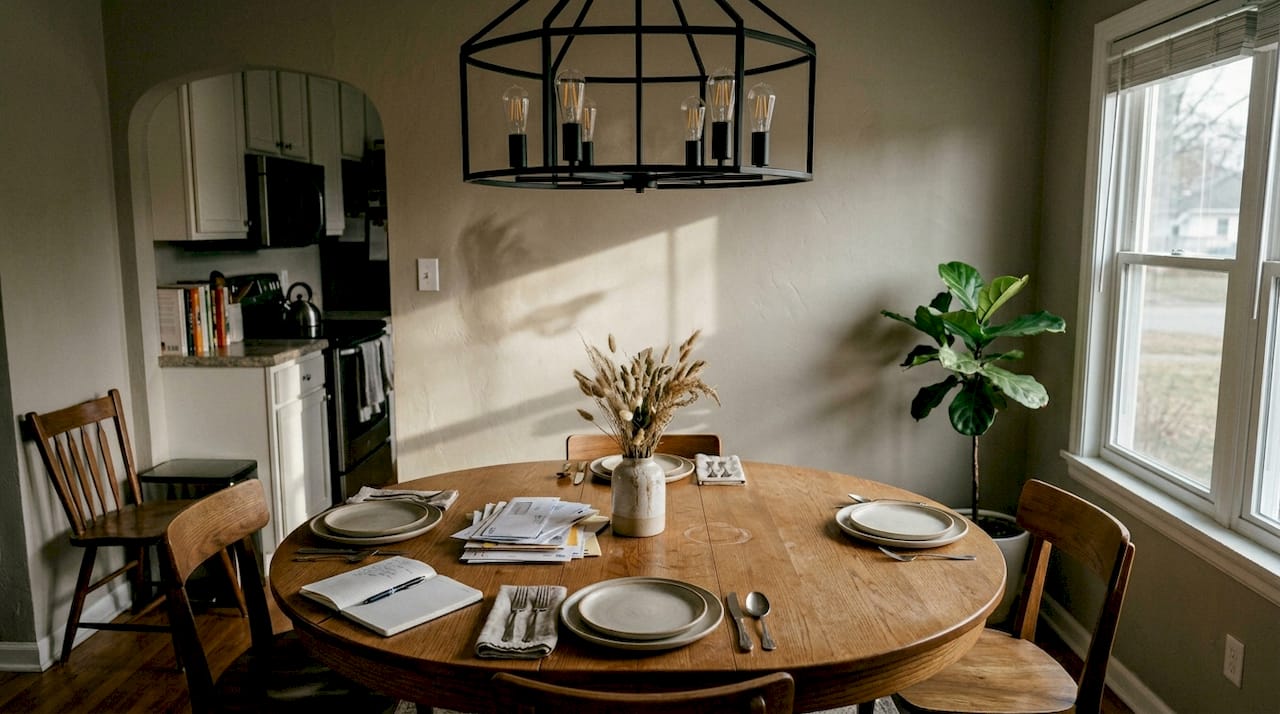
Placement height matters equally. Hang chandeliers 30 to 36 inches above dining tables to prevent head bumps while maintaining clear conversation views across the table. In rooms with high ceilings, you can adjust upward slightly, but never sacrifice function for drama. Test the height before final installation by temporarily hanging the fixture with adjustable chain or cord, then sitting at the table to verify sightlines work from all angles.
Material choices shape both aesthetic and sustainability. Current trends favor organic materials that add warmth:
- Rattan and woven natural fibers for coastal or bohemian spaces
- Alabaster for soft, diffused glow with sculptural elegance
- Brushed brass or aged bronze for vintage-modern contrast
- Matte black metal for industrial or minimalist interiors
- Handblown glass in jewel tones for artistic focal points
These sustainable materials like rattan and alabaster align with eco-conscious design while delivering texture and visual interest that mass-produced plastic fixtures cannot match. When selecting materials, consider how light interacts with surfaces. Translucent alabaster creates ambient glow, while opaque metal directs light downward for task illumination.
The one-bold-piece rule prevents visual chaos, especially in smaller rooms. Limit yourself to a single statement fixture per room, allowing it to command attention without competition. If you install an oversized chandelier in your dining area, keep kitchen pendants simple and understated. This restraint applies even in open-plan spaces, where you might designate one zone for your statement piece and use complementary but quieter fixtures elsewhere.
| Design Element | Guideline | Reason |
|---|---|---|
| Fixture diameter | 1/3 of table width or room dimension | Maintains visual balance |
| Hanging height | 30-36 inches above dining surface | Prevents obstruction, ensures safety |
| Material selection | Natural, sustainable options preferred | Adds warmth, supports eco-values |
| Quantity per room | One statement piece maximum | Avoids clutter, maintains focal clarity |
Contrast amplifies impact. Statement lighting shines brightest against minimalist backgrounds where clean walls, neutral furniture, and uncluttered surfaces let the fixture dominate. A sculptural chandelier loses punch in a room already crowded with bold patterns, competing artwork, and heavy drapery. If your design leans maximalist, choose a statement light that complements rather than clashes with existing visual weight, or simplify surrounding elements to give your fixture room to breathe.
Pro Tip: Before purchasing, create a cardboard template matching your fixture’s dimensions and hang it at the proposed height. Live with this mockup for a few days to verify scale, placement, and sightlines feel right in your actual space rather than relying on online photos that distort perspective.
For rooms with limited square footage, explore [lighting tips for small spaces](https://newwayref.store/blogs/news/lighting tips small spaces brighten urban homes) that help you incorporate bold fixtures without overwhelming tight quarters. Transparent materials, open geometric frames, and vertical rather than horizontal designs preserve visual airiness while delivering statement impact.
How statement lighting differs from other lighting types
Lighting design traditionally divides into three functional categories: ambient, task, and accent. Ambient lighting provides overall illumination through ceiling fixtures, recessed cans, or wall sconces that fill rooms with general brightness. Task lighting focuses beams on specific work areas like kitchen counters, reading nooks, or bathroom mirrors where you need concentrated light for activities. Accent lighting uses directional spots or picture lights to highlight architectural features, artwork, or decorative objects, adding depth and visual interest.
Statement lighting contrasts with functional lighting by prioritizing visual drama over utility. While ambient fixtures hide in ceilings and task lights serve practical needs, statement pieces exist primarily as sculptural focal points that happen to emit light. The fixture itself becomes the design element worth showcasing, not what it illuminates. This reversal of priority separates statement lighting from all other categories.
The distinction from accent lighting deserves particular attention because both involve decorative intent. Accent lighting remains a supporting actor, directing attention toward other design elements. You install picture lights to showcase paintings, not to admire the light fixtures themselves. Statement lighting inverts this relationship entirely. The fixture commands center stage while everything else provides context. When guests enter a room with a dramatic chandelier, they notice the chandelier first, then the space around it.
| Lighting Type | Primary Purpose | Visual Priority | Typical Fixtures |
|---|---|---|---|
| Ambient | General illumination | Low, blends into ceiling | Recessed cans, flush mounts, basic pendants |
| Task | Focused work light | Minimal, purely functional | Under-cabinet strips, desk lamps, vanity bars |
| Accent | Highlight other objects | Moderate, directs attention away from itself | Track lights, picture lights, wall washers |
| Statement | Decorative focal point | Maximum, fixture is the art | Chandeliers, sculptural pendants, artistic floor lamps |
This hierarchy impacts how you perceive luxury and engagement in spaces. Rooms relying solely on ambient lighting feel utilitarian and flat, lacking personality or memorable features. Adding statement lighting injects instant sophistication and intentionality, signaling that someone curated this space with care. The emotional response differs markedly. A simple overhead fixture says “this room is lit.” A sculptural chandelier says “this room has character.”
Statement lighting also differs in installation commitment and cost. Swapping ambient recessed lights or task lamps requires minimal effort and expense. Replacing a statement chandelier involves significant investment in both money and labor, making the choice more permanent. This permanence demands thoughtful selection aligned with your long-term aesthetic vision rather than fleeting trends.
Understanding these distinctions helps you layer lighting effectively. [Modern home lighting](https://newwayref.store/blogs/news/modern home lighting explained) combines multiple types strategically, using ambient light for baseline visibility, task lights for functional needs, accent lights for depth, and statement pieces for personality. Each category serves a distinct role, and recognizing those roles prevents confusion when planning room illumination.
The empirical transformation from bland to luxurious happens because statement lighting engages both visual and emotional responses. Functional lighting satisfies practical needs without triggering aesthetic reactions. Statement fixtures activate the same neural pathways as encountering art, creating memorable experiences that elevate ordinary rooms into spaces people want to inhabit and photograph.
Practical applications and tips for using statement lighting at home
Start with one statement piece as your room’s anchor, then layer other lighting types around it for balanced functionality. Your statement fixture establishes visual hierarchy and style direction, while ambient lighting fills shadows and task lights serve specific needs. This layered approach prevents the one-dimensional flatness of single-source illumination while maintaining clear focal priority.
Follow this numbered workflow for integrating statement lighting:
- Identify your room’s primary function and gathering point (dining table, seating area, kitchen island)
- Select a statement fixture scaled appropriately for that focal zone
- Install the statement piece first, positioning it precisely over the anchor point
- Add ambient lighting around the perimeter to eliminate harsh shadows
- Layer task lighting where needed for reading, cooking, or detailed work
- Test the combined effect at different times of day and adjust as needed
Finish selection amplifies seasonal and stylistic impact. Metallic finishes like brushed gold or copper add warmth perfect for fall and winter months, reflecting candlelight and creating cozy atmospheres. Natural materials like rattan or light wood suit spring and summer aesthetics, bringing organic texture that feels fresh and airy. Matte black or industrial finishes work year-round in modern or minimalist spaces, providing timeless contrast against white walls.
For open-plan layouts, use statement lighting to define zones without physical barriers. A dramatic pendant cluster over the dining table separates eating areas from adjacent living spaces visually, creating psychological boundaries that help rooms feel organized rather than chaotic. Different fixture styles in each zone reinforce functional divisions while maintaining cohesive design language through coordinated finishes or materials.
Dimmable and smart lighting controls multiply your fixture’s versatility. A bold chandelier serves as morning task light at full brightness, ambient glow during dinner parties at 40 percent, and romantic accent at 10 percent for late evenings. Smart controls let you program scenes matching daily routines or special occasions, extracting maximum value from your investment. When following a [lighting selection workflow](https://newwayref.store/blogs/news/lighting selection workflow step by step guide 2026), prioritize fixtures compatible with dimmer switches or smart bulbs to preserve future flexibility.
Avoid overdoing it in compact spaces by choosing fixtures with visual transparency. Open geometric frames, glass globes, or minimal metal structures provide statement impact without blocking sightlines or making rooms feel cramped. A cage-style pendant delivers boldness while maintaining airiness, whereas a solid drum shade creates visual weight that shrinks small dining areas.
Pro Tip: Photograph your room from multiple angles with your phone before shopping for fixtures. Use these images to digitally overlay fixture options at proper scale, helping you visualize how different styles and sizes will actually appear in your specific space rather than relying on staged product photos.
Practical example: In a 12-by-14-foot dining room, install a 24-inch diameter chandelier positioned 32 inches above a 60-inch rectangular table. Pair this with recessed ambient lighting around the room’s perimeter and a dimmer switch controlling all sources. This combination delivers statement impact during meals while providing flexible illumination for homework, crafts, or casual gatherings when you dim the chandelier and rely more on perimeter lighting.
The benefits of [smart lighting](https://newwayref.store/blogs/news/what is smart lighting guide modern homes) extend beyond convenience into energy efficiency and longevity. LED-compatible statement fixtures consume less electricity while lasting years longer than incandescent alternatives, making bold design choices sustainable in both aesthetic and environmental terms. Modern smart bulbs fit most statement fixtures, adding voice control and scheduling capabilities without sacrificing style.
Ideal rooms for statement lighting include kitchens, dining areas, and living spaces where people gather and entertain. These high-traffic zones benefit most from memorable design elements that spark conversation and create Instagram-worthy backdrops. Bedrooms and home offices work well with statement floor lamps or wall sconces that add personality without overwhelming intimate spaces meant for rest or concentration.
Explore statement lighting and home decor at New Way Ref
Ready to transform your space with the bold fixtures and expert principles you’ve just discovered? New Way Ref curates a lighting collection featuring statement chandeliers, sculptural pendants, and artistic floor lamps that turn rooms into showcases. Each piece balances dramatic visual impact with quality construction, giving you the confidence to anchor your design around fixtures built to last.
Beyond lighting, explore complementary home decor that completes your aesthetic vision. From minimalist furniture that lets statement fixtures shine to textured accessories that add warmth, you’ll find everything needed to execute the layered, intentional design approach this guide recommends. Visit New Way Ref to browse collections organized by style, room, and function, making it simple to translate inspiration into reality.
Frequently asked questions
What is statement lighting?
Statement lighting is a bold, decorative lighting fixture designed to be the visual focal point in a room. It combines aesthetic appeal with functional illumination, transforming ordinary spaces into curated environments that reflect personal style. Unlike ambient or task lighting that prioritizes utility, statement pieces exist primarily as sculptural art that happens to emit light.
How do I choose the right size statement light for my room?
Match fixture diameter to approximately one-third of your room’s width or the table it hangs above. For a 12-by-16-foot dining room, aim for a chandelier around 28 inches in diameter. Keep chandelier height 30 to 36 inches above tables for proper sightlines and safety. Test placement with a cardboard mockup before final installation to verify proportions feel balanced in your actual space.
Can statement lighting work in small spaces?
Yes, by choosing see-through or minimalist designs that maintain visual airiness while delivering bold impact. Limit yourself to one statement piece to prevent clutter, and select fixtures with open geometric frames, transparent glass, or vertical rather than horizontal orientations. Consider [lighting tips for small spaces](https://newwayref.store/blogs/news/lighting tips small spaces brighten urban homes) that help you incorporate dramatic fixtures without overwhelming tight quarters. Adaptable heights and materials preserve balance in compact rooms.
What are popular materials for statement lighting?
Materials like rattan, alabaster, metal, and sculptural finishes blend art with sustainability and style. Rattan and woven natural fibers add warmth perfect for coastal or bohemian aesthetics, while alabaster creates soft, diffused glow with elegant translucence. Brushed brass, aged bronze, and matte black metal suit vintage-modern or industrial spaces. These choices enhance warmth and texture in interiors while supporting eco-conscious design values that matter to today’s homeowners.