

TL;DR:
- Transitional style combines traditional warmth with modern simplicity to create timeless, comfortable interior spaces. It emphasizes balance through neutral palettes, layered textures, and mixing period silhouettes, avoiding extremes for harmony. This versatile approach evolves with personal preferences, making it an honest and adaptable decorating method for lasting aesthetic appeal.
Transitional style is defined as an interior design approach that blends traditional warmth with modern simplicity to create spaces that feel timeless, comfortable, and never dated. It combines furniture, palettes, and materials from multiple periods without committing to any single era, which is exactly what makes it so enduring. The style emerged in the 1950s as a direct response to stark mid-century minimalism, and it has remained one of the most popular choices among American homeowners ever since. If your goal is a home that feels both polished and livable, transitional interior decor is the clearest path to get there.
What is transitional style and what defines it visually?
Transitional style design is built on one core principle: balance. Every visual decision, from furniture silhouettes to color choices, is made to prevent the room from leaning too far toward ornate traditional or too far toward cold contemporary. The result is a space that feels grounded, welcoming, and effortlessly put together.
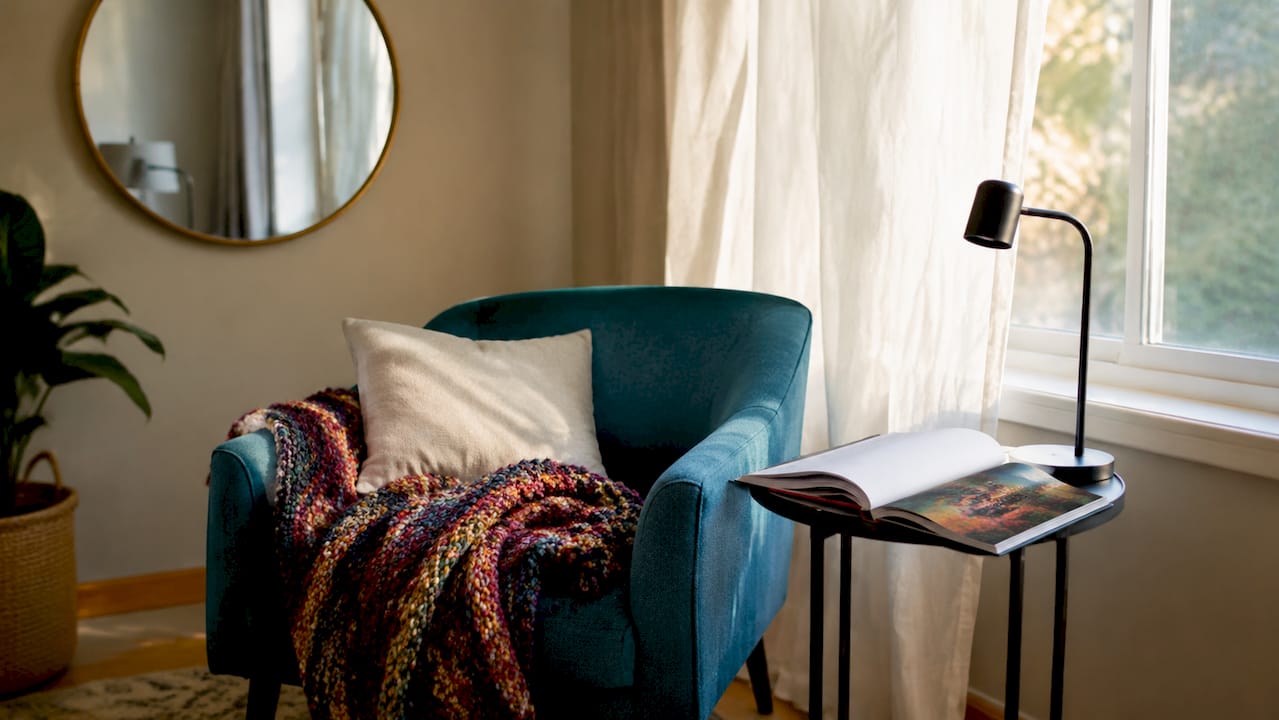
The core design principles of transitional style are balanced proportions, restrained ornamentation, functional elegance, and timeless appeal. These principles work together to avoid extremes and favor harmony above all else. Think of a sofa with a classic rolled arm paired with clean-lined legs in brushed nickel. Neither piece dominates. Both coexist.
Here are the defining transitional style characteristics you will recognize in well-executed rooms:
- Neutral color palette using the 70-20-10 rule. The 70-20-10 color method means 70% neutral base (warm whites, taupes, greiges), 20% deeper neutrals (charcoal, navy, warm brown), and 10% accent color. This keeps the room calm while preventing it from feeling flat.
- Layered textures across three levels. Chairish identifies three texture tiers: foundation textures (rugs, upholstery), soft textures (throw pillows, curtains), and accent textures (ceramics, metallic objects). Each layer adds visual depth without adding visual noise.
- Furniture that mixes period silhouettes. A Queen Anne side table next to a streamlined linen sofa is a classic transitional pairing. The shapes reference different eras, but the scale and finish keep them harmonious.
- Restrained ornamentation. Transitional rooms use subtle detail, carved legs, simple molding, or a single tufted cushion, rather than heavy decorative carving or ultra-minimal flat surfaces.
- Statement lighting as a focal point. A sculptural pendant or an antique-inspired chandelier over a clean-lined dining table is a signature transitional move.
Pro Tip: Avoid the mistake of choosing only safe, matching pieces. The character of a transitional room comes from controlled contrast, not uniformity. Include at least one piece with genuine age or texture to prevent the space from feeling like a showroom.
How does transitional style compare to traditional, contemporary, and eclectic?
Many homeowners confuse transitional with adjacent styles. The differences are real and worth understanding before you start shopping or planning.
| Style | Key character | Ornamentation level | Trend sensitivity | Period reference |
|---|---|---|---|---|
| Transitional | Balanced blend of warm and modern | Restrained | Anti-trend, timeless | Multiple periods, no single era |
| Traditional | Formal, rich, historically rooted | High | Low | Specific historical periods |
| Contemporary | Sleek, minimal, current | Very low | High | Present moment |
| Eclectic | Bold, layered, personal | Variable | Low | Freely mixed, often dramatic |
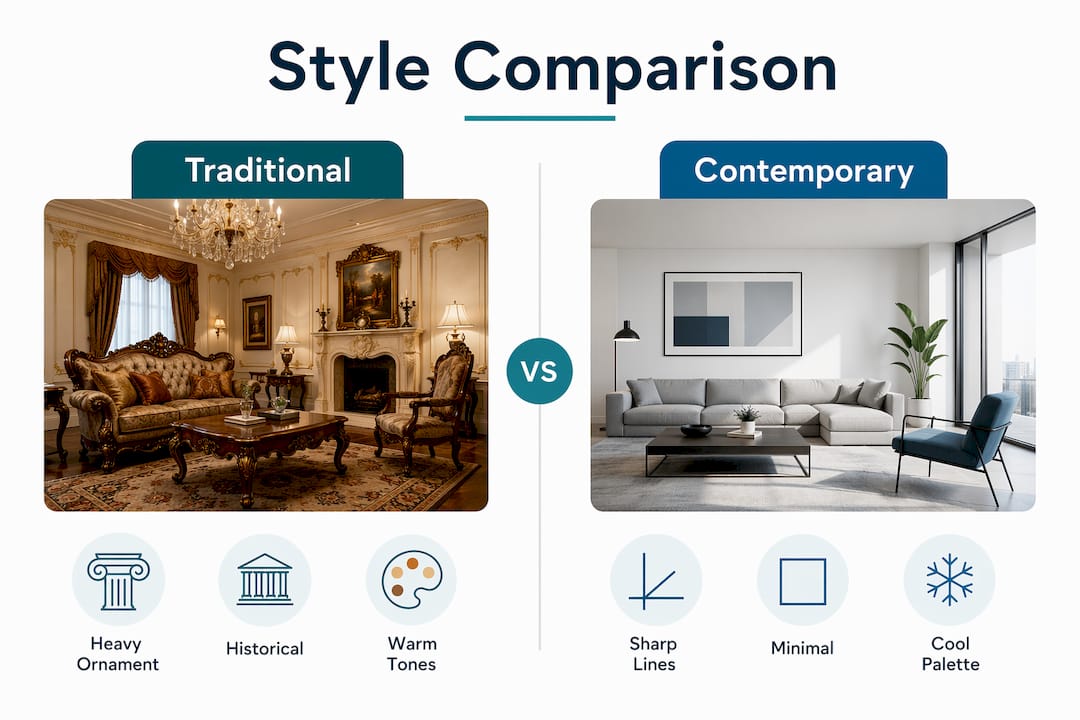
Traditional style uses heavy drapery, dark wood furniture, and ornate details drawn from specific historical periods like Georgian or Victorian design. Transitional decor borrows the warmth and craftsmanship of traditional style but strips away the formality and heavy ornamentation. The room breathes more.
Contemporary style, by contrast, is tied to what is current right now. It favors sharp lines, monochromatic palettes, and minimal accessories. Transitional design is warmer and less trend-driven. A contemporary room can feel cold or dated within a decade. A well-executed transitional room does not.
Eclectic style embraces bold contrasts and personal collections without the restraint that transitional style requires. Eclectic rooms celebrate the unexpected. Transitional rooms celebrate harmony. The anti-trend philosophy of transitional design is its greatest strength: it evolves naturally with you rather than demanding a full redesign every few years. For a deeper look at how to mix old and new styles without losing cohesion, that principle sits at the heart of what makes transitional interiors work.
How to achieve transitional style in your home
Implementing transitional style design does not require a full renovation or a designer budget. It requires a clear process and a disciplined eye.
- Start with an anchor piece. Chairish recommends beginning with one substantial piece that already embodies the transitional balance, a sofa with classic lines in a modern fabric, or a dining table with a traditional silhouette in a light oak finish. Every other decision flows from this piece.
- Build your neutral palette deliberately. Choose your 70% base color first. Warm whites like Benjamin Moore’s White Dove or Sherwin-Williams’ Accessible Beige work well. Then select your 20% deeper neutral for upholstery or cabinetry, and reserve your 10% accent for throw pillows, art, or a single statement chair.
- Layer textures in three stages. Lay your foundation texture first with a natural fiber rug like jute or sisal. Add soft textures through linen curtains and velvet cushions. Finish with accent textures through ceramic vases, woven baskets, or a hammered metal tray.
- Mix furniture styles with proportion in mind. Pair pieces that share a similar visual weight even if their styles differ. A slim-legged antique console works beside a low-profile modern sofa because both feel light. Practical guidance on mixing furniture styles confirms that proportion and readability matter more than matching periods.
- Add one statement lighting piece per room. A sculptural floor lamp, a drum pendant, or a lantern-style chandelier gives the room a focal point and prevents the neutral palette from reading as bland.
- Edit your accessories ruthlessly. Transitional rooms use fewer accessories than traditional rooms, but each one carries more weight. Choose pieces that blend materials or periods: a ceramic lamp with a linen shade, a brass bowl on a reclaimed wood tray.
Pro Tip: The most common failure in transitional decor is treating it as a “safe” middle ground with no distinctive character. Statement pieces and texture contrast are not optional extras. They are what separates a well-designed transitional room from a forgettable one.
How lighting and accessories complete the transitional look
Lighting is not a finishing touch in transitional style. It is a structural element. Statement lighting balances serenity with visual drama, which is exactly the tension that makes transitional rooms feel alive rather than static.
The most effective transitional lighting strategy uses three layers:
- Ambient lighting sets the overall tone. Recessed lighting or a central pendant provides the base layer. Choose warm-toned bulbs (2700K to 3000K) to reinforce the palette’s warmth.
- Task lighting adds function and intimacy. Table lamps with ceramic or linen bases on side tables or desks bring the eye down and create cozy zones within a larger room.
- Accent lighting creates drama. A picture light over a piece of art, or LED strip lighting inside a glass-front cabinet, adds depth and draws attention to curated objects.
For kitchen lighting specifically, layering pendant lights over an island with under-cabinet task lighting follows the same transitional logic: function and beauty working together.
Accessories in transitional rooms follow one rule: blend, do not match. A room where every object shares the same finish or material reads as staged. Instead, mix aged brass with matte black, rough linen with polished marble, and natural wood with glass. Designer Venetia Rudebeck notes that pairing antiques with sleek modern pieces effortlessly is one of transitional style’s defining strengths. For artwork, styling art walls for calm spaces using a restrained palette and consistent framing style reinforces the transitional aesthetic without overwhelming it.
Key takeaways
Transitional style works because it combines the warmth of traditional design with the clarity of modern design, creating interiors that stay beautiful, functional, and personal for decades.
| Point | Details |
|---|---|
| Core definition | Transitional style blends traditional and modern elements across furniture, color, and texture for a timeless result. |
| Color rule | Use the 70-20-10 method: 70% neutral base, 20% deeper neutral, 10% accent to maintain calm with depth. |
| Texture layering | Build in three stages: foundation, soft, and accent textures to add visual interest without clutter. |
| Avoid blandness | Include at least one statement lighting piece and one high-texture or antique element per room. |
| Style distinction | Transitional differs from traditional by reducing ornamentation, and from contemporary by adding warmth and timeless references. |
Why transitional style is the most honest approach to decorating
I have worked with enough interior spaces to say this plainly: most homeowners do not actually want a strict style. They want a home that feels like them. Transitional style is the only design category that openly admits this.
What I find most underrated about this approach is its anti-trend philosophy. When you commit to a purely contemporary room, you are betting on the current moment. That bet rarely ages well. Transitional style, by contrast, is designed to absorb change. You can add a new piece, swap out a rug, or introduce a different accent color without the room falling apart. That flexibility is not a compromise. It is a feature.
The misconception I hear most often is that transitional means “boring.” It does not. It means disciplined. The rooms that feel most alive within this style are the ones where the homeowner took a risk on one strong piece, a sculptural lamp, a richly textured antique chair, a piece of bold artwork, and let the rest of the room support it. Restraint in the background makes the foreground sing.
My personal approach is always to start with what you already own and love. If you have a traditional heirloom piece, build around it with cleaner, lighter modern pieces. If you have a sleek contemporary sofa, warm it up with layered textiles and an aged wood coffee table. The confidence to mix decor styles comes from understanding proportion and palette, not from following a rigid formula.
— Enn
Find transitional style pieces at Newwayref
If you are ready to build or refresh a transitional interior, the right pieces make all the difference.
Newwayref offers a thoughtfully curated selection of home furniture and decor designed to fit the transitional aesthetic. From clean-lined sofas and coffee tables to lighting fixtures and home accessories, the collection covers the full range of what you need to layer a balanced, timeless room. Whether you are starting from scratch or adding one statement piece to an existing space, you can shop the full collection and find pieces that blend function with design appeal. Free shipping is available on orders over $50, making it easy to experiment with new textures and styles without a large upfront commitment.
FAQ
What is transitional style in interior design?
Transitional style is an interior design approach that blends traditional and modern elements, including furniture, color palettes, and textures, to create timeless, balanced spaces that cannot be pinpointed to a single era.
What colors work best in a transitional interior?
Neutral palettes work best. The 70-20-10 rule applies: 70% warm neutrals like taupe or greige, 20% deeper tones like charcoal or navy, and 10% accent color through pillows or art.
How is transitional different from traditional style?
Traditional style uses heavy ornamentation, dark woods, and formal arrangements tied to specific historical periods. Transitional style keeps the warmth and craftsmanship but removes the formality and reduces decorative detail significantly.
Can I mix antique and modern furniture in a transitional room?
Yes, and this is actually the defining move of transitional design. The key is matching visual weight and proportion rather than period or finish, so pieces from different eras feel like they belong together.
How do I avoid a bland transitional room?
Include at least one statement lighting piece and one high-texture or antique element per room. Generic neutrals and safe furniture choices without contrast or character are the most common cause of flat transitional spaces.