

Searching for furniture that feels at home in your New York apartment often means narrowing your options to pieces that fit both your style and your floor plan. Small spaces demand more than good looks – they require solutions that make everyday life simpler without sacrificing personality. Contemporary furniture breaks away from heavy, ornate traditions, focusing on clean lines, flexibility, and thoughtful use of materials so you can design a space that feels open, functional, and uniquely yours.
Table of Contents
- Contemporary Furniture Defined and Debunked
- Essential Materials and Design Elements
- Key Benefits for Small Urban Spaces
- Comparing Contemporary and Traditional Styles
- Common Mistakes When Selecting Pieces
Key Takeaways
| Point | Details |
|---|---|
| Contemporary Furniture Philosophy | Focuses on functionality, minimalism, and intelligent design, moving away from ornate styles of the past. |
| Sustainability in Design | Prioritizes eco-friendly materials and practices that emphasize durability and reduce environmental impact. |
| Space Optimization | Offers modular and multi-functional designs that maximize utility in compact living environments. |
| Avoiding Common Mistakes | Emphasizes the importance of practicality over trend, ensuring furniture serves daily needs effectively. |
Contemporary Furniture Defined and Debunked
Contemporary furniture represents more than just a design aesthetic - it’s a philosophy of living that prioritizes functionality, minimalism, and intelligent spatial solutions. At its core, contemporary furniture breaks away from ornate historical styles, embracing clean lines and practical design.
The evolution of contemporary furniture stems from significant philosophical and technological shifts. Post-World War II design principles dramatically transformed furniture manufacturing, moving away from decorative excess toward streamlined, purposeful pieces. This transition marked a radical departure from previous design eras characterized by heavy wooden furniture and intricate patterns.
Key characteristics of contemporary furniture include:
- Minimal ornamentation
- Emphasis on functional design
- Use of innovative materials like polished metal and engineered composites
- Clean geometric forms
- Visually lightweight structures
- Adaptable to multiple living spaces
Modern furniture design now actively incorporates sustainability, with manufacturers focusing on creating pieces that extend service life and reduce environmental impact. Sustainable design principles have become integral to contemporary furniture manufacturing, reflecting a broader commitment to ecological responsibility.
Pro tip: When selecting contemporary furniture, prioritize pieces that offer both aesthetic appeal and practical functionality for your specific living environment.
Essential Materials and Design Elements
Contemporary furniture design goes far beyond aesthetic appeal, focusing intensely on material innovation and purposeful design principles. Sustainable material choices have become paramount in creating furniture that not only looks remarkable but also minimizes environmental impact.
The selection of materials in contemporary furniture reflects a sophisticated understanding of form, function, and ecological responsibility. Designers now prioritize materials that offer multiple benefits: durability, aesthetic versatility, and reduced environmental footprint. Innovative inputs like recycled metals, engineered wood composites, and eco-friendly synthetics are transforming how furniture is conceived and manufactured.
Key materials in contemporary furniture design include:
- Aluminum and lightweight metals
- Engineered wood and bamboo
- Recycled plastic composites
- Carbon fiber
- Low-emission glass
- Sustainable textile blends
The Museum of Modern Art highlights that contemporary design isn’t just about materials - it’s about reimagining material life cycles. This means considering how each piece of furniture can be produced, used, and eventually recycled or repurposed with minimal environmental consequences.
Pro tip: When selecting contemporary furniture, evaluate materials not just for their appearance, but for their sustainability, durability, and potential for future recycling.
Key Benefits for Small Urban Spaces
Contemporary furniture emerges as the ultimate solution for young professionals navigating the challenges of compact urban living. Furniture design strategies prioritize maximizing functionality without sacrificing style, transforming cramped apartments into smart, livable spaces.
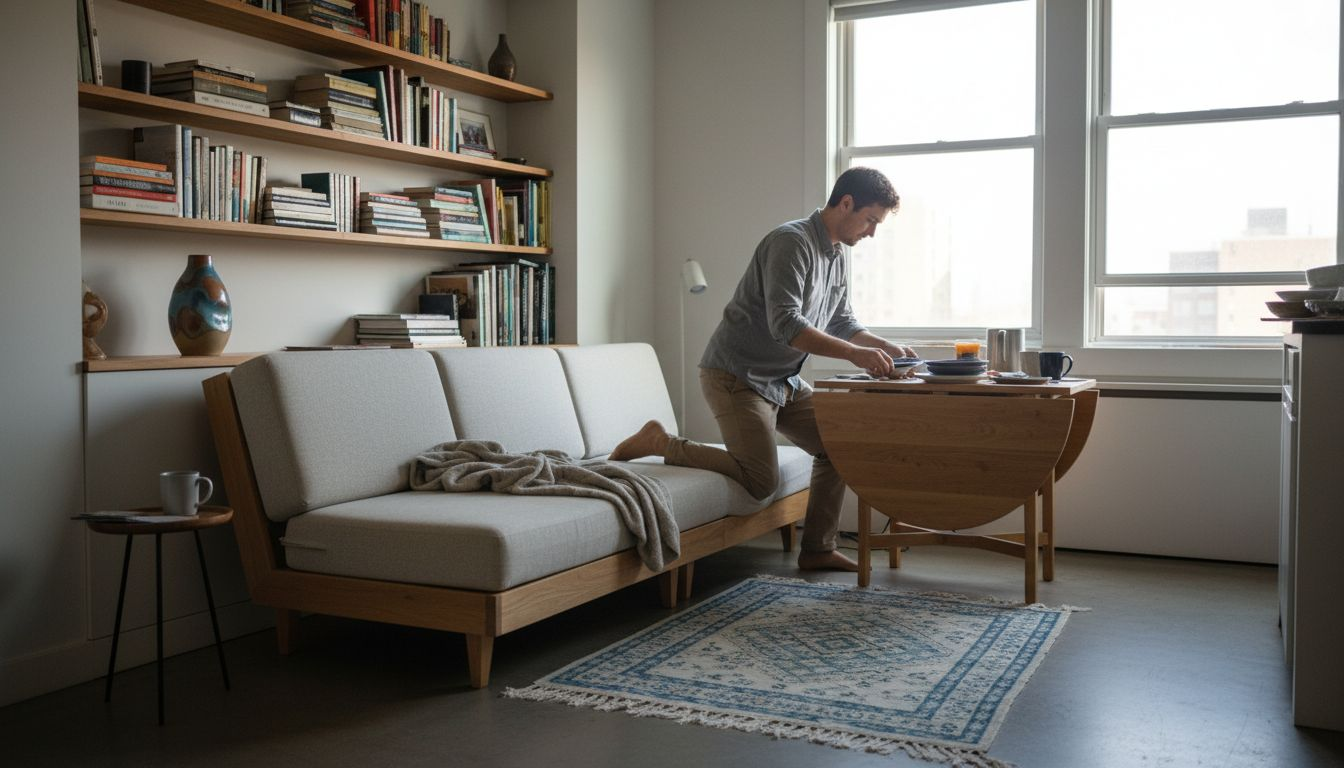
The magic of contemporary furniture lies in its ability to create visual breathing room. By emphasizing clean lines, minimalist profiles, and multi-functional pieces, these designs make small spaces feel dramatically more expansive. Space optimization becomes an art form, with each piece carefully selected to serve multiple purposes while maintaining a streamlined aesthetic.
Key advantages of contemporary furniture for small urban spaces include:
- Modular designs that adapt to changing layouts
- Built-in storage solutions
- Lightweight, movable pieces
- Compact footprints with maximum utility
- Neutral color palettes that enhance perceived space
- Pieces that serve multiple functions
Contemporary furniture doesn’t just fill a space - it transforms it.
Urban dwellers can leverage compact living design principles to create environments that feel both stylish and supremely functional. The goal isn’t just about fitting furniture into a small space, but creating a living area that feels intentional, comfortable, and uniquely personalized.
Pro tip: Measure your space precisely and choose furniture pieces that offer hidden storage or convertible functions to maximize every square inch of your urban home.
Comparing Contemporary and Traditional Styles
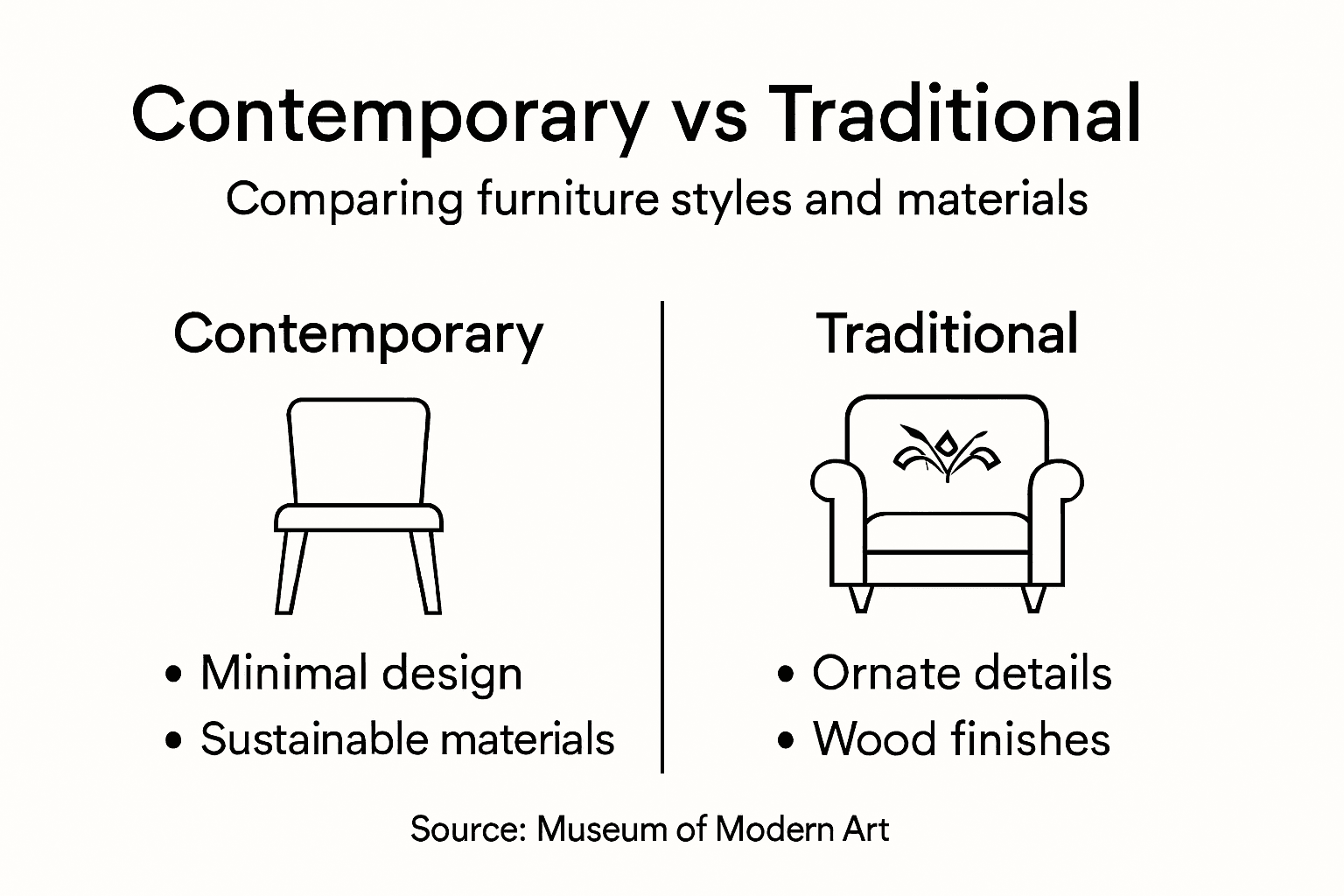
Designing living spaces requires understanding the fundamental differences between contemporary and traditional furniture styles. Furniture design philosophies reveal a stark contrast in approach, with contemporary styles prioritizing functionality and minimalism over historical ornamentation.
Traditional furniture embodies a sense of historical continuity, characterized by intricate details, symmetrical designs, and materials that speak to generational craftsmanship. In contrast, contemporary furniture strips away decorative excess, focusing on clean lines, innovative materials, and adaptable forms that reflect modern urban lifestyles.
Key distinctions between contemporary and traditional styles include:
Here’s a concise overview of how contemporary and traditional furniture styles differ across several dimensions:
| Category | Contemporary Style | Traditional Style |
|---|---|---|
| Material Usage | Focus on innovative, eco-friendly materials | Relies on solid wood and classic textiles |
| Visual Approach | Minimalist, clean lines | Ornate, detailed craftsmanship |
| Functional Priorities | Adaptability and multi-functionality | Formality and historic continuity |
| Manufacturing Process | Utilizes modern technology | Emphasizes hand-made techniques |
| Spatial Interaction | Enhances open, flexible layouts | Defines distinct room areas |
- Material selection
- Visual complexity
- Functional priorities
- Aesthetic philosophy
- Manufacturing approach
- Space interaction
Contemporary design transforms spaces; traditional design preserves them.
The evolution of interior design styles demonstrates how furniture reflects broader cultural shifts. While traditional styles invoke a sense of permanence and historical connection, contemporary designs celebrate innovation, flexibility, and individual expression.
Pro tip: When mixing furniture styles, use contemporary pieces as statement elements and traditional pieces as complementary accents to create a balanced, personalized living environment.
Common Mistakes When Selecting Pieces
Furnishing your living space requires more than just aesthetic appeal. Furniture selection challenges can quickly derail your design intentions if you aren’t strategic about your choices. Young professionals often fall into predictable traps that compromise both comfort and functionality.
One of the most critical errors is prioritizing trend over practicality. Many consumers select pieces that look impressive in showrooms but fail to consider how those items will function in their actual living environment. Style without substance becomes a costly mistake that leads to furniture that looks good but doesn’t serve your daily needs.
Common mistakes to avoid when selecting furniture include:
To avoid common furniture selection mistakes, consider these solutions matched with their impact:
| Mistake | Mitigation Strategy | Benefit for Homeowner |
|---|---|---|
| Ignoring measurements | Create a detailed floor plan | Optimal use of available space |
| Overlooking durability | Research material longevity | Fewer replacements, cost savings |
| Impulse buying | Set clear functional requirements | Functional, personalized environment |
| Prioritizing style only | Test comfort and utility in-store | Daily satisfaction, improved comfort |
- Ignoring room measurements
- Choosing style over comfort
- Neglecting material durability
- Overlooking existing decor compatibility
- Impulse buying without long-term planning
- Disregarding personal lifestyle requirements
Thoughtful furniture selection balances aesthetics with practical living needs.
Understanding furniture design principles helps prevent costly purchasing errors. The goal is creating a living space that not only looks remarkable but genuinely supports your daily life and personal aesthetic.
Pro tip: Create a detailed room layout with exact measurements before shopping, and always sit and test furniture pieces to ensure they meet your comfort and functional requirements.
Elevate Your Space with Contemporary Furniture Solutions
Struggling to find furniture that combines style, functionality, and smart space use for your modern living environment? This article highlights the key challenges of small urban spaces and the importance of choosing pieces that are adaptable, minimalist, and sustainable. At New Way Ref, we understand these needs and offer a curated selection of contemporary furniture designed to transform your home—whether you need sleek coffee tables, space-saving shoe cabinets, or stylish sofas that fit perfectly in compact layouts.
Explore our Home & Kitchen collection to discover multi-functional furniture that optimizes every inch of your space while delivering timeless style. Take advantage of our exclusive offers and free shipping on orders over $50 by visiting New Way Ref today. Upgrade your living area now with pieces that marry aesthetic appeal and practical design crafted just for modern lifestyles.
Frequently Asked Questions
What are the key characteristics of contemporary furniture?
Contemporary furniture is characterized by minimal ornamentation, functional design, innovative materials, clean geometric forms, and adaptable structures suitable for various living spaces.
How does contemporary furniture benefit small urban living?
Contemporary furniture maximizes space through modular designs, compact footprints, and multi-functional pieces, making small areas feel larger and more livable.
What materials are commonly used in contemporary furniture design?
Common materials include aluminum, engineered wood, recycled plastic composites, carbon fiber, low-emission glass, and sustainable textile blends that prioritize durability and ecological responsibility.
How do contemporary and traditional furniture styles differ?
Contemporary furniture emphasizes minimalism, innovative materials, and adaptability, while traditional furniture focuses on intricate details, symmetry, and historical continuity.