

Many homeowners treat wall art as an afterthought, choosing pieces to fill blank spaces rather than craft meaningful statements. Yet curated wall art transforms your home into a personalized sanctuary that reflects your identity and tells your story. This guide reveals why thoughtful curation elevates both aesthetics and emotional connection, helping you create living spaces that genuinely feel like yours.
Table of Contents
- Understanding The Impact Of Curated Wall Art On Your Home
- Mastering Proportion, Placement, And Lighting For Visual Harmony
- Curating Gallery Walls: Creating Engaging Narratives And Cohesion
- Practical Steps To Curate Wall Art That Reflects Your Style And Enhances Your Space
- Discover Curated Home Decor And Lighting Solutions
- Frequently Asked Questions
Key takeaways
| Point | Details |
|---|---|
| Curated art defines personality | Thoughtfully selected wall art establishes your home’s unique character and visual harmony. |
| Proportion matters significantly | Scale, placement at 57-60 inches, and lighting dramatically impact how art transforms room dynamics. |
| Gallery walls tell stories | Mixing varied pieces with consistent framing creates engaging narratives while maintaining cohesion. |
| Personal connection drives selection | Choosing art you genuinely connect with ensures authentic expression and lasting satisfaction. |
| Experimentation builds confidence | Starting small with less prominent walls lets you refine curation skills before tackling major spaces. |
Understanding the impact of curated wall art on your home
Wall art does far more than cover empty walls. It broadcasts your personality, interests, and values to everyone who enters your space. Choosing art defines the energy you create and reveals what matters to you.
Curated pieces add emotional depth that generic prints cannot match. When you select art with intention, each piece contributes to an atmosphere that feels genuinely welcoming. The right artwork makes visitors pause, sparks conversations, and creates moments of connection. Spaces filled with meaningful art feel alive rather than staged.
Art makes homes feel personal, distinguishing your space from showroom perfection. Your selections communicate whether you value bold expression or subtle sophistication, modern minimalism or eclectic warmth. This visual language operates continuously, shaping how you and your guests experience each room.
Thoughtful curation transforms houses into homes through these key impacts:
- Identity expression: Your art choices reveal passions, travels, and values without words
- Mood creation: Colors, subjects, and styles directly influence room energy and emotional tone
- Spatial definition: Strategic placement guides attention and defines functional zones
- Conversation catalyst: Unique pieces naturally invite dialogue and shared experiences
Consider your art collection as an evolving autobiography displayed on your walls. Each addition should feel intentional, whether it recalls a meaningful memory, supports an artist you admire, or simply brings daily joy. When you prioritize personal resonance over matching your sofa, your home becomes a curated collection that expresses authentic style.
The cumulative effect of curated art extends beyond aesthetics. Surrounding yourself with pieces that genuinely move you creates an environment that supports wellbeing and reflects your evolving identity. This foundation makes personalizing your home for comfort both meaningful and achievable.
Mastering proportion, placement, and lighting for visual harmony
Even exceptional art loses impact when displayed incorrectly. Three technical factors determine whether your pieces enhance or diminish your space: proportion, placement, and lighting. Understanding these elements transforms good intentions into stunning results.
Proportion creates balance between art and architecture. Art must engage with room dimensions to make a meaningful impact. A tiny print above a king bed feels lost, while an oversized canvas in a compact hallway overwhelms. Calculate your wall width and aim for art that spans roughly two-thirds to three-quarters of the furniture below it.
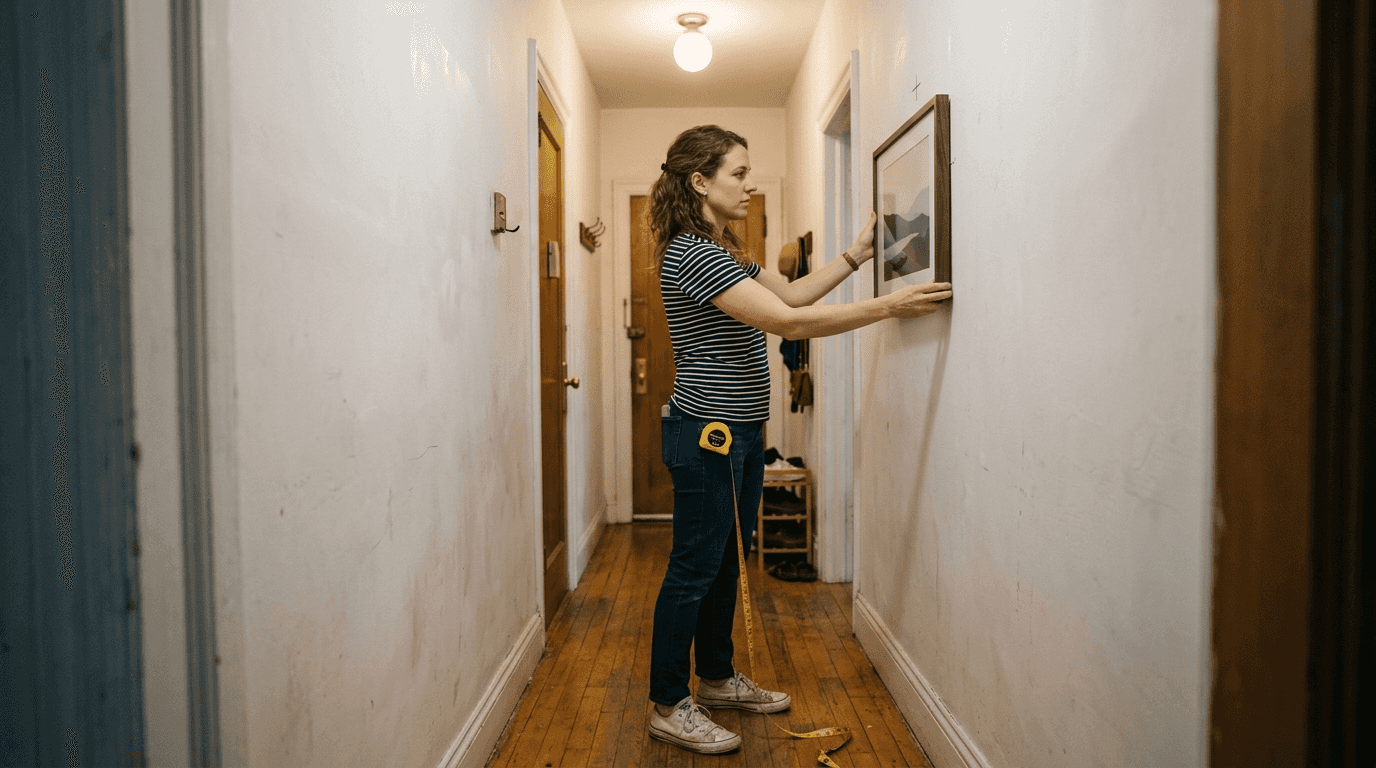
Placement height affects accessibility and flow. The universal standard positions artwork so the center sits at 57-60 inches from the floor, mimicking average eye level in galleries. This placement feels natural whether you’re standing or seated. Improper sizing makes rooms feel sparse or cramped, disrupting the visual balance you’re trying to create.
Lighting reveals or obscures artistic details. Natural light shifts throughout the day, deepening textures and transforming colors in ways that artificial light cannot replicate. Position pieces where morning or afternoon sun enhances rather than washes them out. Avoid hanging reflective or glass-covered art directly opposite windows where glare becomes problematic.
Pro Tip: Before hammering any nails, cut paper templates matching your art dimensions and tape them to walls. Live with this mock arrangement for several days, observing how light changes throughout the day and whether the scale feels right. This simple step prevents costly mistakes and unnecessary wall damage.
Apply these proportion guidelines for different spaces:
- Above sofas: Art should span 50-75% of furniture width
- Dining areas: Center pieces over tables with 6-8 inches clearance above serving dishes
- Narrow hallways: Vertical pieces draw the eye upward, making spaces feel taller
- Large blank walls: Oversized statement pieces anchor rooms better than undersized collections
Your living room layout optimization depends partly on art placement that complements rather than competes with furniture arrangements. Similarly, understanding the role of lighting in design helps you position art where illumination enhances its impact. These technical considerations separate amateur attempts from professionally curated displays.
Curating gallery walls: creating engaging narratives and cohesion
Gallery walls offer unique opportunities to showcase personality through varied collections. Done well, they create visual interest that single pieces cannot match. Done poorly, they become cluttered messes that overwhelm rather than delight.
Organized complexity satisfies our aesthetic needs. Gallery walls balance order and visual interest, giving viewers enough variety to stay engaged while maintaining coherence. This tension between uniformity and diversity explains why successful gallery walls feel both dynamic and harmonious.
Media mixing adds texture and depth. Apply the 60-30-10 rule for balanced compositions: 60% photographs or prints, 30% paintings or textured pieces, and 10% dimensional objects like small shelves or sculptures. This proportion creates visual rhythm without monotony.
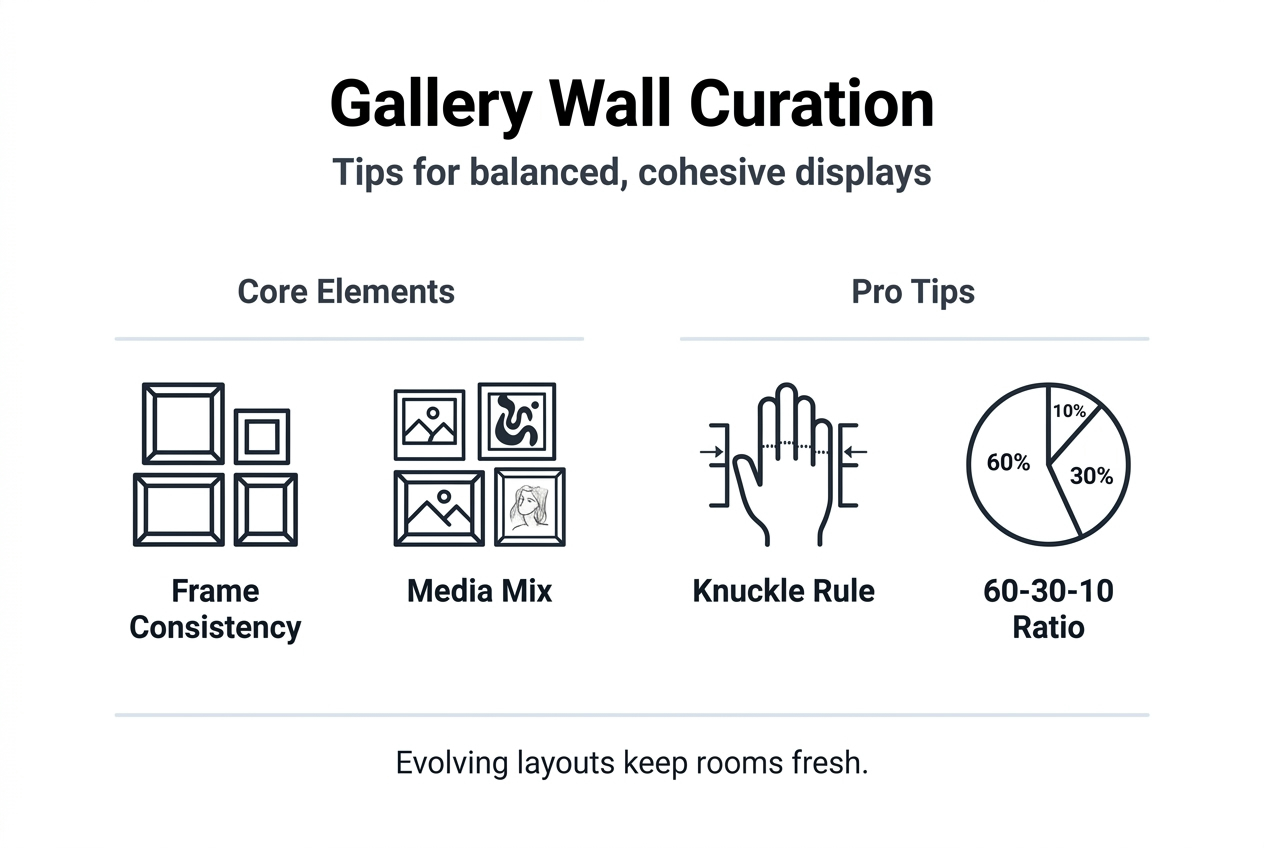
Consistent framing unifies diverse content. While matching frames create sleek, modern galleries, mixing frame styles works when you maintain consistent elements like color palette or mat width. Black frames with white mats universally work across different art styles and periods.
Compare these gallery wall approaches:
| Style | Best For | Key Characteristics | Difficulty |
|---|---|---|---|
| Salon Style | Eclectic collectors | Varied sizes, tight spacing, fills entire wall | Advanced |
| Grid Layout | Modern minimalists | Uniform frames, symmetrical arrangement, clean lines | Beginner |
| Linear Gallery | Narrow hallways | Single horizontal row, consistent bottom line | Intermediate |
| Cluster Focus | Statement collections | Grouped around central anchor piece, balanced weight | Intermediate |
Start your gallery wall journey with these practical steps:
- Choose an anchor piece first, typically your largest or most meaningful artwork
- Arrange remaining pieces on the floor, adjusting until the composition feels balanced
- Photograph your final floor layout for reference during hanging
- Work outward from the center rather than left to right for better symmetry
Pro Tip: Use painter’s tape to map exact spacing on your wall before hanging. The knuckle rule recommends 2-3 inches between frames, maintaining visual connection without crowding. This spacing lets each piece breathe while the collection reads as a unified whole.
Begin with smaller, less prominent walls like a staircase landing or hallway to build confidence. These practice spaces let you experiment with arrangements and discover your aesthetic preferences without the pressure of perfecting your main living area. Your skills and taste will evolve, making early experiments valuable learning experiences rather than permanent commitments.
Integrating gallery walls into your broader home decor approach for modern urban spaces creates layered, sophisticated interiors that reflect genuine personality rather than catalog-perfect sterility.
Practical steps to curate wall art that reflects your style and enhances your space
Transforming wall art theory into reality requires systematic action. Follow these steps to build a collection that genuinely represents you while enhancing your living environment.
1. Identify pieces that resonate personally
The biggest mistake is not finding art that personally speaks to you. Rush this step and your walls will feel generic despite quality pieces. Visit galleries, browse online collections, and save images that provoke emotional responses. Notice patterns in your preferences to understand your authentic aesthetic.
2. Assess your space requirements
Measure wall dimensions and note existing furniture arrangements. Consider room function and how art can support it. A energizing abstract piece might energize a home office but overwhelm a bedroom meant for relaxation. Light conditions matter too; southern exposures handle bolder colors while northern light flatters subtle tones.
3. Test layouts before committing
Never hang art permanently without experimenting first. Use removable adhesive strips or lean larger pieces against walls to evaluate scale and placement. Live with temporary arrangements for at least a week, observing how different times of day and lighting conditions affect your response.
4. Layer varied media for depth
Combine these elements to create textured, engaging displays:
- Photography capturing meaningful moments or inspiring landscapes
- Original paintings or limited edition prints from emerging artists
- Textile art like woven pieces or embroidered works
- Three-dimensional elements including shadow boxes or small sculptural objects
- Personal memorabilia framed as art, from vintage maps to concert posters
5. Refresh periodically to prevent stagnation
Your collection should evolve as you do. Rotate seasonal pieces, swap art between rooms, or replace works that no longer resonate. This fluidity keeps your space feeling current and prevents visual fatigue from seeing identical arrangements daily.
Pro Tip: Create a dedicated folder on your phone for art inspiration. Screenshot pieces you love, note why they appeal to you, and reference this collection when making purchasing decisions. Patterns will emerge revealing your true style beyond temporary trends.
Successful curation balances intuition with strategy. Trust your emotional responses while applying technical principles of proportion, placement, and lighting. This combination produces spaces that feel both professionally designed and authentically personal.
A step by step approach to modern home decor includes wall art as a foundational element rather than a finishing touch. Similarly, selecting modern home accessories for urban spaces works best when coordinated with your existing art collection, creating cohesive rooms where every element supports your overall vision.
Remember that curation is an ongoing practice, not a one-time project. Allow your collection to grow organically, adding pieces as you discover them rather than forcing completion. The most compelling galleries develop over years, accumulating layers of meaning that catalog-purchased sets can never replicate.
Discover curated home decor and lighting solutions
Your curated wall art deserves equally thoughtful surroundings. Explore our home decor collection featuring furniture and accessories designed to complement diverse art styles. From minimalist coffee tables that let bold artwork shine to textured throws that echo gallery wall colors, each piece supports your vision.
Proper illumination transforms good art into great displays. Our lighting collection includes adjustable fixtures that adapt throughout the day, highlighting textures and colors while eliminating glare. Whether you need focused picture lights or ambient room lighting, our curated selection ensures your art looks its best.
Visit New Way Ref to discover how quality home furnishings and strategic lighting elevate your entire space, making your curated art collection the star it deserves to be.
Frequently asked questions
What is the ideal spacing between pieces in a gallery wall?
The knuckle rule recommends 2-3 inches between frames for optimal visual flow. This spacing maintains connection between pieces while preventing crowding. Tighter spacing creates salon-style intensity, while wider gaps suit minimalist aesthetics.
How can I ensure my wall art reflects my personal style?
Feel genuine connection to each piece by relating it to personal stories, memories, or artist affinity. Avoid purchasing solely to match decor or fill space. Your authentic response matters more than design rules or trend forecasts.
What lighting tips improve the appearance of my wall art?
Natural light transforms art by deepening texture and shifting colors throughout the day. Position reflective pieces away from direct window glare. Consider adjustable artificial lighting that adapts as natural light changes, maintaining consistent visibility and impact.
Should I match frame styles across my entire home?
Matching frames creates cohesion but risks feeling overly coordinated. Instead, maintain consistency within individual rooms or gallery walls while varying styles between spaces. This approach lets each room develop unique character while your home maintains overall harmony.
How do I know if art is properly scaled for my space?
Art above furniture should span 50-75% of the furniture width. Stand back and ensure pieces engage with surrounding architecture rather than floating insignificantly or overwhelming the wall. When uncertain, err toward larger sizes as undersized art disappoints more often than oversized pieces.
Recommended
- What Is Curated Collections? 58% More Personal Stylish Homes – New Way Ref
- Home Decor Guide 2026: Transform Your Urban Space Easily – New Way Ref
- Why personalize your home for comfort and style in 2026 – New Way Ref
- Role of Home Accessories: Elevating Urban Living Spaces – New Way Ref
- Custom Wall Decor Guide: Create Personalized Art at Home