

TL;DR:
- Blending vintage and modern styles creates personalized, layered spaces that feel warm, authentic, and timeless. Using the 70/30 rule and shared design principles ensures cohesion, while embracing imperfection adds character and storytelling. This approach enhances every room, making interiors more meaningful and environmentally sustainable.
Most people assume that mixing old and new styles in a home will look confused or thrown together. The reality is the opposite. When done thoughtfully, combining modern and vintage creates spaces that feel personal, layered, and alive in a way that any single-era room simply cannot. This article breaks down why mix old and new styles works so well, what the design principles behind it are, and how you can apply them room by room without second-guessing every choice.
Table of Contents
- Key takeaways
- Why mixing old and new styles creates timeless spaces
- Design principles for mixing old and new successfully
- The role of materials and imperfection
- Room-by-room applications
- Common pitfalls when mixing styles
- My take on why this matters beyond aesthetics
- Find the right pieces to bring your vision to life
- FAQ
Key takeaways
| Point | Details |
|---|---|
| Vintage adds soul, modern adds function | Vintage pieces bring craftsmanship and history; modern pieces deliver practicality and freshness. |
| Use the 70/30 rule | Ground 70% of your space in one style and use 30% as contrast to maintain cohesion. |
| Cohesion beats perfection | Shared tone, proportion, or material holds a mixed design together better than matching sets. |
| Neutral backdrops unify the mix | Calm, neutral walls give each piece room to breathe and prevent visual overload. |
| Imperfection is an asset | Embracing wear and patina in vintage pieces adds authenticity that no new purchase can replicate. |
Why mixing old and new styles creates timeless spaces
The reason so many designers favor blending eras is not trend-chasing. It is the opposite. Layering antiques with modern elements produces interiors that feel unexpected, fresh, and deeply personal. A room styled entirely in one era, whether all mid-century or all minimalist contemporary, can feel like a catalog page. It looks polished but tells no story.
Vintage pieces carry something modern manufacturing cannot reproduce: the evidence of time. The worn grain on an oak sideboard, the hand-stitched detail on a Victorian chair, the slightly imperfect glaze on a ceramic lamp. These qualities bring warmth and character that anchor a space emotionally. Too much modern without vintage can feel cold, stripped of the history and emotional dimension that makes a house feel like a home.
Modern elements, on the other hand, support the way you actually live. Clean lines, functional storage, and low-maintenance surfaces keep things practical. They also provide the visual breathing room that lets vintage pieces stand out rather than compete with each other.
“Mixing old and new is not random eclecticism. It is purposeful visual tension that enriches interiors with deep stories and layered meaning.”
The contrast between old and new creates what designers call visual tension. Not chaos, but depth. Your eye moves around the room with interest rather than settling on one predictable story. That dynamic is exactly why fusion styles work at every price point and in every type of home. You do not need a historic property or an unlimited budget to benefit from it.
Design principles for mixing old and new successfully
The single most useful framework for combining modern and vintage is the 70/30 rule in interior design. The concept is simple. Let 70% of your space reflect one dominant style, and use the remaining 30% as intentional contrast. If your base is contemporary, let the vintage pieces be the accent. If you love traditional furniture, let modern accessories and surfaces keep the space from feeling heavy.
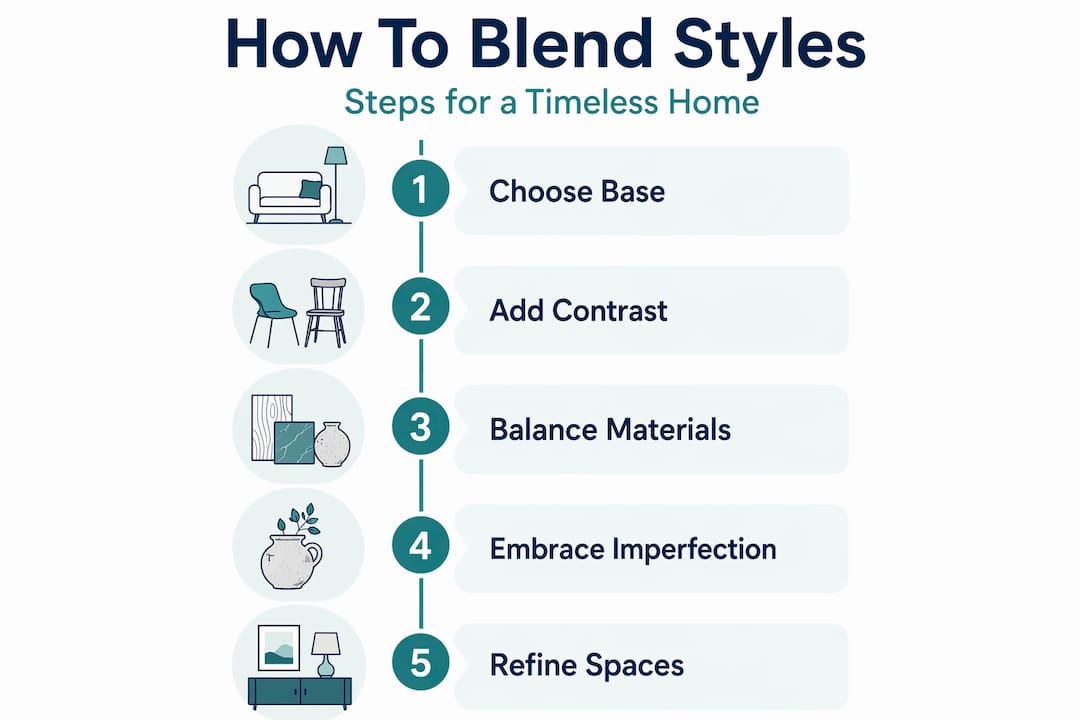
A related approach is the 80/20 ratio. 80% modern pieces mixed with 20% vintage works especially well in open-plan spaces where too many antique pieces would disrupt the flow. The 20% vintage still pulls significant visual weight when placed deliberately.
Beyond ratios, the principles that hold a mixed design together are:
- Shared tone. Warm wood tones connect a mid-century credenza to a modern sofa table. Cool grays link a steel-framed vintage mirror to a contemporary gray linen sofa.
- Consistent scale. A massive antique armoire and a tiny modern side table in the same zone will feel unresolved. Match the visual weight across eras.
- Limiting your palette. Two or three colors across all pieces, old and new, prevent the space from reading as cluttered.
- Reupholstery as a bridge. Reupholstering vintage furniture with contemporary fabrics updates the piece while honoring its original form. A Georgian chair in a bold geometric fabric is a perfect example.
Pro Tip: When you bring a vintage piece home, place it against your most neutral wall first. Live with it for a week before adding surrounding items. This gives you a clearer sense of what the piece needs rather than forcing it into a pre-existing arrangement.
| Approach | Best for | Ratio |
|---|---|---|
| Contemporary dominant | Modern homes adding warmth | 70% modern / 30% vintage |
| Equal blend | Eclectic, maximalist spaces | 50% modern / 50% vintage |
| Vintage dominant | Period homes adding function | 70% vintage / 30% modern |
| Mostly modern | Open-plan, minimalist spaces | 80% modern / 20% vintage |
If you want more guidance on choosing pieces that support this kind of balance, the Newwayref guide to mixing decor styles covers how to approach this with confidence.
The role of materials and imperfection
One of the less-discussed advantages of eclectic design is what it does with imperfection. In purely modern spaces, wear and variation read as damage. In a mixed interior, the patina on a brass fixture or the hairline crack in a vintage ceramic bowl tells a story. Deliberate contrast and acceptance of imperfection create richer spatial narratives and can actually save costs by reducing the need for perfect restoration.
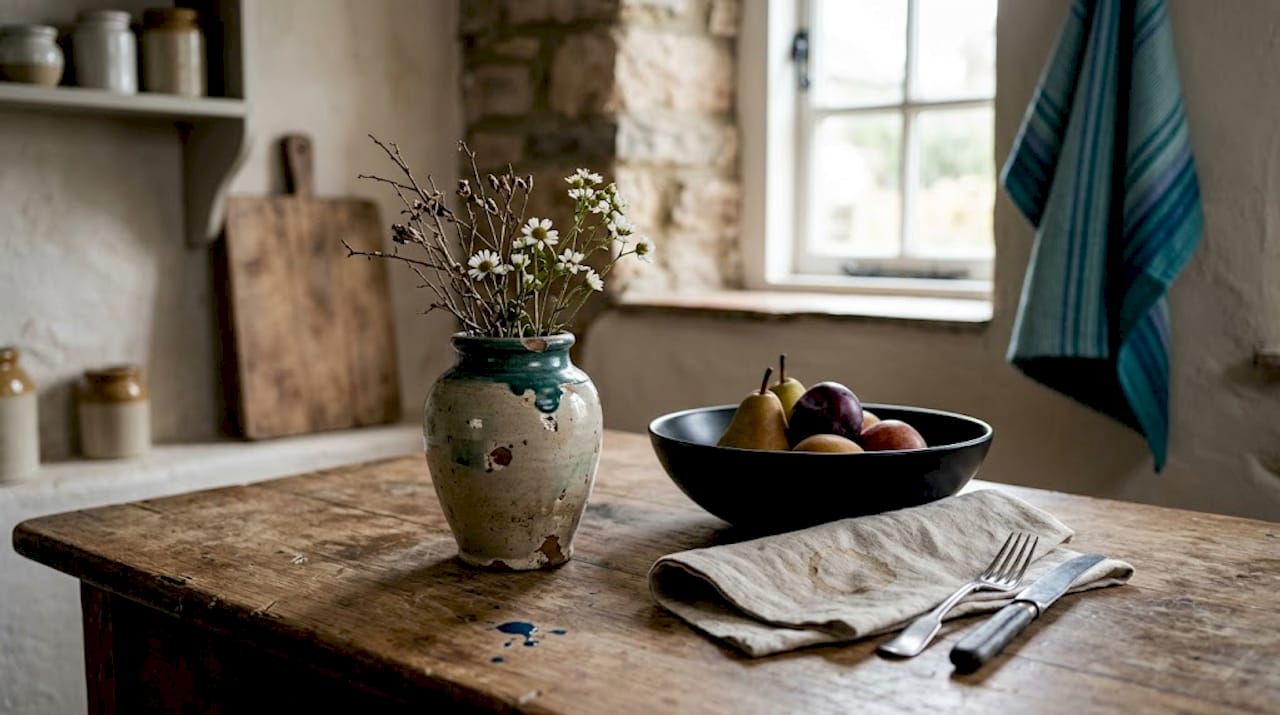
The key idea here is legibility. Let old things look old. A refinished antique stripped of all its original character loses its reason for being in the space. The aged patina, the visible joinery, the slight asymmetry. These are features, not flaws. Contemporary insertions, by contrast, should look clearly new. A polished concrete countertop next to an original brick wall does not need to match. The honest contrast is the point.
This thinking applies to heritage and contemporary renovations as much as to furniture styling. Architects working in historic buildings have long understood that the new addition benefits from being visibly new rather than pretending to be old. The same logic applies in your living room.
Pro Tip: Before repainting or refinishing a vintage find, consider what you would lose. Sometimes the worn surface is the most valuable quality the piece has. A light clean and a coat of wax preserves the patina while making the piece livable.
Material contrast also works as a practical design tool. Rough-hewn wood against sleek marble, brushed metal against matte ceramic, aged leather against linen. These pairings create texture variety that makes a room feel considered rather than assembled from a single shopping trip.
Room-by-room applications
Knowing why blend traditional and contemporary is one thing. Knowing where to start in your own home is another. Here is how the mix translates across specific rooms:
- Living room. A statement vintage piece, a Victorian velvet sofa or an Art Deco cabinet, pairs naturally with clean-lined modern seating and a simple coffee table. A vintage Victorian sofa paired with a modern throw pillow introduces intentional contrast without overwhelming the space. Keep surrounding pieces calm and let the vintage item lead.
- Kitchen. Rustic vintage dining tables anchor a kitchen that has sleek modern cabinetry. The contrast softens the hard lines of contemporary kitchens and adds the warmth that modern decor for stylish homes sometimes lacks on its own.
- Lighting. This is one of the most forgiving elements to mix. Vintage fixtures add warmth and character anywhere you place them. An ornate vintage chandelier over a modern dining table is one of the most effective ways to bring two eras together without committing to a full furniture overhaul.
- Bedroom. A vintage headboard or an antique dresser grounds the room while modern bedding, lamps, and nightstands keep it feeling fresh and easy to live in.
- Bathroom. Vintage tile, a clawfoot tub, or period fixtures pair beautifully with modern vanity surfaces and hardware. This combination adds character to a room that often defaults to generic.
The goal in every room is the same: personal expression over strict rules. Choose pieces you actually love, not pieces that fit a theme perfectly on paper.
Common pitfalls when mixing styles
Even with a clear framework, a few consistent mistakes trip people up when they try to combine modern and vintage.
- Letting styles compete for dominance. If every piece demands attention, nothing gets it. Pick one focal piece per zone and let the others support it.
- Using too many disparate colors or patterns. When the palette fragments, the mix reads as messy. Limit yourself to two or three colors and repeat them across both old and new pieces.
- Overcrowding with eclecticism. More vintage does not mean more character. Give each piece physical and visual space. A single great antique in a well-edited room carries far more weight than ten antiques competing for notice.
- Choosing vintage that feels accidental. Neutral walls give each piece room to breathe, making mix-and-match feel intentional. If a vintage piece looks like it wandered in by mistake, the backdrop and surrounding arrangement need adjustment, not the piece itself.
- Skipping the cohesion check. Shared cohesion elements like proportion, tone, or craftsmanship hold the design together. Before adding a new piece, ask: what does this share with what is already in the room?
Pro Tip: Take a photo of your room on your phone and convert it to black and white. Without color, you can see immediately whether the visual weights and proportions across old and new pieces are balanced.
My take on why this matters beyond aesthetics
I’ve spent a lot of time looking at rooms that were designed to be impressive and rooms that were designed to be lived in. The ones that stay with you are almost never the perfectly matched, perfectly curated sets. They are the ones where something unexpected sits next to something familiar and the two things make you think.
What I’ve found is that mixing old and new styles is really an act of storytelling. Every vintage piece you bring into a contemporary space carries a fragment of another time. And when you place it thoughtfully next to something modern, you are building a room that reflects how life actually works: layered, imperfect, and accumulating meaning over time.
I’ve also come to believe that mixing period and contemporary pieces is one of the most environmentally sound approaches to furnishing a home. Choosing a well-made antique over a new piece keeps that object in use and out of a landfill. It also creates something no catalog can sell: a home that is genuinely yours.
My honest opinion is that the obsession with perfect matching is one of the things that makes so many modern interiors feel forgettable. The rules exist to guide you, not to limit you. Once you understand the 70/30 framework and the principle of shared cohesion, the rest is experimentation. And that is exactly where the most interesting interiors come from.
— Enn
Find the right pieces to bring your vision to life
Ready to start building your own mix of old and new? Newwayref offers a thoughtfully curated selection of modern furniture and home decor that works beautifully alongside vintage finds. Whether you are looking for a clean-lined coffee table to ground a vintage living room or accent lighting that bridges two eras, the collection is designed to complement, not compete.
From statement sofas to accent pieces and lighting fixtures, Newwayref makes it easy to find modern elements that support an eclectic, layered home. Browse the full catalog at Newwayref and discover pieces that give your vintage favorites the modern backdrop they deserve. Free shipping on orders over $50.
FAQ
Why does mixing old and new styles work so well?
The contrast between vintage and modern creates visual depth and personal character that single-era rooms cannot achieve. Each era brings something the other lacks: vintage pieces add warmth and history, while modern pieces add function and clarity.
What is the best ratio for mixing vintage and modern decor?
The 70/30 rule is a reliable starting point: 70% dominant style with 30% contrasting style. Some designers use an 80/20 split in more minimalist spaces, with 80% modern and 20% vintage.
How do I avoid a cluttered look when mixing styles?
Limit your color palette to two or three tones, give each piece physical space, and use neutral walls as a backdrop. Treating vintage pieces as intentional focal points rather than filler keeps the room feeling curated.
Can I mix old and new styles on a budget?
Absolutely. Accepting the patina and wear of vintage pieces rather than restoring them fully saves money and preserves character. Reupholstering an older frame with a new fabric is another cost-effective way to blend eras without buying new furniture.
Which rooms benefit most from mixing old and new?
Every room can benefit, but living rooms and kitchens show the most dramatic improvement. Vintage lighting works across all spaces, and even small vintage accessories in a bathroom or bedroom add warmth without requiring a full redesign.