

TL;DR:
- Thoughtful kitchen decor improves mental well-being by reducing stress and encouraging more meal preparation and socializing. Using color psychology and visual harmony creates an inviting space that enhances mood and productivity. Even renters can boost kitchen appeal with simple, non-permanent changes that support both function and style.
Kitchen decor appeal is defined as the deliberate design of your kitchen’s visual environment to support mood, function, and social connection. The kitchen is the most used room in most homes, and its atmosphere directly shapes how you feel, eat, and interact every day. Prioritizing kitchen aesthetics goes beyond surface-level style. Research links kitchen environments to stress levels, cooking motivation, and even eating behavior, making intentional design one of the most practical investments a homeowner or renter can make.
Why prioritize kitchen decor appeal: the case for intentional design
Kitchen decor appeal shapes your daily well-being in ways most homeowners underestimate. Clutter-free kitchens reduce stress and improve daily functioning, according to a 2026 Environment and Behavior Journal study. That finding means the state of your kitchen is not just a visual preference. It is a measurable factor in how calm or anxious you feel throughout the day.
The kitchen is where meals start, conversations happen, and families gather. Without intentional decor, it stays purely utilitarian. Personalized kitchens encourage gathering and self-expression, according to architect Andrew Pharis. That shift from functional room to social hub is exactly what thoughtful decor achieves.
Renters often assume decor investment is not worth it in a space they do not own. That assumption is wrong. Non-permanent changes like lighting, rugs, plants, and curated accessories can completely change how a kitchen feels, without touching a single wall or cabinet.
How do kitchen aesthetics affect mental well-being?
Kitchen clutter triggers a measurable stress response. Cluttered kitchens increase cortisol and stress eating, affecting both mental and physical health. Cortisol is your body’s primary stress hormone, and a visually chaotic kitchen keeps it elevated even when you are not actively cooking.
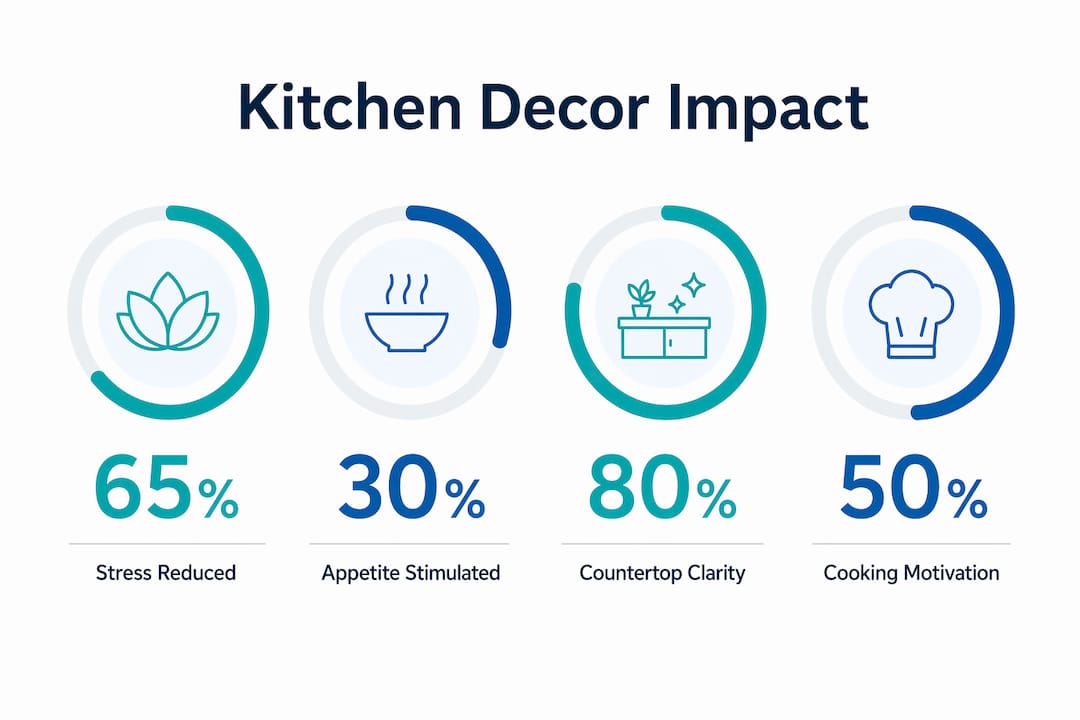
Countertops carry the most weight in this equation. Messy counters cause negative emotional responses and reduce perceived cleanliness, according to psychologists who identify counters as the visual centerpiece of any kitchen. When guests walk in, countertops are the first thing they notice. When you walk in, they set the emotional tone for your entire cooking experience.
Minimalist kitchen aesthetics reduce mental friction by lowering visual noise, turning cooking from a chore into a form of self-care. That is a meaningful shift. When your kitchen feels calm and organized, you are more likely to cook at home, eat better, and spend time in the space willingly.
“A kitchen that feels good to be in changes how often you use it, and how much you enjoy it.” This is the core argument for treating kitchen decor as a health and lifestyle decision, not just an aesthetic one.
Key mental well-being benefits of intentional kitchen decor:
- Reduced cortisol from clutter-free surfaces
- Lower stress eating triggered by visual chaos
- Improved cooking motivation from a calm, organized space
- Greater sense of control and comfort in daily routines
- More frequent family meals and social interaction
How does color psychology shape kitchen mood and appetite?
Color is one of the most powerful and least expensive tools in kitchen design. Warm colors like red and yellow increase appetite and social interaction, while cool colors like blue reduce hunger and promote calm. That distinction matters depending on what you want your kitchen to do for you.
Here is how the main color families perform in kitchen environments:
- Red and orange stimulate appetite and energy. They work well in dining areas and social kitchens where you want conversation to flow.
- Yellow promotes optimism and warmth. It pairs well with white or wood tones for a bright, welcoming feel.
- Blue and gray calm the nervous system and reduce appetite. They suit kitchens where you want a clean, focused cooking environment.
- White and cream create a sense of space and cleanliness. They are the most forgiving base for layering accent colors.
- Green connects the space to nature and promotes a sense of balance. It works especially well with natural wood and stone textures.
| Color family | Mood effect | Best use in kitchen |
|---|---|---|
| Red / Orange | Stimulates appetite, energy | Accent walls, bar stools, accessories |
| Yellow | Warmth, optimism | Cabinets, backsplash tiles |
| Blue / Gray | Calm, focus | Island, lower cabinets |
| White / Cream | Clean, spacious | Walls, upper cabinets |
| Green | Balance, natural calm | Plants, cabinet color, textiles |
Lighting also changes how every color reads in your kitchen. Warm bulbs (2700K–3000K) make reds and yellows feel richer. Cool white bulbs (4000K+) sharpen blues and grays. Choosing the wrong bulb temperature can make a carefully selected paint color look flat or off.
Pro Tip: Before committing to a wall color, test paint swatches under both your daytime natural light and your evening artificial light. Colors shift significantly between the two, and what looks perfect at noon can feel wrong at dinner.
A professional color consultation can help you select a palette that works across all light conditions in your specific kitchen.
Balancing aesthetic appeal with functionality in kitchen design
Good kitchen design is not just about looking beautiful. It is about creating a space where beauty and function reinforce each other. Aesthetic appeal must be balanced with clear movement paths and sufficient storage to avoid a chaotic environment. When those two elements conflict, the kitchen stops working well on both levels.
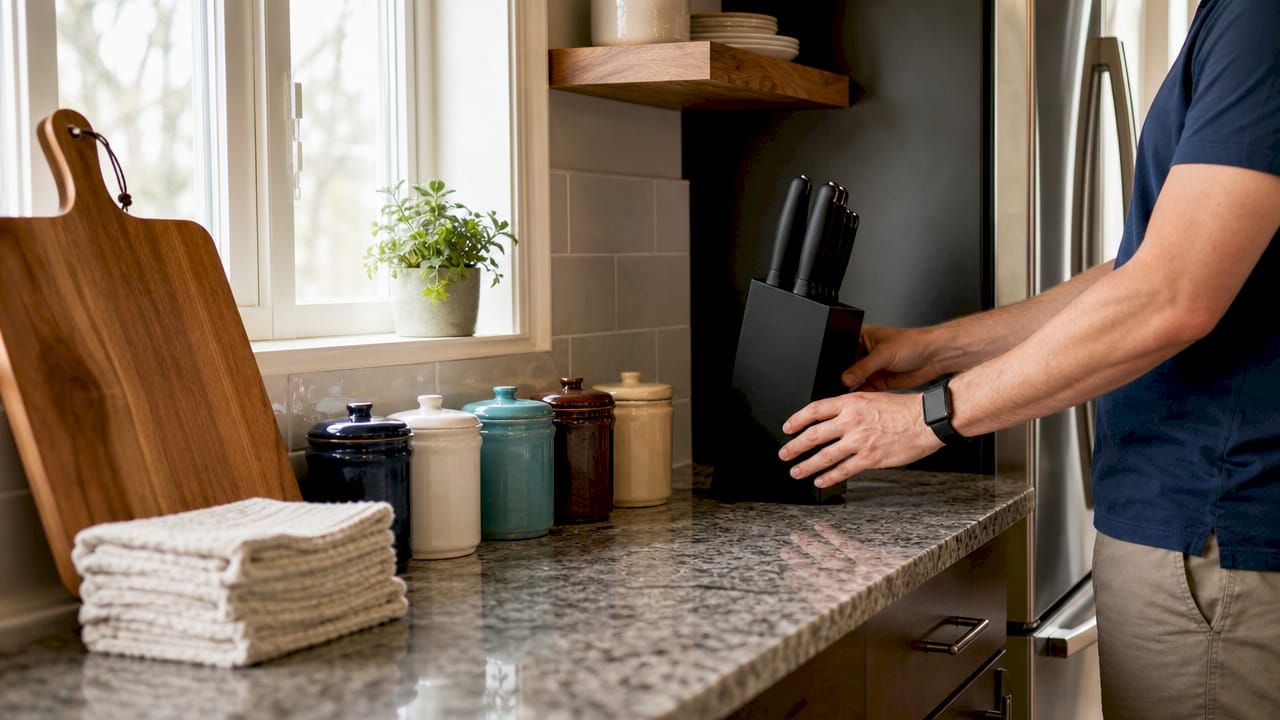
Storage is the foundation of visual calm. When you have a place for everything, countertops stay clear, and the kitchen looks intentional rather than cluttered. Investing in home storage solutions is one of the fastest ways to improve both function and appearance at the same time.
Repeating a design element at least three times creates visual harmony and intentionality. Interior designers call this the repetition principle. For example, if your faucet is matte black, repeat that finish in cabinet hardware and a light fixture. Three repetitions signal a deliberate choice rather than a random mix.
Visual zones using non-permanent decor like lighting, rugs, and open shelving help organize kitchen workflow without renovations. A pendant light over the prep area tells your brain that is where focused work happens. A rug near the coffee station creates a separate, relaxed zone. These mental associations reduce decision fatigue while you cook.
Practical ways to balance aesthetics and function:
- Use drawer organizers and cabinet inserts to hide clutter without sacrificing access
- Group frequently used items together so workflow feels natural
- Choose decor pieces that also serve a purpose, such as a beautiful cutting board or a stylish utensil holder
- Keep appliances you use less than weekly stored out of sight
Pro Tip: Apply the repetition principle to your kitchen’s three most visible surfaces: countertop, backsplash, and upper cabinets. Repeating one material or color across all three creates a unified look without a full renovation.
Practical tips to enhance kitchen decor appeal
Enhancing your kitchen’s appeal does not require a renovation budget. The most effective changes are often the simplest. Start with the blank slate rule, which advises keeping 80% of your countertop clear. That single habit separates kitchens that feel inspiring from ones that feel chaotic.
Follow these steps to build a kitchen that looks and feels great:
- Declutter first. Remove everything from countertops and put back only what you use daily. Store the rest.
- Add a statement light fixture. Lighting is the fastest way to change a kitchen’s mood. A pendant or cluster of pendants over an island or table immediately adds character.
- Introduce one natural element. A potted herb, a small succulent, or a vase of fresh branches adds warmth and connects the space to the outdoors.
- Choose a cohesive color scheme. Pick two or three colors and repeat them across textiles, accessories, and small appliances.
- Personalize with curated pieces. A vintage ceramic bowl, a handmade cutting board, or a framed print adds personality without visual noise.
Additional tips that make a real difference:
- Swap generic dish towels for ones in your chosen color palette
- Use open shelving to display a few beautiful, functional items
- Replace builder-grade cabinet hardware with a finish that matches your style
- Layer lighting with under-cabinet strips for task areas and a dimmer for ambient light
Checking out kitchen decor trends for 2026 can help you identify which styles align with your taste before you spend anything.
Key Takeaways
A well-designed kitchen directly reduces stress, increases cooking motivation, and turns a functional room into a space your household genuinely wants to spend time in.
| Point | Details |
|---|---|
| Clutter raises cortisol | Clear countertops lower stress hormones and reduce stress eating daily. |
| Color drives mood | Warm tones boost appetite and conversation; cool tones promote calm focus. |
| Repetition creates harmony | Repeat one finish or color in at least three places for a cohesive look. |
| Storage enables beauty | Sufficient storage keeps surfaces clear, making decor choices more visible. |
| Visual zones guide workflow | Use rugs, lighting, and shelving to organize kitchen areas without renovating. |
What I have learned from paying attention to kitchen decor
Most people treat kitchen decor as the last thing to think about after appliances, layout, and storage. I think that order is backwards. The way a kitchen looks and feels shapes how often you use it and how much you enjoy being there. That is not a small thing.
I have noticed that the kitchens people love spending time in share one quality: every element feels chosen. Not expensive, not perfect, but intentional. A single pendant light over a worn wooden table. A row of matching jars on an open shelf. A plant on the windowsill. None of those things cost much. All of them signal that someone cared about the space.
The benefits of personalizing your home go beyond aesthetics. When a kitchen reflects your taste, you cook in it more. You invite people into it more. You feel better starting your morning there. That connection between environment and behavior is real, and it is worth designing for deliberately.
My honest opinion: minimalism is not about owning less. It is about choosing more carefully. A kitchen with ten well-chosen pieces feels richer than one with fifty random ones. Start by removing what does not serve you, then add back only what genuinely makes the space feel like yours.
— Enn
Thoughtfully curated kitchen decor at Newwayref
Your kitchen deserves pieces that work as hard as they look good. Newwayref offers a thoughtfully curated selection of home decor and kitchen accessories designed to help you build a space that is both functional and visually satisfying.
From statement lighting fixtures to modern storage solutions, every product at Newwayref is selected with both style and daily use in mind. Free shipping applies on orders over $50, so you can start refreshing your kitchen without adding unnecessary cost. Browse the full collection and find the pieces that fit your kitchen’s personality.
FAQ
Why does kitchen decor affect mental health?
Cluttered and visually chaotic kitchens elevate cortisol levels and increase stress eating. A calm, organized kitchen reduces mental friction and supports better daily habits.
What colors work best for kitchen decor appeal?
Warm colors like red, orange, and yellow stimulate appetite and social energy. Cool tones like blue and gray promote calm and focus, making them better for kitchens used for focused meal prep.
How can renters improve kitchen aesthetics without renovating?
Non-permanent changes like pendant lights, rugs, open shelving, plants, and curated accessories can significantly improve kitchen appeal without altering any permanent fixtures.
What is the blank slate rule in kitchen design?
The blank slate rule advises keeping 80% of your countertop clear at all times. This maintains a sense of order, improves workflow, and makes the kitchen feel more inviting.
How does storage relate to kitchen decor appeal?
Effective storage keeps surfaces clear, which directly improves the visual quality of your kitchen. When clutter has a home, your decor choices become the focal point instead of the mess.