

TL;DR:
- Prioritizing storage furniture from the start of home setup reduces clutter, stress, and unnecessary expenses. Organized spaces improve mental well-being and adaptability, especially through sustainable, durable, and modular designs. Implementing practical storage solutions enhances daily function and long-term environmental and financial benefits.
Storage furniture, or functional storage solutions as interior designers commonly call them, gets overlooked more often than you’d think. Most people treat it as an afterthought, something to buy once the “real” furniture is in place. But there’s a strong reason to why prioritize storage furniture from the very beginning of any home setup. Clutter doesn’t just look bad. It raises your stress hormones, drains mental energy, and quietly chips away at your enjoyment of home. The right storage furniture changes all of that, and this article walks you through exactly how.
Key Takeaways
| Point | Details |
|---|---|
| Storage reduces stress | Organized spaces lower cortisol levels, improving your mental well-being at home. |
| It saves real money | Smart in-home storage can eliminate the need for costly off-site storage units. |
| Renters benefit too | Freestanding modular systems adapt to any rental layout without permanent changes. |
| Function meets design | Modern storage furniture improves both usability and the look of your living space. |
| Sustainability matters | Durable, well-chosen storage furniture outlasts cheap alternatives and reduces waste. |
Why prioritize storage furniture: the stress connection
Most people think of clutter as an aesthetic problem. It isn’t. Cluttered environments act as steady chronic stressors, keeping your nervous system on alert and reducing your ability to focus and relax. Every unresolved pile of stuff is a tiny open loop in your brain, demanding low-level attention even when you’re trying to unwind.
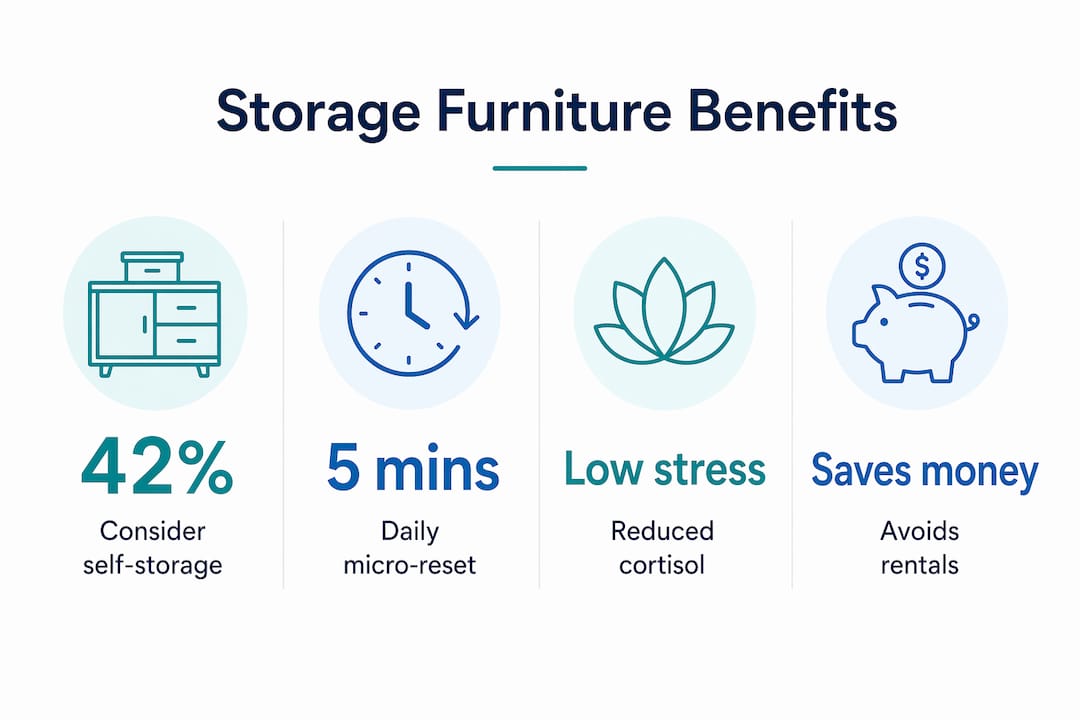
The science backs this up. UCLA research found that women who described their homes as cluttered had dysregulated cortisol patterns linked to chronic stress, while those in organized homes showed healthier hormonal rhythms throughout the day. Your home environment directly shapes your body’s stress response, not just your mood.
“Organization is not about perfection. It’s about reducing the background noise that keeps your nervous system on edge.”
This is where storage furniture earns its place. When your belongings have a designated home, visual clutter drops, your brain stops registering unfinished tasks, and the space starts to feel genuinely restful. The effect is immediate and cumulative.
Pro Tip: Try applying small “micro-resets” at the end of each day. Spending just five minutes returning items to their designated storage spots can measurably reduce the sense of overwhelm by morning. These small actions work because they interrupt the cycle of accumulating visual stress cues.
You don’t need to overhaul your entire home. A well-placed shoe cabinet by the entryway, a coffee table with drawers, or a modular shelving unit in the living room can create enough order to shift how your home actually feels to live in.
The real cost of skipping storage furniture
Here’s a number worth knowing. 42% of Americans have rented or seriously considered renting self-storage because their home doesn’t have space for everything they own. That’s roughly 16% actively paying monthly fees, while another 25% are weighing the option right now.
Self-storage unit costs add up fast. Here’s a quick comparison:
| Storage approach | Average monthly cost | Long-term flexibility | Moving impact |
|---|---|---|---|
| Self-storage unit | $90 to $200+ | Low, requires travel | Adds complexity |
| In-home storage furniture | One-time purchase | High, travels with you | Simplifies moving |
| No dedicated storage | $0 upfront | Very low, constant friction | Increases clutter stress |
The in-home solution wins on nearly every dimension beyond the initial price. Quality storage furniture moves with you when you relocate. A rented unit doesn’t.
Beyond monthly fees, off-site storage creates behavioral friction. Items stored off-site tend to get forgotten. You end up repurchasing things you already own because retrieving them feels like too much trouble. The practical benefits of storage furniture go well past convenience.
- Keeps all your belongings accessible and visible
- Eliminates duplicate purchases caused by “out of sight, out of mind”
- Reduces moving costs by consolidating your household into one location
- Supports better home adaptability as your needs change over time
Pro Tip: Before paying for an external unit, audit what you’re actually storing off-site. Many people find they can reclaim that space with two or three well-chosen pieces of furniture at home, and cancel the rental within a few months.
Design and function: how good storage shapes your space
This is where the benefits of storage furniture get genuinely interesting. Modern storage pieces don’t just hold things. They organize how you interact with your home on a daily basis.
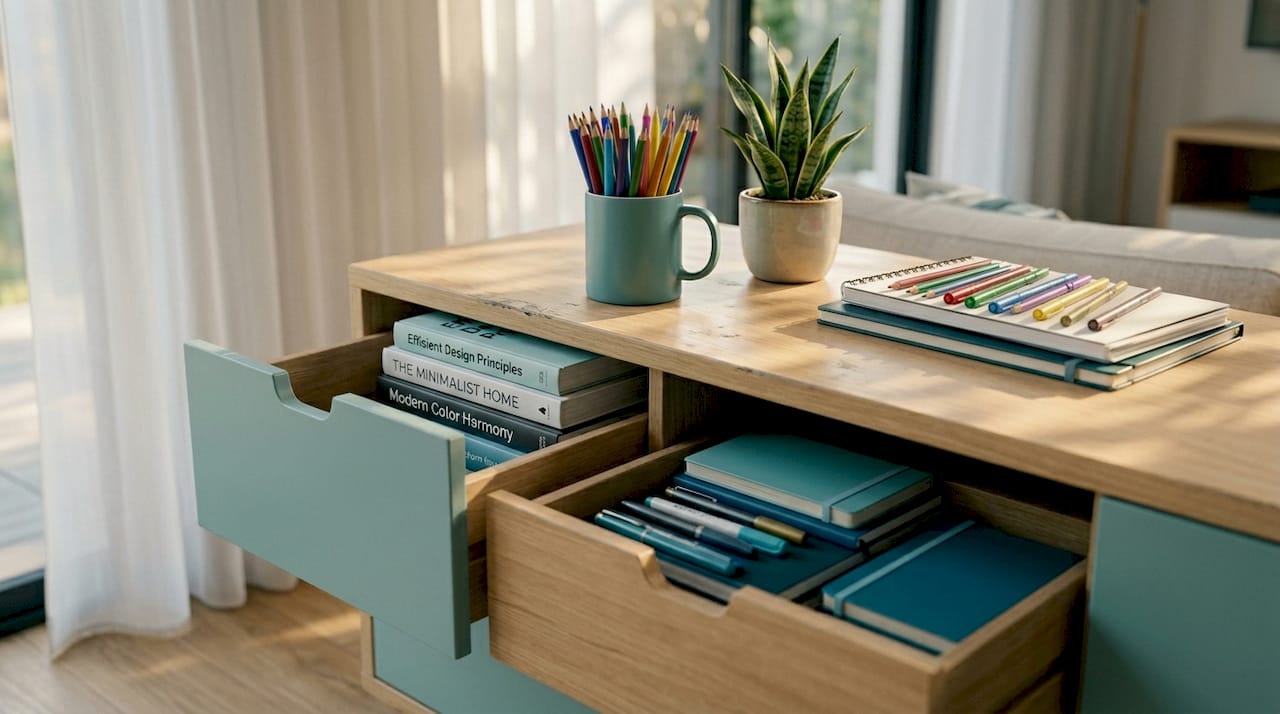
The concept of “return paths” matters here. Predictable placement in storage reduces cognitive load beyond just hiding clutter. When every item has one obvious place to go back to, you spend less mental energy managing your home. You stop losing things. You stop the low-grade frustration of searching through piles.
Here’s how to apply this practically across different rooms:
- Entryway. A shoe cabinet or hallway bench with storage creates a clear transition zone. Coats, bags, and shoes get a home the moment you walk through the door.
- Living room. Coffee tables with built-in drawers, ottomans with lift-top storage, and media units with closed cabinets reduce visible clutter without sacrificing access.
- Bedroom. Under-bed storage frames and nightstands with drawers keep frequently used items close without covering every surface.
- Home office. Modular shelving lets you separate active work materials from archived items, reducing search friction during work sessions.
Renters have specific needs here too. Unlike homeowners, you can’t install built-in units or drill into walls without risking your deposit. Modular freestanding systems adapt to changing layouts and lease restrictions, so you’re not replacing furniture every time you move. They reconfigure easily, which means the same system can serve a studio apartment and later a two-bedroom home.
Storage furniture also supports better zoning. Smart storage organization starts with placing frequently accessed items at the front and most visible spots, while seasonal or rarely used items go deeper or higher up. The same logic applies to home storage furniture: zone your pieces so that what you need daily is always within arm’s reach. This is a simple approach to maximizing small spaces that pays off constantly.
You can find more small space furniture ideas tailored to different room types and living situations at Newwayref’s blog.
Sustainability and long-term value
One underappreciated storage furniture advantage is environmental. When you choose wooden storage furniture from sustainable sources, you’re not just buying a piece of furniture. Sustainably sourced wood stores carbon over years as part of its physical structure, giving it a lower lifecycle footprint than most materials.
Compare that to cheap flat-pack furniture that gets replaced every few years. The disposable furniture cycle creates more waste and higher long-term spending, neither of which makes practical sense for a home you’re trying to organize thoughtfully.
- Durability: Quality storage pieces last a decade or more with basic care, spreading the cost over time
- Adaptability: Modular systems in particular can be reconfigured or expanded instead of replaced
- Carbon impact: Solid wood furniture stores carbon for the lifespan of the piece, unlike synthetic alternatives
- Resale value: Well-made storage furniture holds value, so you can recoup costs if you eventually downsize
The alignment between sustainability and smart organization is genuine. Buying less but better, and keeping your home organized so you don’t repurchase forgotten items, is both environmentally and financially sound.
Practical steps for choosing storage furniture
Getting this right doesn’t require redesigning your home. It requires a clear-eyed look at what you own, how you use it, and what your current setup is missing.
- Inventory your belongings by frequency of use. Separate items you reach for daily, weekly, monthly, and seasonally. Each category has different storage requirements, and your furniture choices should reflect that.
- Map your friction points. Notice where clutter naturally accumulates. That’s where storage furniture will deliver the fastest return. Common spots include entryways, kitchen counters, and bedroom floors.
- Choose pieces that build in return paths. Don’t just look for something that hides clutter. Look for furniture where returning items is as easy or easier than leaving them out. Drawers with organizers, open shelving at eye level, and labeled bins all reduce the chance of things piling up again.
- Decide between freestanding and fitted. Renters should focus on freestanding modular options that move with them. Homeowners have more flexibility to invest in fitted solutions, but modular systems still offer better long-term adaptability for most people.
- Avoid overbuying features you won’t use. A storage ottoman with charging ports sounds appealing, but if you need more open shelving than closed cabinets, buy what your actual habits support. Expensive multi-function pieces that don’t match your routine tend to become clutter themselves.
Pro Tip: Before buying any new storage piece, do a ten-minute “return path test.” Simulate putting away the items that typically pile up near where you plan to place the furniture. If the motion feels natural, the piece will work. If it feels awkward, it won’t get used consistently no matter how well it looks in a room.
Homeowners should also think about home adaptability over time. A family with young children needs different storage solutions than the same family a decade later. Choosing modular and adjustable systems means you adapt the furniture rather than replacing it.
My honest take on storage furniture as a foundation
I’ve helped enough people set up homes to say this plainly: storage furniture is not a luxury. It’s one of the first things you should get right, not the last.
The mistake I see repeatedly is people spending heavily on sofas, beds, and dining tables, then treating storage as whatever’s left in the budget. What happens next is predictable. The beautiful sofa sits in a room where clutter accumulates on every flat surface, the aesthetic never comes together, and the home feels more stressful than it should.
What I’ve found works is flipping that sequence. When storage is sorted first, everything else in the room becomes easier to maintain. You’re not constantly tidying, you’re just using the systems you built. That shift in daily experience is real and lasting.
I’ve also noticed that people significantly underestimate how much of their stress at home is spatial. You think you’re stressed about work or life. Sometimes you are. But walk into a genuinely organized room and notice how your body responds. The drop in tension is measurable even when nothing else has changed.
The goal isn’t a magazine-perfect home. It’s a home where things work, where you can find what you need, and where the environment supports you rather than adding to your load.
— Enn
Transform your home with Newwayref storage solutions
If you’ve recognized your home in any part of this article, the practical next step is straightforward. Newwayref carries a thoughtfully curated range of storage furniture designed for exactly the kind of living situations described here: renters who need flexibility, homeowners who want lasting quality, and anyone trying to get more function out of their space.
From shoe cabinets that transform your entryway to modular shelving that grows with your needs, Newwayref’s storage collection covers the full range of functional furniture options. Products are selected for both design appeal and practical durability, with free shipping on orders over $50. Whether you’re setting up a small apartment or reorganizing a larger home, you’ll find pieces that match your space and your budget. Browse the full collection and start building the organized, calm home you actually want to live in.
FAQ
Why does storage furniture reduce stress?
Clutter keeps your nervous system on alert by creating unresolved visual demands. Organized spaces regulate cortisol patterns and reduce cognitive load, making your home feel genuinely restful.
What’s the best storage furniture for renters?
Freestanding modular systems are ideal for renters because they require no permanent installation and move with you. They reconfigure easily to fit different floor plans as your living situation changes.
Is storage furniture worth the upfront cost?
Yes, especially when you factor in the cost of self-storage rentals, duplicate purchases, and furniture replacement. A single quality storage piece can offset months of external storage fees while staying with you for years.
How do I know where to put storage furniture first?
Identify where clutter consistently accumulates in your home, typically entryways, bedroom floors, and countertops. Those spots signal your highest-friction areas and are where storage furniture will make the biggest difference fastest.
Does wooden storage furniture have environmental benefits?
Sustainably sourced wood stores carbon throughout its usable lifespan and has a lower lifecycle footprint than synthetic materials, making it a more environmentally responsible choice for long-term home organization.